Ad

From hiring freezes to no more fruit in the office: how faculties are preparing for budget cuts

No more printed sashes for graduates with distinction, no more fresh fruit in the office, no one-off bonuses, the sports café closed at weekends. It may take months before there is more clarity about the cuts to higher education, yet the effects are already being felt – and each faculty is dealing with them in its own way.

Image by: Femke Legué
You could call them the small things that brighten working life, but with 1.3 billion euros in cuts looming over higher education, savings already have to be made. At the Erasmus School of Economics, that means going for the low-hanging fruit – quite literally.
“The fresh fruit for staff at the Erasmus School of Economics will soon be scrapped. We’ve all been told to be more frugal. It’s usually the extras that disappear first”, says Albert Wagelmans, University Council member and professor of Management Science.
Cutting the fruit – a saving of 20.000 to 25.000 euros – is part of a broader package of measures at the faculty, explains Mario van Boven, director of operations. “Our biggest expense is staff. We’ve now imposed a hiring freeze and have a committee reviewing which vacancies will or won’t be filled. Since this year, we’ve been saving 300,000 euros a year on material costs – the equivalent of three full-time jobs. We’re also taking a critical look at externally organised events, and whether we really need to arrange lunch and coffee for away days. We’re cutting costs without affecting our core activities of teaching and research.”
Sash without cum laude
‘Why run four half-full power pump classes when you can run two full ones?’
Until recently, graduates with distinction at the Erasmus School of History, Culture and Communication (ESHCC) received a sash with the words ‘cum laude’ printed on it. “It’s an expensive item, and everything is getting more expensive, so we decided to not do that anymore”, says Tonny Krijnen, vice-dean of Education. Each department and faculty decides for itself where savings can be made. “We still want to reward students who performed exceptionally. They’ll still receive the deep-blue sashes, just without the lettering.”
Erasmus Sport is also saving money through schedule changes, says director Jon de Ruijter. “For example, the summer schedule usually starts mid-July, but last summer, for the first time, we switched to a reduced schedule from 1 June. It’s so quiet on campus after that date. Why run four half-full power pump classes when you can run two full ones? Closing the sports café at weekends is also a saving. The average weekend turnover didn’t cover the costs. This way, we’re saving several thousand euros.”
Every little bit helps
“We’ve definitely reached the stage where we’re discussing the cuts in depth”, says Krijnen. “If the cuts to higher education go ahead, you want to be prepared. Until then, we’re looking at where we can save. Every little bit counts.”

At the economics faculty, the budget cut scenarios are already prepared. “In the meantime, we’re also generating extra income”, says Van Boven. “More grants, more of our lecturers teaching in the university’s private education arm, more PhD positions sponsored by industry. We often tell the faculty that we don’t expect to have to go through a reorganisation. But you can sense that, because of the political uncertainty, the fear doesn’t entirely go away.”
More than just cuts
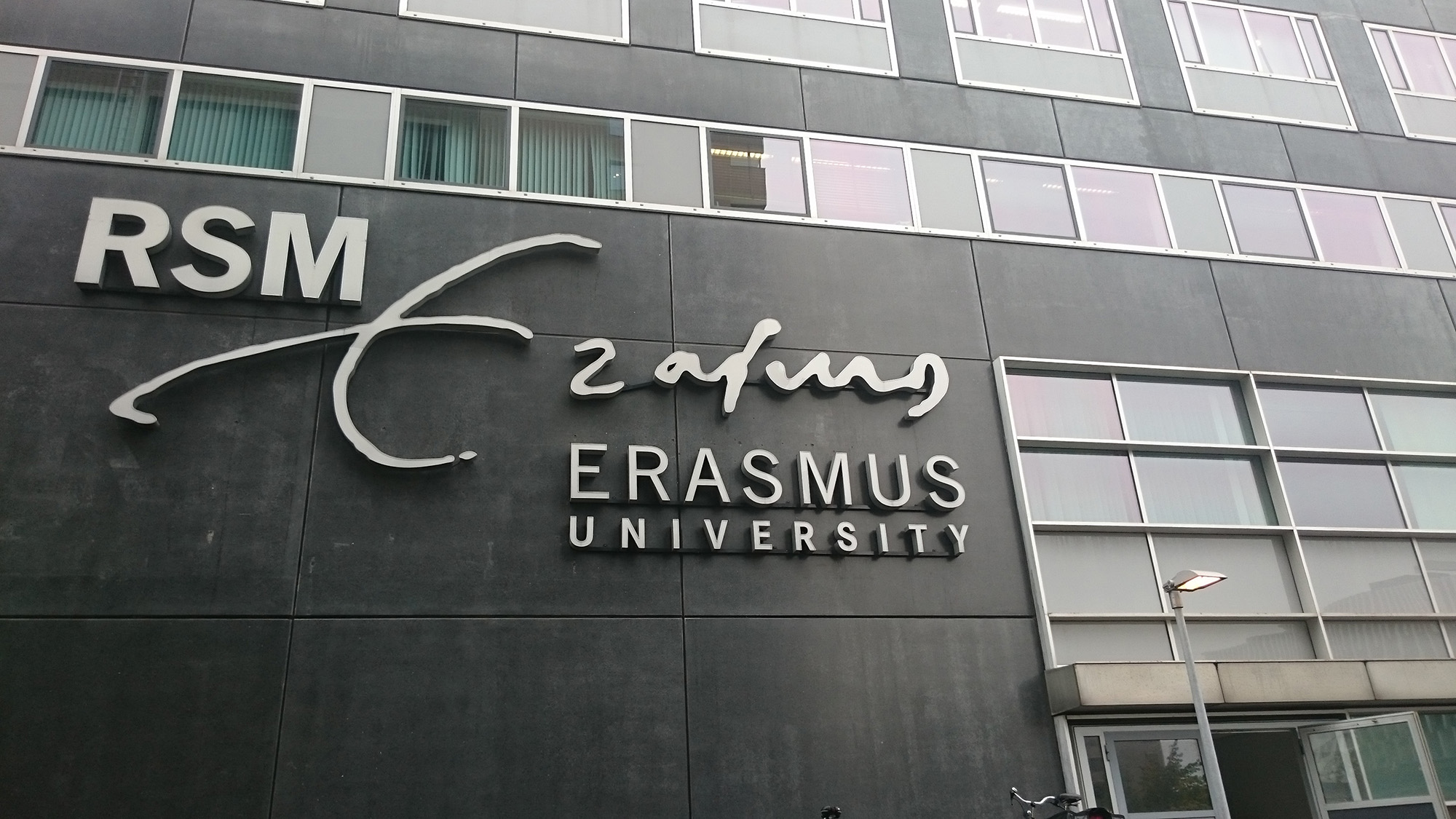
At some faculties, it’s no longer just about saving but about actual cutbacks. At the Rotterdam School of Management (RSM), a reorganisation has already been announced to address an existing budget deficit. “It’s never easy to make these decisions, because they affect our people”, says director of operations Myra van Esch via a RSM communications officer. “We’ve done our best to handle the process with care and transparency. At the same time, it was necessary to secure RSM’s future.”
This faculty has also imposed a hiring freeze. “In addition, in 2024, 2025 and 2026, we haven’t paid one-off bonuses and have limited external hiring as much as possible – only when strictly necessary”, Van Esch writes. “In 2025, we saved 2.7 million euros, and for 2026 we expect savings of 2.3 million.”
Read more
-
Reorganisation at Rotterdam School of Management should cut back 5.5 million euros
Gepubliceerd op:-
Money
-
At Erasmus MC, the Education and Research (O&O) division – which covers the hospital’s academic and research activities – also faces cuts. This was discussed in early October during the Joint Meeting, the faculty council of the education programmes. In 2024, the budget deficit stood at 13 million euros, which was covered by the hospital. The Erasmus MC board’s aim is for O&O to become financially independent and able to invest in, for example, new buildings and facilities, allowing TU Delft to provide more teaching there. Departments are therefore being supported in saving money, and several have imposed hiring freezes. In 2025, the expected deficit is 5 million euros; next year it should be zero, and by 2027, there should be a surplus of 9 million.
Not everything is a cut
Not all changes are budget cuts, several sources would like to emphasise. In the education centre of Erasmus MC, there used to be a coffee machine offering free drinks for students and staff. In the new education wing, opened last year, there isn’t one. Contrary to what some students think, this is not a budget cut, a spokesperson for Erasmus MC explains. The absence of a machine is ‘due to logistics during construction’.
‘Now that hybrid working is the norm, it’s less of a necessity’
Another measure sometimes perceived by staff as a cut is the flu jab. The university board is considering scrapping it. “The flu jab was introduced as a service for staff back when most people worked on campus”, a spokesperson says. “Now that hybrid working is the norm, it’s less of a necessity. So HR is taking this opportunity to ask: does this still fit with how we work now, and what does it really achieve? It’s important to stress that this isn’t about budget cuts, and nothing will change for now. Only after the evaluation and in consultation with the employee participation body will a decision be made about whether to continue or not.”
Read more
-
Disproportionate cuts for Erasmus University; forced redundancies ‘not ruled out’
Gepubliceerd op:-
Governance
-
Heavy-hearted
Wagelmans is not worried about a major reorganisation or his own job, but something else concerns him. “You know what I’m really afraid of? People lose heart in the face of uncertainty – they need perspective. When times are tough, people come to the office less. But that’s exactly when it’s important to be there for each other. As senior staff, we must support early-career lecturers and PhD candidates. Even more so for our international colleagues, who often don’t have a social safety net here yet. Be their support, talk to them, make yourself visible in the department.”
De redactie
-
 Tessa Hofland
Editor
Latest news
-

TU Delft may not favour women in admissions to courses
Gepubliceerd op:-
Education
-
-

Hate campaigns and political pressure: KNAW wants legal protection for academic freedom
Gepubliceerd op:-
Science
-
-

Signing up for a Dutch course ‘feels like a race’, no more places available for now
Gepubliceerd op:-
Internationalisation
-

Comments
Comments are closed.
Ad
Read more in Money
-

Repay your student debt in 15 years? Then interest rises to 3.28 per cent
Gepubliceerd op:-
Money
-
-

For the first time, student debt in the Netherlands falls
Gepubliceerd op:-
Money
-
-

Interest on student debt at highest level in 17 years
Gepubliceerd op:-
Money
-