Ad

Fewer students drink alcohol, but just as many ‘heavy drinkers’

Although fewer students are drinking alcohol, one in four in higher education remains a ‘heavy drinker’. University students still turn out to be the most frequent drinkers.
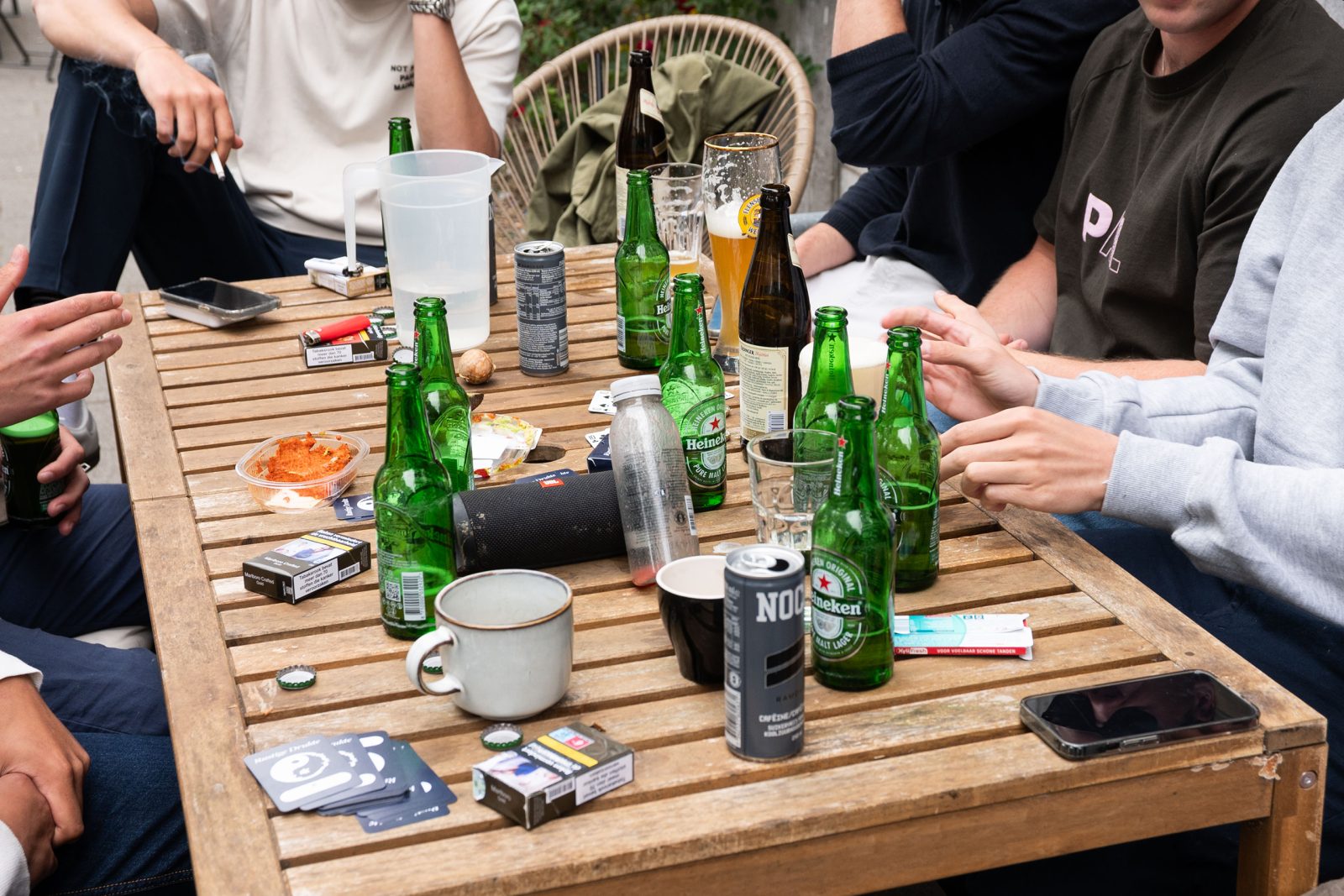
In front of a student house in Kralingen, these students are having a drink, and a cigarette.
Image by: Tyna Le
Around eighty per cent of young people drink alcohol occasionally, according to figures from the RIVM, the Trimbos Institute and Statistics Netherlands (CBS). The data come from health surveys conducted between 2022 and 2024.
That is six percentage points less than in the previous survey from 2015/2017, when 86 per cent of young people aged 18 to 25 said they drank alcohol. Among university students, alcohol use remains the highest at ninety per cent. In universities of applied sciences, the figure is 86 per cent, and in vocational colleges 74 per cent.
However, the proportion of ‘heavy drinkers’ among young people has hardly fallen. In universities of applied sciences, it has even increased. Roughly one in four students in higher education drinks at least once a week six glasses (for men) or four glasses (for women).
Lees meer
-

Ig Nobel Prize: Germans speak better Dutch with a drink
Gepubliceerd op:-
Science
-
Long-term and frequent alcohol use brings more risks than just a bad hangover: it can, for example, lead to brain or liver damage. For that reason, at the end of 2018, a range of organisations – including the government, educational institutions and even beer brewers – signed the National Prevention Agreement. One of its goals is to halve the number of students who drink excessively.
The study also shows that an increasing number of students are following the alcohol guidelines. According to the 2015 Dietary Guidelines of the Health Council, the advice is not to drink or to have no more than one glass per day. Around 25 per cent of university students, 31 per cent of students at universities of applied sciences and 39 per cent of vocational students comply with this recommendation.
Read more
-

Why the word ‘beer’ isn’t allowed anymore. Five questions and answers on the university’s alcohol policy
Gepubliceerd op:-
Analysis
-
De redactie
Latest news
-

Students and staff join the Pride March: ‘We must stand up for this community’
Gepubliceerd op:-
Diversity
-
-

EM TV newsflash: Too many internationals, too many information platforms and more collaboration with the military
Gepubliceerd op:Article type: Video-
EM TV
-
-

18-year-old student dies after ‘hazing party’ in France
Gepubliceerd op:-
Student life
-



Comments
Comments are closed.
Ad
Read more in Student life
-
18-year-old student dies after ‘hazing party’ in France
Gepubliceerd op:-
Student life
-
-

Jasper has lost his carefree outlook since the attack on Erasmus MC, but the experience will make him a better doctor
Gepubliceerd op:-
Mental health
-
-

Government sets aside millions extra for student accommodation construction
Gepubliceerd op:-
Housing
-