Ad

The digital reality can be deceptive, knows Ofra Klein
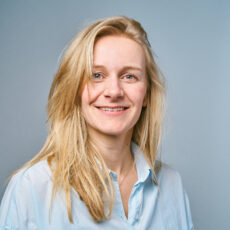
You can spend your days stacking shelves in a supermarket and at the same time post far-right messages online. Social media do not reflect reality, says Ofra Klein, who has spent ten years studying politically charged content on social platforms. As a secondary school pupil, she read The Picture of Dorian Gray by Oscar Wilde, in which appearances are not what they seem.
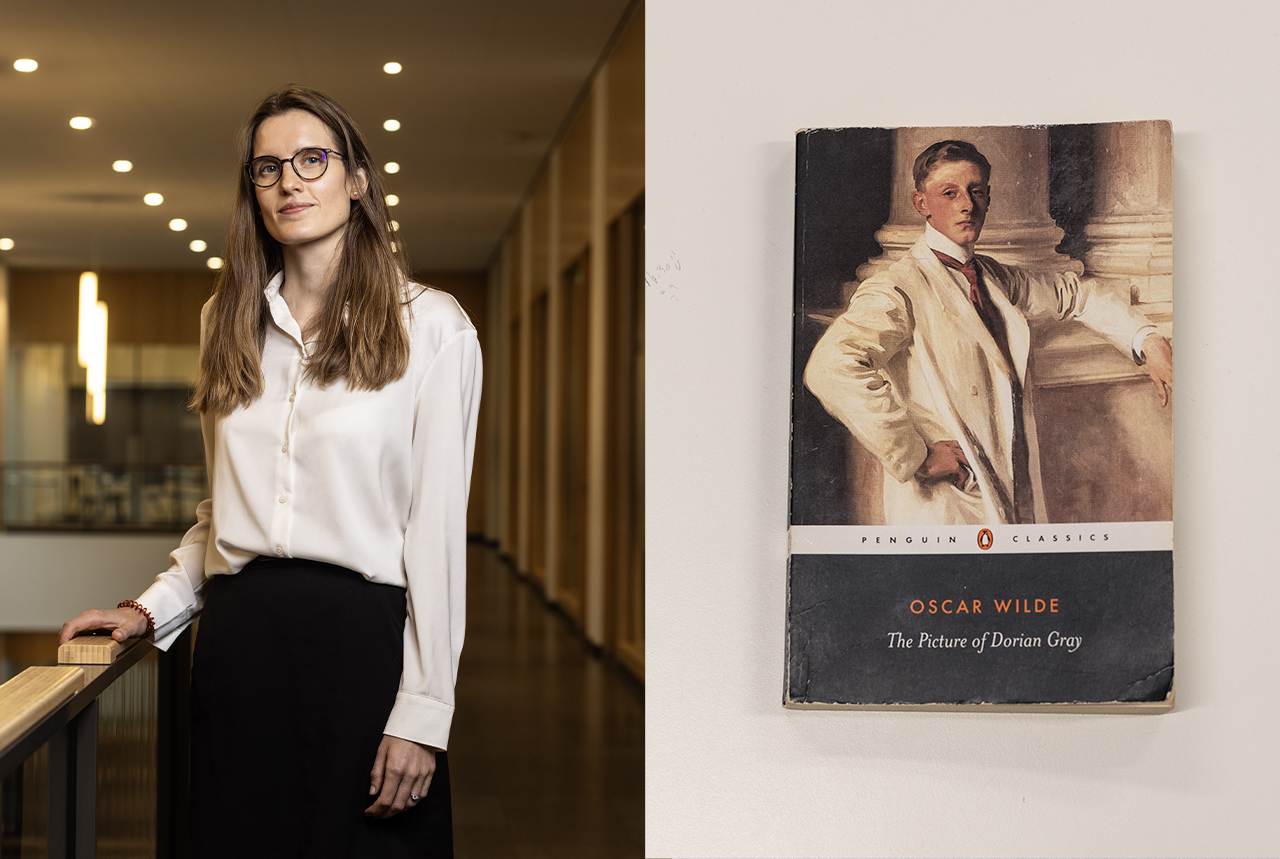
Image by: Leroy Verbeet
Ofra Klein is fascinated by the cat-and-mouse game between social media and the radical right. Platforms employ moderators to remove photos, videos and comments that break the rules. Far-right individuals, in turn, look for ways to bypass those rules. “And those rules sometimes change daily”, Klein says.
The banned book
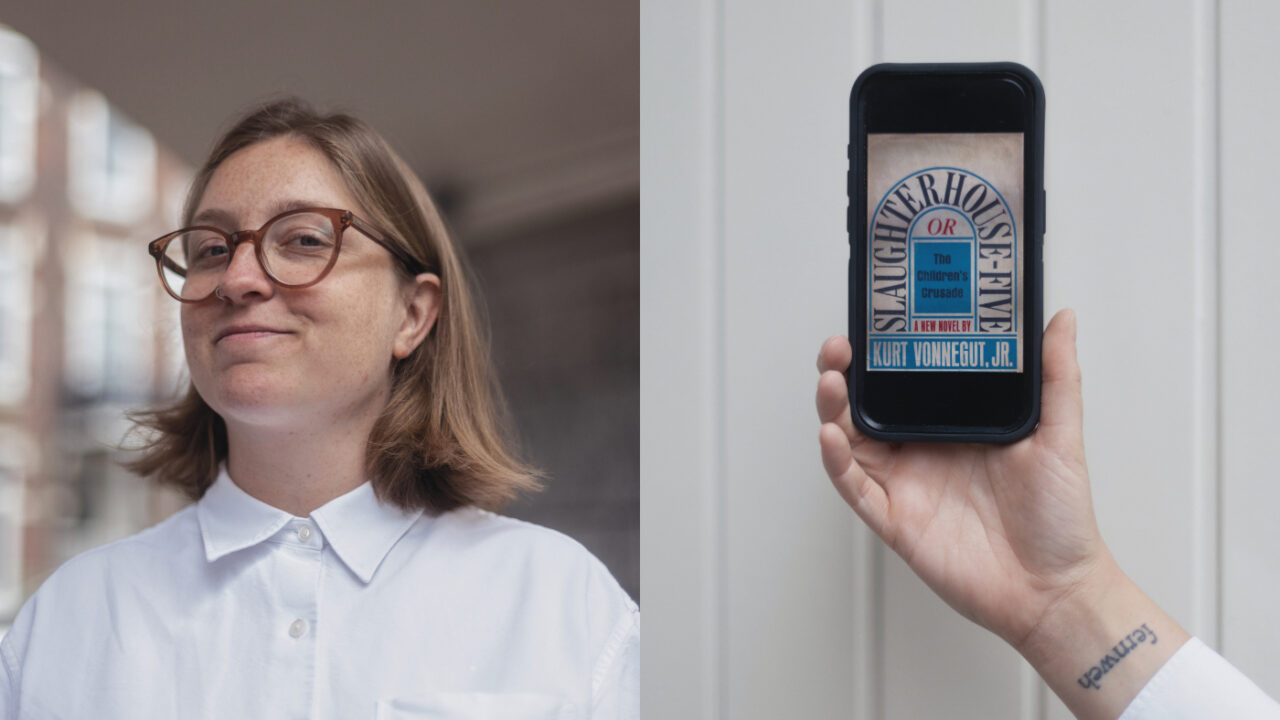
Social media do not reflect reality. That is also a theme in The Picture of Dorian Gray by Oscar Wilde. Dorian Gray is portrayed in a painting and then persuaded to live a life devoted to beauty. His portrait ages, but he himself does not. With every wrong he commits, his portrait becomes more wrinkled. While Dorian’s own appearance stays youthful, he feels ashamed of the image of himself. What is seen on the painting does not match reality. “That’s often how it is on social media too”, says Klein. “In that sense, Oscar Wilde was far ahead of his time.”
The book was censored for its references to homosexuality. Implicit references were modified or softened, yet remained recognisable to perceptive readers. Klein sees a similar pattern among extremist groups online. “They too use hidden messages to spread hateful ideas and to avoid being detected by platforms.” She now recognises the homosexual references in The Picture of Dorian Gray that she once missed as a schoolgirl. The writer was convicted for homosexuality and fled to Paris, where he later died. Klein visited his grave and recently travelled to Dublin, Oscar Wilde’s birthplace.
The far right is visible
You might think these are busy times for a researcher of the far right. And indeed: Klein receives emails from journalists after events such as the murder of Charlie Kirk in the United States and the violent clashes between far-right demonstrators and police officers in The Hague. She is no longer surprised by such incidents. “There’s just so much happening.”
It was very different ten years ago, when she began her bachelor thesis on populist memes. Back then, people would sometimes tell her that her research was ‘completely irrelevant’. “Later, when I started my PhD research, people said that anyone working on the far right would never find a job, because it was all just a temporary phenomenon.” And look where we are now. “Even in countries where it used to be unthinkable, there’s growing electoral support for the far right”, Klein concludes.
Her work seems more socially relevant than ever, though she remains modest. She calls her PhD position at the European University Institute in Florence ‘luck’, just like the Veni grant she received this year. And she describes her recent nomination by New Scientist for Science Talent of the Year as ‘very kind of my faculty’.
She began her research career out of a personal fascination with the vulgar memes her supermarket colleagues used to share on their Facebook pages. “I couldn’t understand why you’d post an image portraying Mark Rutte and his party members as gay on your timeline”, says Klein. She no longer wonders why people share such content. “It seems to have become normal. So many people do it.”
Last book read: Drive Your Plow Over the Bones of the Dead, Olga Tokarczuk
Favourite genre: “Fiction. I’m trying to figure out who my favourite Dutch authors are. I think Herman Koch is very funny. I also like Griet op de Beeck.”
Number of books per year: “Twenty. I buy a lot of books, but there are still many waiting to be read.”
Main motivation: To escape daily reality.
The test of time
The field is constantly changing, and Klein finds those movements particularly interesting. What was unacceptable ten years ago can now easily pass. “The rules of social media platforms are constantly changing, sometimes even daily.” Can regulation on social media turn the tide against far-right movements? Klein is pessimistic. “Things have already gone so far, and there always seem to be ways around it – for example, by creating your own platform, as president Trump did with Truth Social.” In that sense, it’s better to write a book than a tweet: a tweet can be deleted, but a book remains permanently.
Ofra Klein is assistant professor of Mediatisation and Digitalisation at the Erasmus School of History, Culture, and Communication. Her research focuses on the radical right and online political mobilisation. Her research and teaching are part of the programme The Influence of Digitalisation on Work, Prosperity and Entrepreneurship.
Read more
-

Why Jamie van der Klaauw doesn’t always finish his books
Gepubliceerd op:-
Page-turners
-
De redactie
-
 Maartje Braam
Editor
Latest news
-
Clubs closing, expensive drinks and dancing with a matcha. How Rotterdam’s nightlife is changing
Gepubliceerd op:-
Culture
-
-
Powerhouses are like shoulder pads
Gepubliceerd op:-
Column
-
-
Seven EUR scientists receive a Vidi grant
Gepubliceerd op:-
Science
-
Comments
Comments are closed.
Ad
Read more in Page-turners
-
Why Irene van Oorschot prefers to focus on what she does not yet know
Gepubliceerd op:-
Page-turners
-
-
Kindred spirits are closer than you think, Lara Fizaine knows
Gepubliceerd op:-
Page-turners
-
-
Once you have found what suits you, things fall into place, says Lenya Slierendrecht
Gepubliceerd op:-
Page-turners
-