Ad

‘We reclaim the night’ protest in The Hague, EUR research offers hope

Under the slogan ‘the night is ours’ demonstrations were held on Saturday at dozens of locations across the Netherlands. In The Hague, hundreds attended. The night is and feels very unsafe for many women, and the demonstrators want to change that. The research project T@ckle at Erasmus University might contribute to that: it will be studying offline and online sexually transgressive behaviour and sexual violence.

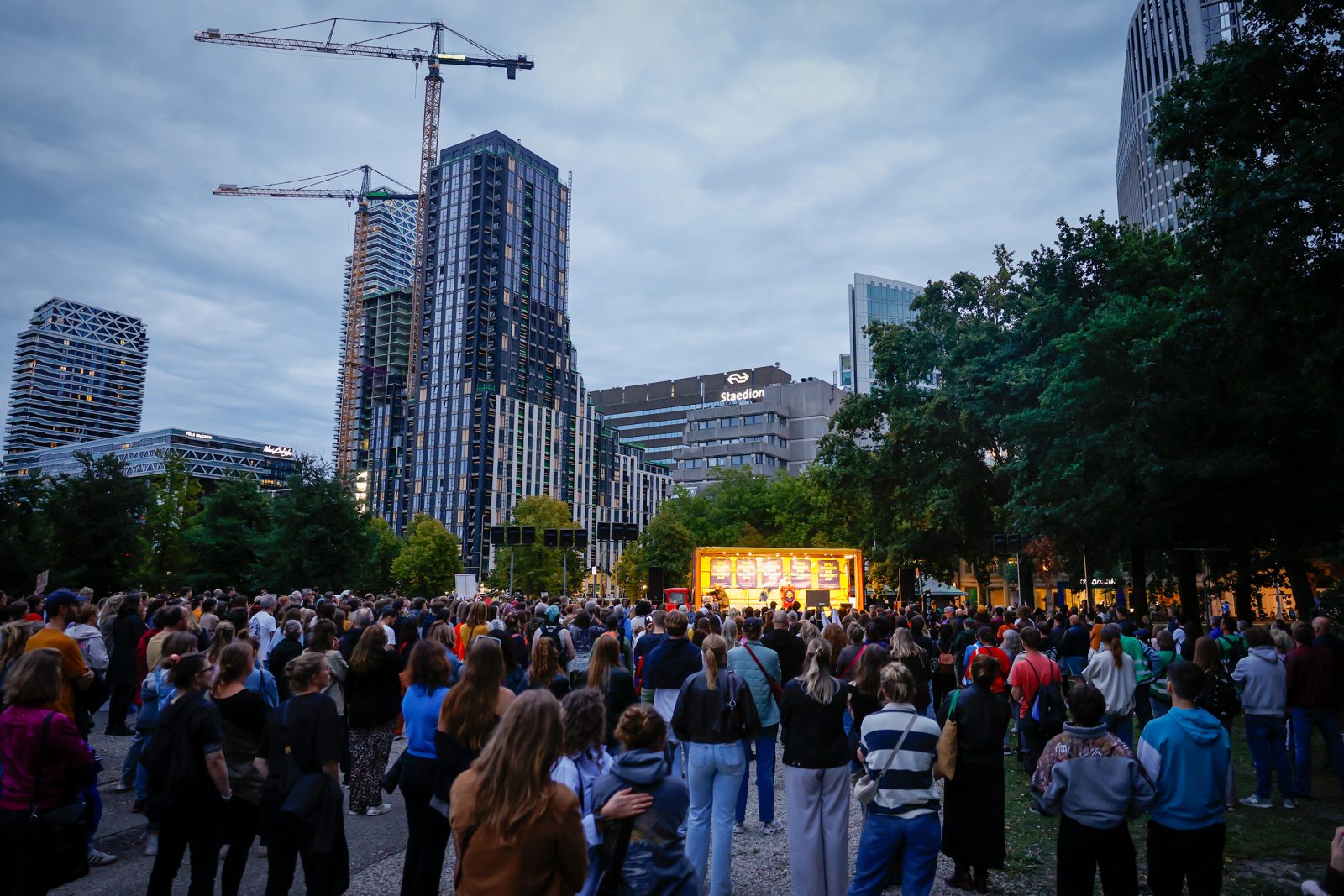
Under the slogan 'the night is ours' demonstrations were held at dozens of locations across the Netherlands at the end of August. In The Hague hundreds of people gathered.
Image by: Daan Stam
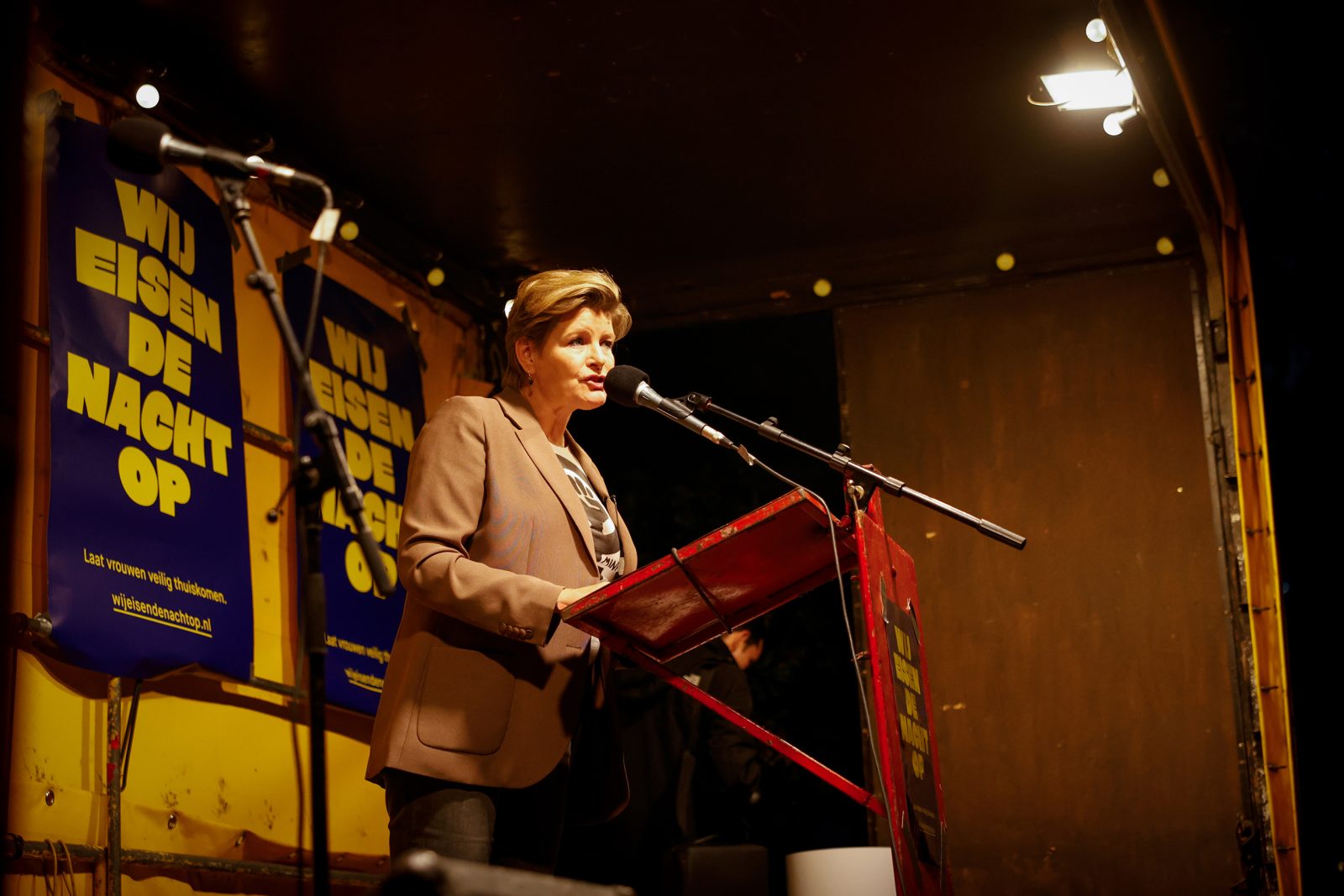
“I damn well want Lisa back. I want Bouchra back. I want Clarinda back. And Wendy. And Shamila. And Paro. And Zehra. And Gea. Nadine, Sanne, Joeweela, Mala, Laura, Annemiek, Eva, Jolanda, Shelly, and Linda back.” With every name the The Hague alderwoman Marielle Vavier lists, the crowd gets more goosebumps. “The anger we feel is intense and that anger is justified.” Her voice breaks occasionally. The applause of the hundreds of demonstrators rings out loudly in The Hague. “Our bodies are ours. Our lives are ours. The streets are ours. The night is ours.”
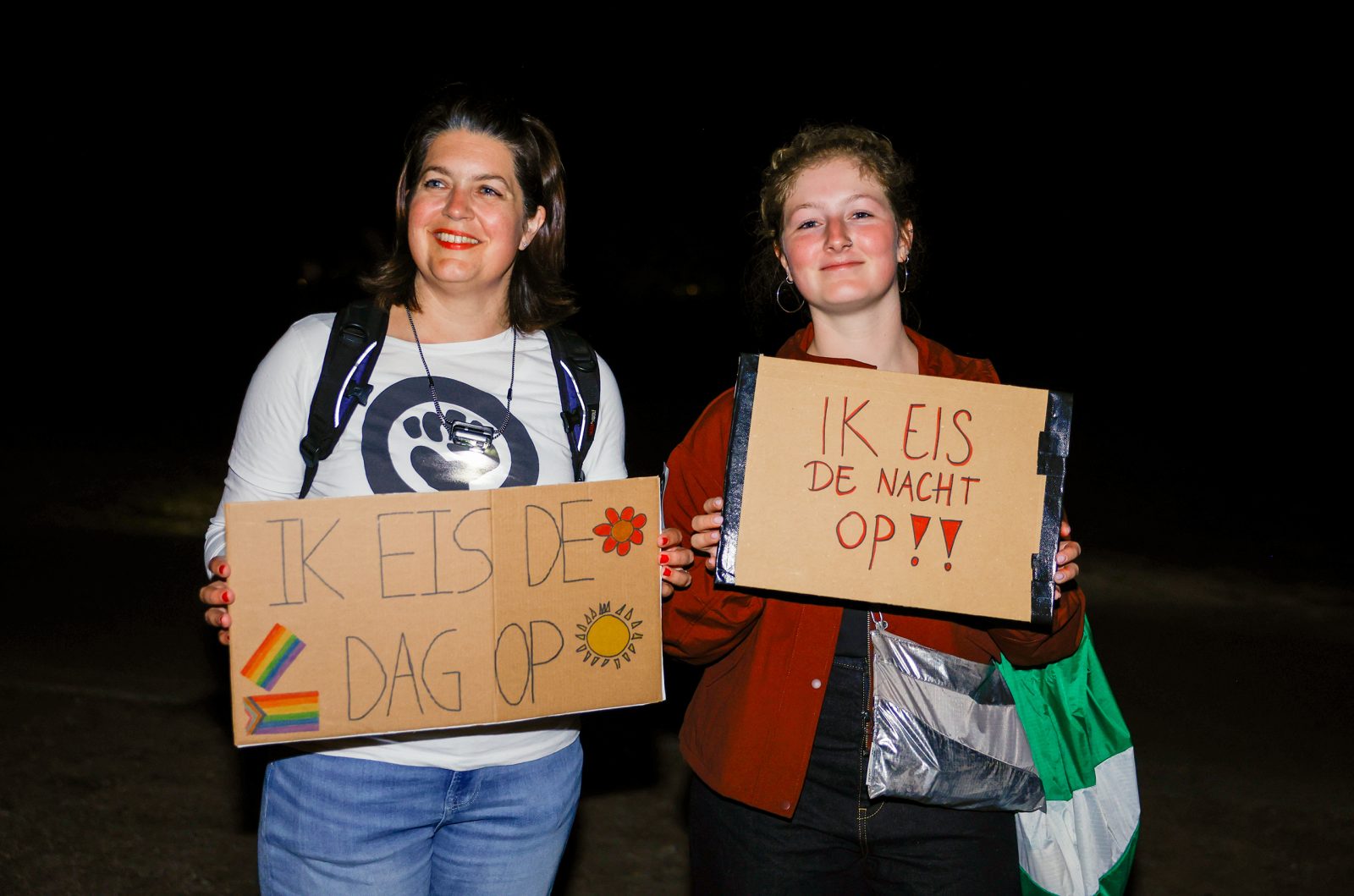
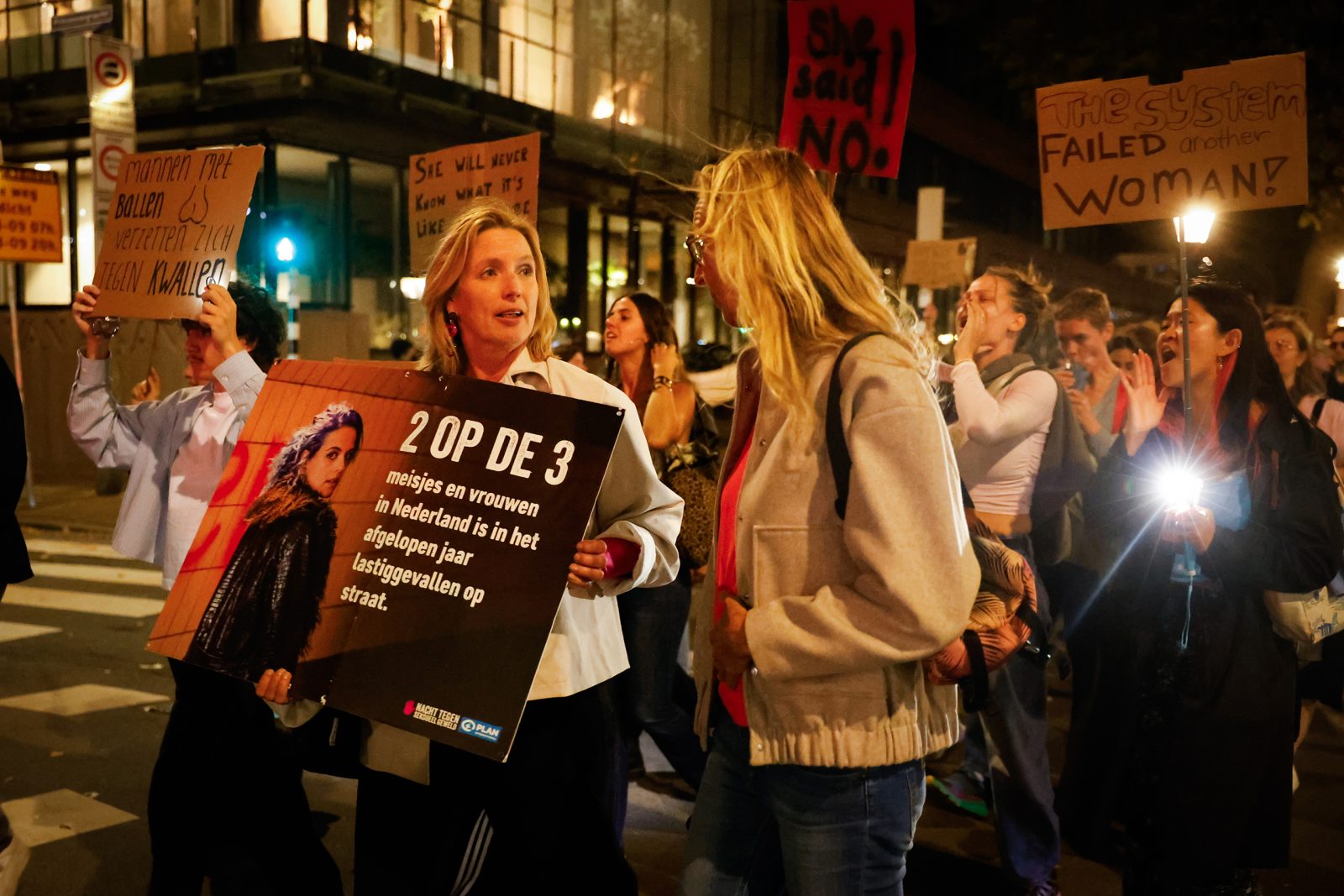
The 27-year-old Lyn is holding a sign reading ‘The system failed another woman‘. “Because Lisa even phoned 112 when it happened”, she says. The Social Work student at The Hague University of Applied Sciences felt she had to be here. “Later, this will be my field of work. Besides, I am part of this city, and I too often feel unsafe.” She scans the crowd. “It feels good to see that I’m not alone in that fear and anger about what is happening.”
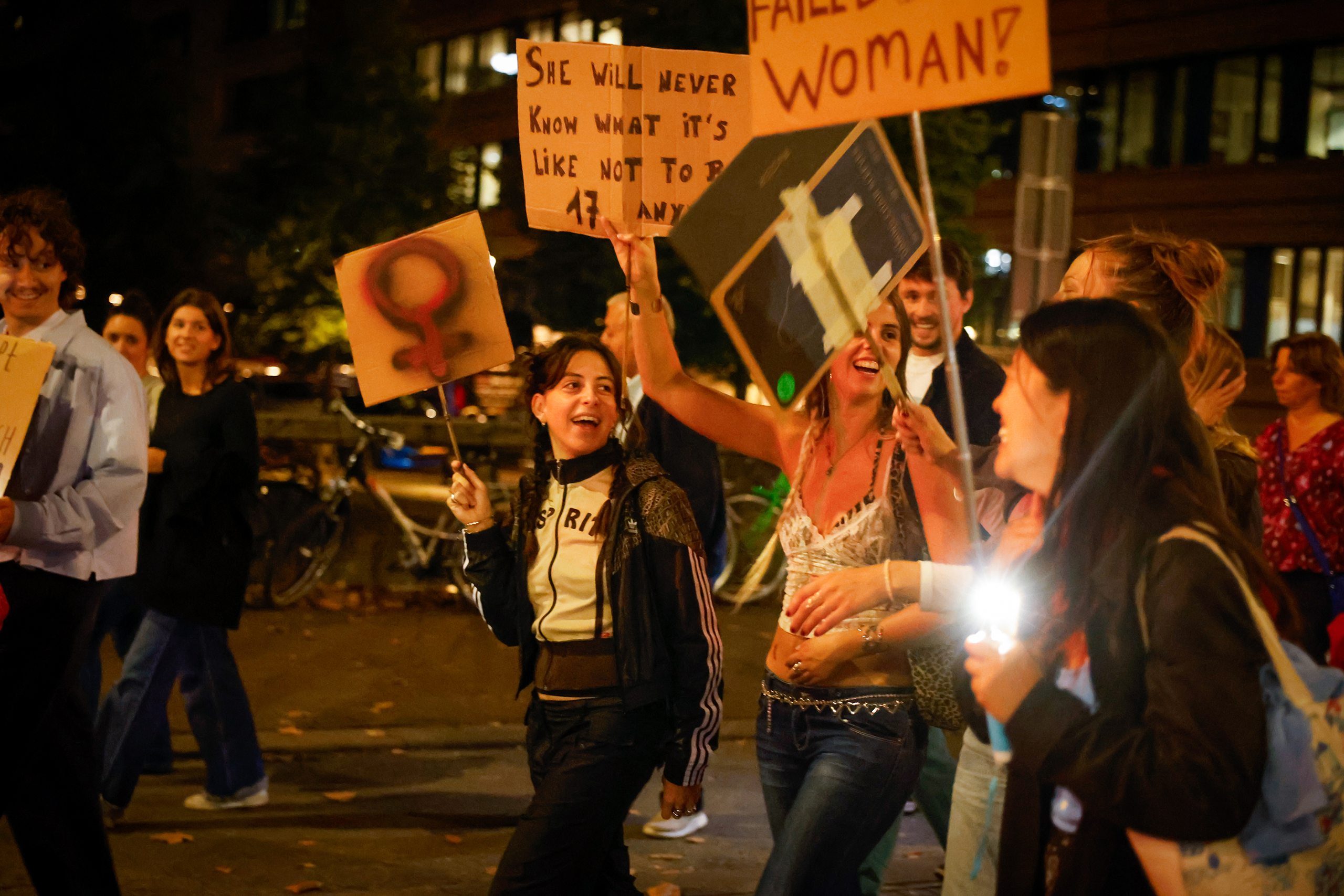
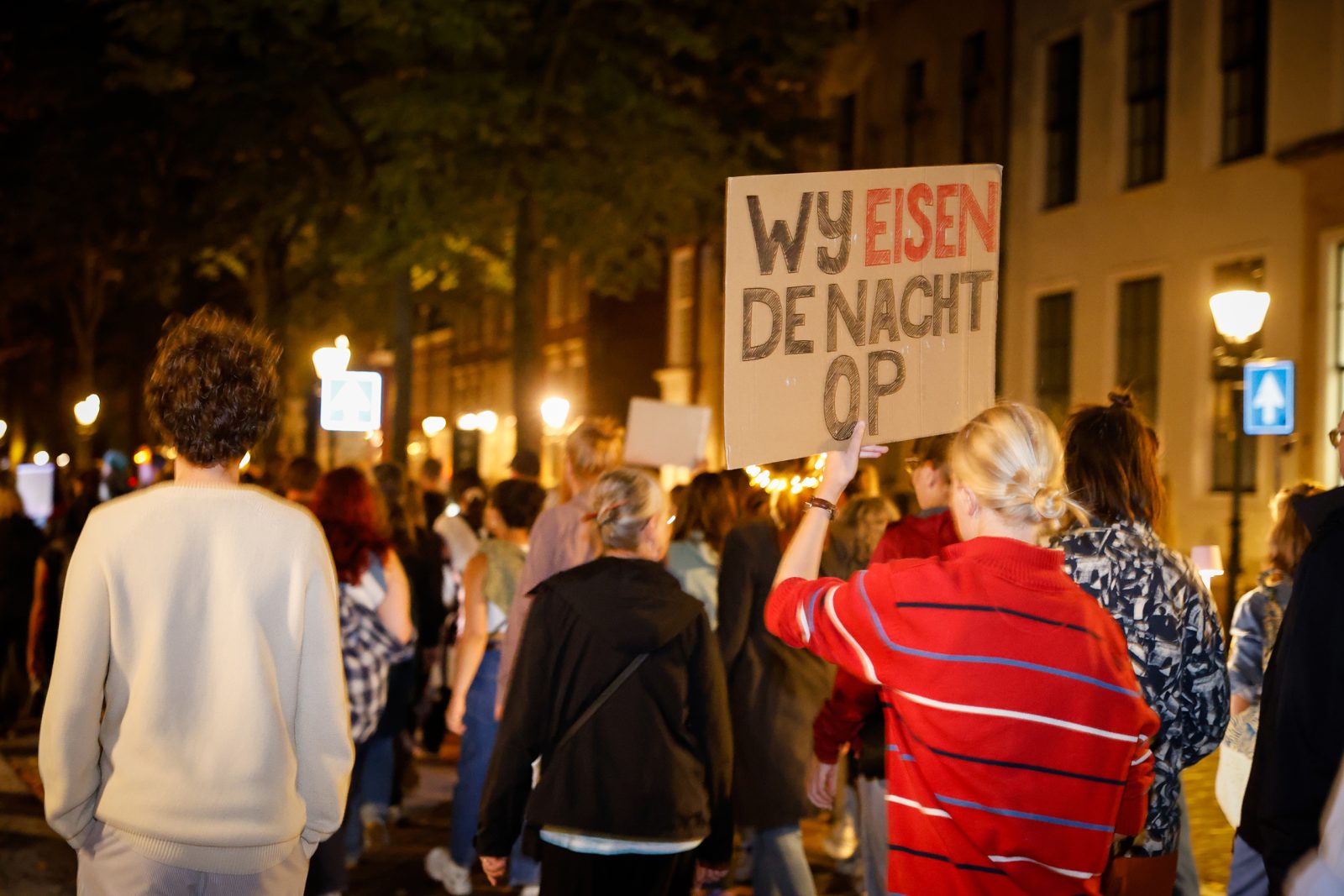
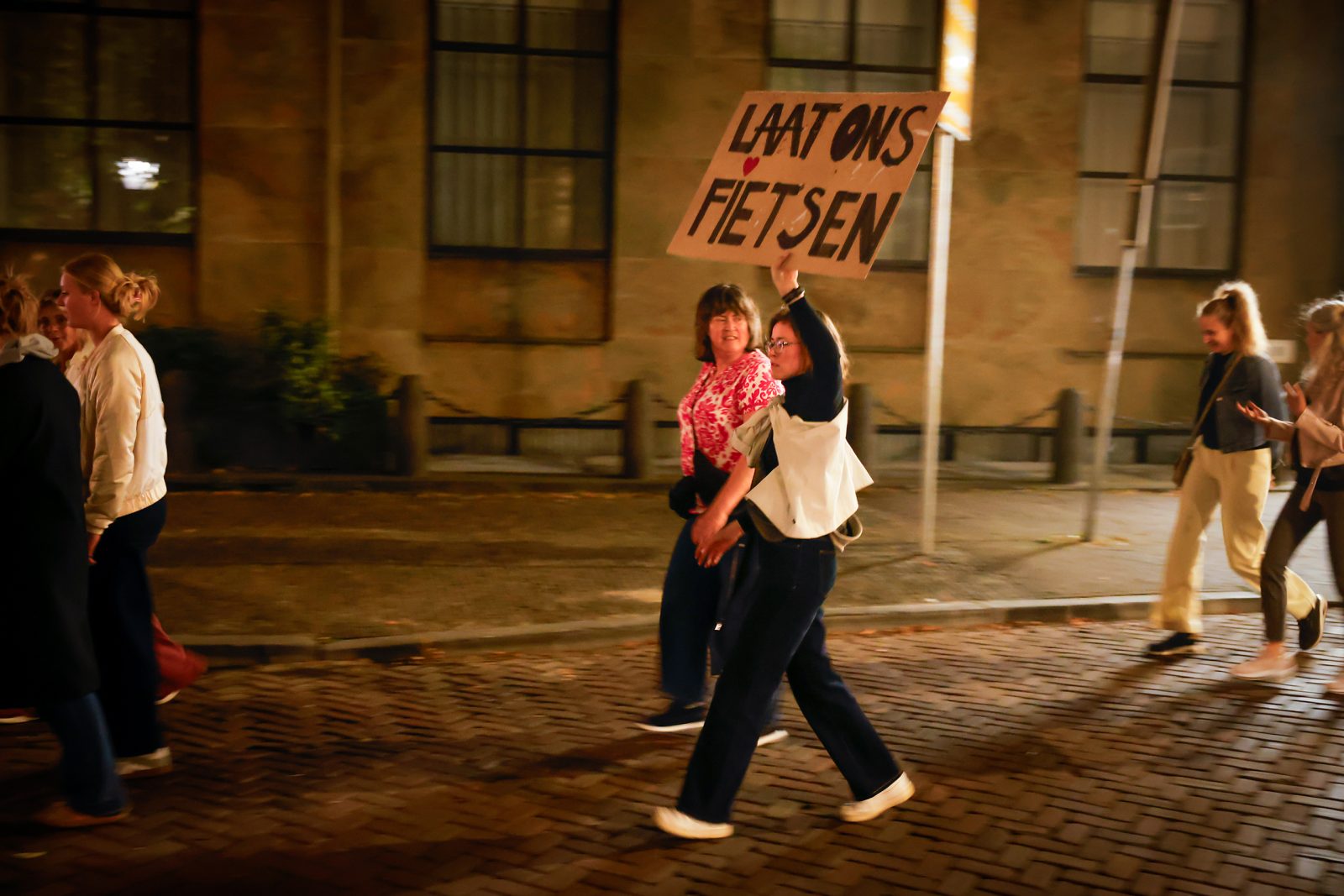
The hundreds of demonstrators marched through nocturnal The Hague after the programme on the stage.
Image by: Daan Stam
Of all times
Violence against women is as old as time, and the increase in modern technologies feeds that violence. On social media the threshold for violent expressions is lower. Research shows this online violence spills over into physical violence against women. For the first time other research shows that young European men are more tolerant of violence against women than older men. Queer people, trans women, women of colour, Muslims are more often victims of violence. Black trans women are most of all targeted.
All of this is noticeable in the Netherlands too. Every eight days a woman is murdered, more than half of them by an (ex-)partner. This summer, at least six young women between eleven and nineteen were harassed in Rotterdam by an unknown man on a scooter. In early August a girl was abused by a man in Zuiderpark. Since the violent death of 17-year-old Lisa, who was pulled from her bike after a night out, more and more people, especially women, have expressed their anger about the violence and the ever-present fear over women’s safety. The national action ‘We reclaim the night’ was born.
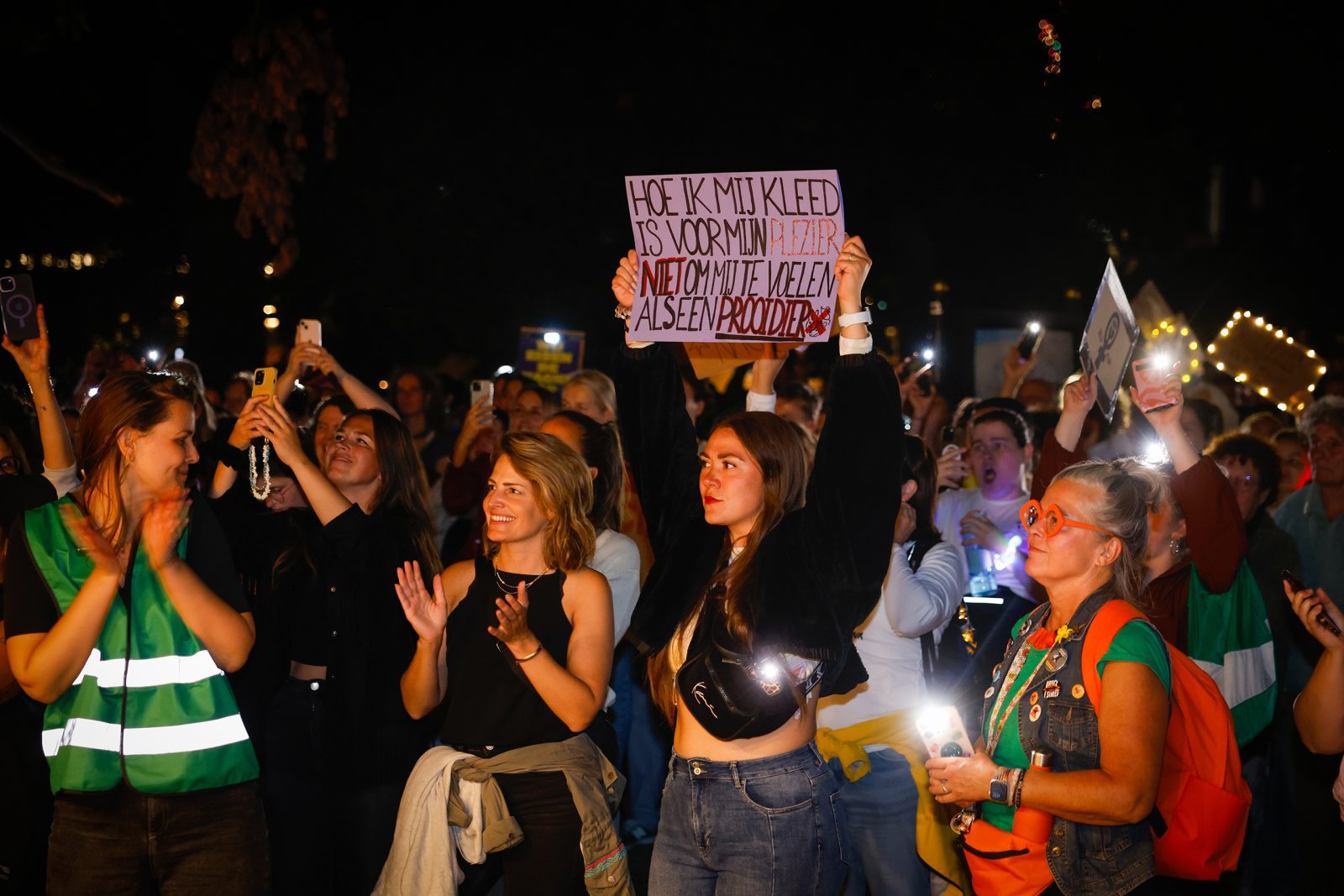
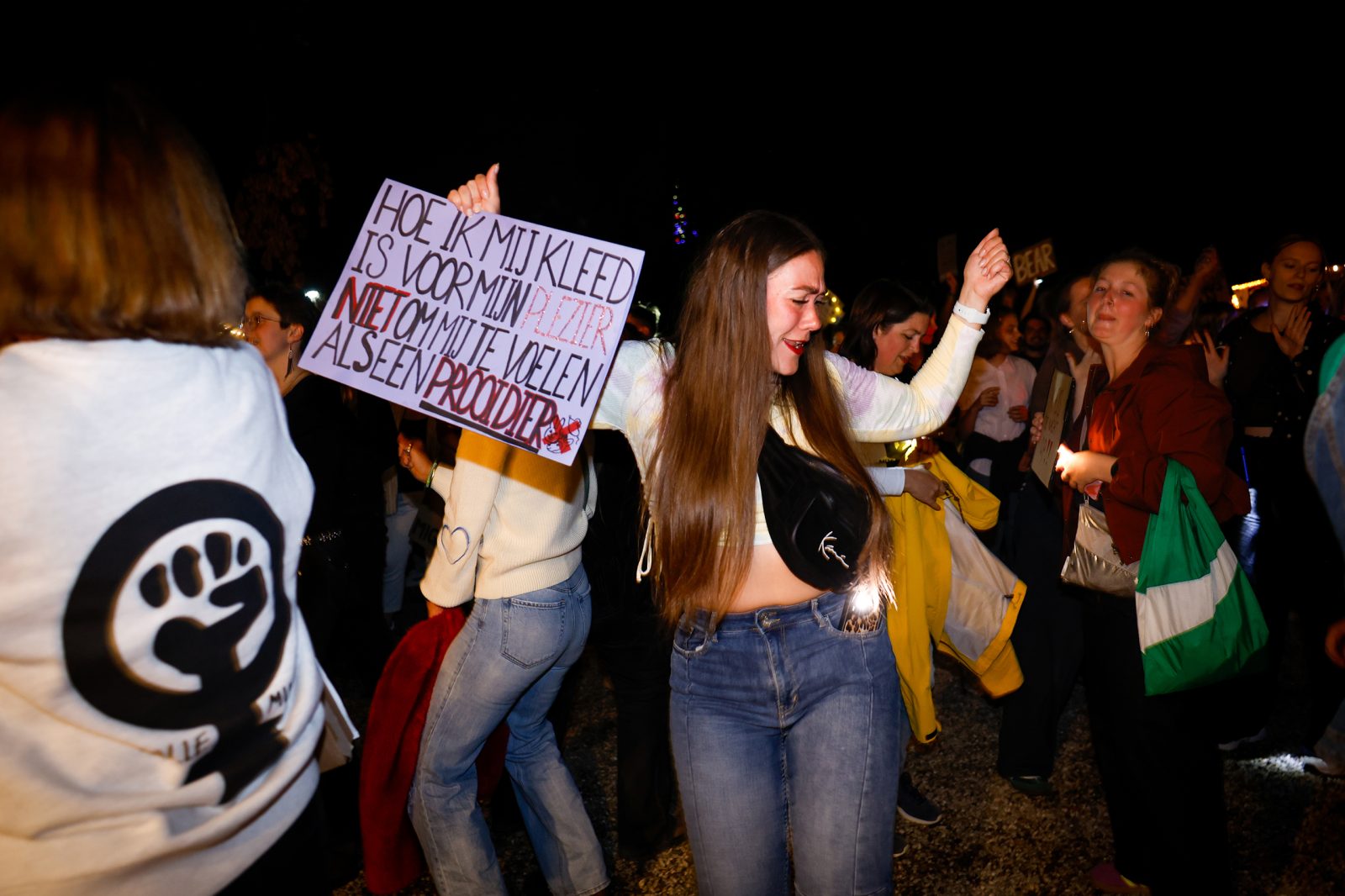
Many demonstrators brought signs and lights so the messages were readable in the dark.
Image by: Daan Stam
Hope for change
Eva (27) came to the protest with three other women and two men. One of her friends carries a sign reading ‘Protect your daughters. Educate your sons‘. “Good that there are a lot of men here tonight as well”, says Eva. “We shouldn’t be the ones to have to adapt, the perpetrators must stop.” Men should call each other out on inappropriate remarks and behaviour, she thinks. “I find the evening quite intense. It’s beautiful and emotional to hear all those names and see how many people recognise this. If so many people experience this, then something really needs to change quickly. But I also don’t know how you do that, or where to start.”
Hope could come from the Erasmus University. Earlier this year, the research project T@ckle, led by professor Daphne van de Bongardt (Erasmus School of Social and Behavioural Sciences), received just over 2.8 million euros in funding. It is a five-year research project into offline and online sexually transgressive behaviour and sexual violence, with the main aim of contributing to a more effective integrated approach. T@ckle stands for Transdisciplinary Analysis and Co-creation of Knowledge to Lead Efforts against Online and Offline Sexually Transgressive Behaviour and Sexual Violence.
‘With T@ckle, we are specifically not focusing on increasing the resilience of girls and women’
“With T@ckle we are specifically not focusing on increasing the resilience of girls and women”, Van de Bongardt, professor of relational and sexual development, education and health and founder of Erasmus Love Lab, tells me by email. “That has been done for too long, is not effective, and contributes to victim blaming.” The research project wants to investigate, expose and tackle the systems behind transgressive behaviour. For example, to see what effect certain language in the media has. It will also look at how bystanders can respond better. “This work is not only aimed at girls and women; boys and men are also victims.”
Van de Bongardt: “This is a historically large investment by the government in this topic.” Although other allocations from the Dutch Research Agenda often receive more money. “But of course we won’t complain, because we can do a lot and we will also focus on spin-offs from this project.” Thirty-four organisations are involved in the project, including universities and expertise organisations such as Rutgers and the Centre for Sexual Violence. Erasmus University is the main applicant for the project. “Of course we at the university and at Erasmus Love Lab are incredibly proud of this, and we are currently working extremely hard to start the project on 1 October.”
Een lijst van afbeeldingen
Who run the world? Girls!
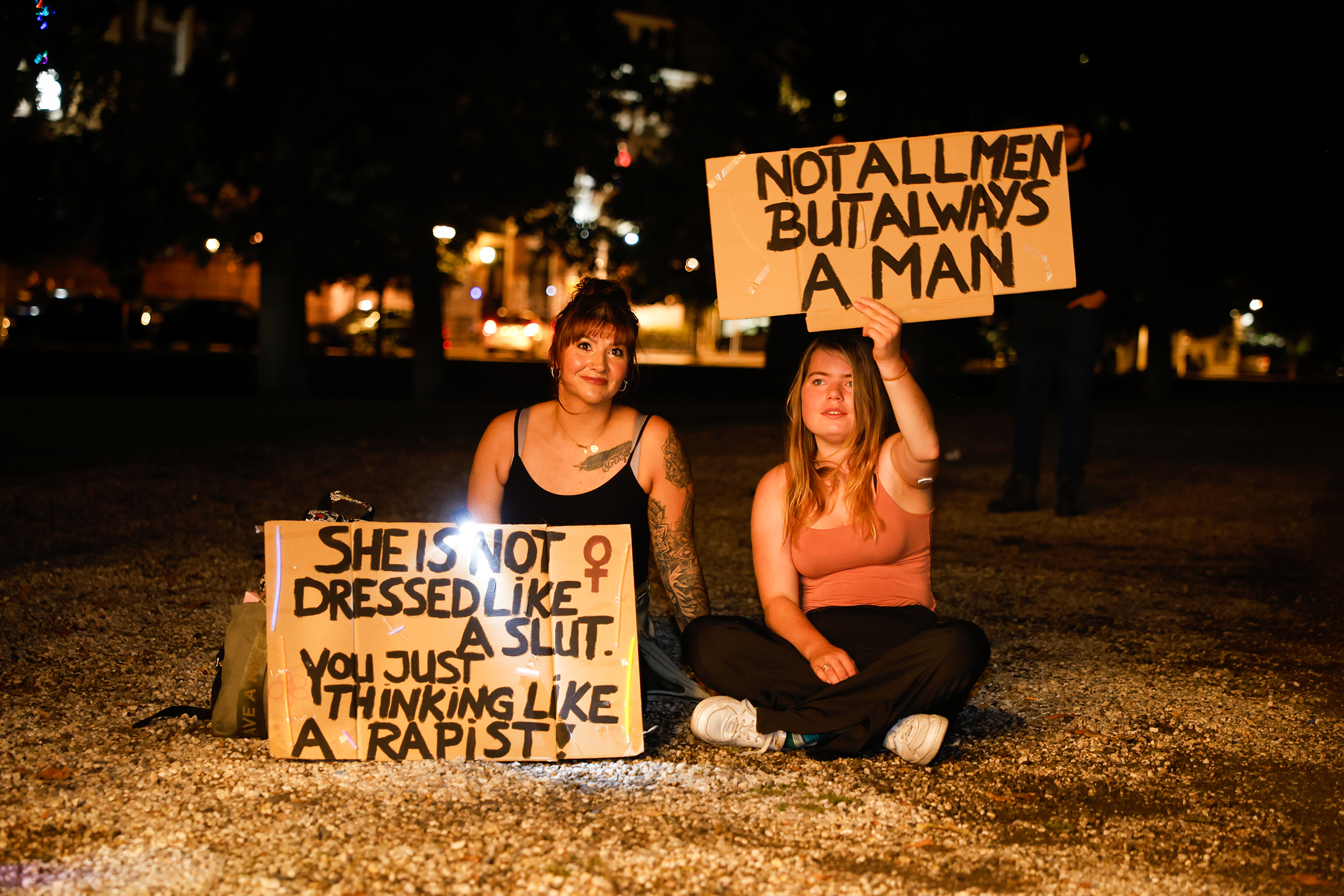
Felicia (16), Floor (17) and Sophie (16) from sixth form say they will write about this theme for their extended project, Floor explains. “We think our generation doesn’t talk enough about it”, says Felicia. “We sometimes feel unsafe too and you have to talk about that.” It was her idea to come tonight. “Boys our age are so like ‘not all men’ when it comes to violence against women.” Online the phrase ‘not all men, but always a man‘ is going around, meaning not all men are perpetrators, but the perpetrator is always a man.
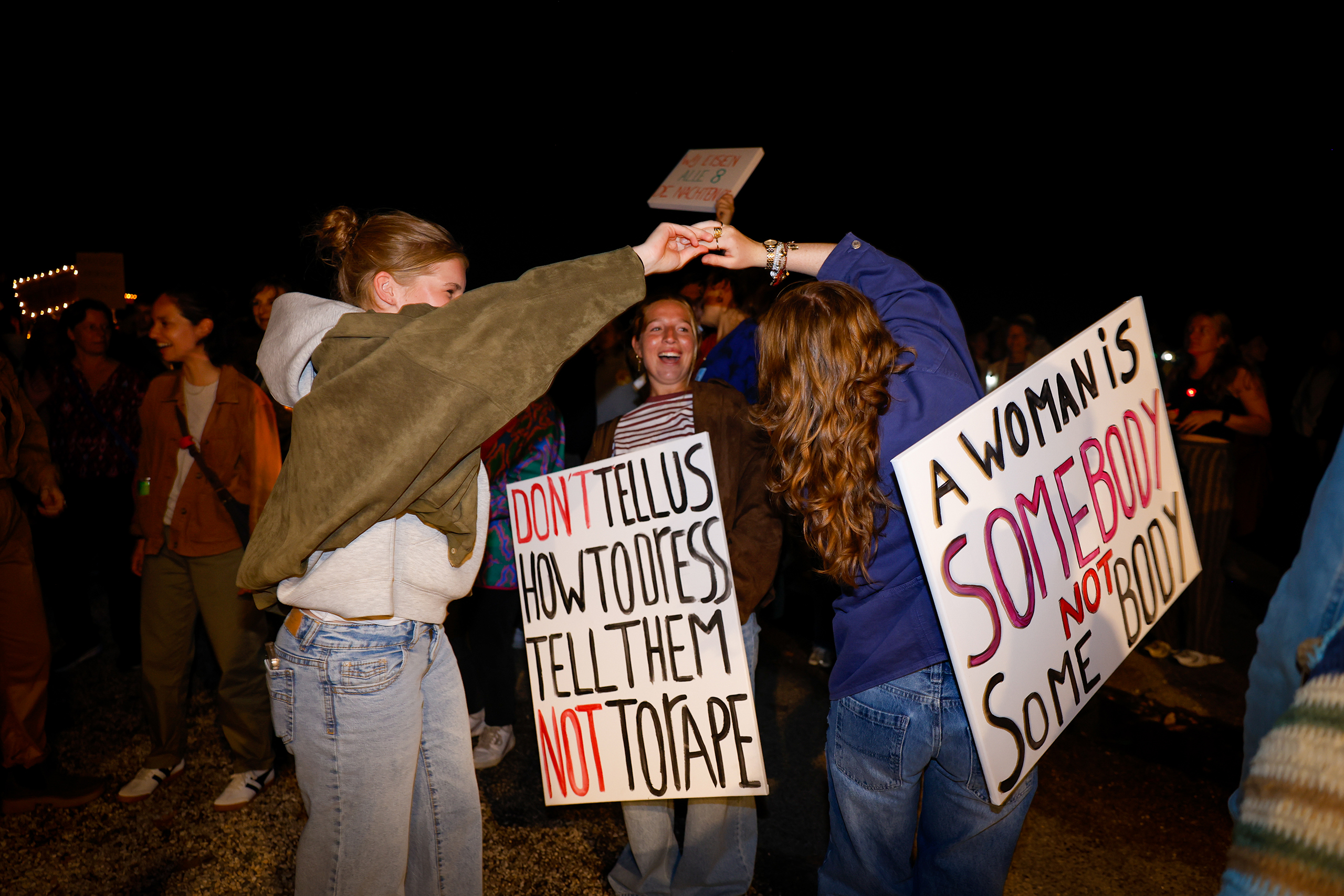
Sophie, Floor and Felicia dance along. The teenagers wanted to show how important they find this protest, because they too regularly feel unsafe.
Image by: Daan Stam
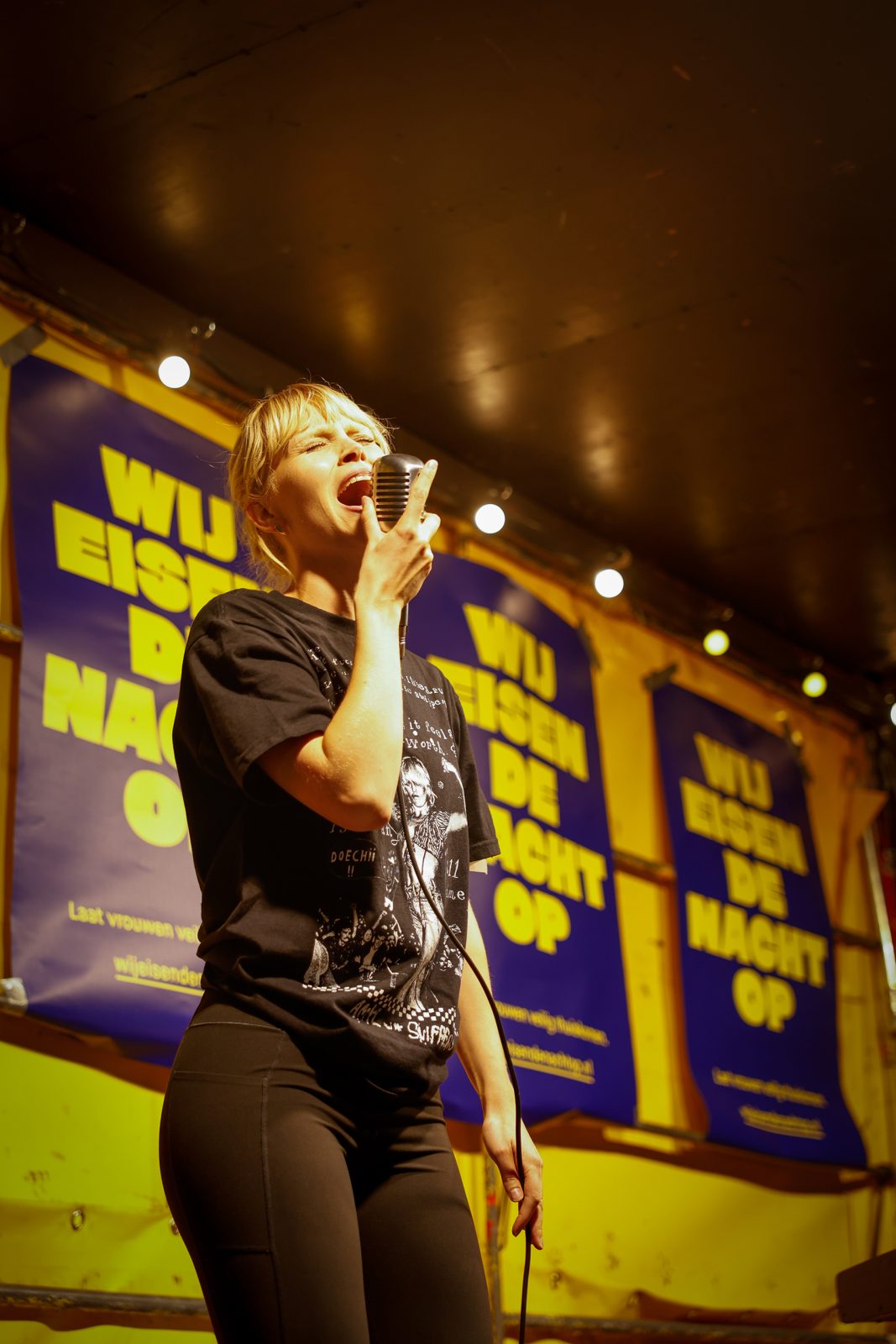
On the stage the music starts. First Pip Lieke Lucas comes on with her debut single Als Het Donker Wordt. Then Beyoncé plays over the speakers. At Run the World (Girls), the crowd goes completely wild. For a moment, they dance freely in the night. Then they straighten their coats and walk through the dark to the station or home. “It is a bit contradictory”, says the Delft resident Hiske (45). “We want to reclaim the night, but we have agreed to travel together for safety.”
Read more
-
Protest against sexual assault at the ISS: ‘The institute has failed to protect students’
Gepubliceerd op:-
Protest
-
De redactie
-
 Tessa Hofland
Editor
Latest news
-
TU Delft may not favour women in admissions to courses
Gepubliceerd op:-
Education
-
-

Hate campaigns and political pressure: KNAW wants legal protection for academic freedom
Gepubliceerd op:-
Science
-
-
Signing up for a Dutch course ‘feels like a race’, no more places available for now
Gepubliceerd op:-
Internationalisation
-

Comments
1 reactie
Comments are closed.
Ad
Read more in Protest
-
Students will still be allowed to occupy a building, but perhaps not while masked
Gepubliceerd op:-
Politics
-
Protest
-
-
TU Delft will no longer pass activists’ names to police
Gepubliceerd op:-
Privacy
-
Protest
-
-
Pro-Palestinian protests in student cities
Gepubliceerd op:-
Protest
-
Time for unity op 4 September 2025 om 19:57
‘not all men, but always a man‘ is disgusting and discrimination. It is not always a man. And a lot of victims of crime are men.
Why do we need to separate? It is time for unity, not division.