Ad

How to find your way on and round the university
Lots of concrete, sometimes teeming with people, you enter one building on T (terrain) level and the next on B (ground floor). Campus Woudestein can be overwhelming at times and the building names are quite confusing. Fortunately, we’ll give you a little help getting around.
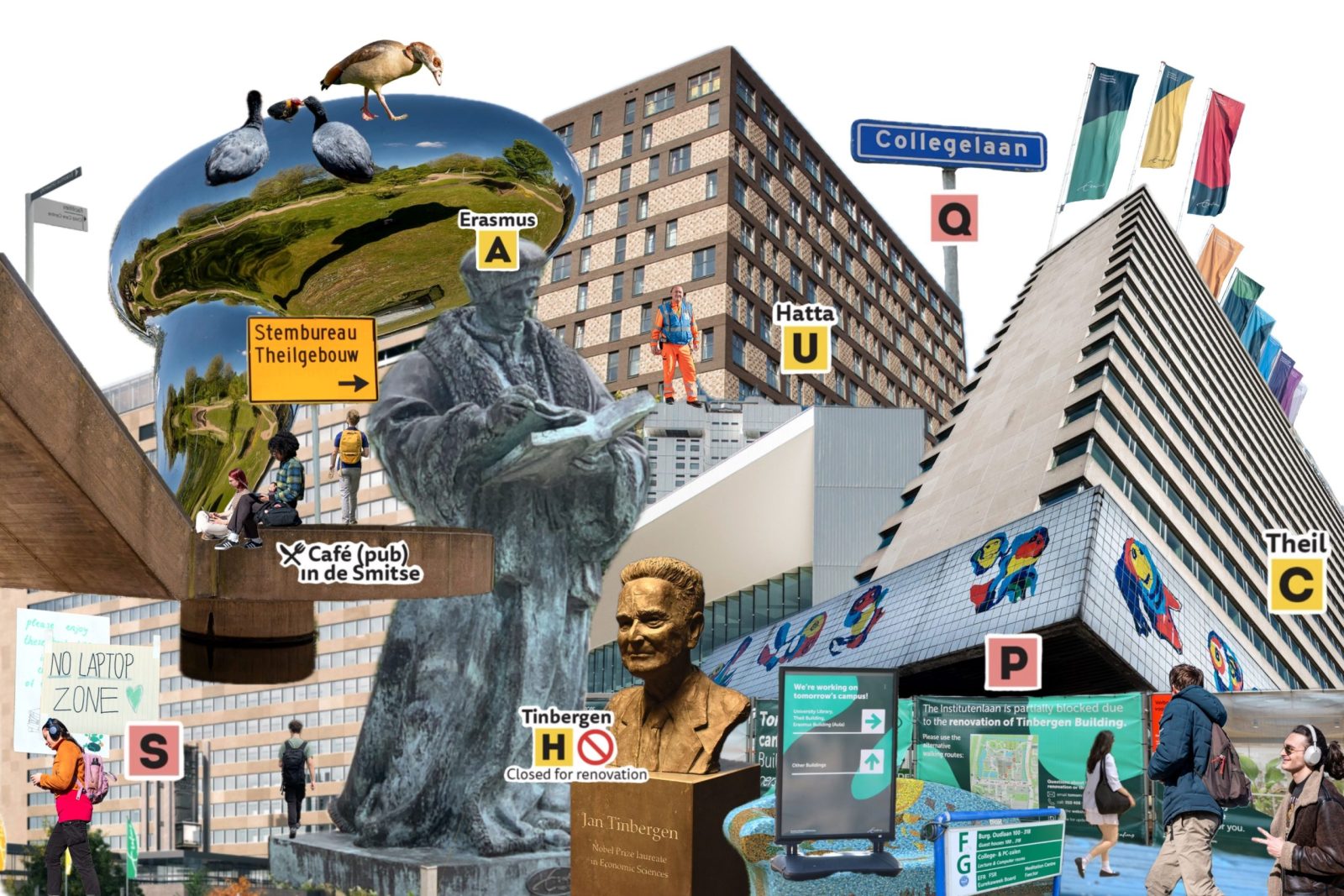
Image by: Sonja Schravesande
‘Where do I go?’ is the question almost every first-year (and new staff member) asks regularly, especially in those first weeks as a student in Rotterdam. The Mandeville building is not the M building, but T. The Tinbergen and Theil buildings are therefore not the T building, but H and C. The Van der Goot building is not the G building, but M. None of that makes it any easier, so hopefully this campus introduction helps.
Here or there?
To make things easier, this university is not just campus Woudestein. Between the Euromast and the Boijmans depot you have the education centre in the Erasmus MC (EMC), where Medicine, Nanobiology, Clinical Technology and the research masters of that faculty are based. Near Blaak you’ll find Erasmus University College (better known as EUC). And the International Institute of Social Studies (ISS) is in The Hague.
Read more
-
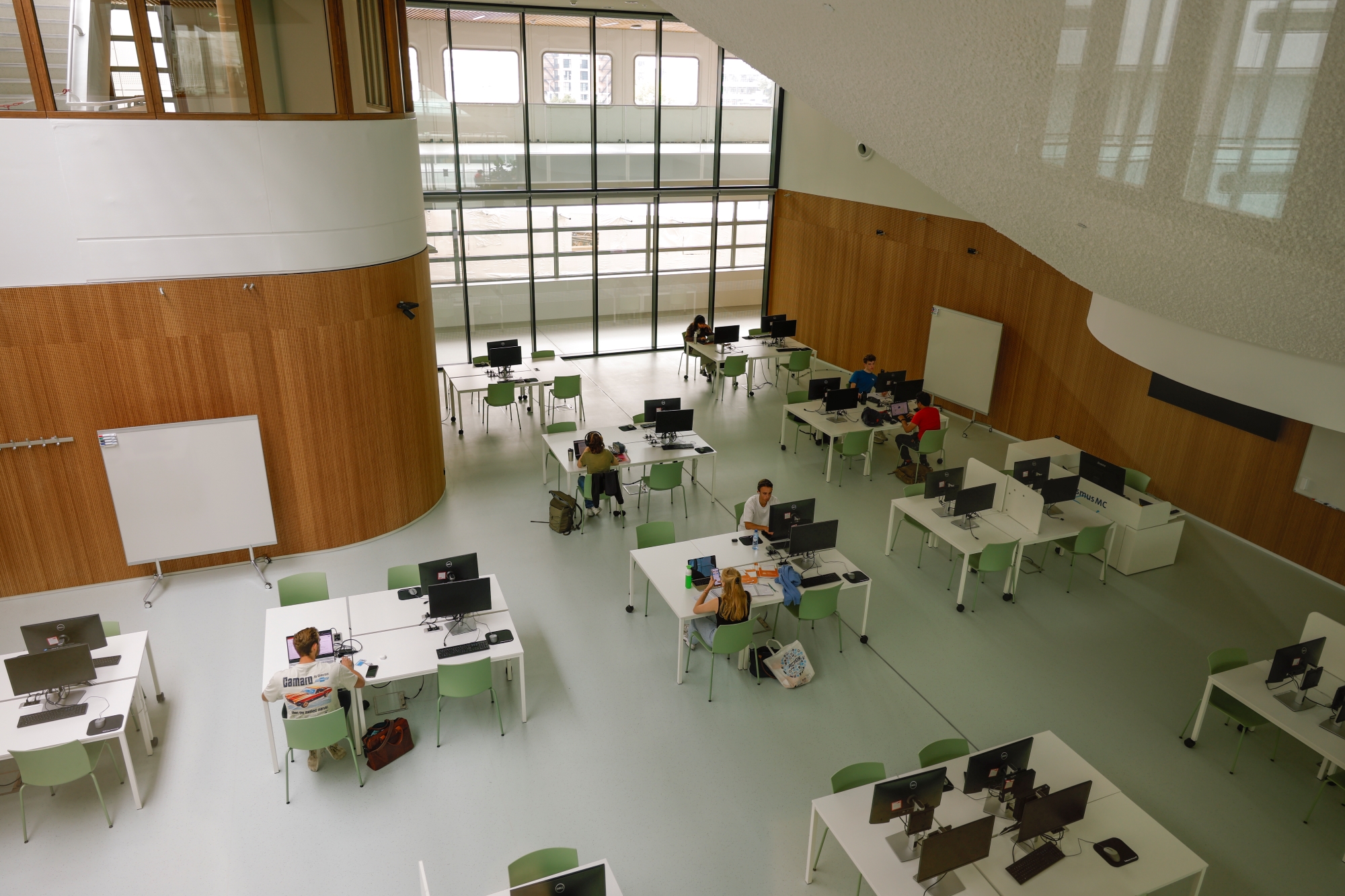
660 new study spaces in the Education Centre of Erasmus MC
Gepubliceerd op:-
Education
-
And really we should mention Delft and Leiden too. Because Erasmus University works a lot with Leiden and Delft. LDE that’s called – yes, that’s abbreviated too. You can take minors at those universities, and researchers conduct joint research. The partnership with Delft is a bit closer, and that is called ‘the Convergence’. Joint degrees are offered with the Erasmus MC, half of the study here and half there. And since everyone naturally wants to come to Rotterdam, Delft wants a campus in Rotterdam. How that will work is still to be seen. They are still looking for several million for that.
Is it a letter? And if so, which one?
Back to campus Woudestein, where most students will spend their time. A short history lesson. The first classes on campus Woudestein were given in 1968. It started with buildings A (Erasmus building), B (the library), C (Theil) and shortly afterwards H (Tinbergen building). The buildings initially had no names, only letters.
The administration and the aula were in the A building, the lecture halls (Dutch term is ‘college’) were in C, the library (bibliotheek in Dutch) in B, and the sports centre was in the S building. The H of the H building comes from ‘high-rise building’. Logical. The square between A, C and H was labelled ‘P’, from patio. When offices were later laid under the square, they together formed the P building, colloquially ‘the well’ (Dutch word ‘put’). Then in 2012, rector magnificus Henk Schmidt came up with the idea of giving the buildings names. The economists were based in H at the time, and they wanted to name the building after ‘their’ Nobel laureate and economist Jan Tinbergen. And so it happened. Only the letters were never changed so that they match the name of the building.
Read more
-
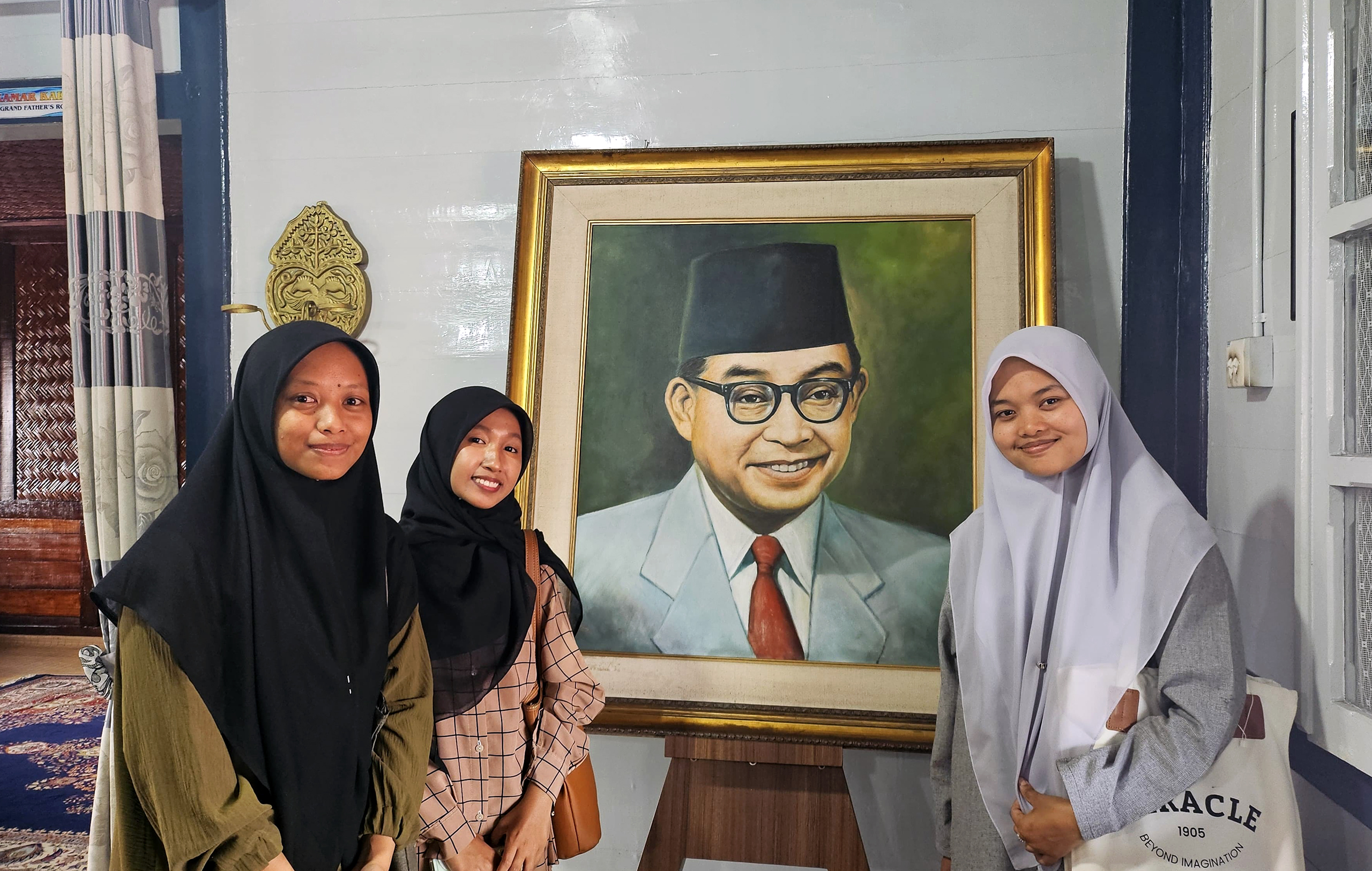
Hatta building in Indonesia: ‘Mohammad Hatta was tied to a tree in the yard’
Gepubliceerd op:-
Culture
-
Two buildings are named after a woman: the Van der Goot building and Langeveld. Willemijn van der Goot was the first woman to earn a doctorate in an economic study. She did so at the Nederlandsche Handels-Hoogeschool, the predecessor of Erasmus University. Henny Langeveld was professor of empirical sociology and later professor of emancipation issues in Rotterdam and the university’s first women professor.
The only non-western namesake is the Hatta building. Mohammad Hatta was a student of the Nederlandsche Handels-Hoogeschool. He was a founding father of the Indonesian state. Hatta opposed Dutch rule in colonial Indonesia and after independence was one of the most important figures in Indonesian politics, among other roles as prime minister.
Read more
-
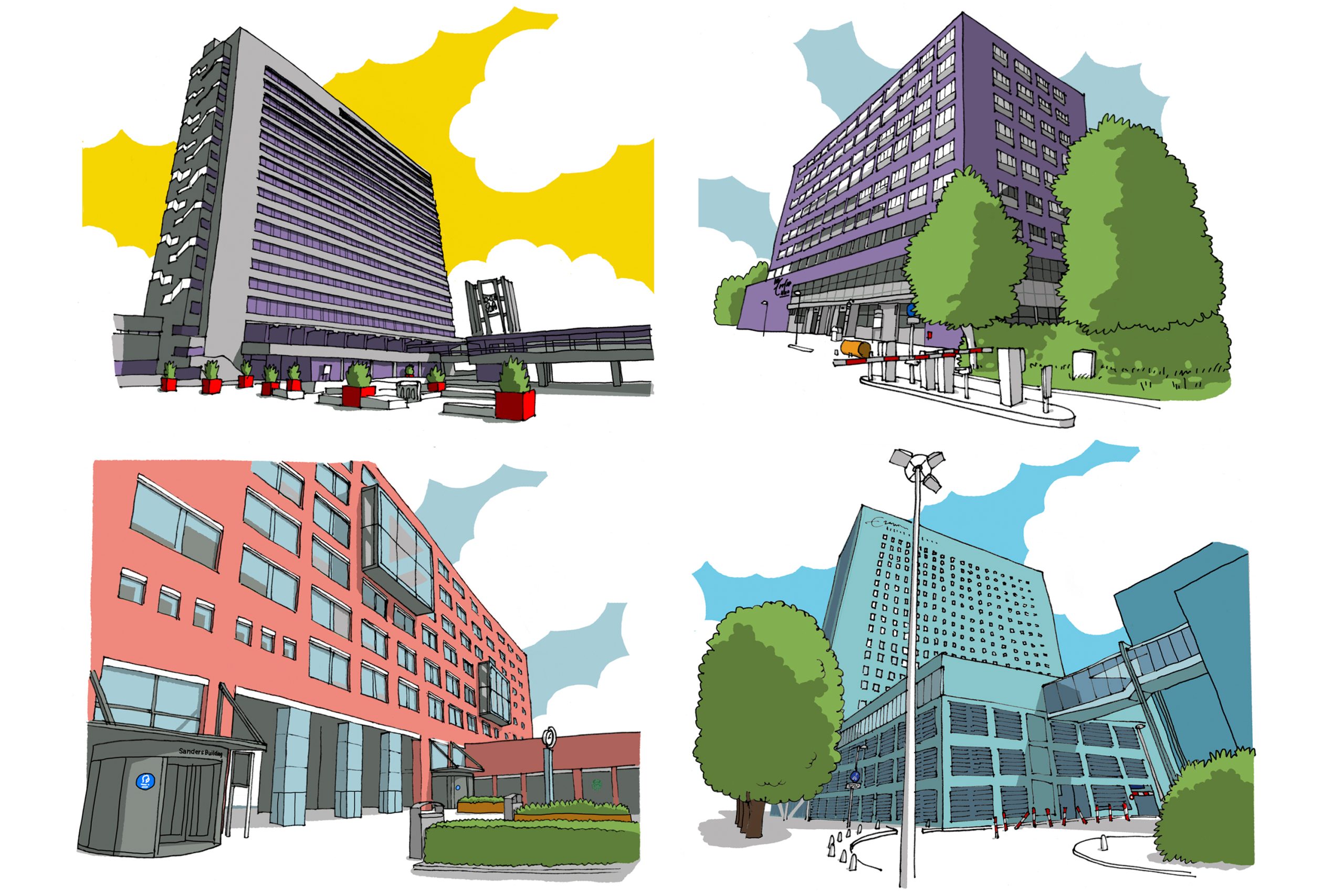
Which building is which? Guide to never get lost on campus
Gepubliceerd op:-
Campus
-
From hairdresser to bar, from supermarket to living room to de-stress
Enough history, back to the present. Woudestein has grown into a large village. Some professors are impossible to shift after their emeritus status (retirement for professors), but the campus also has babies, toddlers and preschoolers – and that’s not a joke about unruly students – because there is childcare. There is also a (pricey) supermarket, a campus bar (cheap beers), a hairdresser, a bike repair shop, a sports centre, various places to eat, student housing (Hatta and Xior), a library and more. The ‘mayor’ of the campus – the rector magnificus – has, like a real mayor, a chain of office.
On the ground floor of Langeveld you’ll find a living room where studying is forbidden, 95 percent of Woudestein is already intended for that. The Living Room is for relaxing. Yoga evenings, meditation sessions, reading groups, a pool table, board games, massage chairs – you really find everything there. Here is also the Personal Support Hub, an umbrella name for various forms of support for your wellbeing. There are drop-in hours with student psychologists, or workshops for, for example, dealing with exam anxiety.
Read more
-
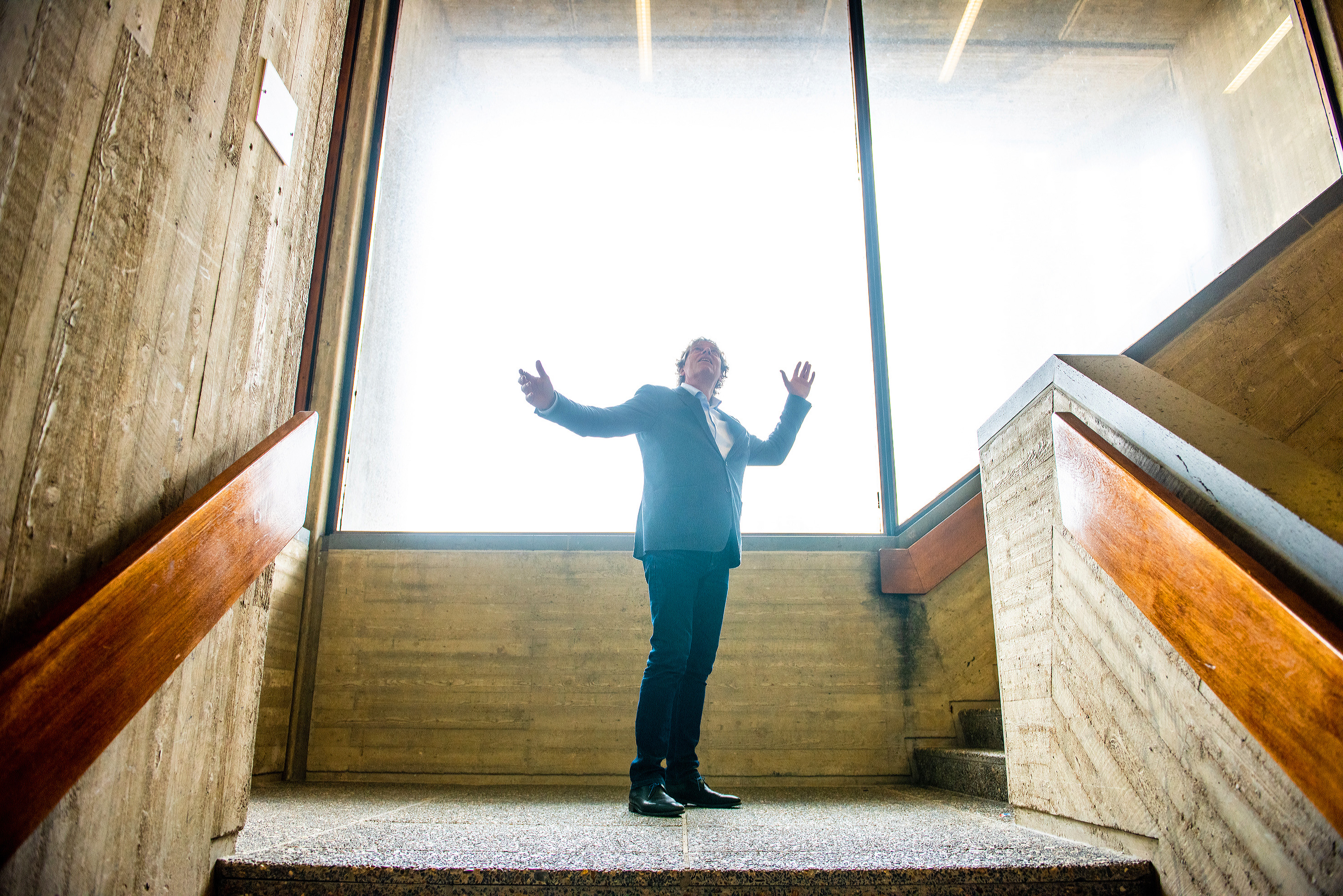
The royal toilet and seven other secrets about the massive concrete blocks on campus
Gepubliceerd op:-
Campus
-
Refurbishments and reshuffle
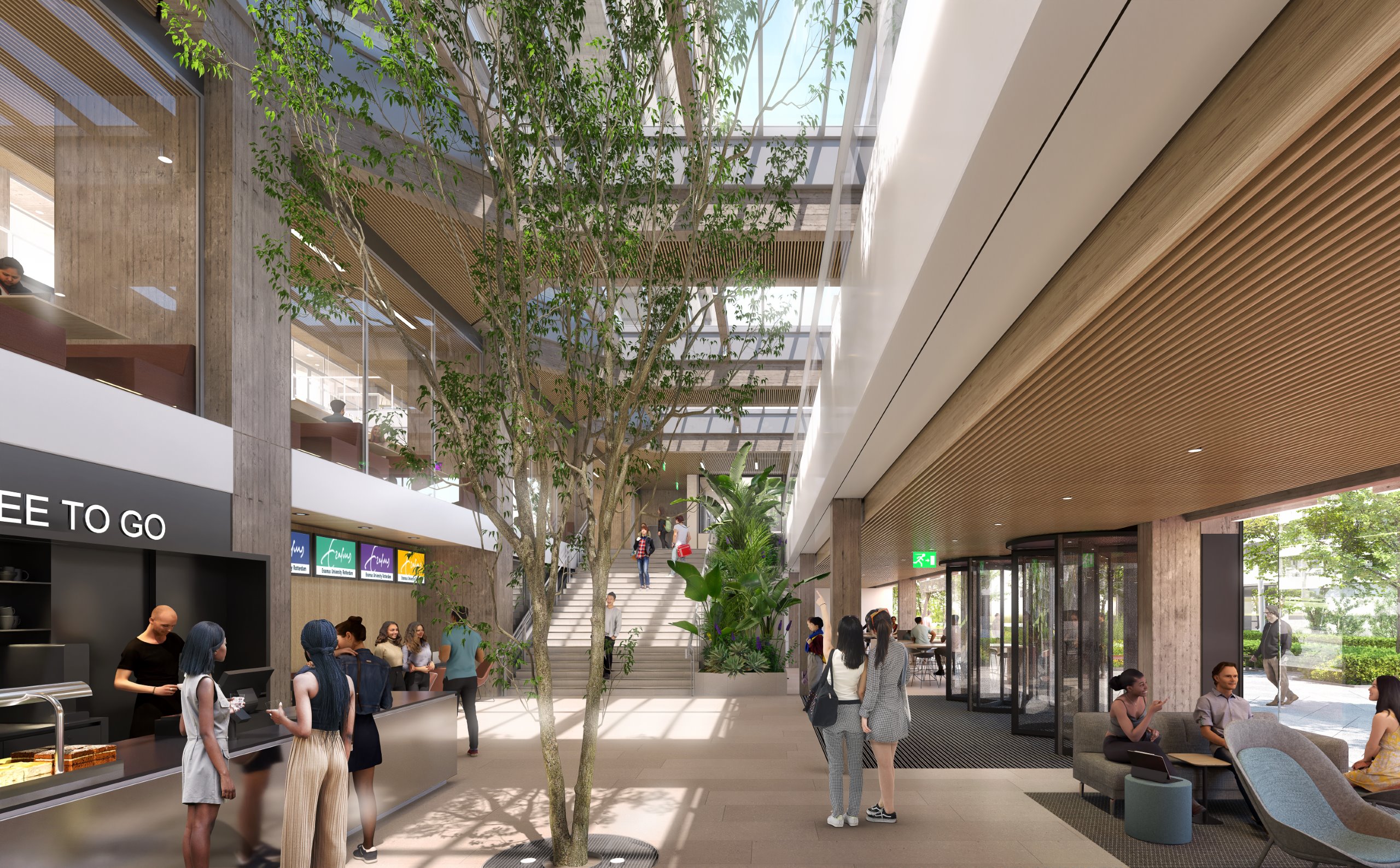
Rotterdam wouldn’t be Rotterdam if there weren’t constant building, demolition and renovation. The same goes for this campus. The Tinbergen building is currently wrapped in scaffolding, and has been closed for years. Some students therefore only know it as that tall tower that just stands on the campus. It is due to reopen in mid-2027 – but don’t hold us to that.
A lot will also be demolished in the coming period. The temporary V building has now really closed after ten years. F, G, Q and N will follow later this year. Next year these buildings will be demolished. The university management is still looking for ways to say goodbye to these buildings. University Council members have already suggested laser tag or paintball. Have you got any ideas? You can share them with the Real Estate & Facilities department.
Read more
De redactie
-
 Tessa Hofland
Editor
Latest news
-
Students and staff join the Pride March: ‘We must stand up for this community’
Gepubliceerd op:-
Diversity
-
-
EM TV newsflash: Too many internationals, too many information platforms and more collaboration with the military
Gepubliceerd op:Article type: Video-
EM TV
-
-
18-year-old student dies after ‘hazing party’ in France
Gepubliceerd op:-
Student life
-

Comments
Comments are closed.
Ad
Read more in Campus
-
Students and staff join the Pride March: ‘We must stand up for this community’
Gepubliceerd op:-
Diversity
-
-
After a second compensation payment, that must be it for students who missed out
Gepubliceerd op:-
Money
-
Politics
-
-
Far-right extremists use campuses to normalise their ideas
Gepubliceerd op:-
Politics
-