Ad

Minister Bruins fears American-style politics: ‘Give the education minister less power’
The Minister of Education should have less power, says Education Minister Bruins. He fears that populists will want to interfere in higher education after the elections. “Whole faculties could have been cut.”
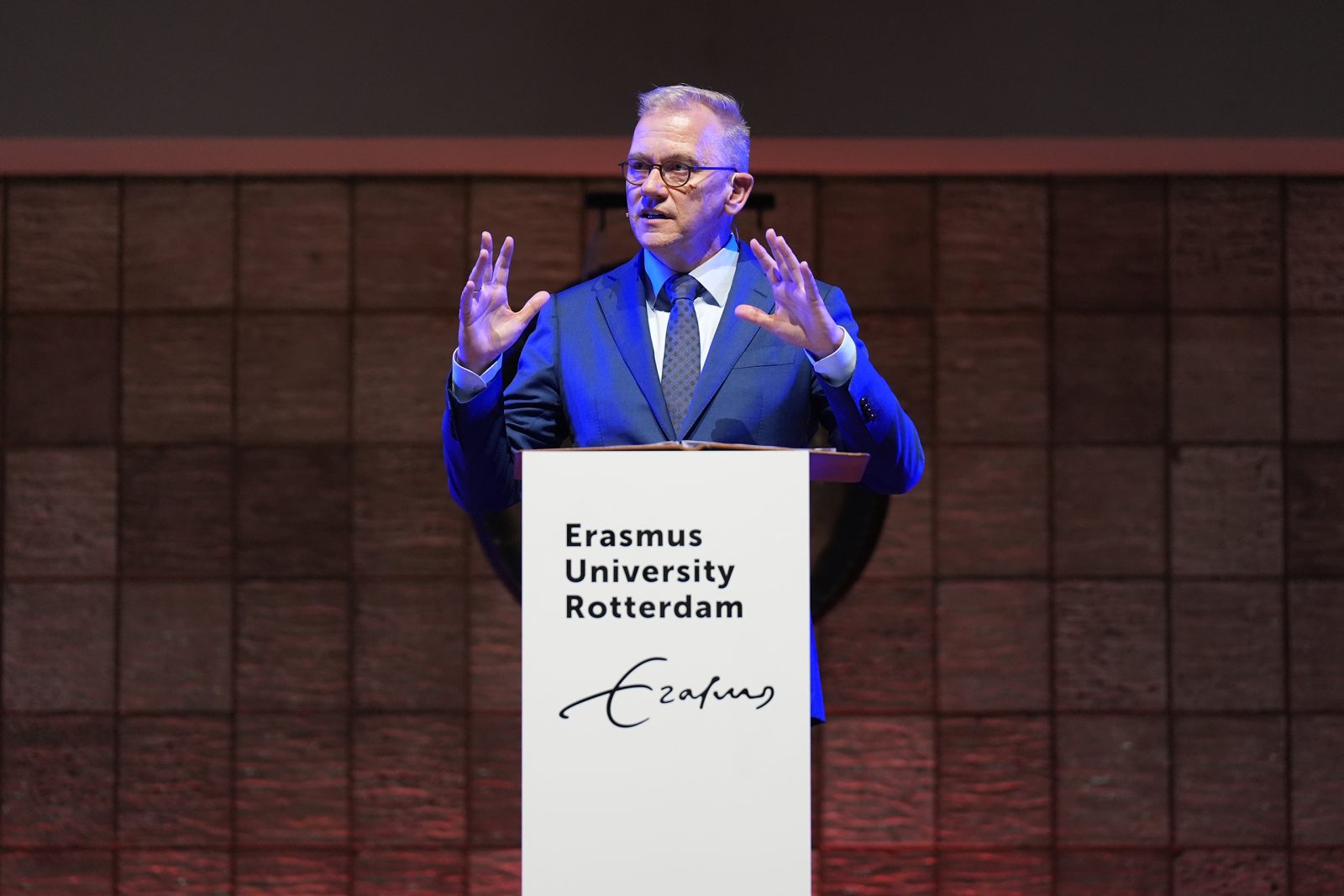
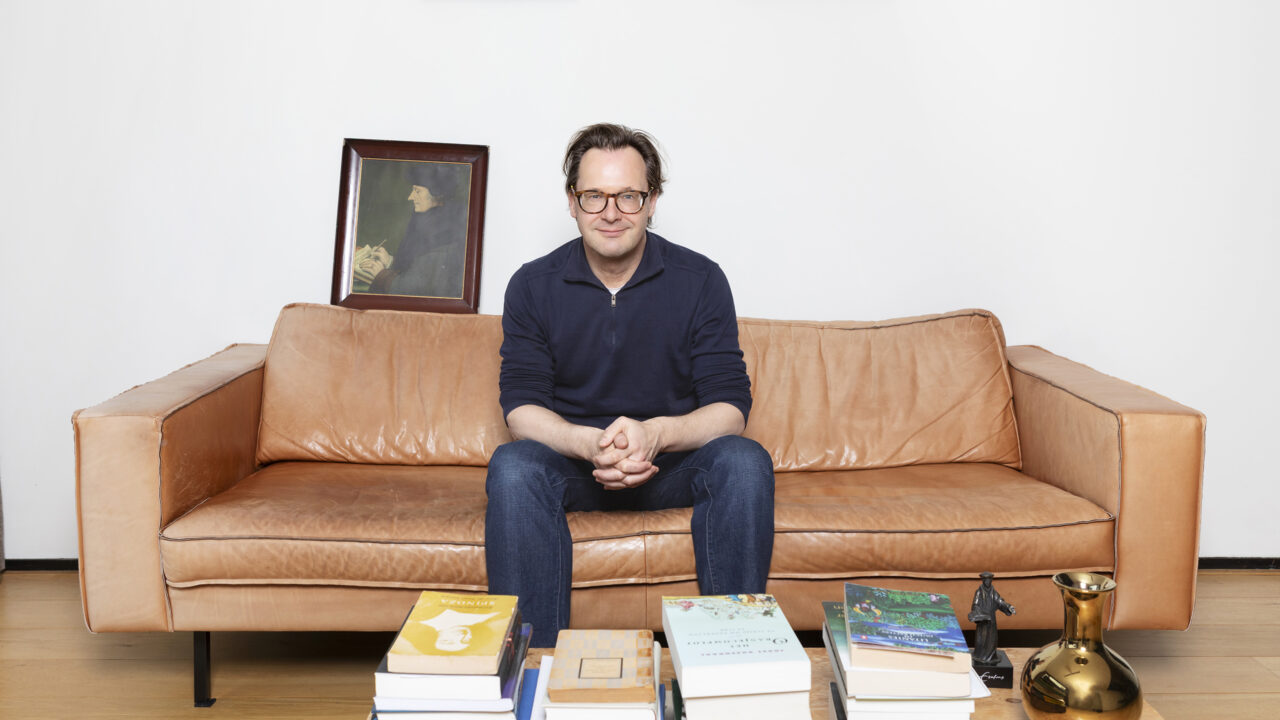
Minister Eppo Bruins at the Opening Academic Year 2024.
Image by: Arie Kers
Minister Bruins often referred to his own multi-billion cuts to education, culture and science as “painful” and “ugly”. Now he thanks his “opponents”: “Thanks to the opposition and other friends of education, the sector is in a better place than it was eleven months ago.”
After lengthy coalition talks, Bruins was asked to become Minister of Education. This came with deep budget cuts, such as the controversial slow-progress penalty for students taking too long to graduate. But he does not regret that “his” measures were softened or scrapped under pressure from mass protests and fierce political opposition.
‘Useless science’
Geert Wilders’ PVV has left the coalition, new elections have been called, and Minister Bruins now feels free to speak his mind about the populist trends in The Hague. “In this political climate, entire faculties or departments could easily have been axed. Because that’s then labelled as useless science.”
There is plenty to discuss since he took office, but Eppo Bruins rarely gives interviews. Last Wednesday, he made some time for HOP. He wants to warn against politicians who undermine the rule of law, he says, following a meeting about autonomy in higher education.
‘Within this cabinet, reasonable forces have ensured that our rule of law still functions properly’
How much power should a minister have in populist times?
Bruins: “Be careful not to exert too much control over higher education. Before you know it, politics starts to interfere. We watch America with concern, but I don’t think the Netherlands was all that far off. We also have people here who say the public broadcaster is biased and should be cut. And people who say science is just another opinion.”
You suggest that under your cabinet we came close to American-style politics.
“I’m not saying anything specific happened. But we now have political parties and a political climate in the Netherlands in which the value of serious science and the existence of a public broadcaster are no longer a given. Within this cabinet, reasonable forces have ensured that our rule of law still functions properly.”
And the public broadcaster was nearly axed?
“The fact that only one hundred million is being cut from the NPO brought a sigh of relief in Hilversum. Everyone knows that very different scenarios were also on the table.”
I didn’t hear any sighs of relief from the universities.
“But the nearly one billion euros in cuts to higher education were no stroke of luck. Those were very ugly cuts.”
Read more
-
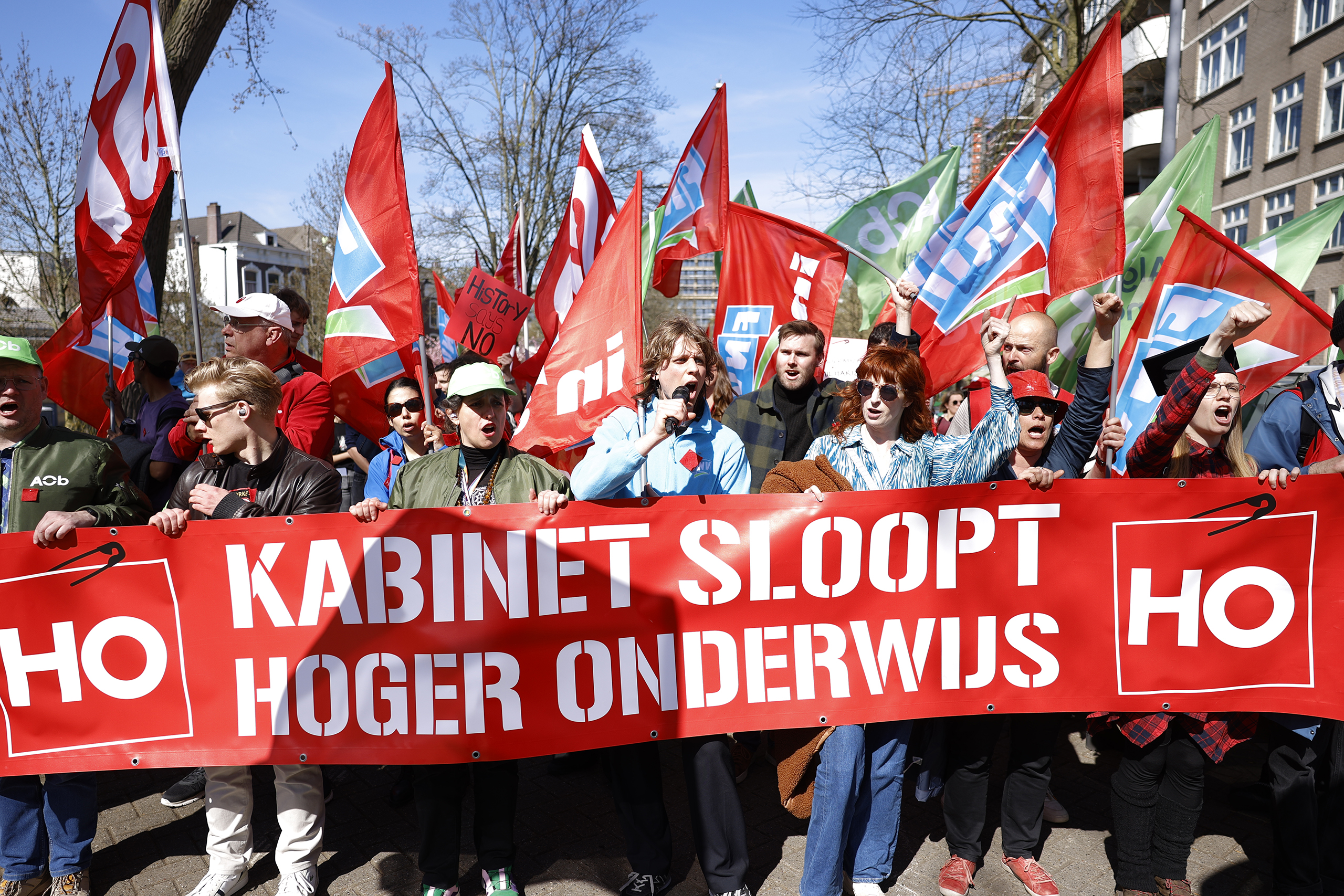
EUR staff went on strike in the city against the ‘Eppocalypse’
Gepubliceerd op:-
Protest
-
Universities are in the line of fire, you warn.
“That’s right, and that’s why we need to make it clearer that higher education and science serve society. During this caretaker period, I want to start that conversation.”
Why?
“Part of the political spectrum finds academic freedom, press freedom, freedom of education and the freedom of creative professionals mainly a nuisance. There’s a reason I always stress the rule of law in my speeches and debates. The rule of law is something we all share. It means taking the Council of State seriously, taking advisory councils seriously, taking parliament seriously, but also taking science seriously as a robust way of acquiring knowledge. There are parties that see this differently and simply say: I believe something, so we’re going to do it. If that voice becomes louder in the next elections, we’ll be very close to American-style politics.”
‘In theory, I can dismiss supervisory boards. I refuse to do that’
You say we should distrust politics, yet as a politician you’re responsible for cuts to universities. That’s quite a message.
“Politicians have to make choices about the future of the country. We’ve chosen, for example, to spend more on defence and to put more money into people’s pockets. That costs a lot and is partly funded by cuts to education and research. I think those cuts are executable, although there’s also an unpleasant measure in there concerning the educational opportunities scheme in secondary education. It’s now up to Parliament to decide whether to make more room for education and science.
“I’m very clear about this: politics is responsible for how we spend taxpayers’ money, but it should not interfere with the content. I want the minister after me to have less power, not more. I want less influence over the media authority. I want less influence over science policy. I want less influence over what a journalistic code should look like. Politics should have no opinion on those matters.”
Crossing the line
Over the past year, the limits have been tested regularly. Parties like BBB and PVV directly attack the public broadcaster or universities. But even a party like the VVD sometimes crosses the line, according to Bruins.
Claire Martens, the VVD spokesperson for higher education, asked him in April, following the pro-Palestinian “riots”, whether he could call university supervisory boards to account for their safety policies. After all, Martens reasoned, Bruins appoints those boards.
On paper, Bruins responded cautiously to the request, but he is now more resolute. “The suggestion was that I should take action against those supervisory boards. In theory I could dismiss them. Well, I’m just not going to do that. I refuse.”
Read more
-
Give researchers their own budget to reduce workload, says The Young Academy
Gepubliceerd op:-
Staff
-
If you want less power, will you stop appointing supervisors at public universities?
“You can indeed question whether it’s wise for the minister to appoint them. But these appointments happen through open applications, and I receive just one name to sign off. That process keeps me at a sufficient distance from the university. My signature is merely confirmation of a transparent procedure.”
‘You have to think very carefully about who you put in my seat’
Universities also see these parliamentary questions. Do they express concerns to you?
“No, not yet. But by now, people know that I would never in my life intervene in that way.”
You see yourself as one of the reasonable forces. In what way have you protected higher education from American-style politics?
“I do dare say I played a protective role. Not to overstate my importance. But I see myself as a guardian of the rule of law. It’s my mission to defend constitutional freedoms to the fullest, especially now that there are people in politics who see those things very differently.
“Look, what happens in America is very particular and is unlikely to happen in the Netherlands. We always have to think in coalitions. But even then, you have to think very carefully about who you put in my seat. That person won’t have the power of an American president, but you still have to reckon with the possibility that they may have very different views on science and journalism.”
And so we have the opposition to thank, you say, not your own cabinet, for the fact that coalition plans were not fully implemented.
“I said: thanks to the opposition and the many friends that education has. In the first two weeks, we as a cabinet immediately rescued the sector plans. And it was also government policy to show how extremely complex it would be to implement the slow-progress measure. Once again, thanks to the opposition and the many friends of education, including those in the cabinet, the starting position for the next minister is better than it was eleven months ago when I took office.”
De redactie
Latest news
-
Minister scraps ‘interest cap’ for students: plan much more expensive than expected
Gepubliceerd op:-
Money
-
-
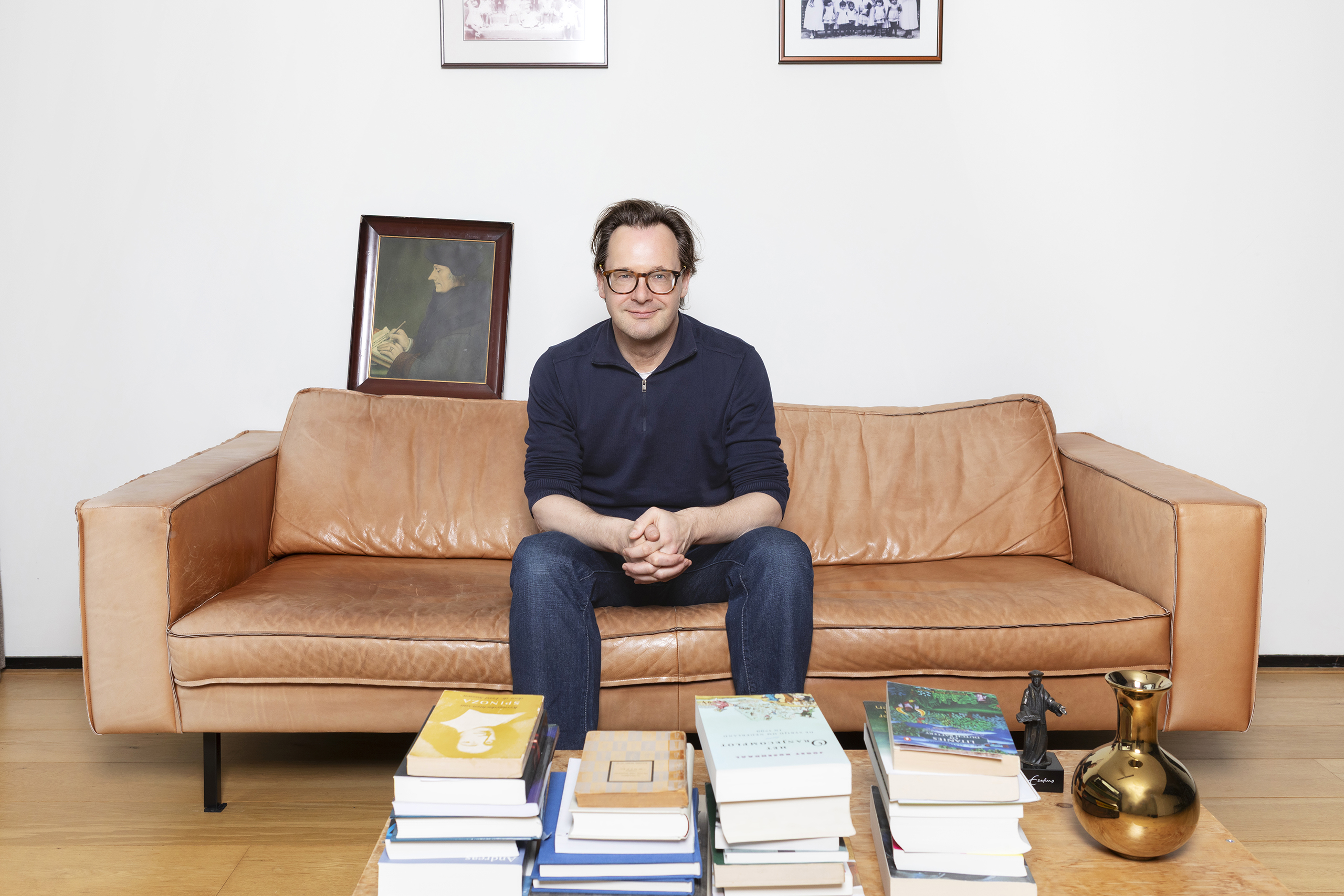
Clubs closing, expensive drinks and dancing with a matcha. How Rotterdam’s nightlife is changing
Gepubliceerd op:-
Culture
-
-
Powerhouses are like shoulder pads
Gepubliceerd op:-
Column
-
Comments
Comments are closed.
Ad
Read more in Education
-
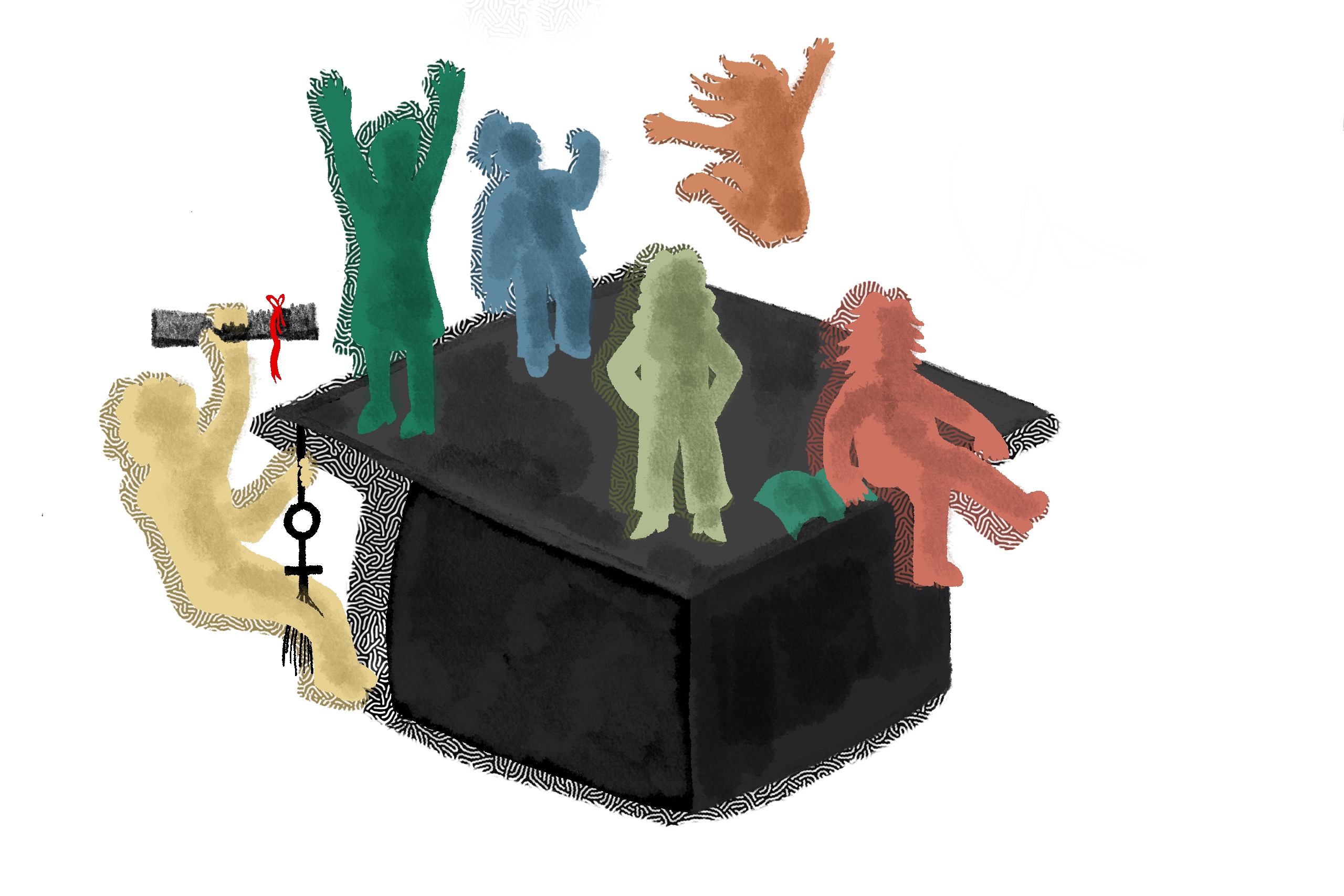
TU Delft may not favour women in admissions to courses
Gepubliceerd op:-
Education
-
-
RTL: More than half of master’s theses contain AI-generated text
Gepubliceerd op:-
Artificial Intelligence
-
Education
-
-
Education pioneer Etienne Augé: ‘Technology should give us more time for people’
Gepubliceerd op:-
Education
-