Committee on fossil industry: Collaboration must meet ‘moral minimum’ or stop

The university will implement rules to assess collaboration with companies in the fossil energy sector. This will determine whether partners meet a ‘moral minimum’, such as the goals of the Paris Agreement. Existing collaborations must be halted or revised.
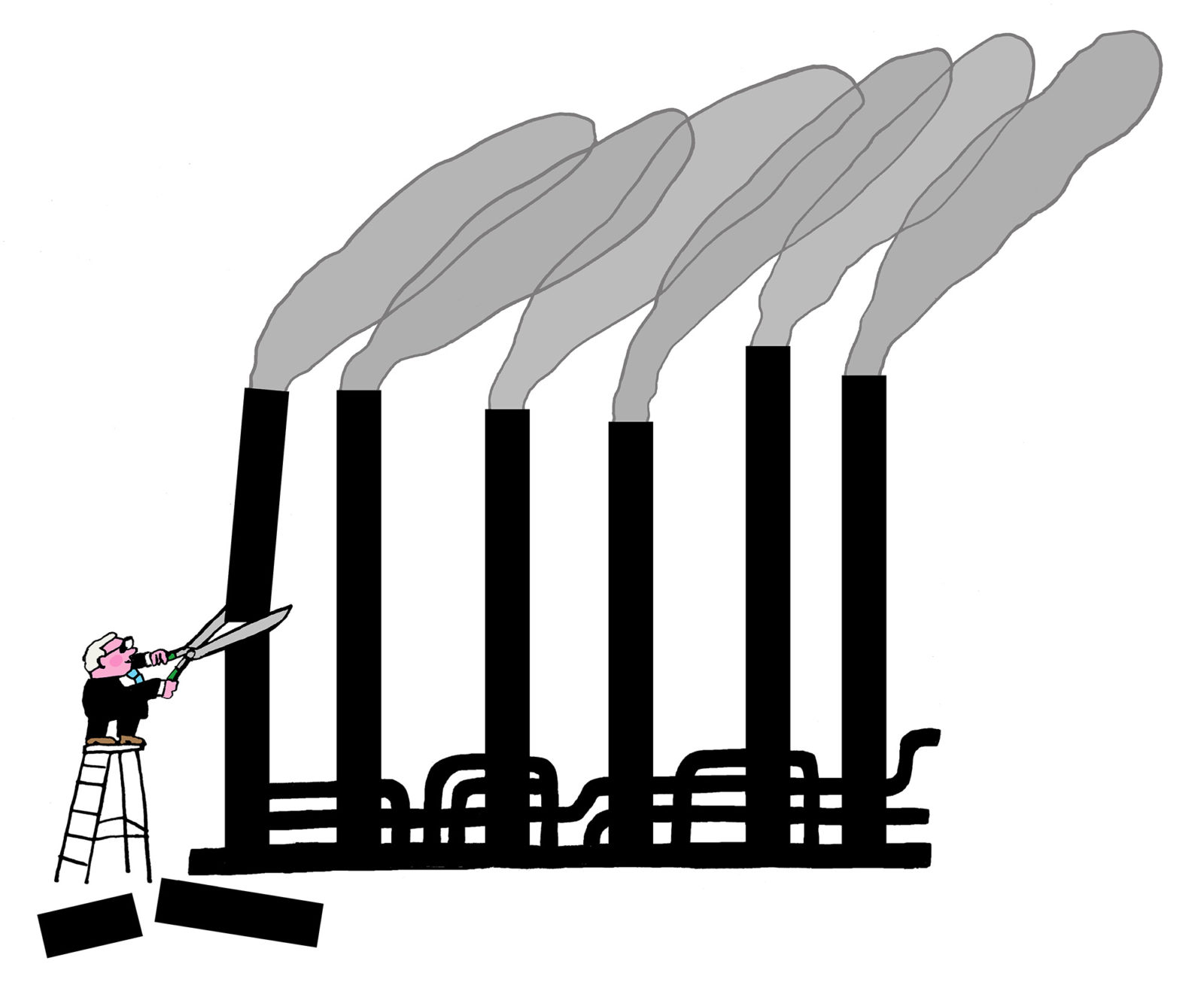
Image by: Bas van der Schot
The Committee of Experts on the Fossil Industry, chaired by strategic dean Arwin van Buuren, has explored in recent months the extent to which the university is willing to collaborate with the fossil industry. The conclusion is that collaboration remains possible, but under stricter conditions. A ‘verification framework’ has been developed to enable deans, researchers and student associations to evaluate whether a particular collaboration is still advisable. Academic freedom is central to this, as well as the gradual reduction of investments in fossil fuels.
No active lobby against
Using the verification framework, researchers can assess whether partners from the fossil industry meet the ‘moral minimum’. This includes, for example, the objectives from the Paris Climate Agreement. Among other things, it states that the fossil industry must achieve net-zero emissions by 2050 and contribute to limiting global temperature rise to a maximum of 2 degrees Celsius. Additionally, a fossil partner of the university must not actively lobby against climate policy and regulation.
For existing collaborations, the committee recommends that short-term partnerships be completed and long-term collaborations be reviewed. Parties associated with EUR, such as Erasmus Holding, RSM BV, Erasmus Enterprise and the Trust Fund, are also asked if they can uphold the same conditions.
Climate emergency
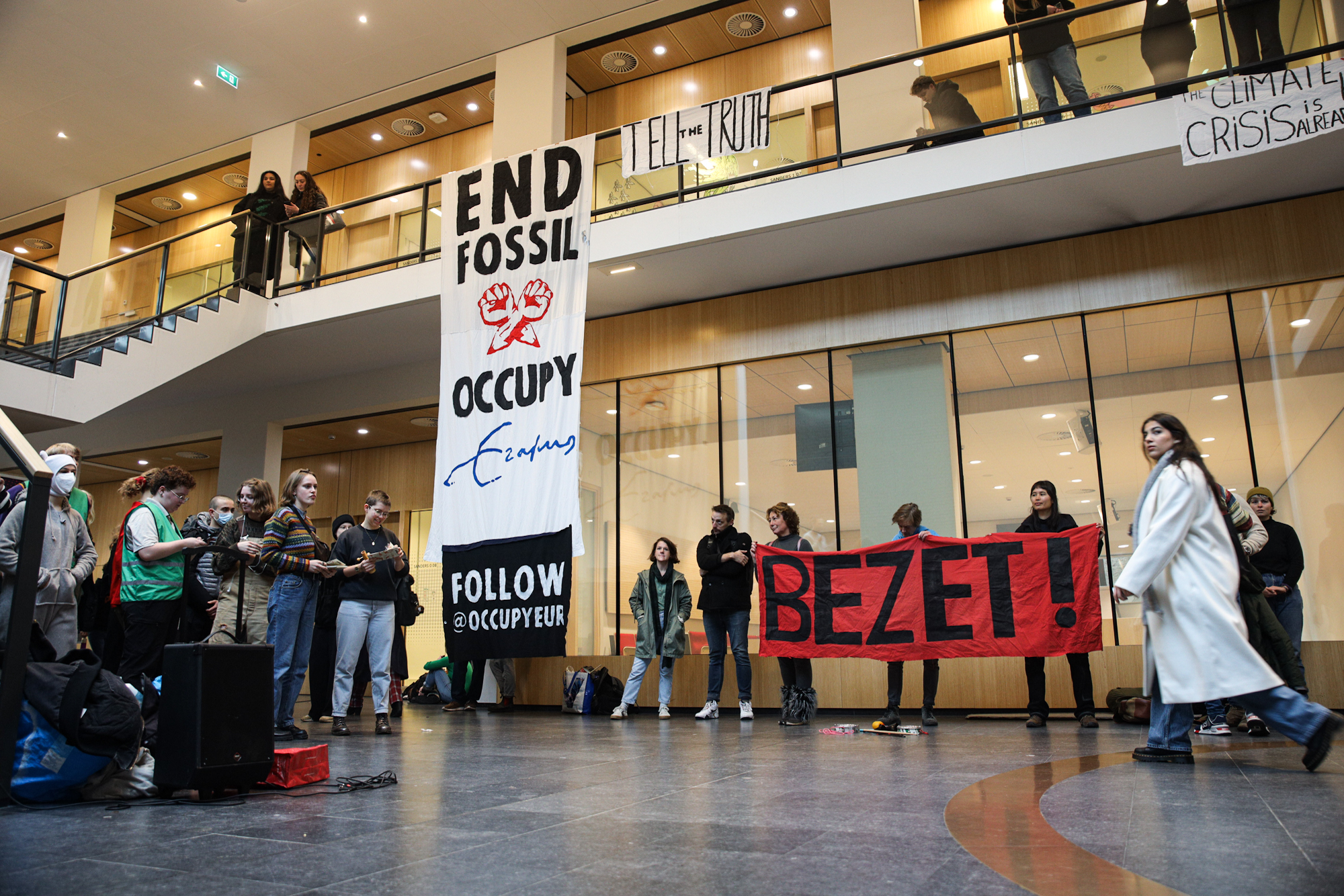
At the beginning of 2024, the university declared a ‘climate emergency‘ and organised several sustainability dialogues in response to student protests from OccupyEUR. During these dialogues, it was agreed that a committee would review the partnerships with the fossil industry. The committee has been dissolved following the publication of its advice.
Read more
-
Committee on the fossil industry begins work
Gepubliceerd op:-
Sustainability
-
De redactie
-
 Elmer Smaling
Deputy editor-in-chief
Latest news
-

Letschert gives nothing away in first parliamentary debate
Gepubliceerd op:-
Education
-
Politics
-
-

Away with the ‘profkip’, says The Young Academy
Gepubliceerd op:-
Science
-
-

House of Representatives wants basic grant for university master after HBO
Gepubliceerd op:-
Money
-
Politics
-



Comments
1 reactie
Comments are closed.
Read more in Sustainability
-
Campus food companies aim for 50 per cent plant-based by 2030
Gepubliceerd op:-
Sustainability
-
-

Students cut, cook and compost correctly during Sustainability Days
Gepubliceerd op:-
Sustainability
-
-
‘Waiting until everyone is on board is like swatting an elephant to death with a cotton bud, then burying it with a teaspoon’
Gepubliceerd op:-
Sustainability
-
Hatsue Nazira op 22 May 2025 om 18:14
At this point, we might as well just ban all collaboration. The so-called “moral minimum” is a useful way to describe what is basically a soft ban. Let’s be honest, no fossil fuel company will meet these idealised criteria any time soon. Instead of letting Erasmus students with strong values and the potential to make real changes from within the industry come and work there, we’re just shutting the door.
And for what? These companies aren’t going to disappear. There will always be people working there, but not us. Not the students who might actually question the way things are, or try to make a change. We’re giving that power to someone else, who probably won’t think twice about it or be as worried about it.
This decision shows the direction Erasmus is heading in: more moral posturing, more restrictions, higher costs and less global relevance. If we prepare students like this, we’re not just limiting their careers, we’re limiting how much we can achieve.