Chief Diversity Officer: ‘I think it’s very important to stay on course, especially now’
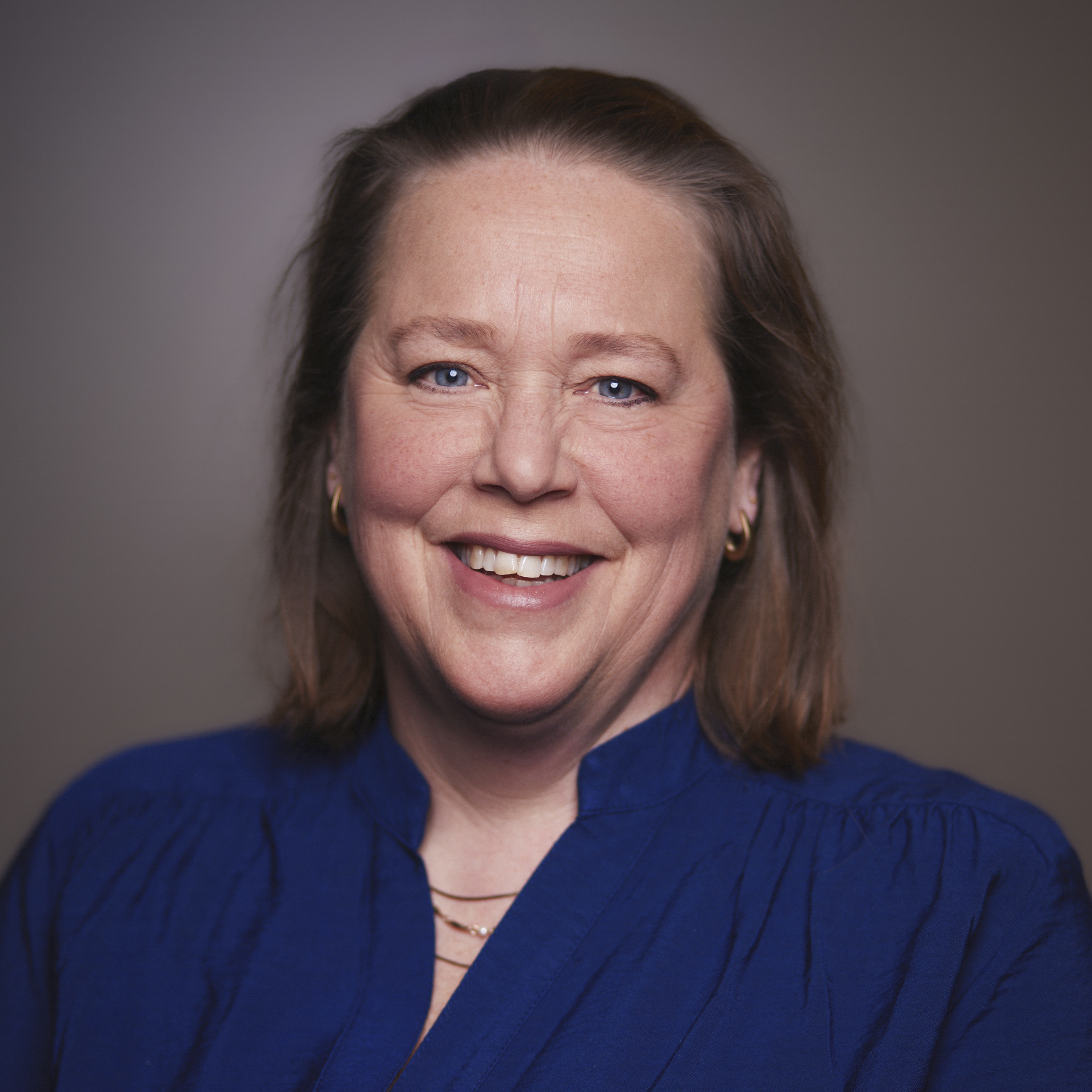
Jane Murray Cramm had only just been appointed Chief Diversity Officer when the campus was rocked by pro-Palestine protests, a new government with far-right ministers and the election of Trump. “I’m not worried, it just means that we need to counter events like this with our own perspective.”
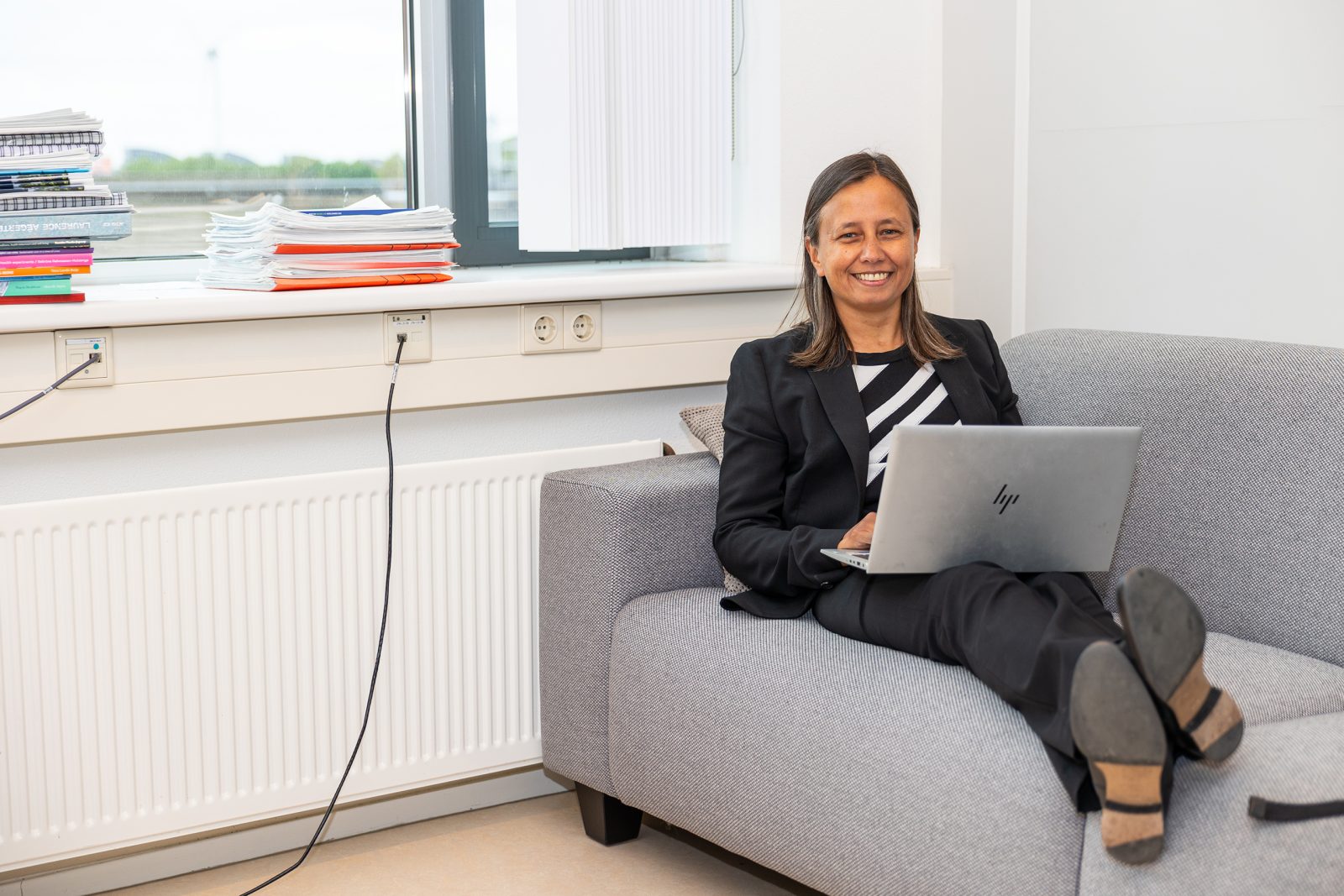
Image by: Pien Düthmann
“Working at the IDEA Center (IDEA stands for Inclusion, Diversity, Equity & Access, ed.), I learnt in the last year that the university is the world in miniature”, Cramm says. “As one of the few organisational units to have feelers in every service department and faculty and with the student body, too, we can see that international events are having an impact on our people. I hadn’t really realised it before, but it’s exactly this that makes my work so rewarding. Consider Trump and his measures against diversity policy at American universities*; they’re affecting the Netherlands and this university as well. But I’m not worried; it really just means that we need to counter events like this with our own perspective and to continue to see the value and importance of diversity.”
Jane Murray Cramm, Professor of Person-Centred Care at the Erasmus School of Health Policy and Management (ESHPM), replaced Semiha Denktaş as the university’s Chief Diversity Officer (CDO) on 1 April 2024.
When asked why she had been chosen, she simply replies: “I checked all the boxes.”
✅ She grew up in Eindhoven and lives in Hoensbroek, outside the Randstad
✅ Her father is of Indonesian descent and was a car mechanic. Her mother sold shoes at the Bijenkorf department store. Cramm was the first person in her family to go to university
✅ She is married to a woman and has three children
✅ She is functionally disabled after a severe accident
Staying on course
Besides Trump’s anti-diversity policy, the Netherlands is facing major cutbacks imposed by the Schoof government. Universities are being forced to make tough choices, possibly at the expense of diversity policy as well. The University of Groningen has already closed its diversity office.
Cramm is not afraid that similar choices will be made in Rotterdam. “The Executive Board is very supportive. In its new strategy, the university is transitioning from an impact university to an engaged university. Of course I’m biased, but I don’t think this will be possible without regard to inclusion, diversity and accessibility. How can a university be engaged without knowing what’s happening in society? You need to connect with everyone, not just rich, leftist or theoretically-educated people.
‘Then we shouldn’t work with America’
“I also think it’s very important to stay on course, especially now. I don’t see this as a problem either. If there are signs that America doesn’t want to work with universities that have IDEA centres, then we shouldn’t work with America. It hasn’t come to this yet, but I think that Erasmus University Rotterdam in particular needs to show its ambition to become an engaged university and see it as an opportunity to raise its profile in this area.”
Real change
Image by: Pien Düthmann
Cramm comes across as calm and modest and chooses her words very carefully, but she certainly doesn’t leave things unspoken. “I start to get interested when things get difficult. In my research on shared decision-making between different patient groups and doctors, this happens when conversations become more strained. I still find it hard to explain a problem to doctors myself, so how difficult must that be for people with dementia or intellectual disabilities? How do you have conversations like that? I don’t think it’s enough to just write an article about my research; I want to ensure real change. That’s also what I’m thinking about when I look around on the campus. I did the same in my previous role as social safety officer and faculty diversity officer at the ESHPM.
“The university’s systems can be very sluggish sometimes, along the same lines as the Dutch Tax and Customs Administration but without all the allowance scandals. People sometimes find it too easy to hide behind systems. For example, when students with disabilities ask the faculty for something and are then told: ‘sorry, we don’t do that; you need to contact REF’, they may not realise that REF is the university’s facility centre. Examples like this made me think that there must be a way to improve the situation.”
Sofa in the office
Cramm knows from her own experience that you ‘sometimes have to go up against these systems a bit’. “I had a very serious accident when I was 20 – I was run over by a truck. Afterwards, I was in a medically-induced coma for a while and then spent one-and-a-half years learning how to walk again. Some 40 operations later, I’m held together by steel pins.
“Because of my accident, I’m often tired and in pain, which is why I wanted a sofa in my office. That way, I can lie down for a while every now and again. However, the rule is that we’re all entitled to a certain amount of workspace and that isn’t big enough for a sofa. After a lot of fuss, my manager said: ‘I don’t care what anyone says, we’re putting a sofa in here.’ I don’t know if I’ll be able to solve every issue, but people can approach me about issues like this as well.”
Not on the barricades
Cramm does not see her role as CDO as one that puts her at the forefront of a situation or at the barricades. “I want to resolve issues behind the scenes, making the community just a little bit stronger – for example, by organising a difficult conversation between people who are in danger of becoming polarised. It makes me happy if I’m able to get them to come together and help others.”
‘There are holes in the system where support for certain groups is concerned’
Amongst other things, Cramm wants to get the university to improve the care it provides to employees with disabilities and the LGBTQ+ community. “There are holes in the system where support for these groups is concerned. Employee surveys show that job satisfaction is lower and work pressure higher among these people, so there’s clearly a problem. Whether that’s a blind spot on the part of the organisation or the culture in a department is what we’re trying to identify, using round-table discussions to identify needs and other tools.
Discussing gender-neutral toilets
“I think that opinions are more polarised now, partly because of Trump. The discussion about gender-neutral toilets, for example, is one we’re all familiar with now. In my opinion, a university should be the ideal place to engage with each other – not in a debate, but real dialogue, so not just presenting your own point of view alongside someone else’s but coming together in a two-way conversation.
“This is a problem for both sides, because I’m also being told that students with a right-wing perspective aren’t able to make their voices heard, that many lecturers are quite left-wing and that lecturers laugh about ideas that are different to their own. That’s a shame, of course. However, I also know lecturers who for example stop their lessons when the subject of pronoun use arises and say, ‘at last, something worth talking about’ and allow students to discuss it. Vice versa, emotions can run high even in professional discussions about market forces in health care. I believe that the IDEA Center can help provide tools for conversations like these, to both staff and students.”
Opportunities board game
While Cramm is not afraid that the IDEA Center will fall prey to the cuts, she knows what the university would miss out on if it did. “If we want to become an engaged university, we can draw on our wealth of experience to help make this happen. For example, we already know plenty about inclusive education and outreach to secondary schools in underprivileged neighbourhoods in Rotterdam. We’ll be launching a handbook based on our experiences soon and have also developed tools like the opportunities board game.
“We want to use these assets to put ourselves on the map more. Everyone says they want to be inclusive and reach out to other groups. That’s all very well, but how? Our researchers often ask themselves similar questions: how can we reach all Rotterdammers? Which method should we use? One of our junior researchers is due to start a PhD programme on this subject in early September.”
For Cramm, diversity and inclusion are about more than just a rainbow zebra crossing or rainbow flags. “I want to talk about the big picture of an inclusive and engaged university. I believe this is the best way for our university to become really meaningful to all the different groups in Rotterdam, as well as nationally and internationally. That would be great.”
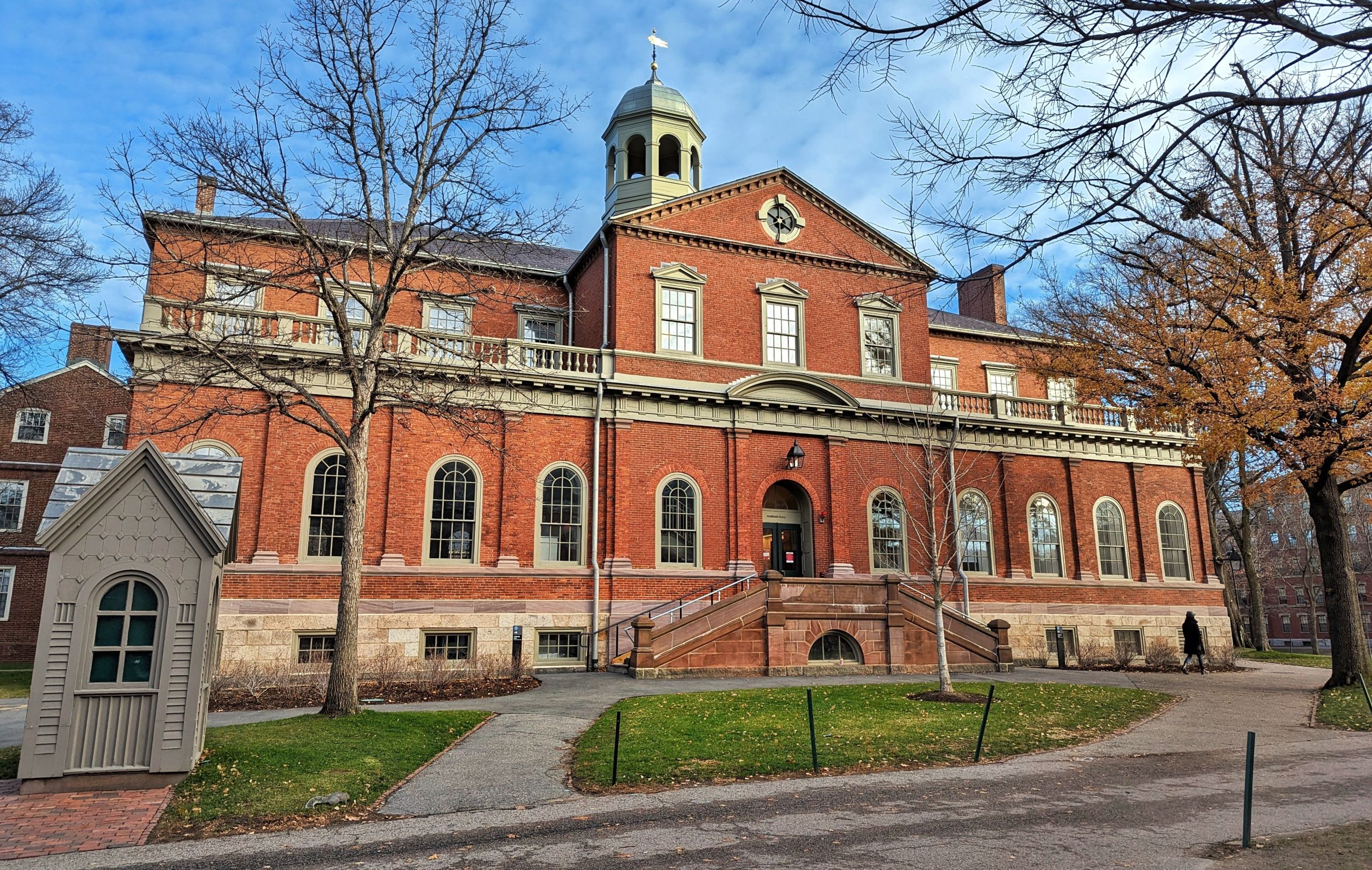
* After this interview, it was announced that Harvard is changing the name of the diversity office to Community and Campus Life department. EM asked Cramm about this and she responded in writing: “Harvard emphasised its ongoing commitment to strengthening community spirit, connecting students, and supporting first-generation and low-income students. At first glance, these goals appear largely in line with what is understood under diversity, equity, and inclusion (DEI).
“Nonetheless, a name is not just a label – it provides direction, creates expectations, and establishes accountability. An explicit reference to DEI holds an organisation publicly accountable for these issues. By opting for a more neutral name like ‘Department of Community and Campus Life’, there is greater room to change course without it being immediately noticed or questioned. This offers flexibility but also makes it easier to drift away from the original mission.
“It is concerning that terms such as diversity, equity, and inclusion have become so contentious within certain circles. There seems to be confusion over what DEI stands for: it does not concern preferential treatment or identity politics, but rather the removal of structural barriers, the creation of equal opportunities, and the building of a safe, accessible university where all students and staff feel seen and supported. At the IDEA Center, we are here for the entire EUR community, but the values we uphold remain explicit: Inclusion, Diversity, Equity, and Accessibility – IDEA. And we remain firmly committed to these principles.”
Read more
-
Harvard changes name of diversity department
Gepubliceerd op:-
Diversity
-
De redactie
-
 Wieneke Gunneweg
Editor-in-chief
Latest news
-

Away with the ‘profkip’, says The Young Academy
Gepubliceerd op:-
Science
-
-

House of Representatives wants basic grant for university master after HBO
Gepubliceerd op:-
Money
-
Politics
-
-

Company takes a huge chunk of the student finance of at least 350 internationals
Gepubliceerd op:-
Internationalisation
-


Comments
Comments are closed.
Read more in Diversity
-
Who is your favourite female professor? ‘There should be more women in professor roles’
Gepubliceerd op:Article type: Video-
Diversity
-
EM TV
-
-
UN calls on the Netherlands to improve the position of women in education
Gepubliceerd op:-
Diversity
-
-

New diversity officer: ‘I am very aware that I have to learn from others what discrimination does to you’
Gepubliceerd op:-
Diversity
-