Ad

A club night as an antidote: queer collective Klauw is back
The club night of queer collective Klauw, originally founded as a student initiative, is back. Students find something they often lack at university: a place where they belong. And music that makes you want to shake your hips.
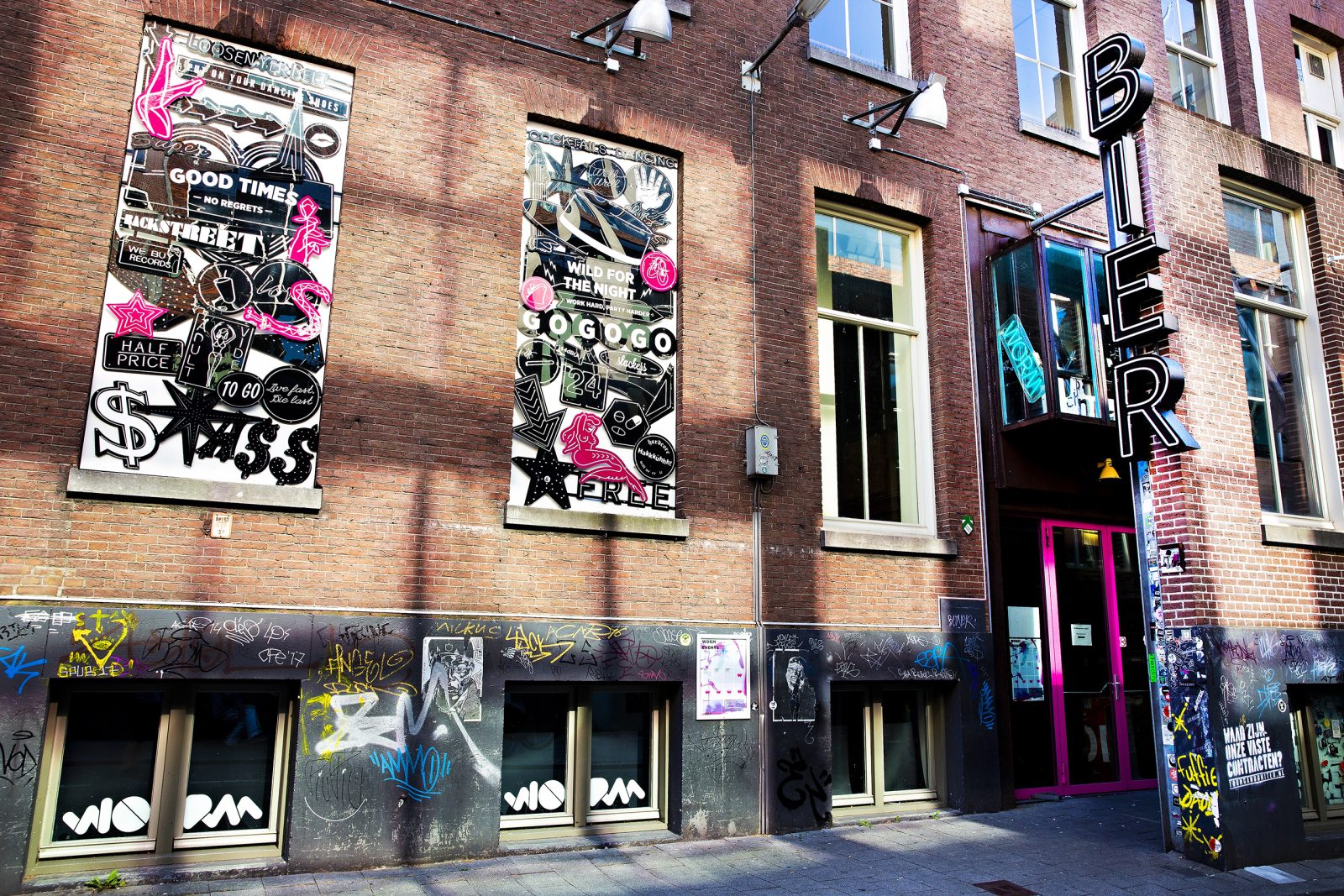
WORM the location of the Klauw event.
Image by: Rotterdam Make It Happen/ Iris van den Broek
This article was altered after publication. Read the justification at the bottom of the article.
The MCs are welcomed by an ecstatic crowd. One wears a vinyl dress, the other a thong and fluffy nipple covers. “Tonight we celebrate the return of Klauw”, proclaims the latter. They are members of the Klauw club collective, established in 2018 by a group of students. The collective’s parties attracted students who wanted to explore and celebrate parts of themselves that were not always welcomed at university. In 2023, the collective took a break. On Saturday 3 May, Klauw returned with a party at Worm.
With a large and a smaller dance floor and nine DJs, Klauw goes all out for its audience, which comprises people who question the norm. The collective is queer in its organisation, music, volunteers, and visitors, with trans people of colour as the primary target group. Many students are present. They are relaxed and surrender to the sweet atmosphere in the sold-out club. Here they find something they don’t have at university: a place where they belong.
Shouted at in the lift
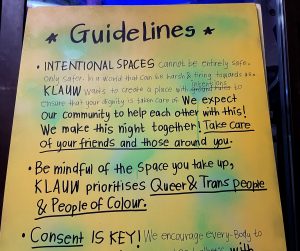
The guidelines for the night.
Image by: Giselle Maria Timmers
“I feel normal here, I can express myself without standing out too much”, says a 23-year-old law student. In his studies, he quickly feels ‘too unique’, but among the vibrant and non-conformist clubgoers, he feels included. He stands outside where man-high barriers have been set up to create a smoking area on the pavement. The crowd barriers obscure the view from the Witte de Withstraat. The street, with its lively atmosphere, can only be heard.
Upon entering, the floor angels remind everyone of the house rules: give each other space, look out for one another, ask for consent, no cameras. The floor angels, identifiable by their fluorescent armbands, are volunteers who monitor the safety of the evening. They enable him to dare to show a different side of himself tonight. “Here, I can express my feminine side more, especially as a Black, queer person.”
‘Here I feel that I can take up space, and I will take that with me outside this fence’
At the university, there isn’t typically space for that. “A group of boys called me a faggot in the lift at Polak”, the law student recounts. His partner a 24-year-old clinical psychology student and friend who studies MISOC recognise that feeling of insecurity. Klauw represents for them a test drive in identity and essential self-confidence. An evening where they can experiment with self-expression. The psychology student says: “Here I feel that I can take up space, and I will take that with me outside this fence.”
Techno with a little Nicki
The three friends have sat down outside on the ground with their backs against a window. One friend leans on another friend’s shoulder and closes her eyes. Behind them, the party continues, vibrant and thumping.
Where Wunderbar usually is, the tables have been pushed aside tonight to make space for the dance floor. The techno beat is fast, mixed with snippets of Nicki Minaj and Beyoncé. It is music that makes you want to shake your hips and kiss while jumping. The dancing people wear pink miniskirts and bikini tops, regardless of the expectations surrounding body and sexuality that come with such revealing clothing outside the club. “Come as you are, and let others do the same”, states one of the house rules.
Niche community
This is what organiser Nychenda (28) had hoped for: “People who are completely in the moment.” As one of the eight members of the Klauw collective, she has been involved since its inception in 2018. At that time, she was still studying at Erasmus University College. Her disappointment with the lack of diversity at university led her to the queer nightlife. There she found her community. “It’s a niche community that we cater to, and it’s okay if not everyone finds that important or understands it.”
Within this community of trans people, queers of colour, and gays, news spread like wildfire that Klauw was throwing a party again. “Over the past few years, we have received many responses from people saying, ‘When are you coming back?’ And we were excited and energised to return”, says Merano (28), a member of the collective.
Blonde culture
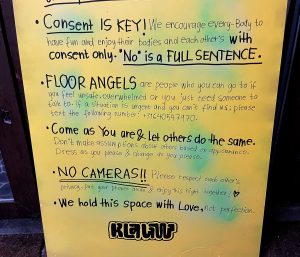
Image by: Giselle Maria Timmers
A 23-year-old medical student has sheltered outside in a corner with her cigarette. When going out, she values conversation and socialising more than dancing. The nightlife is an escape from the ‘blonde, conservative culture’ of her medical studies. “Teachers and patients have a traditional idea of what a doctor looks like, and I fall outside of that”, she explains. With piercings in her mouth, nose, eyebrow, and cheekbone, she stands out in the hospital; here, she is one of many.
Meanwhile, the tempo inside picks up. The DJ in the main room heralds the last hour. Flashing white lights alternate with blue and pink projections. On the dance floor, people weave through one another. On a platform against the wall, they stand swaying their hips with closed eyes. They shine with their looks and soak up the final moments.
Parties like Klauw are rare in a city where more and more clubs are closing. This moment is an antidote for people out here who are not allowed to be themselves without a backlash.
The law student says, in a hoarse voice: “That this exists brings so much joy for people who need that enjoyment badly.”
Justification for article amendment
This article has been amended post-publication; the photos and names of the interviewed partygoers have been removed. This decision was not taken lightly, and below is the reasoning behind it.
The original article was taken offline for four days, as intense commotion arose surrounding the article the day after its publication. Although the editor-in-chief and desk editor assessed that the author of the article acted in accordance with the guidelines that EM employs regarding interviews and that the individuals quoted were able to check the article for factual inaccuracies prior to publication, we were extremely shocked by the severe reactions the author received post-publication. Even after she clarified that she is not ultimately responsible for any potential modifications or removal of information on the EM website, which is the responsibility of the editor-in-chief, the criticism persisted. Neither a discussion nor agreements between the organisation and the editor-in-chief provided our student freelancer with relief.
Of course, the EM editorial team, as a journalistic medium, is used to dealing with criticism, but it also has a responsibility towards its staff. Therefore, the editorial board decided to temporarily take the article offline so that everyone could cool down. It has always been the intention to post the article online again, in this case after the removal of the photos and names of the interviewed attendees at the party. The names of the organisers remain in the article, as they consented to an interview prior to the party and were able to check the text for factual inaccuracies before publication.
These amendments align with EM’s journalistic principle that a publication should minimise harm. In this case, this principle works both ways. Firstly, EM aims to prevent any chance of personal harm to the interviewees. Secondly, EM is committed to the safety and wellbeing of its staff, which was at stake here.
Furthermore, the editorial team is convinced that, in addition to being a well-crafted and beautifully written story, this is also an important narrative that fits within EM’s mission to provide a comprehensive picture of student life in the broadest sense.
This combination of factors means that the story will be published online again today in this amended version.
Wieneke Gunneweg
Editor-in-chief Erasmus Magazine
Lees meer
-
Aksh finds strength in their clothing
Gepubliceerd op:-
Dress code
-
De redactie
-
 Giselle Maria Timmers
Columnist
Latest news
-
New code of conduct for science emphasises ‘distinctiveness and autonomy’
Gepubliceerd op:-
Science
-
-
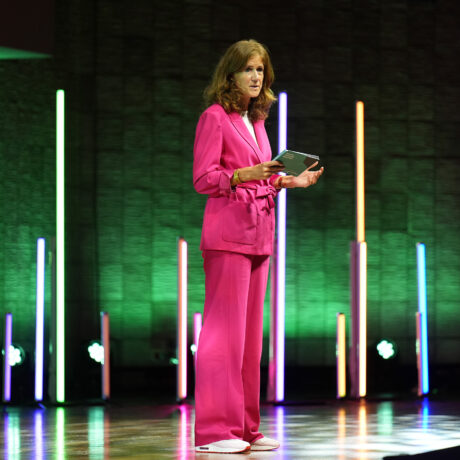
Executive Board regularly uses AI for speeches and LinkedIn posts
Gepubliceerd op:-
Artificial Intelligence
-
Governance
-
-
TU Delft may not favour women in admissions to courses
Gepubliceerd op:-
Education
-
Comments
Comments are closed.
Ad
Read more in Culture
-
The emotions of science (and scientists) are palpable during theatre performance DOPE
Gepubliceerd op:-
Culture
-
Science
-
-
With this theatre show, cybersecurity expert Bernold Nieuwesteeg hopes to finally wake everyone up
Gepubliceerd op:-
Artificial Intelligence
-
Culture
-
-

Art workshops and dance performances play important role during inaugural lecture The art of healing
Gepubliceerd op:-
Culture
-
Science
-