Students ‘of all levels’ learn how to deal with climate change challenges through dance and philosophy

Researchers Ginie Servant-Miklos and Rutger Engels are running a pilot of an education project for senior secondary vocational education, higher professional education and university students. The pilot aims to teach students how to meet the challenges of climate change. In the future, the researchers plan to expand the pilot into a six-month intensive programme.
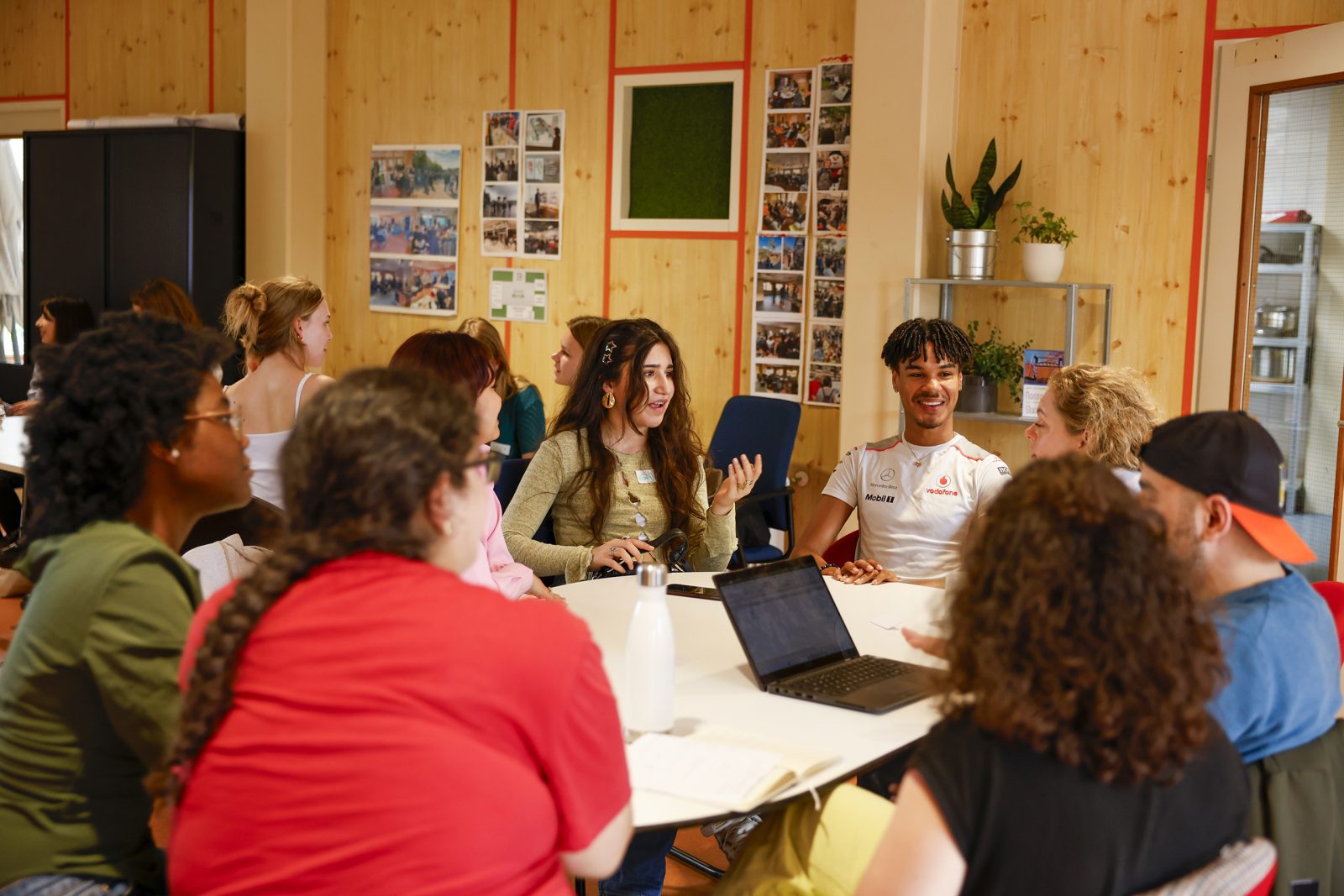
Image by: Daan Stam
“Welcome to Bildung Climate School. Through this programme, we will try to make the world a better place”, said researcher Ginie Servant-Miklos at the launch of the pilot at HefHouse on Monday last week. A total of thirty students from Albeda College, Rotterdam University of Applied Sciences and Erasmus University were in the room. The students will participate in various workshops and field trips over the next nine weeks, from dance, philosophy and ethics to a visit to circular economy hub Blue City and research institute DRIFT.
Bildung
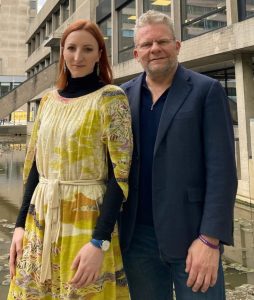
Image by: Own photo
Servant-Miklos and Engels have based the project on the principles of Bildung. The German word Bildung, which literally means ‘formation’, represents the ideal that people should develop as broadly and fully as possible and take on social responsibility. “We want to give students the tools, insights and skills they need to tackle the huge environmental and social challenges”, says Engels.
Each workshop they run has its own purpose. “In the dance and art workshops, for example, students learn about themselves as individuals who are simultaneously part of a group”, Servant-Miklos says. “They also go on field trips to learn about things like how the global system shapes the fashion world.”
Six months
For this programme, Servant-Miklos and Engels are collaborating with institutions including Albeda College, Codarts and Rotterdam University of Applied Sciences. The students come from these educational institutions. “We want to cut through the existing education system”, says Servant-Miklos. “The distinction between senior secondary vocational, higher professional and university education is outdated. We want to reach young people from all walks of life and socioeconomic backgrounds.”
The researchers plan to develop the project into a six-month intensive programme. “That will give us enough time to provide intensive guidance to the students”, says Engels.
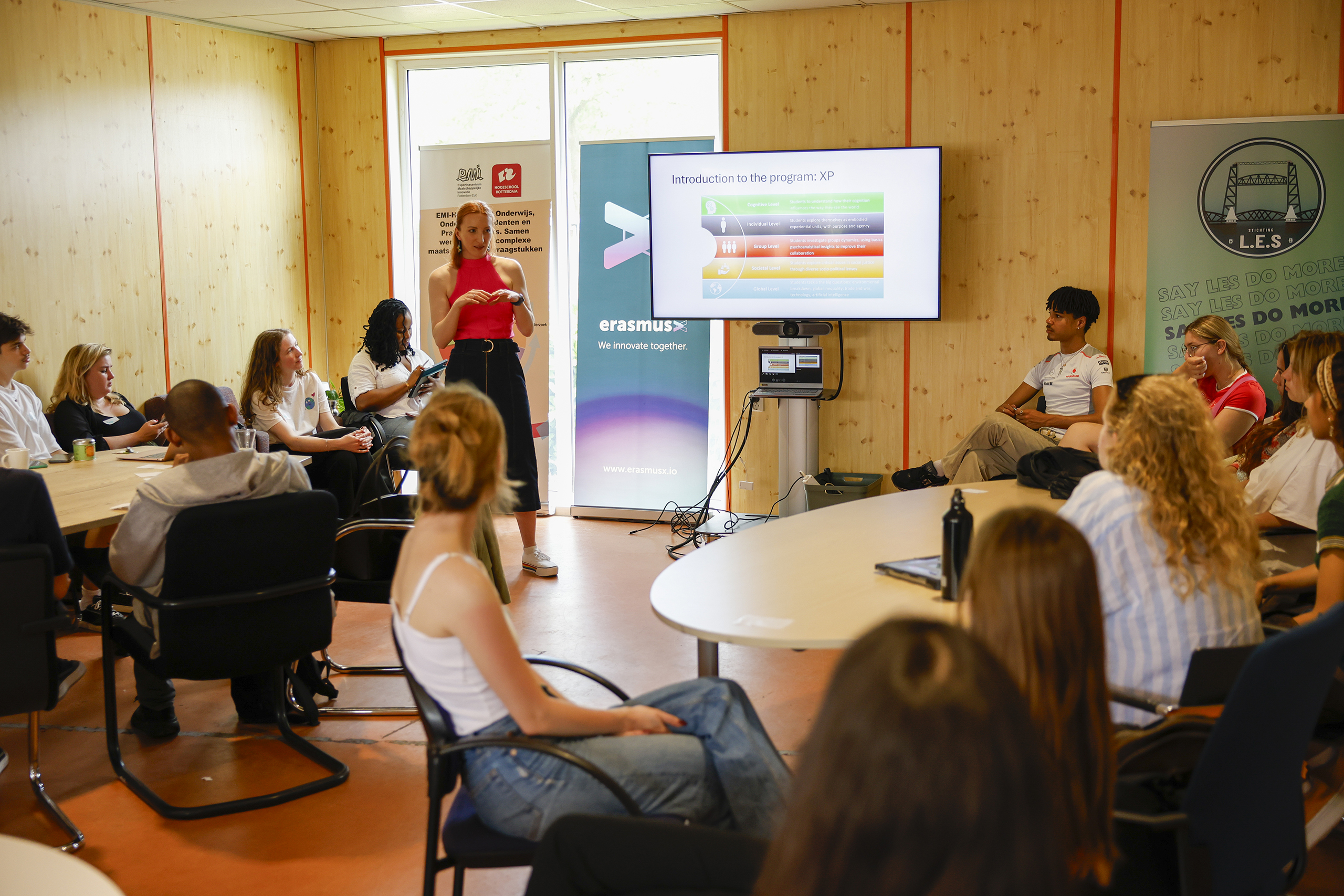
Image by: Daan Stam
Enthusiastic students
Psychology student Nissa was attracted to the programme because it is ‘very different’ from her studies. “I usually just sit and listen to a lecturer giving a lecture. But this programme is active and dynamic. I’m really looking forward to the workshops”, she says. For Cliff, a marketing student at Albeda College, the mix of students is the main reason for joining this programme. “It means I can learn from other students I wouldn’t otherwise meet”, he says. “It will be interesting to see how we cooperate with each other and what comes out of it. I am curious!”
De redactie
-
 Feba Sukmana
Editor
Latest news
-
Letschert gives nothing away in first parliamentary debate
Gepubliceerd op:-
Education
-
Politics
-
-
Away with the ‘profkip’, says The Young Academy
Gepubliceerd op:-
Science
-
-

House of Representatives wants basic grant for university master after HBO
Gepubliceerd op:-
Money
-
Politics
-


Comments
Comments are closed.
Read more in Education
-
Letschert gives nothing away in first parliamentary debate
Gepubliceerd op:-
Education
-
Politics
-
-

EUR master’s in International Management among sixteen ‘excellent’ masters in the Netherlands
Gepubliceerd op:-
Education
-
-
Faculty honours programmes mostly continue, but have to adapt to budget cuts
Gepubliceerd op:-
Education
-