Erasmus MC has a family of peregrine falcons roosting 120 metres up

Ever start off your day by doing laps of the office screaming? That’s the morning ritual of the peregrine family. Not only do they live at Erasmus MC, the hospital is also their base when hunting for food.
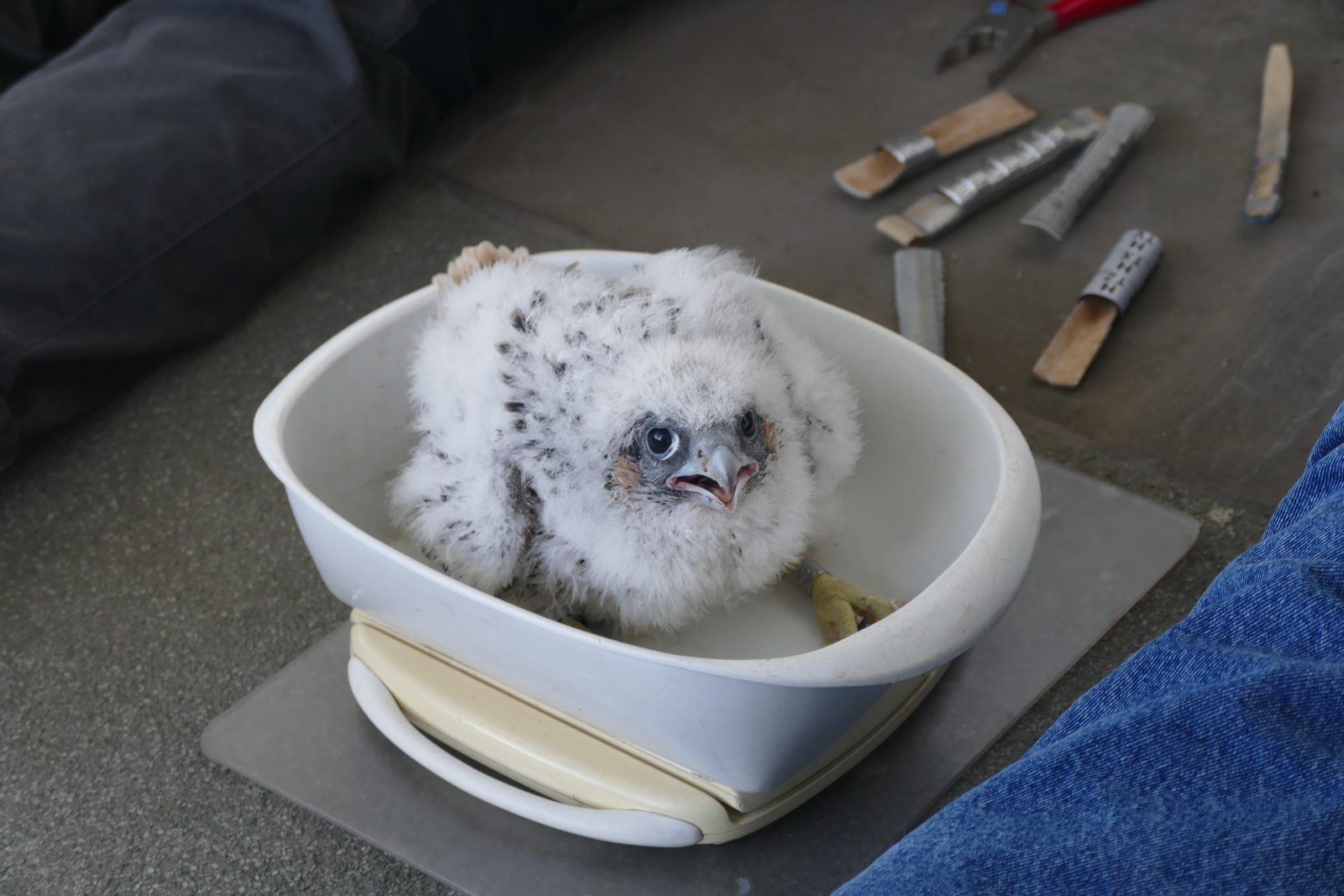
Image by: Jos van der Geest
Papa peregrine looks down from the blue ‘m’ in the Erasmus logo at the very top of the right-hand towers. From his bed, you might say, as peregrine falcons like to sleep on the blue letters on the thirtieth floor (120 metres up). The mother of the family is easy to spot: female peregrines are clearly larger, roughly the size of a buzzard at 40-60 centimetres. The males are about the size of a black crow. On this Wednesday morning, three of this year’s four young falcons are enjoying a flying lesson, circling the building while emitting shrill cries. “You can clearly hear the young begging for their food”, says ecologist Garry Bekker from the Rotterdam Urban Ecology Unit. “This is their morning routine.”

Image by: Ronald van den Heerik
Thirty years ago, peregrine falcons were almost extinct in Europe, and so the birds’ breeding grounds were left strictly alone to protect the animals. By installing high nesting boxes and relocating the birds, they are now back from their long absence. Two boxes have now been installed at Erasmus MC. Before that time, a pair of peregrines had nested in the gutter of the Sophia Children’s Hospital – not the safest place to raise young chicks.
Read more
-
The roof of the car park is home to a rare fern with tongue-shaped fronds
Gepubliceerd op:-
Nature
-
Papa Peregrine feels it’s time to get involved, and he glides down from the ‘m’. The time is coming for the children to start hunting for themselves, they are being fed less and less. Hunting is another lesson on the schedule for today. “Peregrine falcons don’t do all that much in a day. They’re very much opportunists”, Bakker explains. “A few times a day they’ll pluck a pigeon from the sky, but that’s about it.” Peregrine falcons have incredible vision. “They can spot a pigeon flying from a kilometre away and think: aha, that’s a weakling, easy pickings. They only eat other birds, and they don’t waste time chasing the fittest.”
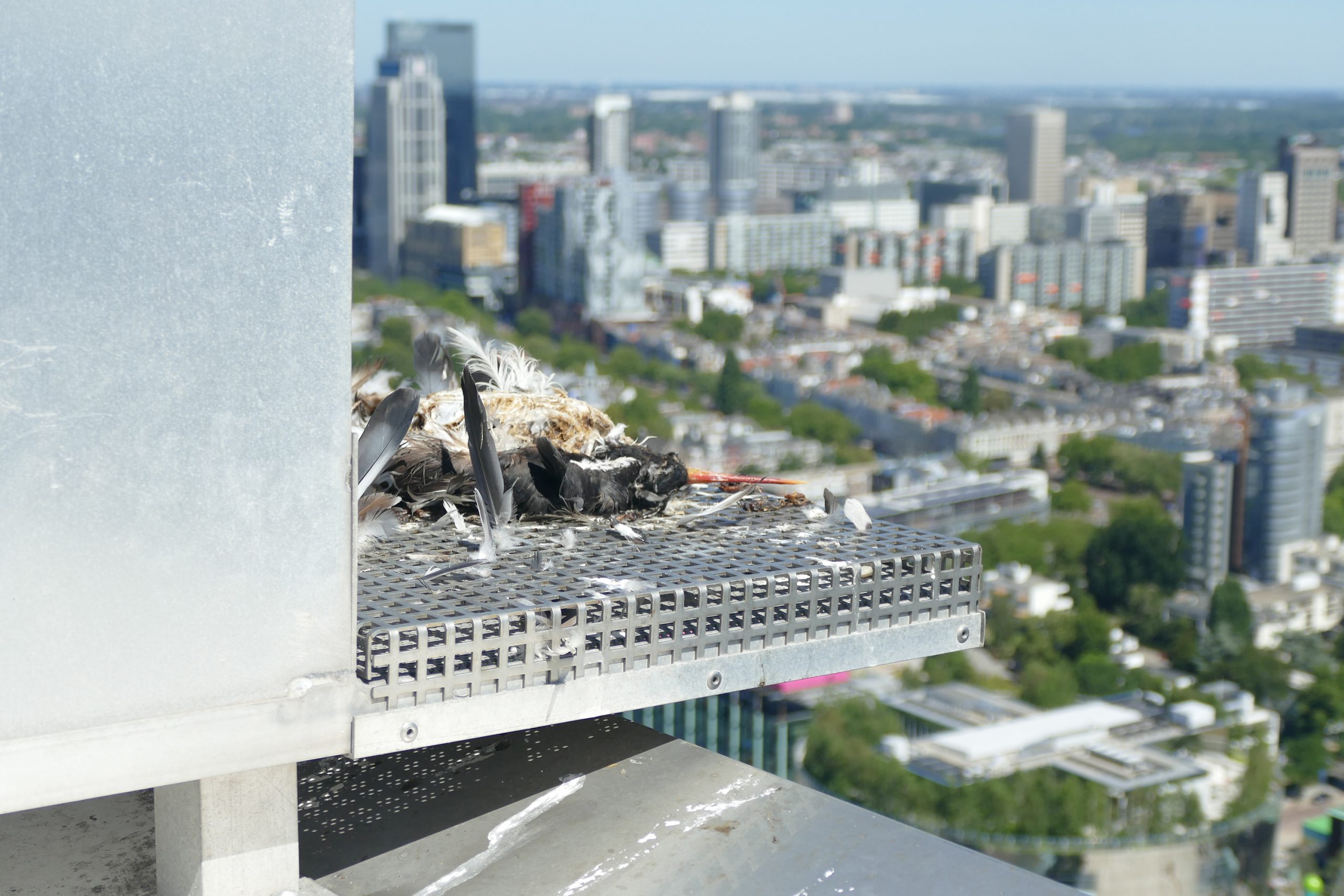
Image by: Jos van der Geest
One, two, three young peregrines. Bakker counts one more time. Where could the fourth be? At some point, all four young falcons have spent a night in the Vogelklas Karel Schot animal rescue centre. “Something almost always goes wrong during the birds’ maiden flight. They have no sense of the dangers on the ground, or they crash into a window somewhere.” Window collisions are always the greatest danger for the family. There’s no shortage of food – their meals come flying to them almost automatically. When pickings are a little slim, the parents work together: one does the chasing while the other attacks. Now it’s time for the children to watch and learn, because mum and dad won’t keep doing it forever.
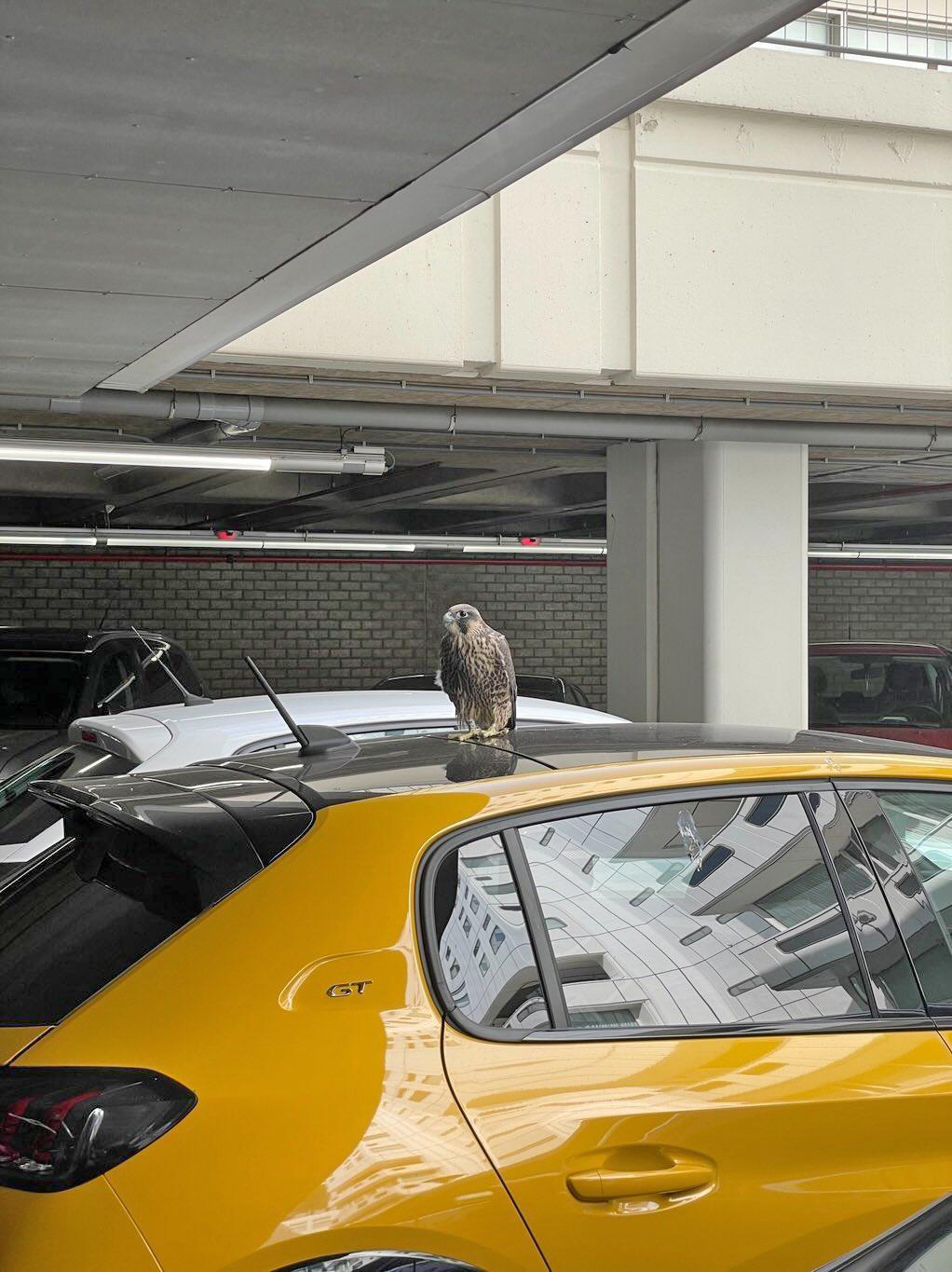
Image by: Lars van Prooijen
De redactie
-
 Tessa Hofland
Editor
Latest news
-
Away with the ‘profkip’, says The Young Academy
Gepubliceerd op:-
Science
-
-
House of Representatives wants basic grant for university master after HBO
Gepubliceerd op:-
Money
-
Politics
-
-

Company takes a huge chunk of the student finance of at least 350 internationals
Gepubliceerd op:-
Internationalisation
-

Comments
Comments are closed.
Read more in Nature
-
The Tinbergen building is one enormous bat enclosure
Gepubliceerd op:-
Nature
-
-
There’s more in the university library’s ‘sea of nourishment’ than you might think
Gepubliceerd op:-
Nature
-
-
The burrow might be abandoned, but the greenery behind the exam rooms is ideal for foxes
Gepubliceerd op:-
Nature
-