Ad

Why Dijkgraaf’s plans are not really a solution to internationalisation problems
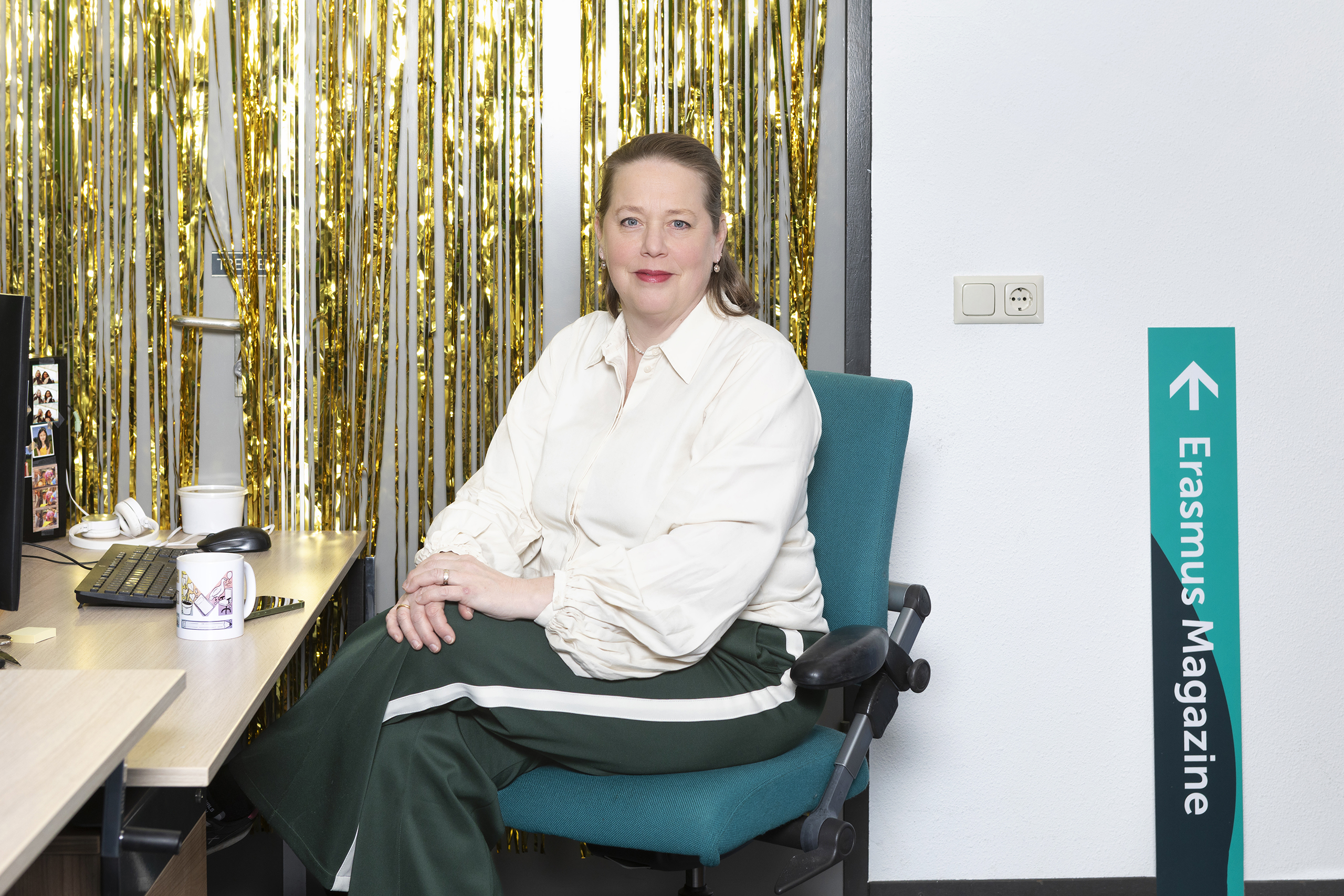
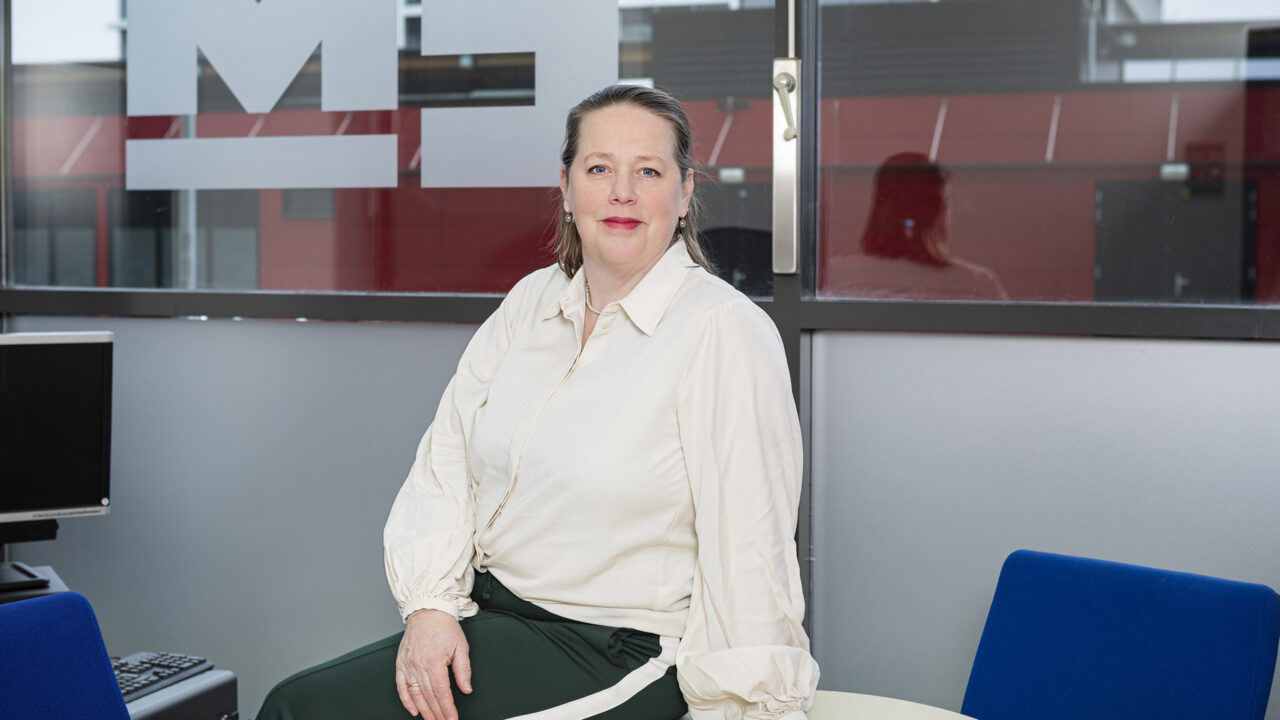
Editor-in-chief Wieneke Gunneweg sees universities blowing their own trumpet when it comes to internationalisation, while at the same time much is not properly regulated for international students. “Both friend and foe agree that something needs to be done”, she says.
Editor-in-chief Wieneke Gunneweg.
Image by: Levien Willemse
One of the saddest stories in EM in the past week is about international students whose first names are displayed with a dot (.) or a dash (-) on their diplomas, because the country of origin records first and last names in a way that does not match the Dutch system. Apparently, after years of internationalising higher education, no one has been able to come up with a decent solution for this.
In my opinion, it shows that everyone likes to brag about the benefits of internationalisation, but that these ideals are often far removed from daily practice.
There are issues with internationalisation of higher education in the Netherlands. Both friend and foe agree that something needs to be done. After all, study programmes are too full, teachers are collapsing under the workload, universities have no means to limit intake, and international students have nowhere to live (affordably).
Not to mention the aforementioned problem of name registration. Might seem like a detail, but the students in question don’t feel that way. In short, the whole system is creaking and the education minister needs to come up with a solution.
‘His statements this week mainly cause confusion, his plans aren’t concrete and everyone contradicts each other’
Minister Dijkgraaf doesn’t have a solution. He does suggest that he has one, but his statements mainly cause confusion, his plans aren’t concrete and everyone contradicts each other.
For instance, several media first wrote that in two years’ time, completely foreign-language bachelors may no longer be allowed, as only one-third of the subjects in a bachelor programme can be in a foreign language. But enquiries by Erasmus Magazine reveal that exceptions will remain possible and existing bachelors are completely off the hook for the time being. This is going to change ‘later’, but when exactly is stated nowhere.
Is it a tactic by Dijkgraaf to shake off political parties with nationalistic tendencies for the time being? Or does the former internationally renowned scholar not dare to make hard choices?
Meanwhile, higher education institutions are left in confusion and uncertainty. Can they still hire international lecturers? How should they organise recruitment for courses in the near future? And how do these plans help to really curb internationalisation?
‘Isn’t the problem much more in the perverse incentives in funding: more students = more money?’
After all, is language really the biggest problem at universities? At Erasmus, half the bachelors are English-speaking, but some of them have a Dutch-speaking counterpart, so there is no exclusion there.
Isn’t the problem much more in the perverse incentives in funding: more students = more money? And the fact that you simply cannot refuse students from within the European Economic Area? Dijkgraaf has yet to offer a concrete solution to that. He shifts the issue to committees and the institutions themselves.
Ironically, in a letter to the European Commission this week, the minister writes that ‘other member states should attract more international students’, for instance by offering more courses in English. Hopefully, his advice includes the following disclaimer: “Of course you should take on more international students: great for your international scientific image! But be careful not to succumb to your own success. Oh yes, and make sure you give students a name, and not a ‘.’ or a ‘-‘ .”
Read more
-
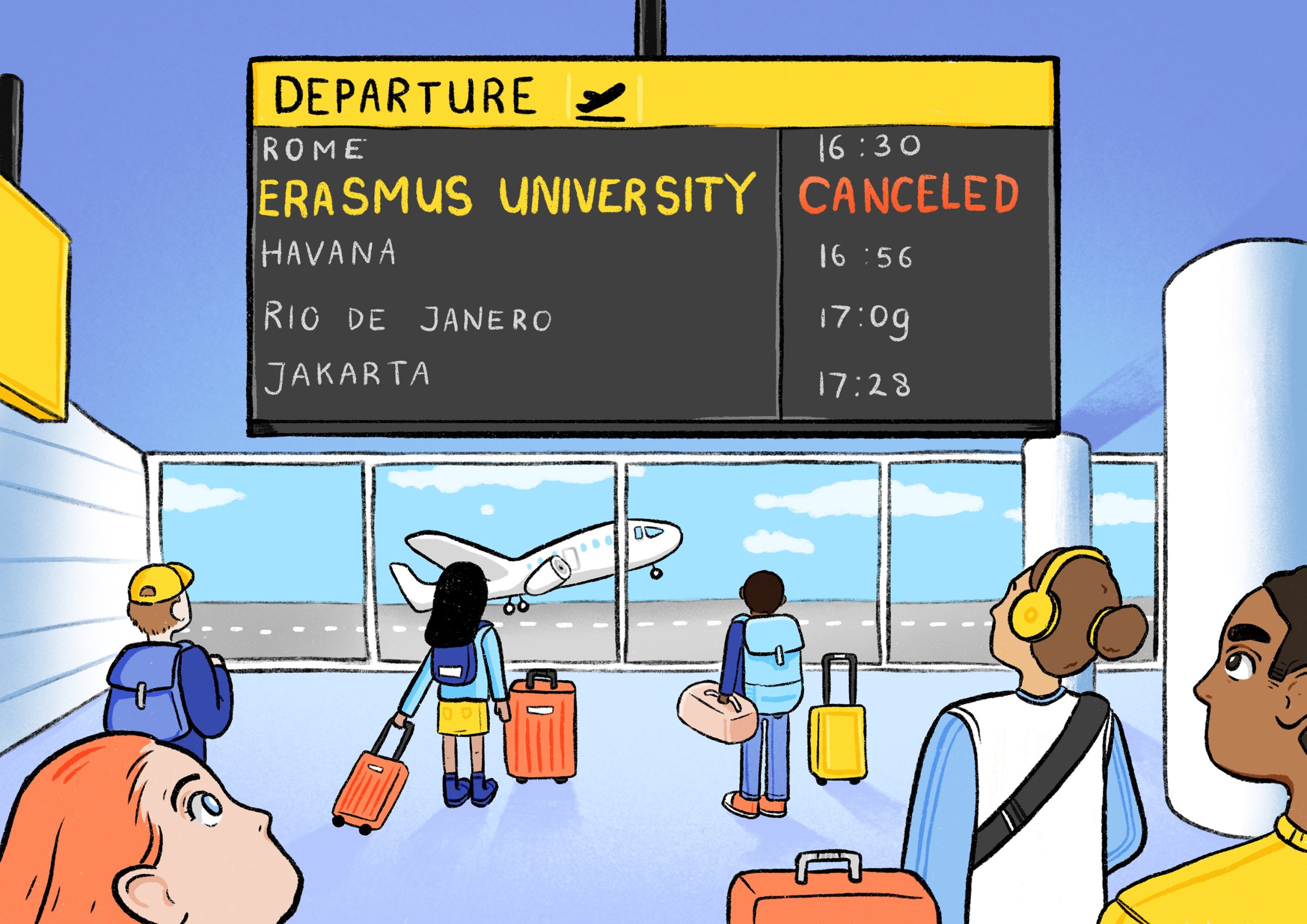
New law for intake of international students: ‘Necessary, but the tone is worrisome’
Gepubliceerd op:-
Internationalisation
-
De redactie
-
 Wieneke Gunneweg
Editor-in-chief
Latest news
-

TU Delft may not favour women in admissions to courses
Gepubliceerd op:-
Education
-
-

Hate campaigns and political pressure: KNAW wants legal protection for academic freedom
Gepubliceerd op:-
Science
-
-
Signing up for a Dutch course ‘feels like a race’, no more places available for now
Gepubliceerd op:-
Internationalisation
-

Comments
1 reactie
Comments are closed.
Ad
Read more in Editorial
-
Sheer nerve
Gepubliceerd op:-
Editorial
-
-
Liminal times
Gepubliceerd op:-
Editorial
-
-
How EM ended up at an awards festival thanks to talent and teamwork
Gepubliceerd op:-
Editorial
-
Professor Hercules Haralambides op 22 June 2023 om 19:20
Indeed, we have programs offered both in Dutch and in English. In comparison to the former, the latter is just a nice walk in the park. Light years apart in terms of learning effectiveness and quality. This shows, doesn’t it, that English programs are there just for the money, offered to students who can pay to ‘buy’ a degree from a good university in an advanced country. And, indeed, and let’s not mince our words, a substantial part of Dutch teachers trying to teaching in English speak ‘pigeon English’, if any English at all, with students trying to understand what the teacher is talking about. Shouldn’t such colleagues first pass a test before being allowed to teach in a foreign language?
Professor Hercules Haralambides