Ad

Dijkgraaf has doubts about DUO’s hard line towards 25 former students every year

It is estimated that every year 25 former students have to pay back their student loans in full, even though they graduated on time. They forgot, however, to send their degree certificate to the Education Executive Agency DUO. Dijkgraaf is having this policy examined.
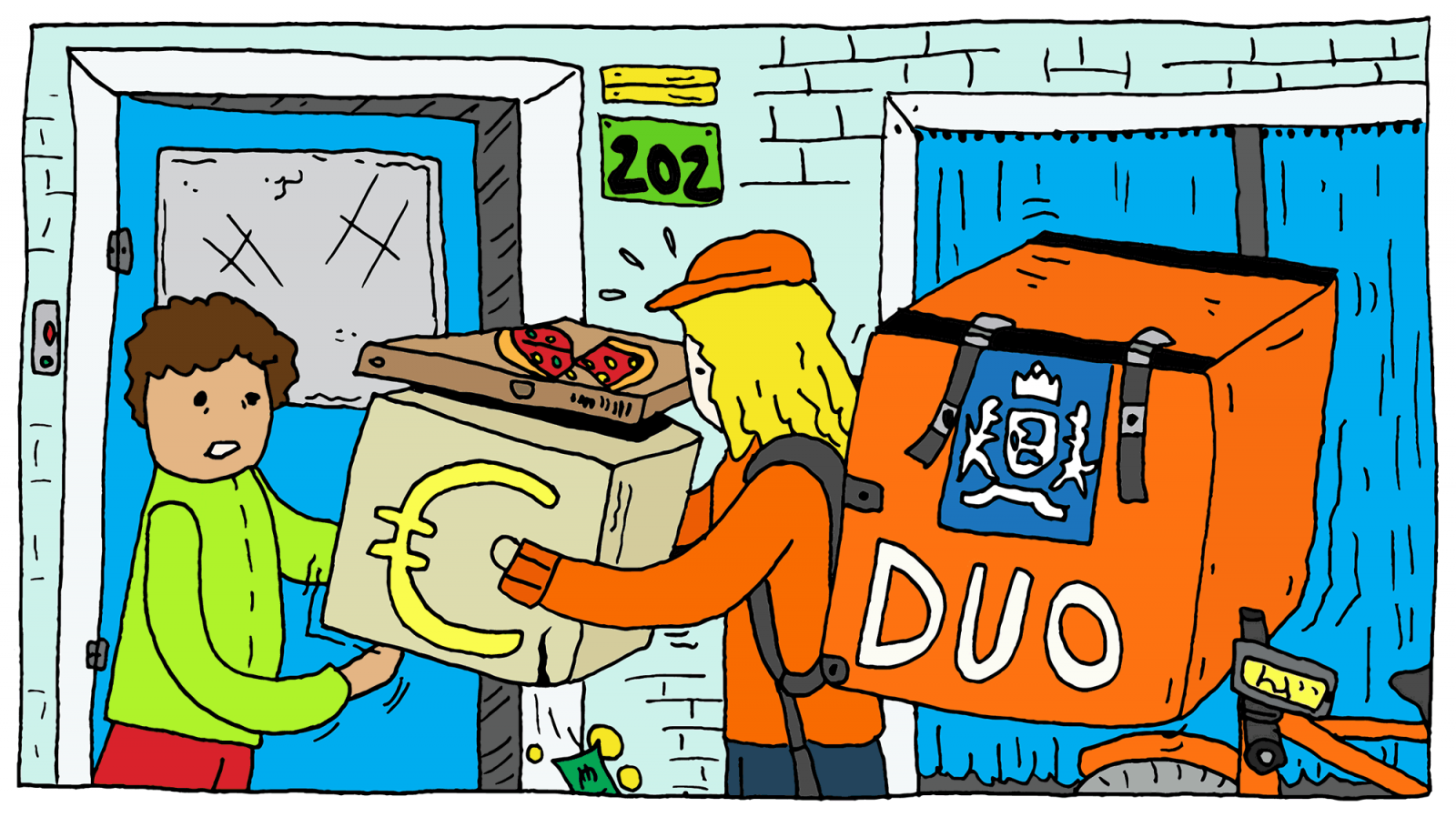
Image by: Pauline Wiersema
It came as a shock to a former student who relocated from Belgium back to the Netherlands. It turned out that he had a substantial student loan debt. Warning letters from the Education Executive Agency had never reached him.
If you graduate within ten years, the basic student grant, student public transport pass and supplementary grant are converted into a gift. Anyone who does not graduate has to pay everything back. In the Netherlands that all happens automatically.
Abroad
But things are different for students who live in other countries. They have to send a copy of their degree certificate to the Education Executive Agency. If they forget to do so, they have to pay back their debt – even if they got their degree on time. It is a mistake that can cost thousands of euros.
How often does it happen? GroenLinks asked Education Minister Robbert Dijkgraaf. An estimated 25 times a year, is the answer. Minister Dijkgraaf has not criticised the Education Executive Agency, but is going to see whether things could be done differently. “Actual case histories help us to identify problem areas”, he says. “That applies also to this case, which gives us cause to consider the deadlines in our legislation.”
The returning student took the case to court, but lost. He ought to have sent off the certificate within three months, although in practice the Education Executive Agency operates a deadline of five years. That should be enough, in the opinion of the court, so the consequences now lie at the student’s door. The student has appealed against the ruling.
Doubt
Apparently, the Minister too has his doubts about that line. “I plan to examine the various deadlines in the law and whether they are still appropriate to the way we look at our citizens nowadays and at their capacity to act.”
Cannot the Education Executive Agency apply the hardship clause? GroenLinks also asked. After all, this student did precisely what the government asked of him: graduate within a reasonable period of time.
That is ‘theoretically possible’, Dijkgraaf confirms, but only if ‘the specific situation results in disproportionate consequences for the citizen’. The court saw no reason to apply the hardship clause, he adds.
Discussion
The tone of his answer, however, suggests that it is nevertheless a little odd. He is still in discussion with the Education Executive Agency on the application of rules. “We’re discussing practical cases”, he tells GroenLinks. Discussions of this type can have different outcomes. Sometimes the regulations have to be changed, and sometimes the situation is so exceptional that a tailor-made solution is required.
Read more
-
DUO too strict for European students
Gepubliceerd op:-
Student life
-
De redactie
Latest news
-

Dutch people increasingly believe AI cannot help advance science
Gepubliceerd op:-
Artificial Intelligence
-
Science
-
-

Maastricht University suspends Palestinian student over 7 October video
Gepubliceerd op:-
Politics
-


Comments
Comments are closed.
Ad
Read more in Student life
-

18-year-old student dies after ‘hazing party’ in France
Gepubliceerd op:-
Student life
-
-

Jasper has lost his carefree outlook since the attack on Erasmus MC, but the experience will make him a better doctor
Gepubliceerd op:-
Mental health
-
-

Government sets aside millions extra for student accommodation construction
Gepubliceerd op:-
Housing
-