Ad

Student debt rises to 19 billion euros

Total student debt in the Netherlands rose by 1.9 billion euros last year to reach a total of 19.3 billion, according to Statistics Netherlands.

The abolition of the basic student grant in September 2015 has forced students to borrow more. They are indeed borrowing, and the younger they are, the faster their debt appears to be growing.
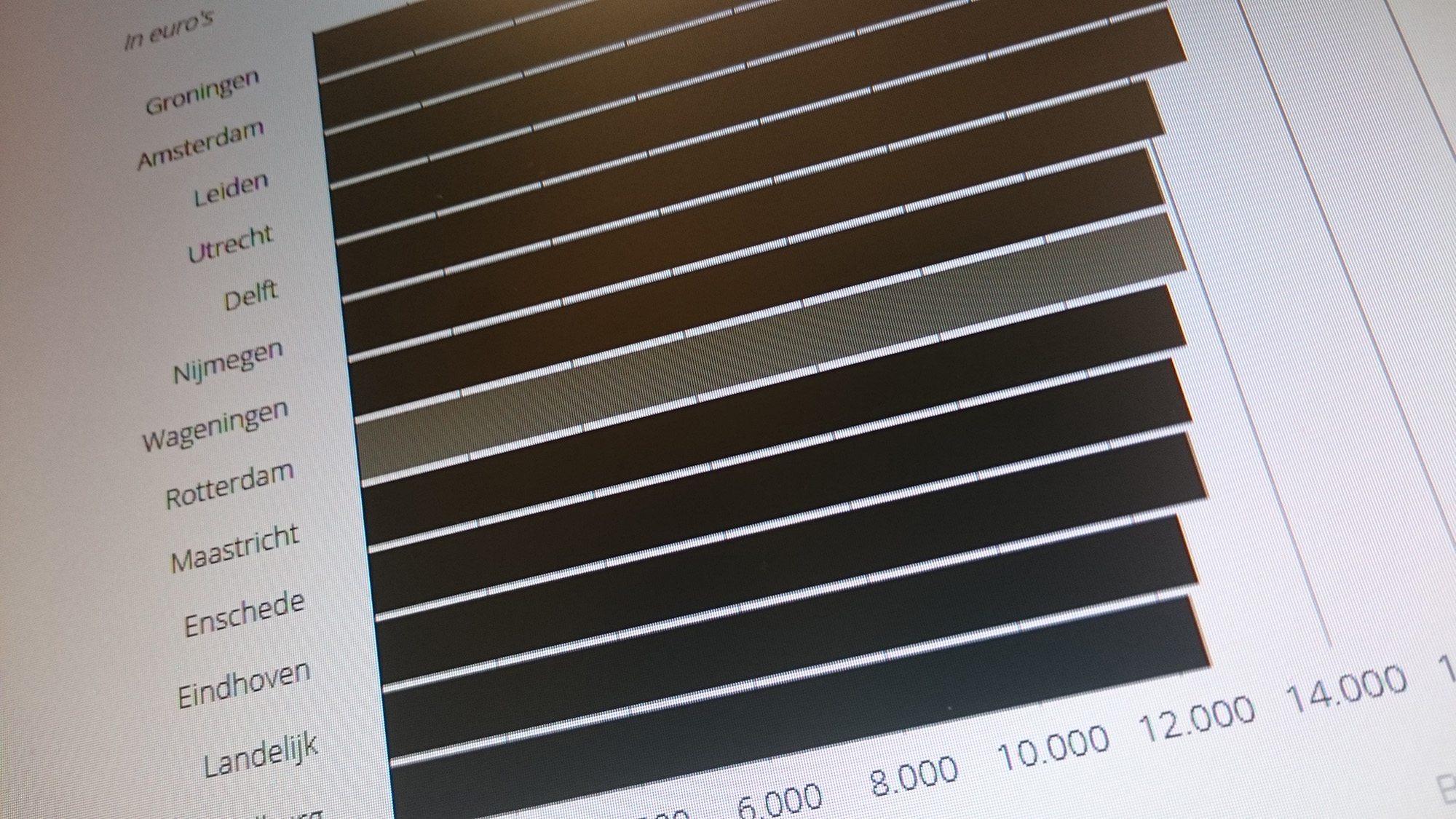
The average student debt has increased from €12,400 in 2015 to €13,700 in 2019. In that period, the number of individuals with student debt has also increased, rising by 388,000 to reach 1.4 million.
Not a positive message
Student organisations are watching this trend with dismay. “The system is telling a whole generation that it is normal to borrow large sums of money,” says Kees Gillesse of the Dutch National Students Association (ISO). “That is not a positive message.”
Alex Tess Rutten of the Dutch National Union of Students (LSVb) agrees: “Substantial student debt is a cause of stress and has a serious impact on the rest of your life. Saddling young people with so much debt is nothing short of irresponsible.”
A coalition of four political parties introduced the new student loan system: VVD, D66, PvdA and GroenLinks. It increased the cost of studying by thousands of euros, while easing the rules that apply to repayment. Students now have 35 years to pay off their student debt – 20 years longer than previously – which means that their monthly repayments are lower. In addition, people on low incomes are allowed to repay less per month.
Basic student grant
GroenLinks and PvdA have now distanced themselves from the new system. In principle, there is a parliamentary majority in favour of returning to a basic student grant. However, the question remains as to what kind of system should be introduced.
Some parties have said they also want to see a form of compensation for students who come under the current student loan system. The rising levels of student debt show that this will not be easy.
Quality agreements
The idea behind the new loan system was that the money generated would be reserved for higher education. In principle, universities and universities of applied sciences can look forward to hundreds of millions of euros in extra funding. Higher education institutions are busy making their own individual quality agreements for this purpose.
In the meantime, however, cutbacks have been imposed, which claw some of this money back from the higher education sector.
Read more
-
38,000 Rotterdam inhabitants have student debt
Gepubliceerd op:-
Student life
-
De redactie
Latest news
-

EM TV newsflash: Shorter waiting time for medical interns, lively trade in graduation tickets and purchasing power increase
Gepubliceerd op:Article type: Video-
EM TV
-
-

In memoriam Rob van der Wal
Gepubliceerd op:-
In memoriam
-
-

Lively trade in tickets for graduation ceremony: ‘Excessive prices are undesirable’
Gepubliceerd op:-
Student life
-


Comments
Comments are closed.
Ad
Read more in Student life
-
Lively trade in tickets for graduation ceremony: ‘Excessive prices are undesirable’
Gepubliceerd op:-
Student life
-
-

Sam and his flatmate create an artwork for every house party
Gepubliceerd op:-
Housing
-
-

Three Skadi members to compete in world’s largest rowing race: ‘It really is a dream’
Gepubliceerd op:-
Sport
-