Ad

Students from ‘broken families’ more likely to leave home

There has been a drop in the total number of students living on their own since the basic student grant was rescinded. Prior to 2015, approximately 23 percent of students at universities of applied sciences and 63 percent of students at research universities lived on their own. In the 2017-2018 academic year, only 11 and 41 percent of students (respectively) had moved into their own digs, according to figures from Statistics Netherlands.
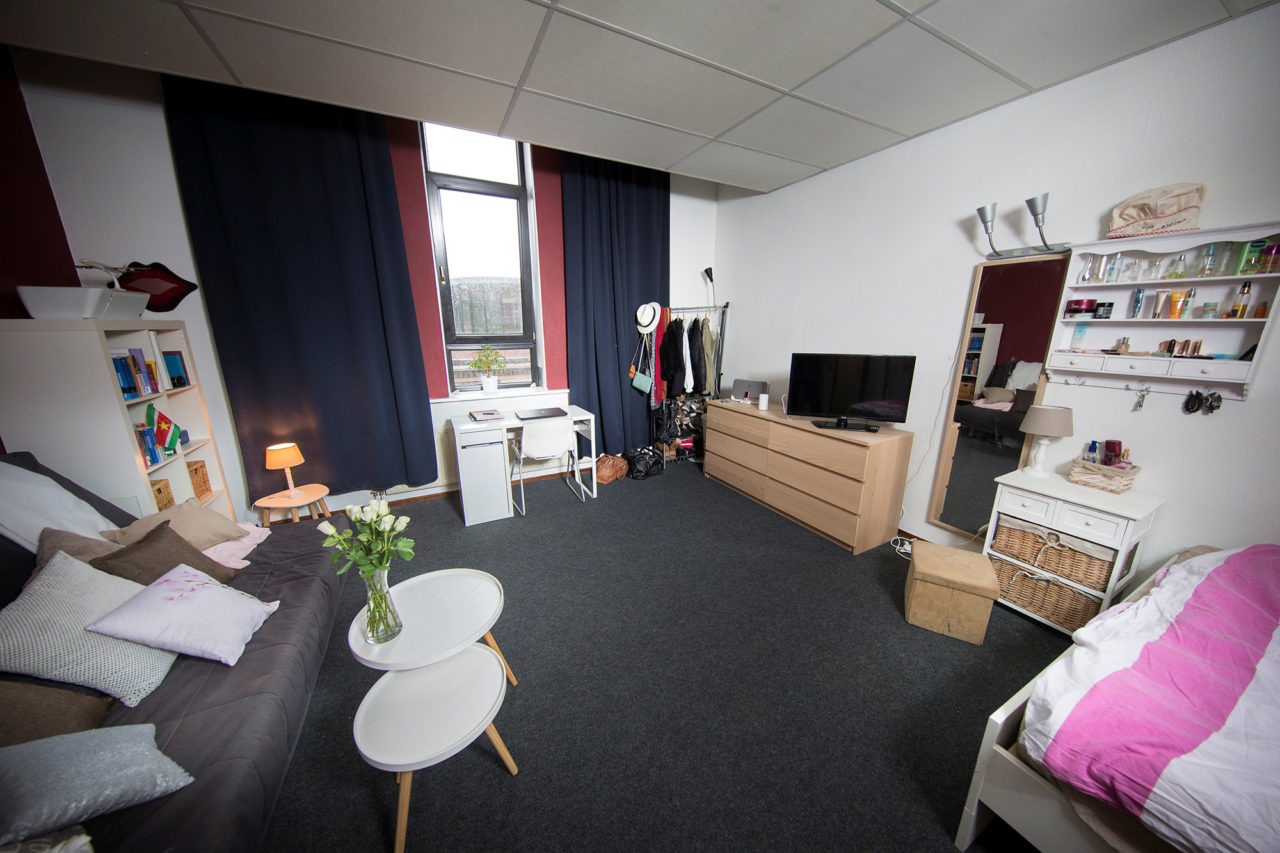
Image by: Levien Willemse
Research university students are more likely to live on their own for two key reasons: they are older on average than their peers at universities of applied sciences, and the distance from their family home to the university is greater on average.
Pushfactor
The students’ home situation also plays a role. Research university students with divorced parents are most likely to live on their own, according to a soon-to-be-published study in Demos, a journal of the Netherlands Interdisciplinary Demographic Institute (see Figure 1). “Young adults whose parents are separated or divorced may have stronger motivations to leave home,” note the researchers. For example, the parent-child bond in these families is less strong, and the family members tend to quarrel more amongst themselves. The presence of a stepparent is another key ‘push factor’ inciting students to strike out on their own.
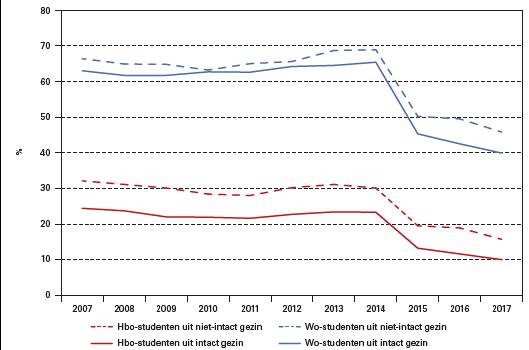
Figure 1. Percentage of students at universities of applied sciences and research universities living on their own within 16 months after the start of their studies, by family situation, 2007-2017 Source: Statistics Netherlands (CBS)
The more complex the family composition, the greater the chance that students live on their own. In cases where both parents have a new partner, 33 percent of female students at universities of applied sciences leave home compared to 22 percent of male students. This figure is 25 and 15 percent respectively for intact families. Among students at research universities, the figure is 70 percent (women) and 59 percent (men) for broken families, compared to 62 percent (women) and 52 percent (men) for intact families (see Figures 2).
Data might be incomplete
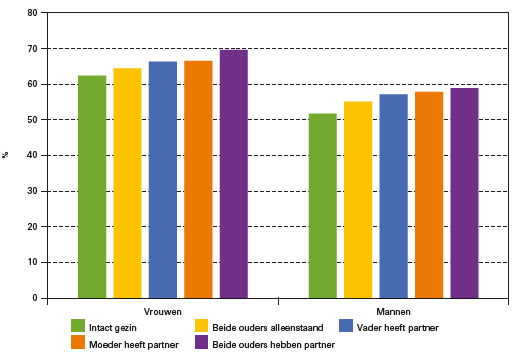
Figures 2. Percentage of students at research universities living on their own within 16 months after the start of the studies, by family situation, 2007-2017 Source: Statistics Netherlands (CBS)
For their study, the researchers used data from Statistics Netherlands and the Personal Records Database. It is unclear whether this data is complete, however, as there is less of an incentive for students to submit a change of address now that the basic grant is no longer available. In the past, students were entitled to additional benefits if they could demonstrate that they were living on their own.
“It’s difficult to say, as this particular motivation is not necessarily reflected in the data,” says Lonneke van den Berg, a researcher at the University of Amsterdam. She continues, “Nevertheless, I do not think it would impact our conclusions to any significant degree.”
De redactie
Latest news
-
The drama of Jason Arday
Gepubliceerd op:-
Column
-
-

Cuts to education after all? It could happen, according to secret coalition plan
Gepubliceerd op:-
Education
-
Politics
-
-

Tinbergen stripped of spikes, new look is taking shape
Gepubliceerd op:-
Campus
-


Comments
Comments are closed.
Ad
Read more in Housing
-
Government sets aside millions extra for student accommodation construction
Gepubliceerd op:-
Housing
-
-

Sam and his flatmate create an artwork for every house party
Gepubliceerd op:-
Housing
-
-
Still a shortage of 20 thousand student homes
Gepubliceerd op:-
Housing
-