Ad

Still a shortage of 20 thousand student homes

Thousands of new student homes have been built, yet the room shortage has barely decreased. New figures show that 20 thousand students are unsuccessfully looking for accommodation.
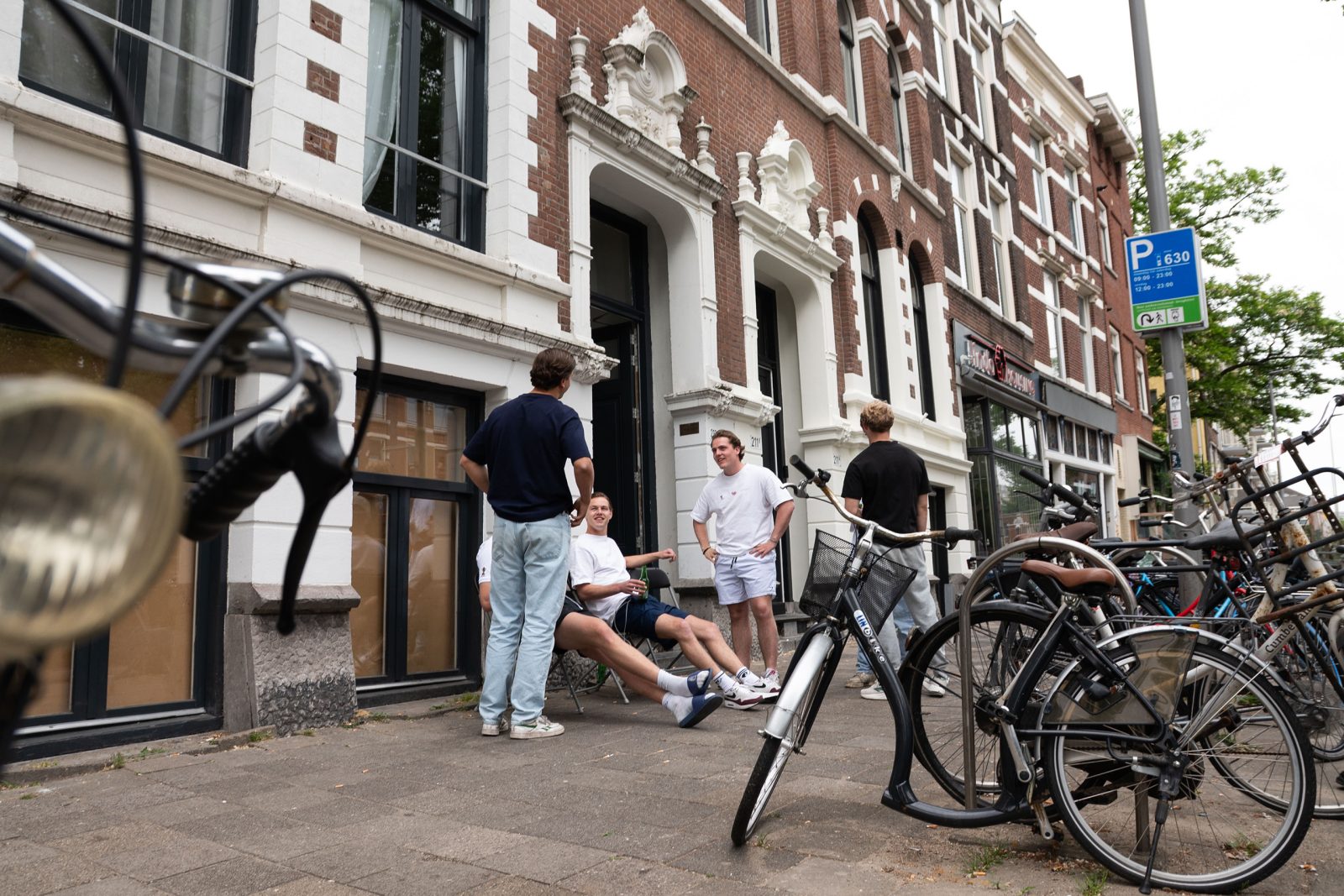
Students talking outside of student housing in Kralingen.
Image by: Tyna Le
Rotterdam is among the cities where pressure on the student housing market is highest. That pressure has eased somewhat recently. There is also still a great deal of construction going on: in Rotterdam, definitive plans are in place to build more than three thousand student homes in the coming years. Only in Utrecht is construction activity even greater.
Since 2022, student housing providers have built nearly 5 thousand new student homes a year, writes Kences, the knowledge centre for student housing. Yet the housing shortage among students has barely decreased.
Nationally, there is a shortage of 20,200 homes for students who want to leave home, according to the National Student Housing Monitor, which was published on Wednesday evening. The shortage has decreased by just 1,300 since last year.
Shortage no worse
But that is also the good news: at least the housing shortage among students has not worsened. Last year, Kences expected the shortage to increase sharply, as many private landlords began selling their student homes. New tax rules had made the properties less profitable.
Many homes have indeed been sold: since 2024, 32 thousand fewer students have rented accommodation from private landlords, ranging from rogue landlords to resident landlords. But this has not led to an explosive increase in the housing shortage.
There are also fewer Dutch students, while fewer international students are coming here. In addition, fewer and fewer Dutch students live away from home. Over eight years, the proportion has fallen from 50 to 43 per cent.
Een lijst met artikelen
-

Students finding it increasingly difficult to spot scams on the housing market
Gepubliceerd op:-
Housing
-
Estimate
The shortage is an estimate: it concerns the number of students who want to live away from home but have no accommodation available to them. But how many students want to leave home? That is not so easy to determine.
“Supply also creates demand”, says Kences director Reijnder Jan Spits. “With new-build projects, we see that students who had given up hope start actively looking again.” In other words, when new student homes are built, some house-hunters who had dropped out begin to think they have a chance again, and are then counted in the shortage once more.
There are other factors that may affect demand. The basic grant has been reintroduced and housing benefit for young people has been expanded, so students may have more money to spend: that could affect demand, Spits says.
On the other hand, life is already expensive and, Spits speculates, first-year students may now be more concerned about the binding study recommendation and wait a while before leaving home.
Space
Continuing to build is important in any case, he believes. Student housing providers might be given more opportunities to build on campus, so that they do not compete with other demands on space, he suggests.
Student housing providers must have sufficient financial resources to build, he says. Kences therefore argues for abolishing profit tax for these housing associations. It would make a difference of 15 thousand to 20 thousand homes, he estimates.
But if the business case for new housing is positive, surely housing associations can find financing? According to Spits, it is not that simple. You cannot simply borrow money, he says. “The regulators have views on that.”
Een lijst met artikelen
-

House of Representatives wants more shared accommodation for students
Gepubliceerd op:-
Housing
-
By city
The housing shortage is not equally severe everywhere, but in many cities the situation is difficult. Kences: “Pressure on the student housing market is highest in Amsterdam, Delft, Eindhoven, Leiden, Nijmegen, Rotterdam, ‘s-Hertogenbosch, Utrecht and Zwolle.” The fewest problems are found in Tilburg, Wageningen, Arnhem, Leeuwarden and Ede.
Students are taking increasingly longer to find a home: students at universities of applied sciences and universities who live away from home took five months on average. This excludes students who never find accommodation. In the 2017-2018 academic year, the search time was 3.5 months.
Yet a lack of homes is the reason for still living at home for only 19 per cent of students. 44 per cent cite the affordability of homes as their reason for still living at home. Only 21 per cent simply have no desire to leave home, while 11 per cent say: my parents live near my place of study.
For a room with shared facilities, students pay an average of 540 euros a month, Kences states on the basis of a survey completed by 42 thousand students at 41 universities of applied sciences and universities. Multi-room homes cost 855 euros on average, although someone else often contributes to the payment. On average, accommodation costs 590 euros a month, out of a student’s disposable budget of 1,340 euros.
More expensive
Some cities are more expensive than others, according to the same survey. In Amsterdam, The Hague and Rotterdam, the price of a room with shared facilities is said to be around 650 euros a month. Multi-room homes average around 950 euros.
Kamernet, the largest platform for private rooms, estimates the average room rent in Amsterdam to be 300 euros higher, but does not distinguish between a single room and a flat. Nationally, the average rent would be 691 euros according to Kamernet.
Een lijst met artikelen
-
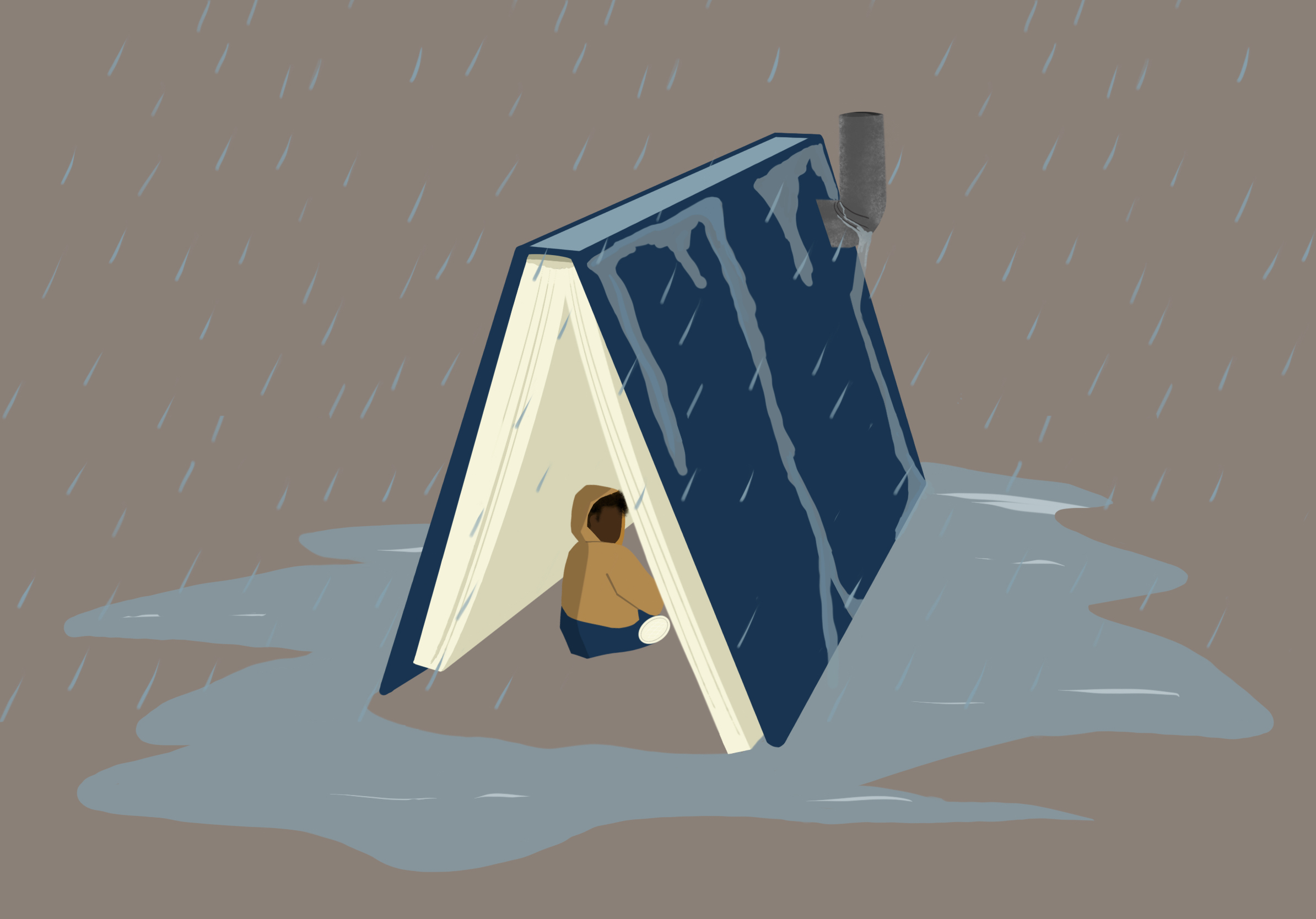
Six in ten student rooms too expensive, municipalities rarely intervene (except Rotterdam)
Gepubliceerd op:-
Housing
-
De redactie
Comments
Comments are closed.
Ad
Read more in Housing
-

Carolina could wake up ten minutes before her lectures
Gepubliceerd op:-
Housing
-
-
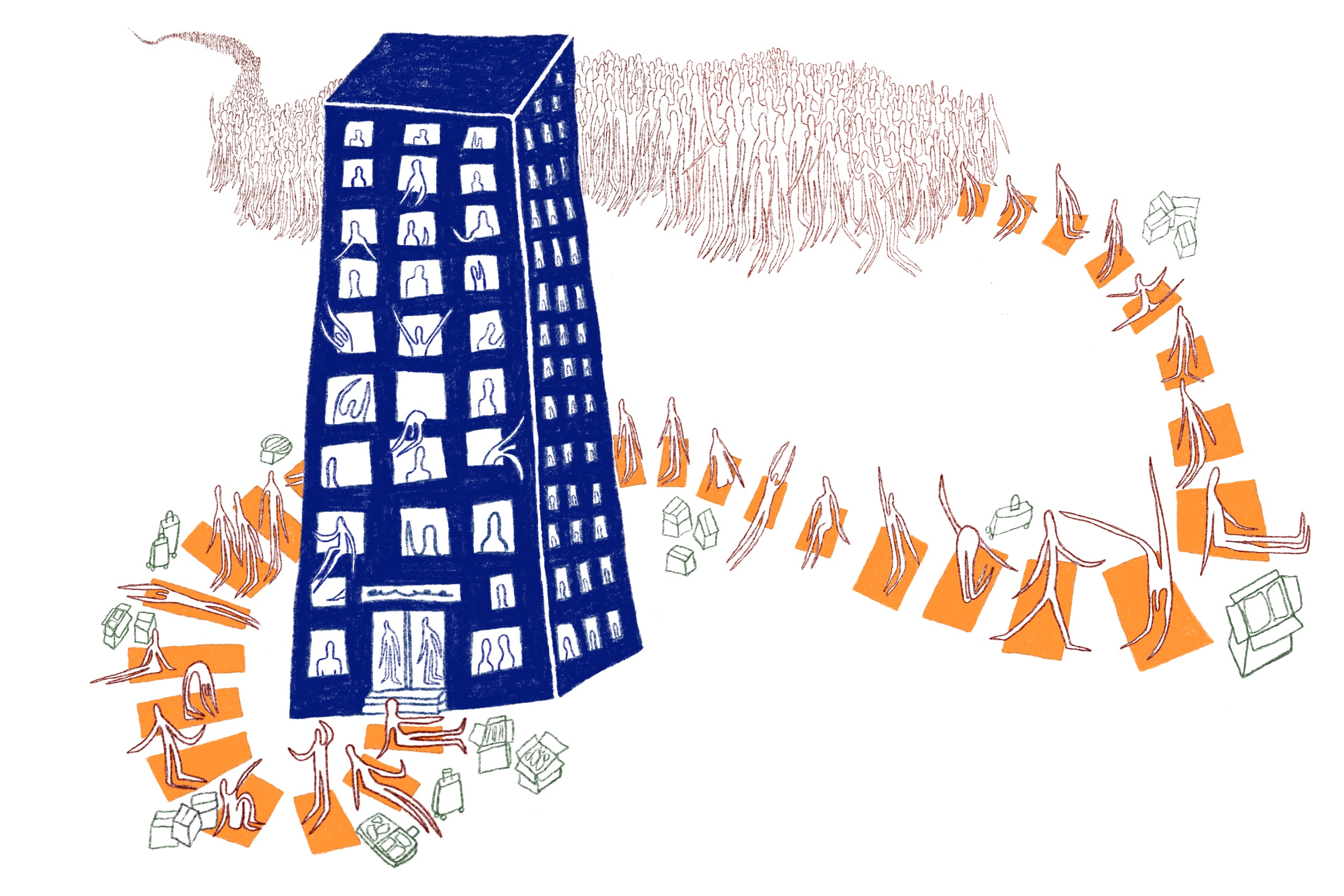
Government sets aside millions extra for student accommodation construction
Gepubliceerd op:-
Housing
-
-

Sam and his flatmate create an artwork for every house party
Gepubliceerd op:-
Housing
-