‘I wished to give poorly educated white girls a face’
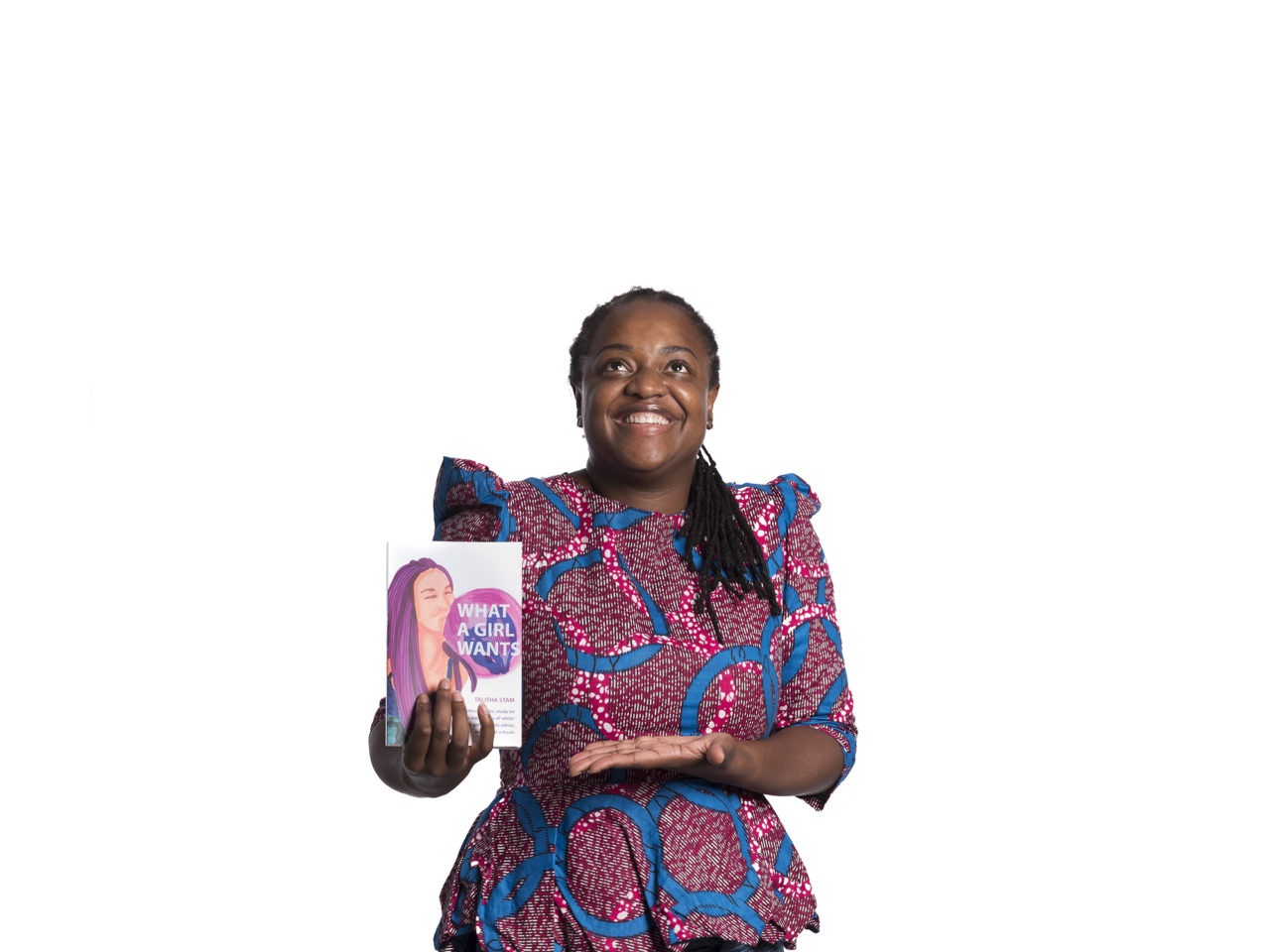
Talitha Stam’s doctoral research saw her follow a group of white girls attending lower-level vocational schools for a two-year period. She observed the girls from the back of the classroom, at their work placements and at their homes. Last Thursday she was conferred a doctorate for a PhD thesis entitled What a Girl Wants.
How would you explain to a member of your family what your doctoral research was about?
“My PhD research focused on the schooling and professional aspirations of girls attending lower-level vocational schools (VMBO and MBO), whose Dutch parents were poorly educated themselves. So basically, my PhD was about schools, and since everyone has attended a school, most people kind of got the picture.”
You stated in your dissertation that you were often asked why you were focusing on white girls.
“As far as early school leaving or educational inequality is concerned, little to no research had been conducted on this group in the Netherlands. In England, where I conducted some of my research, the ‘white working class’ is a population that is researched a lot. I never had to explain to anyone there why I was focusing on this particular group. Here people will often look at me and say, ‘Who exactly are you talking about?’ This is partly because these girls are more or less invisible. When you look at the statistics of early school leavers and young unemployed people, white girls make up the smallest group, which could lead some people to believe that there are no problems in that group. But there are, absolutely. These girls often have complex issues, ranging from fathers who are in prison to boyfriends who are in significant debt. Due to their ethnicity, they are presumed to have a certain ‘white privilege’, but when it comes down to it, they are part of a social class that suffers from systematic educational disadvantage.”
How will your dissertation make the world a better place?
“The main objective of my dissertation was to give this group a face. One major finding of my study was that these girls aren’t necessarily well prepared for the job market when they obtain the qualification they need to enter the healthcare industry (an MBO2-level school-leaving certificate), because the jobs they would like to have, such as nursing or maternity nursing, require a higher-level school-leaving certificate. Technically, an MBO2-level certificate should suffice to get them into elderly care, but in practice, old people’s homes prefer staff with MBO3-level certificates or better. For that reason, the focus should be less on the qualification these girls need to enter the job market, and more on the development of their aspirations and ways to help them find suitable jobs.”
Did you aspire to a doctorate when you were young yourself?
“Not at all. My teachers at primary school thought I was a MAVO girl, but I worked my way up from HAVO and HBO to uni, where I got a degree in Cultural Anthropology. I find it interesting to work on societal issues. I was given the opportunity to do so while doing my PhD, and I will continue to do so in my postdoctoral research, which is great! But I never aspired to this.”
Your teachers thought you were a MAVO girl?
“Yes, but my mother stopped me from being sent to a MAVO. It’s the same story with a lot of people like you and me.” (Stam is referring to the common problem of persons of colour being told to attend low-level schools, even though they are capable of higher-quality schooling.)
What is on the cover of your dissertation?
“I found the illustrator Hedy Tjin in a newspaper. I liked her style because it is playful, yet realistic. She created the illustrations on the basis of the text. I made a conscious decision to get the book to look like the group I researched. The girl on the cover looks like one of the girls I followed.”
‘What a Girl Wants’ is a song by Christina Aguilera, who is white and had a troubled childhood. Is that a coincidence?
“Yes, it’s completely unrelated. I did have a look at the lyrics to see if they were in any way helpful, but alas, they weren’t. My research is purely about the aspirations of these invisible girls, which are summed up in the visual of a girl blowing a chewing gum bubble: they start out with plenty of ambition, but at the end of the day, their bubble will burst.”
De redactie
-
 Tara Lewis
Auteur
Latest news
-

Letschert gives nothing away in first parliamentary debate
Gepubliceerd op:-
Education
-
Politics
-
-
Away with the ‘profkip’, says The Young Academy
Gepubliceerd op:-
Science
-
-

House of Representatives wants basic grant for university master after HBO
Gepubliceerd op:-
Money
-
Politics
-


Comments
1 reactie
Comments are closed.
Read more in The PhD Defence
-
How investment treaties undermine the voices of local communities
Gepubliceerd op:-
The PhD Defence
-
-
Why it is hard to find a connection between the psychiatric illness and the brain
Gepubliceerd op:-
The PhD Defence
-
-
Dogs bring people with epilepsy their medicine when they can’t do it themselves
Gepubliceerd op:-
The PhD Defence
-
Eva op 27 September 2018 om 10:13
Very interesting read, thanks! I was not at all aware of these issues…