‘For a man of colour, you’re quite handsome’

A couple of weeks ago, I went on a date with a guy I’d just met. It was a sunny Friday evening and we decided to go out for a few beers. We had a nice conversation and at one point I told him that I felt I had to compete with white men because, as a man of colour, I sometimes felt less attractive than white men.

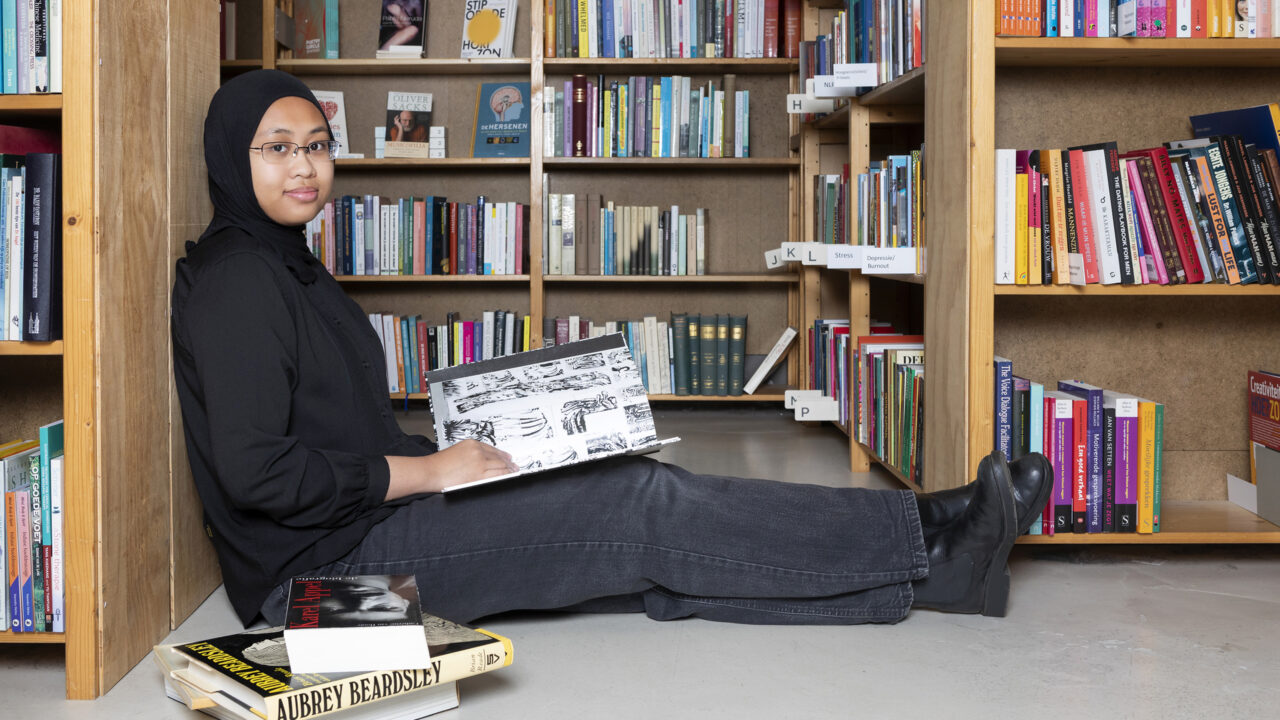
Image by: Levien Willemse
More columns
My date, a white man, told me that he knew what I meant because he didn’t find coloured men attractive. However, he did find me attractive for a man colour. I looked at him and just laughed because I didn’t know how to react. On the one hand because I hadn’t completely registered what had just happened, on the other hand because I can’t believe that some people still have such thoughts.
These things happen more often than you might think. Other examples are: “I don’t understand why I like you, you’re so extravagant.” And “You’re quite nice for a gay guy.” Friends have had to hear the same kind of remarks: feminists who aren’t as hateful as expected, people from a non-Dutch background who had integrated ‘quite well’ and more.
When you look up the definition of ‘stereotype’, you’ll find the following description: “an exaggerated image of a person or group from a negative point of view and which is used as a justification of discrimination”. If you compare this definition with the aforementioned examples, it almost looks as if those people are shocked that the stereotypes aren’t true. Astonishing, right?
Some people remain silent while others make rude comments about how surprised they are when somebody isn’t a stereotype
Stereotypes have existed since the beginning of time (let’s hold on to that exaggerative element) and we’re all guilty of having them, yours truly included. However, some people remain silent while others make rude comments about how surprised they are when somebody isn’t a stereotype.
According to psychology, stereotypes do have a function: the human brain thinks in categories in order to make sense of the world. The most common characteristics are used as the central features for describing a certain group. Pop culture also uses stereotypes and even makes it worse: gay men are seen as accessories, black women are always angry, feminists don’t shave their armpits (seriously?) and more nonsense.
So, my message to you is that the next time you feel like making a comment about how somebody of colour is actually pretty, someone doesn’t sound like an uncultured migrant or isn’t an extreme feminist: remember that you’re talking to real people, not one of the stereotypes stored in your brain.
De redactie
-
 Rocher Koendjbiharie
Columnist and blogger
Latest news
-

Letschert gives nothing away in first parliamentary debate
Gepubliceerd op:-
Education
-
Politics
-
-

Away with the ‘profkip’, says The Young Academy
Gepubliceerd op:-
Science
-
-

House of Representatives wants basic grant for university master after HBO
Gepubliceerd op:-
Money
-
Politics
-



Comments
Comments are closed.
Read more in Column
-

Minister Letschert and the academic tower
Gepubliceerd op:-
Column
-
-
Spinach seed wounds
Gepubliceerd op:-
Column
-
-

Leftover dame blanche
Gepubliceerd op:-
Column
-