JOVD are obsessed with diversity, but they’re missing the point

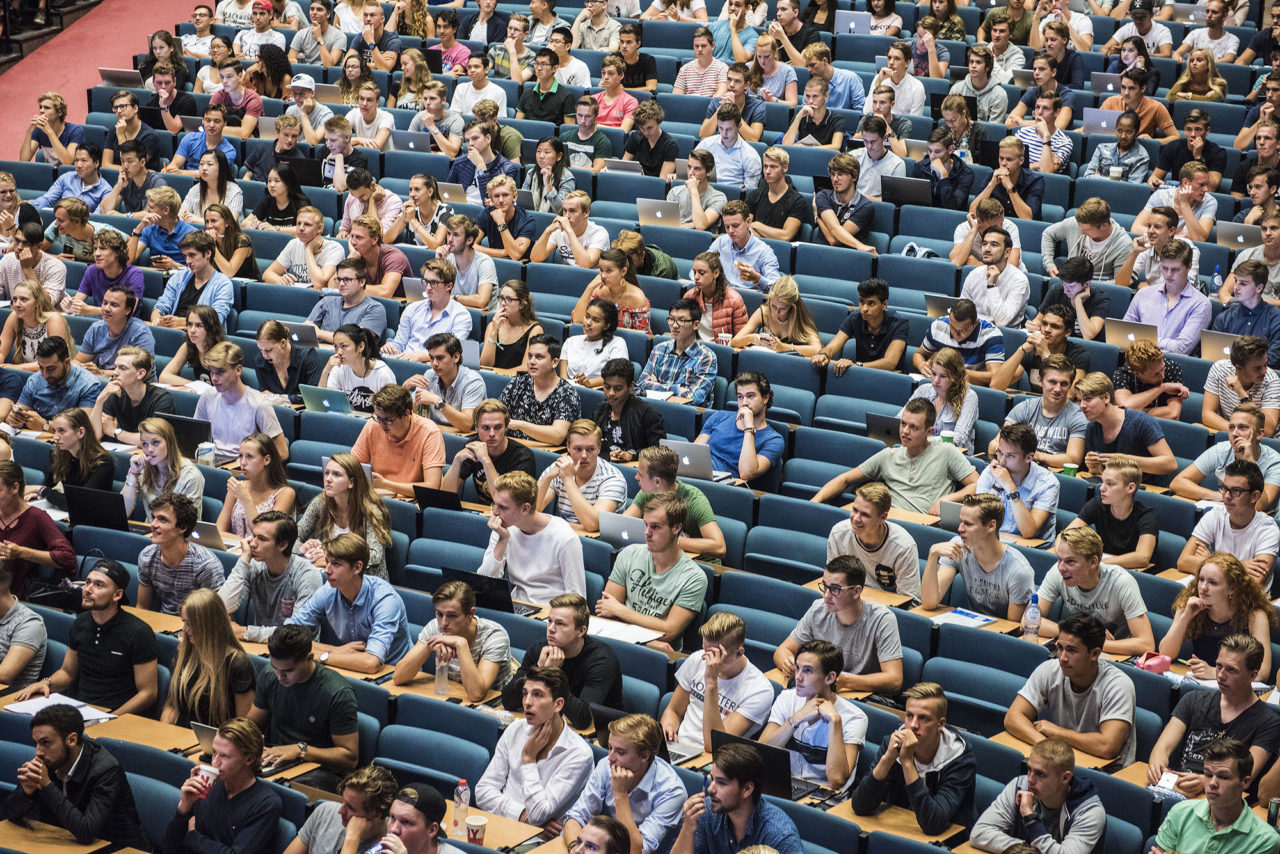
Image by: Ronald van den Heerik
EUR’s student body is as diverse as the university’s home town. While it makes sense that the composition of its staff doesn’t keep pace with every new development, this issue still merits our attention. The diversity of our university’s workforce is a very important subject. Precisely because it can provide us with all sorts of new perspectives.
The Rijnmond chapter of JOVD, the Youth Organisation Freedom and Democracy, affiliated with the People’s Party for Freedom and Democracy (VVD), believes diversity policy is an important issue. JOVD has issued two press releases on this subject over the past few weeks. And on both occasions, they were way off mark.
‘Unnecessary’ and ‘too expensive’?
In their first press release, the JOVD members call the university’s diversity policy ‘unnecessary’ and ‘too expensive’. Only one out of ten professors who work for our university is female – even though women cannot be called less suitable. Indeed, one presently finds more female students enrolled at our university than male students. This means that we find insufficient examples of women progressing to a professorship in their career – which underlines the need for a diversity policy. JOVD’s second point – that a diversity policy is purportedly too expensive – mainly shows how the members arrive at their positions. The fact is that they are unable to specify the alleged costs, and suffice by referring to the University of Amsterdam’s annual budget reservation for diversity programmes. All this means that JOVD hasn’t done its homework. They could have gained a lot more insight by contacting the University Council for details, or possibly filing a request under the Government Information (Public Access) Act.
Since then, JOVD has also responded to an open letter signed by some 300 EUR staff members. The signatories make a – highly justified – call for more inclusive education and changes to the university’s HR policy that could contribute to a more diverse workforce. JOVD President Van Putte responded by attacking this letter, stating the adverse effects of a ‘quota’. I’m still wondering how she actually came up with this ‘quota’, because the open letter doesn’t make any mention of such a measure. The only thing the letter says is:
‘Strategic HR policy that aims to diversify our staff by means of transparent selection and promotion processes, with the starting point being the added value for the team, and not individual excellence.’
JOVD has pulled this call for a quota out of thin air. A diversity policy that focuses on how someone functions within a team, on the other hand, is actually a very smart idea. That’s because teams that work well together and have an equal ratio of men and women tend to perform better.
Male-dominated culture
Let’s acknowledge that the present male-female ratio is a symptom of the prevailing male-dominated culture
In addition, JOVD disputes the idea of a male-dominated culture at EUR, reasoning that “if we were actually dealing with a male culture, this female contingent of 11 percent wouldn’t have been appointed either.” Well, yes… so the fact that the US has elected a black president means there’s no such thing as racism?
Let’s acknowledge that the present male-female ratio is a symptom of the prevailing male-dominated culture. We don’t have ten times as many men suited for a professorship as women. But we do have a culture that men feel more comfortable with than women. And to ensure that our university becomes more inclusive, this needs to change.
What sets universities apart
If you consider the diversity of our student body, our university is actually doing great. Together with Maastricht, we rank as the Netherlands’ most international university, and compared to other universities, EUR’s has a relatively high number of students from a different cultural background. This is something we can be proud of. Unfortunately, the diversity of our staff still has to catch up. Research shows that a diverse workforce results in better collaboration and improved performance. In addition, diversity can yield a larger number of perspectives and enrich academic debate. Which is exactly what sets universities apart. Let’s utilise new talent and set to work on creating a more diverse university.
Elene Walgenbach is a former President of Jonge Democraten (D66). She is currently enrolled in EUR’s Public Administration-Management master programme and is standing for Rotterdam’s Municipal Council as a D66 councillor.
Read more about the JOVD
- JOVD: ‘Don’t push (Divers)it(y) @ EUR’
- JOVD: Diversity Student Board ‘expensive, unnecessary and undesirable’
Read more about the open 'diversity' letter
- Make (Divers)it(y) happen @ EUR: a plea for urgent action
- Diversity: enough talk – time for action!
- Open letters, closed conversations?
De redactie

Comments
1 reactie
Comments are closed.
Read more in Letter to the editor
-
‘ESL loses a programme that could have become a beacon for law students’
Gepubliceerd op:-
Letter to the editor
-
-
Upon the departure of the rector: ‘We would have loved to keep going with you as our figurehead’
Gepubliceerd op:-
Letter to the editor
-
-
Dear EUR, act(ion demanded)!
Gepubliceerd op:-
Letter to the editor
-
J Smith op 30 October 2017 om 13:17
Hello,
Thank you for this op-ed. A few questions remain from my side: