Why it helps when queer teachers come out

Acceptance of homosexuality among pupils has fallen sharply in four years, according to research by the Trimbos Institute and Utrecht University. Schools are required to address sexual diversity. Education researcher Sabine Severiens says: “It’s a minefield.”
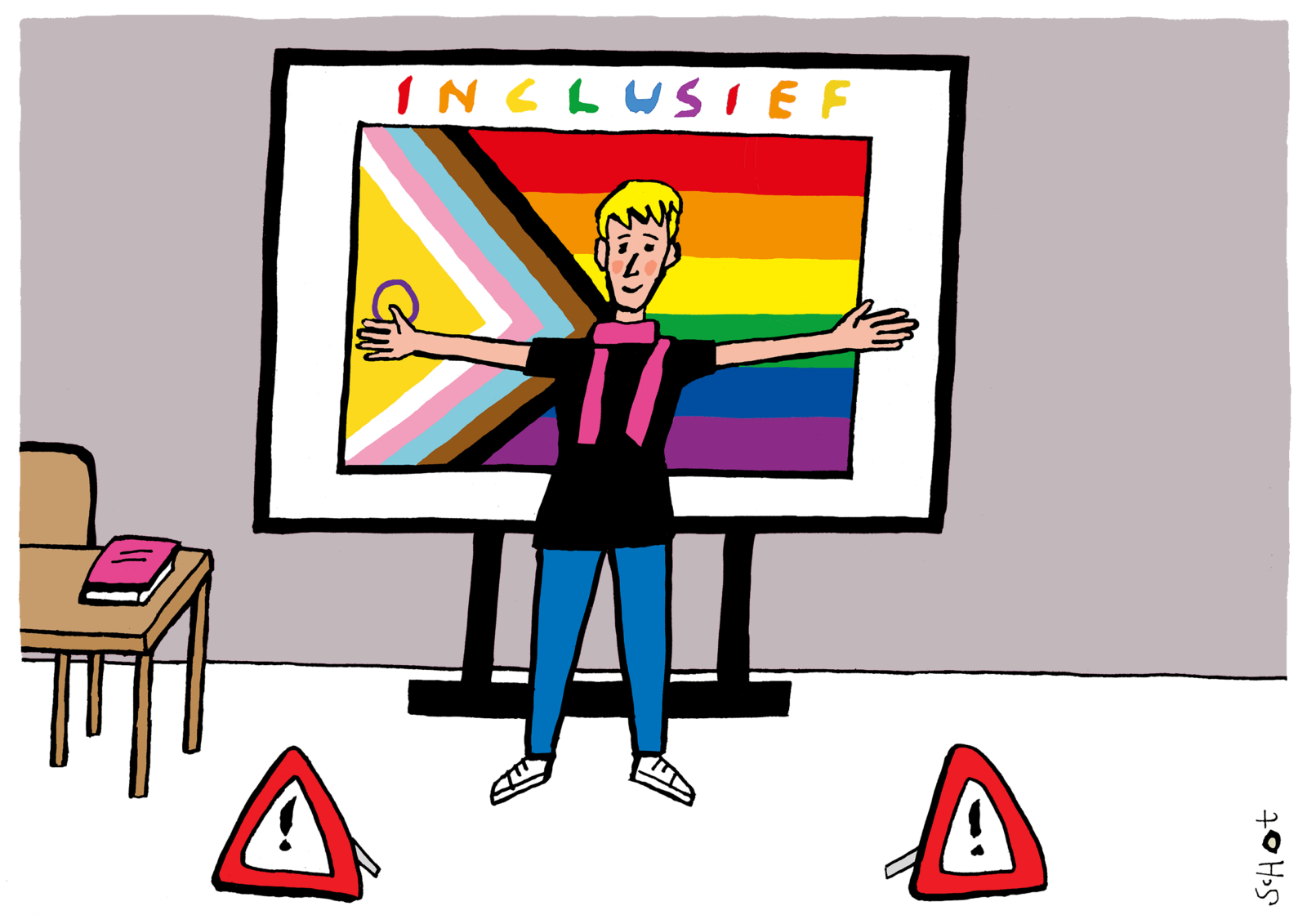
A recent report by the Trimbos Institute and Utrecht University found that the proportion of boys who viewed homosexuality positively fell from 40 per cent in 2021 to 22 per cent in 2025, while the figure for girls fell from 78 to 51 per cent. What do you make of those figures?
“I was shocked. But it’s very difficult to explain. The report offers no explanations, only statistics. I see the same trend in the Educational Master’s in Primary Education. One of our lecturers asked first-year students whether the primary schools where they were doing their placements had done anything for Purple Friday. Not one of the schools in Rotterdam had marked Purple Friday. Schools seem no longer willing to touch the subject. I find that worrying.”
Sabine Severiens is professor of education at Erasmus School of Social and Behavioural Sciences. She researches diversity and inequality in education, focusing in particular on diverse classrooms and supporting teachers and schools with inclusive education. She is also director of the Educational Master’s in Primary Education.
What challenges do schools face when discussing LGBTQ+ issues?
“Those lessons mainly cause problems with parents. Some parents have the strangest ideas. They get in touch because they’re afraid their child will become gay if these kinds of topics are discussed. Some insist that the school does not discuss them, or keep their children at home.”
Where do parents get these ideas?
“There are more conservative ideas around than there were a few years ago. As a result, LGBTQ+ issues have become highly politicised. You could say that people are ‘for or against’ sexual diversity. And addressing sexual diversity in the curriculum is dismissed as ‘woke’. That’s very strange, because sexual diversity is simply a fact.
“These ideas are further fuelled and spread by social media. In the rabbit holes people can disappear down, such as the manosphere or tradwife communities, there are deeply conservative ideas about masculinity and femininity. Homosexuality does not fit with those rigid views of gender.”
Schools are required to address sexual diversity. What exactly does that requirement involve?
“There are a number of core objectives that primary and secondary schools must meet. One concerns multicultural society and diversity, including sexual diversity. Schools also have a legal duty to contribute to citizenship education and teach respect for the fundamental values of our democratic constitutional state. The law explicitly mentions respect for differences in sex and sexual orientation. In that sense, schools are required to create an environment in which pupils and staff feel safe and accepted.”
How do schools deal with sexual diversity in practice?
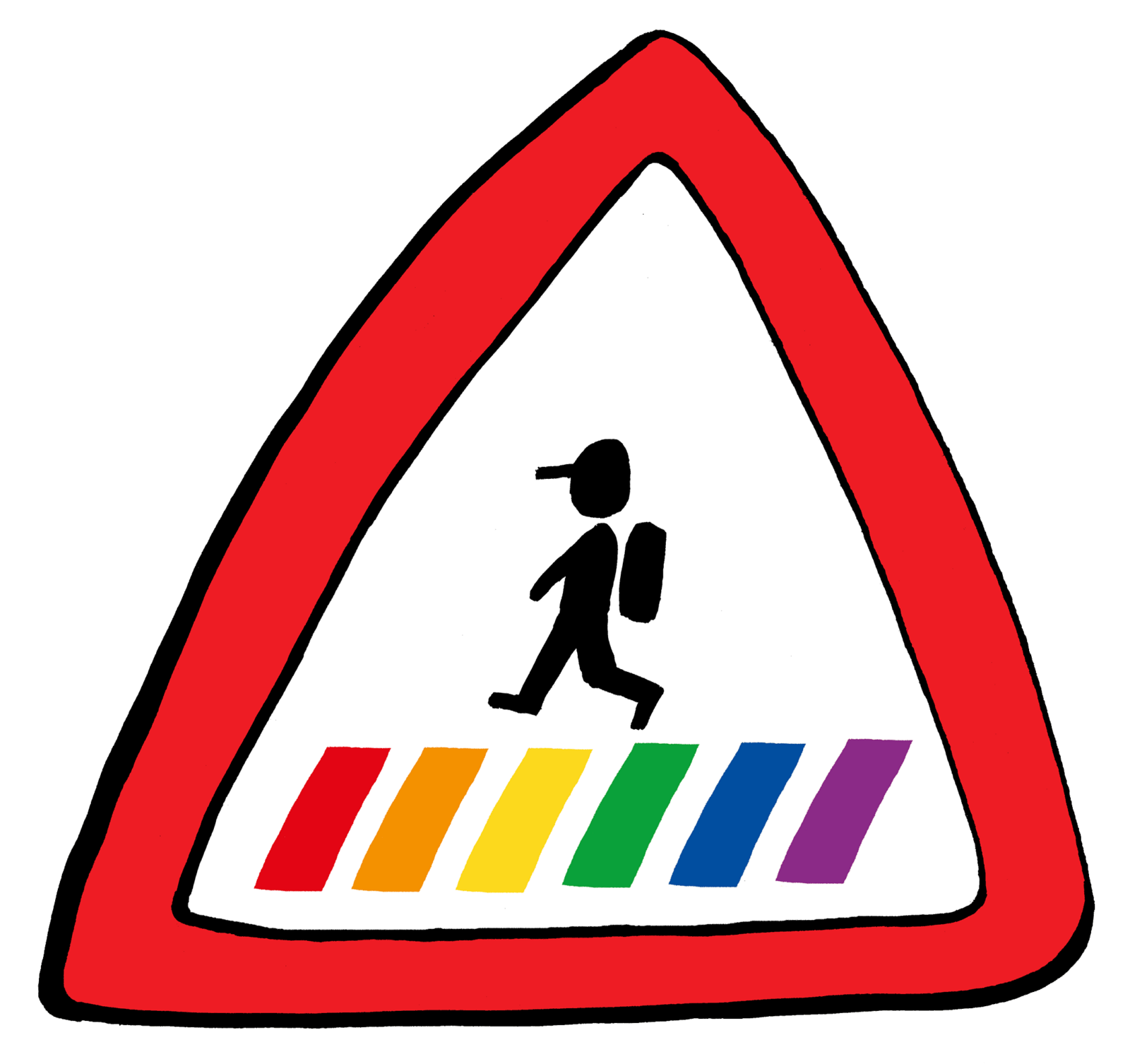
“Research into schools’ policies on LGBTQ+ issues shows roughly two groups. The first sees LGBTQ+ acceptance mainly as an issue of bullying. They therefore address the problem at an individual level. If LGBTQ+ young people are not accepted, the school responds with an anti-bullying policy.
“A second group of schools sees LGBTQ+ acceptance more as part of the school’s social responsibility. They treat it as a shared problem, something that concerns everyone. So it is not seen as an individual problem between a child who is gay and being bullied and the person bullying them.”
Does research show that requiring schools to cover LGBTQ+ issues actually increases resistance among pupils and parents?
“No. So many things are compulsory in education that we’re used to it. The government sets all those core objectives, and they’re simply important for the curriculum. Schools can decide for themselves how to put them into practice. So in reality, schools have plenty of room to put their own spin on them in line with their own vision.”
Does addressing LGBTQ+ issues at school lead to greater acceptance?
“You can tell that schools which take a more social approach have a more inclusive culture, where pupils feel comfortable and can be themselves. There is less bullying across the board. That’s good for all pupils, not just LGBTQ+ pupils. In that kind of environment, pupils can really focus on learning. Because if you feel you’re not allowed to be yourself because you’re gay, learning becomes much more difficult.”
What do you think schools could change to counter the decline in acceptance of homosexuality?
“Schools should treat children as ‘whole’ people, and teach them accordingly. In years seven and eight, when these issues start to become more relevant, pupils have to sit tests before moving on to secondary school. Many schools don’t want too many extra activities or distractions at that point. You have to be good at language and maths; nothing else matters. But everything else matters enormously. A lot is happening in children’s lives at that age. Schools should recognise that.
“A school needs a clear position on the subject, which requires strong school leadership and a team of teachers who support it. They need to speak with one voice about what the school stands for. So not just that we tolerate homosexuality, but that we accept and respect it. And if you have a problem with that, you shouldn’t choose this school.”
Doesn’t that lead to segregation?
“Yes, it could, but I can’t see how else we can do this. Schools already do a lot to engage with parents. That is also part of the solution. For example, during the Week of Spring Fever, when schools give extra attention to relationships and sex education, friendship, emotions and the body. Some schools share the entire programme with parents in advance, so they know exactly what will happen. That helps, but it does demand a lot from schools and teachers.”
Are there ways of structuring lessons on LGBTQ+ issues to make them more likely to resonate?
“The problem isn’t with the teaching materials, because the existing resources are very good. There are also all kinds of organisations that schools can ask for help, and which provide guest lessons.
“What I know from research is that LGBTQ+ issues, especially for young people, are about much more than sex. They are about identity, appearance, clothing and culture. So that’s how you should approach them in lessons, not just in a guest lesson on sexual diversity. For example, it’s also important in biology lessons to emphasise and discuss the fact that gender involves both physical and social characteristics.”
'Because if you feel you're not allowed to be yourself because you're gay, learning becomes much more difficult'
Do religious schools deal with this differently than public schools?
“I was recently at a religious school. The school’s position was that homosexuality was not straightforward from the perspective of its faith. But the school was clear that homosexuality exists and that it is allowed to exist. So they respect it, but at the same time it’s not something they want to celebrate or express. I do wonder how safe an LGBTQ+ young person would really feel there. But it is not completely rejected.
“And what I often see at schools with a strong religious background is that they talk and think a lot about identity. In a sense, then, they are well placed to discuss those broader issues of identity and culture without making it all about sex.”
What can teachers do themselves?
“It helps when queer teachers come out. Their mere presence can make an enormous difference to pupils who are struggling with these issues. But not every school makes it equally easy. The subject is difficult for teachers to navigate if the school they work at would rather not talk about it.
“One student on the Educational Master’s course is doing a teaching placement at a primary school where a boy came to school wearing nail polish. He was laughed at and bullied. The school let it slide and did not put a stop to the behaviour. The student, who is a man, painted his own nails. Without doing or saying anything else, he went to teach his class like that, as a show of support for the boy.”
More Issues
-

Why supermarkets should maintain a month’s emergency stock
Gepubliceerd op:-
IT
-
The Issue
-
De redactie
-
 Manon Dillen
Editor
Comments
Read more in The Issue
-
Why supermarkets should maintain a month’s emergency stock
Gepubliceerd op:-
IT
-
The Issue
-
-
‘There should be a minimum age for fatbikes’
Gepubliceerd op:-
The Issue
-
-

‘With gadgets like Meta Glasses, we pay to be surveilled’
Gepubliceerd op:-
The Issue
-

Leave a comment