Ad

How examination boards determine AI use: the consequences for students can be far-reaching

One student abandoned his thesis before graduating, another was banned from his next exam. For students suspected of unauthorised AI use, the consequences can be far-reaching. As AI-generated writing becomes increasingly difficult to distinguish from human work, establishing concrete evidence of misconduct is equally challenging.
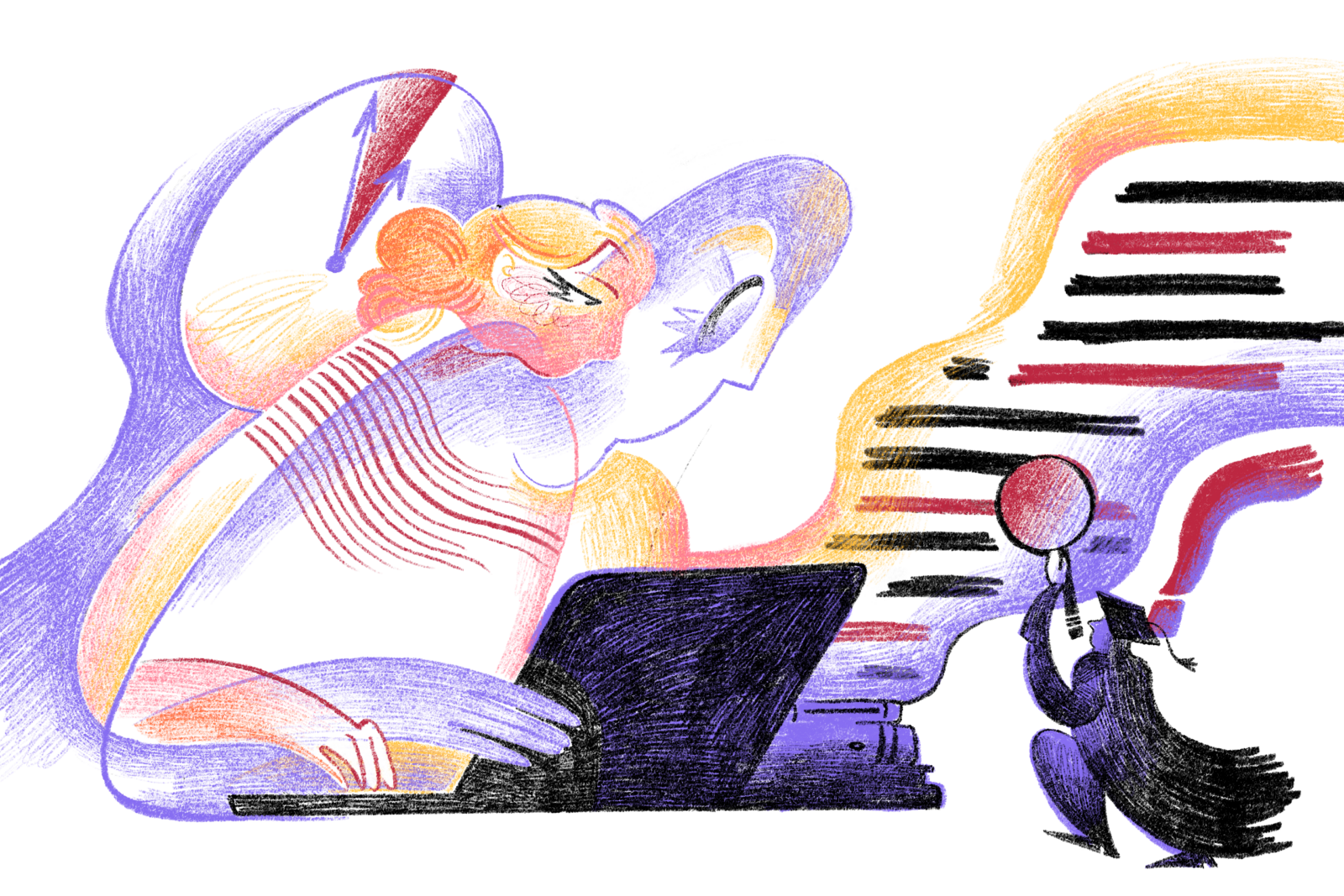
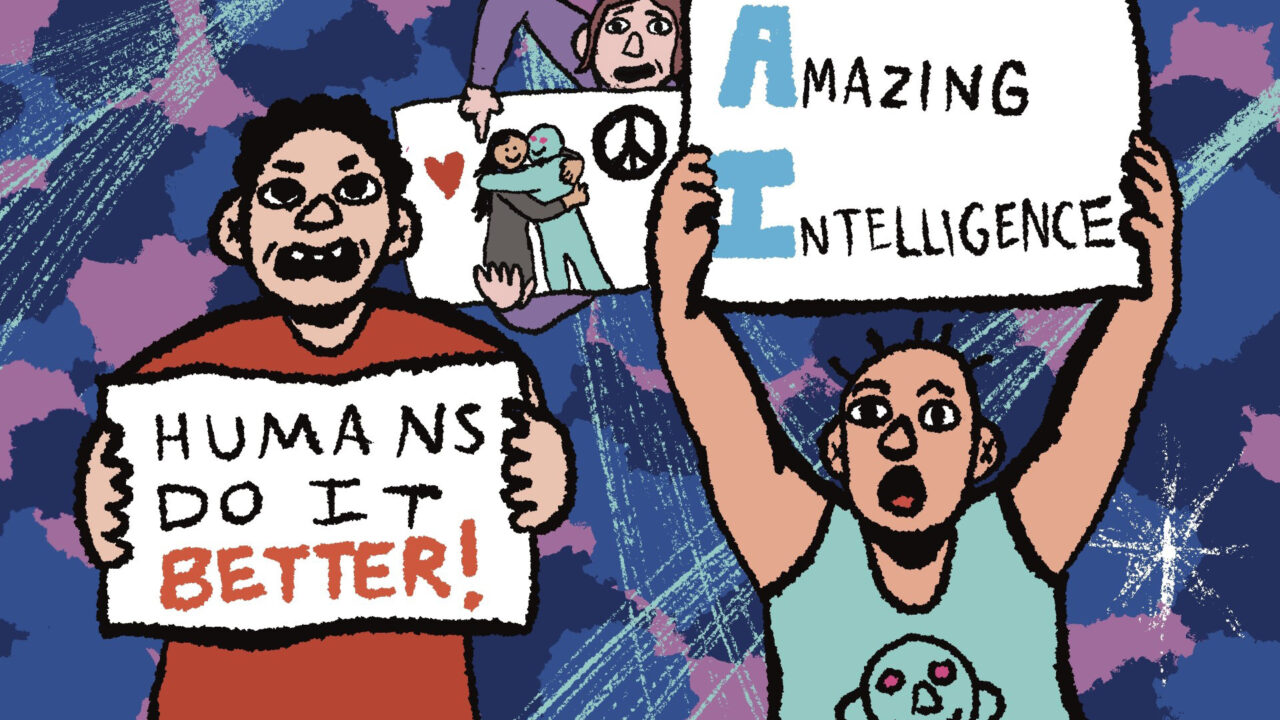
Image by: Ami Rinn
“The moment I was notified of suspected fraud, I decided it was in my best interest to stop writing my thesis”, says Krasimir , a Supply Chain Management student at the Rotterdam School of Management (RSM). He is one of the students at Erasmus University whose work was suspected of unauthorised generative AI use.
The temptation for students to finish their academic work quicker and easier has led to such an increase in fraud cases, that such cases practically became the sole task of the head of the Erasmus School of Philosophy examination board during the past year, said Sonia de Jager, AI policy adviser of the Erasmus School of Philosophy (ESPhil).
Dropping out
Krasimir doesn’t deny using AI for his thesis. He admits he used two AI tools: SciSpace to find academic articles related to his topic and ChatGPT to edit his writing, suggest ideas, and explain concepts.
“I had complete control of my main research ideas. I had read and analysed all the scientific works I had cited and used as a base for my thesis”, he says.
The EUR guidelines on AI use highlight the basic principle that any student assignment that is generated by an AI tool is considered to be fraudulent. What the consequences of that are, however, can vary between study programmes. They set the policy themselves.
According to the RSM AI Guide, students are ‘allowed to use generative AI where it supports their learning and work, unless it limits the ability to assess knowledge, insights or competences as described in an assignment or in a course’s learning objectives’. Every unauthorised use of generative AI is considered ‘violation of academic integrity, in other words, plagiarism and fraud’. If this is detected or suspected, the examiner must inform the examination board as soon as possible.
Always a human check
“Teachers are able to suspect AI fraud by finding inconsistencies in the text”, explains Liza Kozlowska, an AI & education policy adviser within Academic Affairs. “For example, if the first part of the text is very elaborate and in perfect British English, while the second part contains more mistakes in grammar and style. Or if the references link to sources that don’t exist or cannot be verified. Teachers can use AI detectors, such as Pangram, as support evidence. However, there is always a thorough human check.”
Een lijst met artikelen
-
RTL: More than half of master’s theses contain AI-generated text
Gepubliceerd op:-
Artificial Intelligence
-
Education
-
If the suspicion stands, the examination board will invite the student to a hearing to explain themselves. With minor offences, the case can sometimes be settled without a hearing.
Krasimir didn’t go to his hearing. At that point, he was already in another country, employed in a field different from his master.
“I understand it makes me look a bit guilty, but because of this, I considered it not worth the extra money and time I had to spend, just to get a chance of being allowed to submit and get the diploma”, he says.
Due to his departure, the hearing didn’t take place at all.
Sanctions
In general, the sanctions for students are determined based on the documents and the hearing. The RSM MSc rules and guidelines list potential consequences. Those include a reprimand, invalidation of the concerning test, exclusion from one or more tests, exclusion from one or more exam periods or a combination of these measures, an exclusion for up to one year or end of enrollment.
A combination of these sanctions has been applied to Vasil , a student in the People, Organisations & Change programme at the RSM. His work was flagged due to references the AI tool invented.
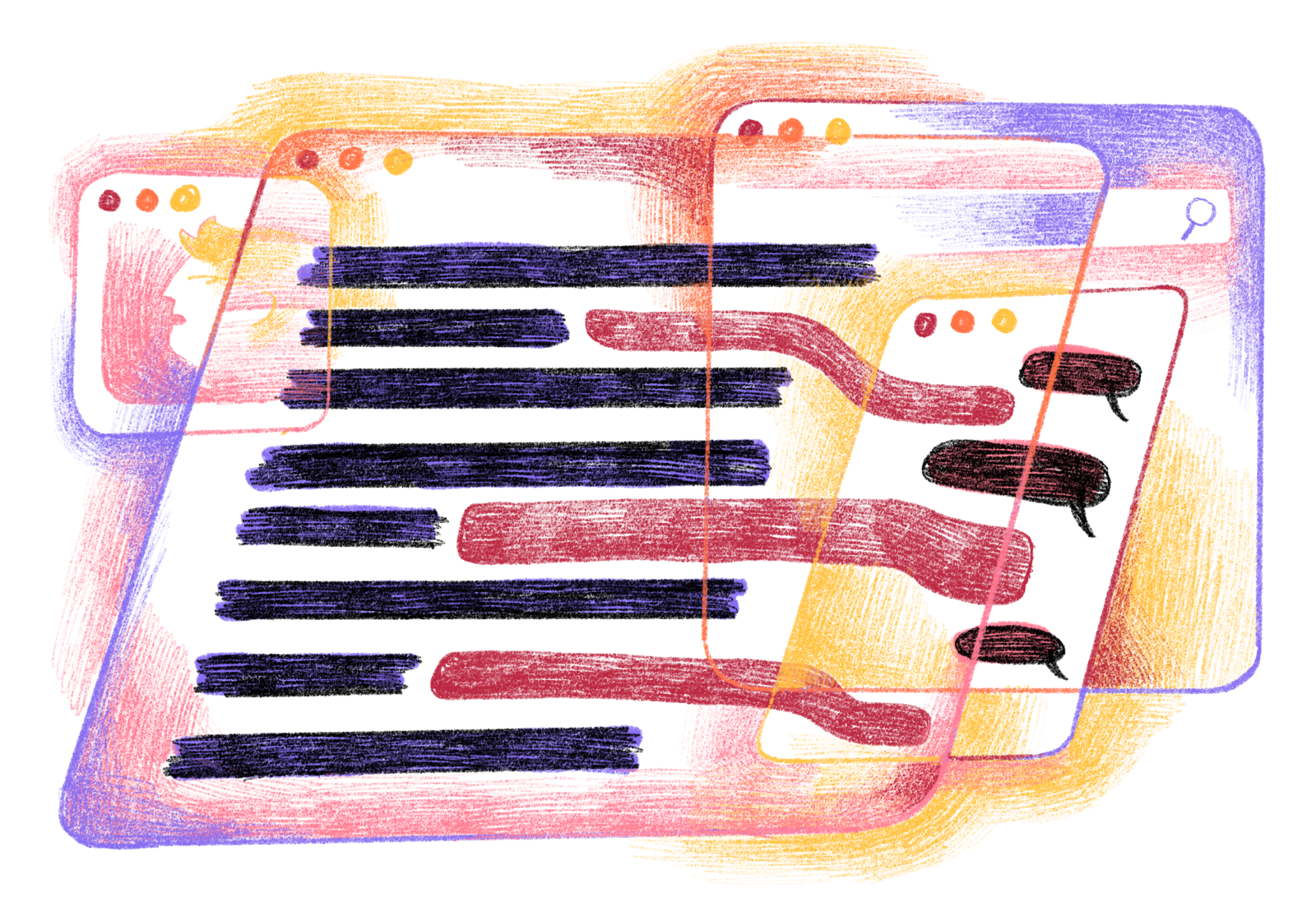
Image by: Ami Rinn
“The tool did most of the work”, he admits. “I’m aware it was not a good decision but when you have the possibility to finish your work quicker, you do it.”
At the hearing with the Examination Board, the head shared the consequences with him: redo the assignment, write an essay about responsible AI use, and a ban from his next exam, leaving him to go directly to the resit.
Accusations assessment
The severity of a sanction depends on several factors, Kozlowska says.
“If the assignment was fully written by AI, sanctions are usually more severe than, for example, just a paragraph”, she says. “Another thing taken into consideration is the stage of the student’s programme, whether it’s about a final thesis or a first-year student that just started to work with references. We take these factors into account when deciding on the sanctions.”
Limits to detection
There are cases where the reference list is flawless and there are no reasonable signs of fraud. Can misuse be detected simply from the writing style? Sonia de Jager, who is also part of the examination board of ESPhil, says tools are currently not good enough to detect AI fraud.
“This is because there are limits to the combinatorial possibilities of natural language as we’re used to seeing it right now, at this point in history, which can lead to false negatives or false positives by the AI checkers”, explains de Jager.
'What we can say to a student is: this reads like an AI chatbot. Your text lacks ethos, pathos, and logos'
Still, the examination board has to judge student results by some means. “What we can say to a student is: this reads like an AI chatbot. Your text lacks ethos, pathos, and logos”, explains Robin van den Akker, Vice Dean of Education at ESPhil.
“What we need to do as teachers, is prepare students well enough to have them understand complex concepts and be able to relate them to each other, to teach them the craft of writing so they don’t even feel the need to use an AI chatbot.”
De Jager emphasises that that’s exactly what they would like to focus on. “Teaching philosophy is what we are after. We are not interested in catching anyone cheating.”
Often not enough
Yet even a serious suspicion is often not enough if there is no proof or admission of guilt.
“Even if the student doesn’t acknowledge the suspicion, the examination board may still conclude that the evidence provided is sufficient to conclude that fraud occurred. In practice, however, the evidence is often not sufficiently conclusive for the examination board to establish misconduct with complete certainty. I expect and hope that more cases will help create clearer legal precedents in the near future”, explains Liza Kozlowska.
Een lijst met artikelen
-
AI in thesis is not always fraud, rules highest education court
Gepubliceerd op:-
Artificial Intelligence
-
Education
-
De redactie
-
 Radina Kirilova
Student Editor
Comments
Ad
Read more in Artificial Intelligence
-

Bredenoord: Mentioning AI use in speeches unnecessary
Gepubliceerd op:-
Artificial Intelligence
-
University Council
-
-

Executive Board regularly uses AI for speeches and LinkedIn posts
Gepubliceerd op:-
Artificial Intelligence
-
Governance
-
-
RTL: More than half of master’s theses contain AI-generated text
Gepubliceerd op:-
Artificial Intelligence
-
Education
-


Leave a comment