Ad

NVAO positive about Erasmus University’s education quality

The panel of the Netherlands and Flemish Accreditation Organisation (NVAO) is positive about the quality of the university’s education. Its social engagement is particularly appreciated. Workload and a more structural approach remain areas of concern.
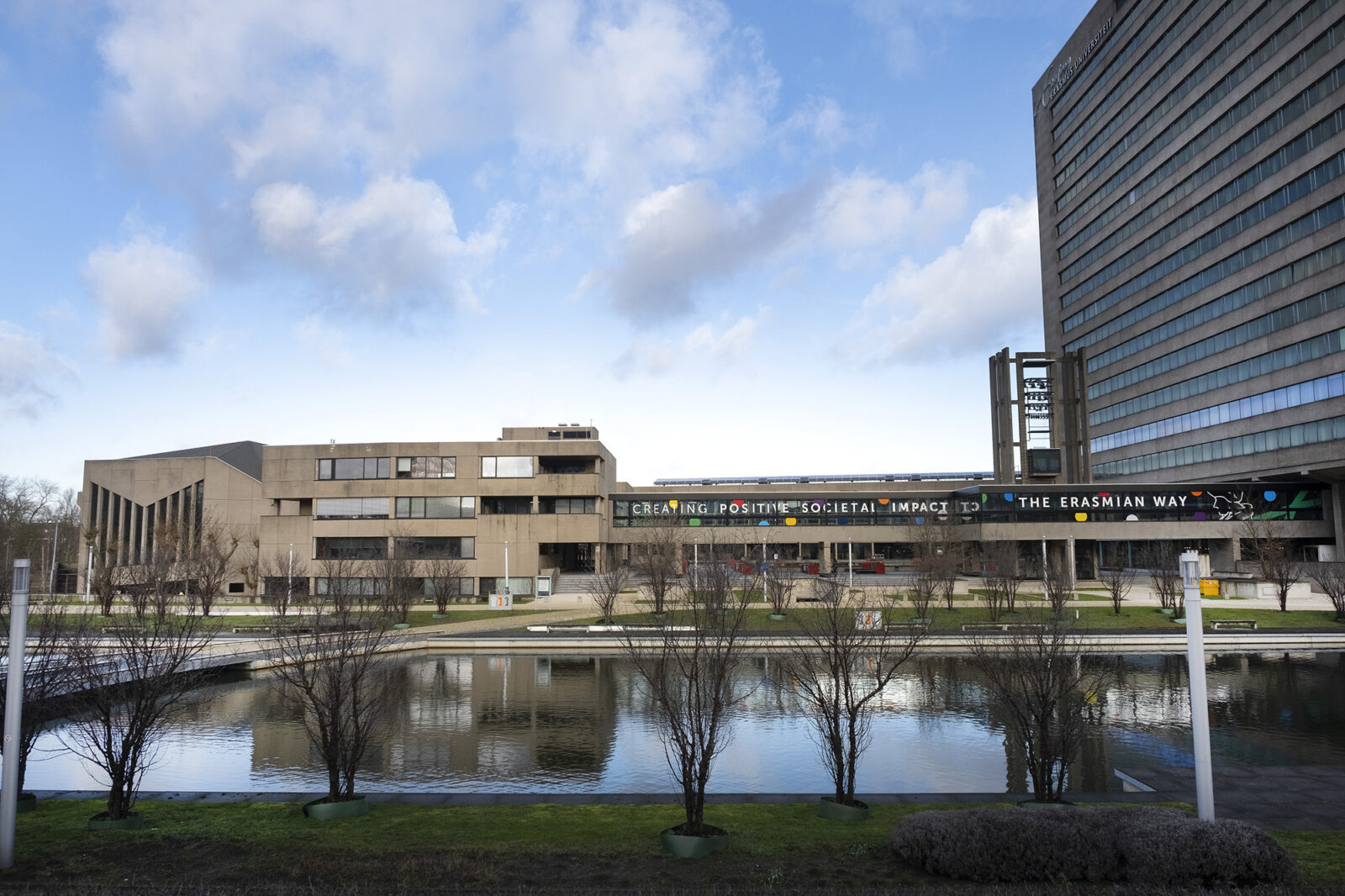
Image by: Levien Willemse
The university has its quality assurance for education in order. This is the conclusion of an expert panel from the NVAO in its advisory report on the institutional quality assurance assessment. The panel gives the university a positive assessment on all four elements: vision and policy, implementation, evaluation and monitoring, and development.
Connected to society
“Erasmus University is an engaged university that educates students to become global citizens who make a positive difference in society. The panel has established that the institution is delivering on this ambition”, the NVAO says in its assessment of the university in the report.
According to the panel, one of EUR’s strengths is the social focus of its education: “Students work on current social issues, often in collaboration with organisations in Rotterdam and the surrounding region.” The panel cites collaborations with the Pauluskerk and projects in Rotterdam South as examples.
Recognition for university initiatives
The report also praises several university initiatives. According to the panel, the Erasmus Verbindt programme acts as ‘a bridge between the university and its surroundings’. Through this programme, practical issues faced by businesses and social organisations are brought into the classroom. This gives students the opportunity to apply their knowledge to concrete issues in society.
The panel also describes the Community for Learning & Innovation as ‘an important driver of professional development for lecturers, educational innovation and the exchange of knowledge between faculties’. Examination boards also receive a positive assessment for their ‘independent and proactive role in safeguarding the quality of assessment’.
Workload
The panel also identifies a number of areas of concern. Staff surveys show, among other things, that lecturers experience a heavy workload. The university has taken various measures to reduce this, including the Smarter Academic Year and Recognition & Rewards programmes. The Smarter Academic Year has shortened the teaching period to reduce lecturers’ workloads. Recognition & Rewards programme also offers clearer career paths and criteria for assessing, recognising and rewarding staff.
The panel recommends continuing to monitor the effects of these measures closely, as they do not have the same effect on all staff. Some staff, for example, have experienced an increase in their workload as a result of the Slimmer academisch jaar.
Een lijst met artikelen
-
More than half of staff experience work-related stress
Gepubliceerd op:-
Campus
-
A more structural approach
The panel also says that the faculties’ considerable autonomy sometimes leads to differences in how university-wide policy is implemented. According to the panel, EUR has good physical and digital facilities for students and staff, but there are still differences between faculties in how these are provided. For example, the option to attend lectures online is not a given at every faculty. The panel says it is important for EUR to set out more clearly which matters are managed centrally and where faculties have room to make their own arrangements.
The panel also calls attention to the cooperation between different staff and student representation bodies. According to the panel, the links between the University Council, faculty councils and programme committees could be organised on a more structural basis.
Institutional assessment
As part of the Institutional Quality Assurance Assessment, a panel examines how a university or university of applied sciences safeguards, evaluates and improves the quality of its education. The panel issues an advisory report to the NVAO, the independent organisation that assesses and monitors the quality of higher education in the Netherlands and Flanders. The NVAO then takes a formal decision based on the advice, which is valid for six years.
Een lijst met artikelen
-

Erasmus University receives preliminary positive recommendation on institutional review
Gepubliceerd op:-
Education
-
De redactie
-
 Feba Sukmana
Editor
Comments
Ad
Read more in Education
-

Universities admit more international students than agreed
Gepubliceerd op:-
Education
-
Internationalisation
-
-
House of Representatives wants to put civil servants laid off by cuts in front of classes
Gepubliceerd op:-
Education
-
Politics
-
-

EUR comes last in Keuzegids, Utrecht and Open University score highest
Gepubliceerd op:-
Education
-

Leave a comment