Ad

Student movement wins elections in Serbia: how did they come about?
The Serbian student movement has won the elections. This brings an end to President Aleksandar Vučić’s autocratic rule. How did the student movement grow so large?
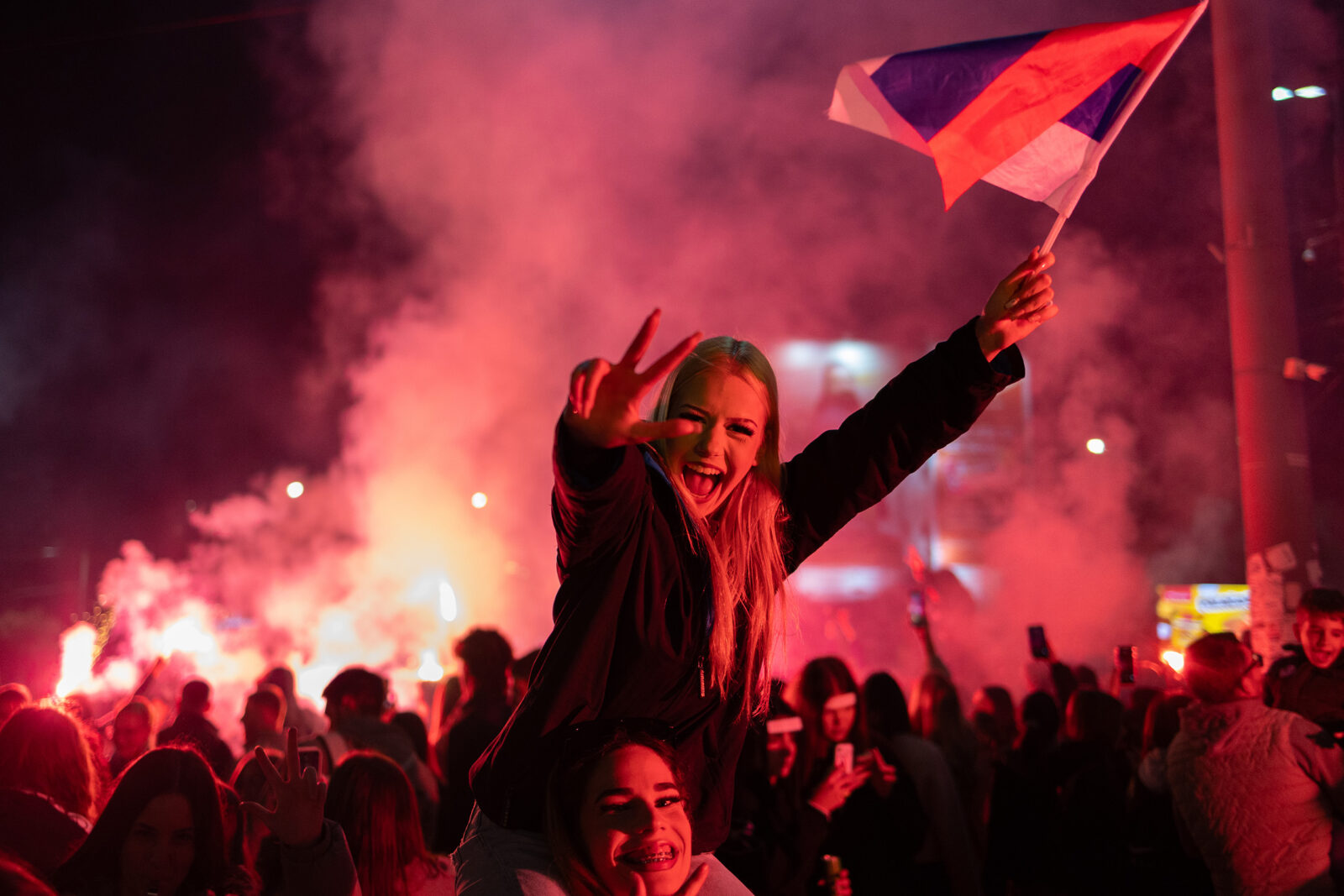
“We have lost these elections”, said Aleksandar Vučić on Sunday evening, based on the preliminary count. “The Student List has won.”
Vučić dominated Serbian politics for years: he became prime minister in 2014 and president in 2017. But the Studentska Lista (Student List, or, as the students prefer to call the party, the movement) has now won more than 50 per cent of the vote. Vučić’s Serbian Progressive Party (SNS) was left with 40 per cent.
When was this student party formed?
The student movement has its roots in the protests that broke out in late 2024, after part of the roof of a railway station collapsed in the city of Novi Sad. Sixteen people died in the disaster. The building had been renovated a few years earlier.
What happened in the disaster?
The collapse became a symbol of corruption in the country. The construction companies hired for the work were reportedly chosen because of their close ties to the SNS, rather than their expertise. Large protests followed, led mainly by students: they occupied university buildings for months and took to the streets alongside other protesters. The protests were brutally suppressed.
What happened at the universities?
Academic freedom came under threat there, as confirmed by the recent annual report from Scholars at Risk. Academics were no longer free to carry out research. Lecturers and staff who expressed solidarity with the students risked losing their jobs.
So a party emerged from the protests?
The students did indeed decide to take part in the elections. They chose the candidates themselves; most of them are not students, but experts, professors and local representatives.
Who is the leader of the student movement?
The lead candidate is 56-year-old professor of cardiology Ilija Srdanović. But the movement has no formal leader. Most of the candidates have little political experience.
What do they want to achieve?
Experts from various fields helped draw up the party’s programme. Tackling corruption is a priority, the programme says, and the rule of law must be restored. Judges and the police should be able to work independently, for example, and there must be room for free media.
How did the European Union respond to the situation in Serbia?
Serbia is not yet a member of the European Union: it is a candidate country, and accession negotiations have been under way since 2012. The country already takes part in the Erasmus+ exchange programme and is also an associated member of the Horizon Europe research programme. But accession talks are progressing slowly, particularly because the rule of law is deteriorating in the country and it has close ties with Russia.
Could that change now?
The students’ victory could indeed affect relations between Serbia and the EU, although the students say little about Russia in their programme.
The situation is vaguely reminiscent of Hungary, where the rule of law came under severe pressure under Orbán. The European Union froze subsidies for Hungary, and the country was also barred from taking part in the Horizon research programme and the Erasmus+ exchange programme. A political change of direction came there earlier this year too. Hungary has since been taken off the naughty step.
Een lijst met artikelen
-
D66 in particular must tread carefully in debate on the OCW budget
Gepubliceerd op:-
Politics
-
De redactie
Comments
Ad
Read more in Politics
-
D66 in particular must tread carefully in debate on the OCW budget
Gepubliceerd op:-
Politics
-
-
Translator: Suspended Palestinian student did not say ‘this is me’
Gepubliceerd op:-
Politics
-
-
Knowledge institutions warn against the Netherlands’ frugal approach in Europe
Gepubliceerd op:-
Internationalisation
-
Politics
-
Leave a comment