Ad

Talent strategy takes shape: plenty of ‘self-management’, freedom of choice of study remains intact

The new government’s ‘talent strategy’ relies heavily on ‘self-management’ by educational institutions: they promise to recruit more students for ‘useful’ courses. Including from abroad.

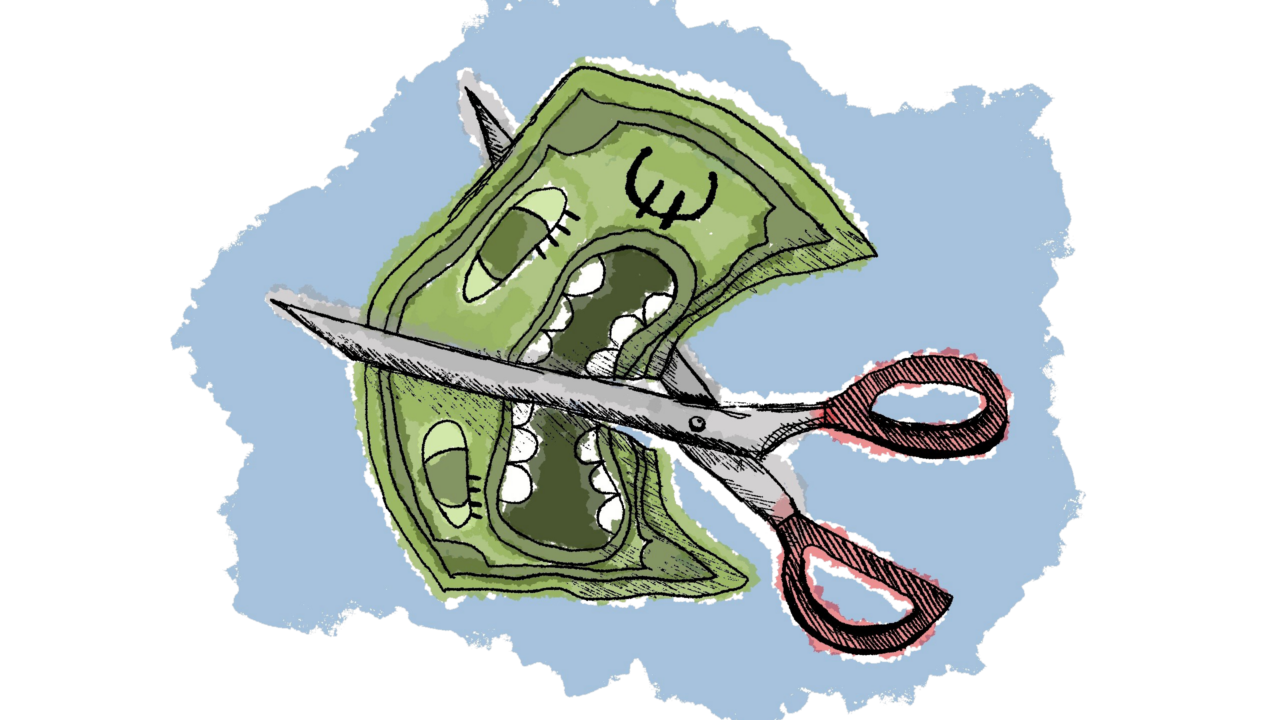
Image by: Ami Rinn
The labour market is tight and changing rapidly. That is why the government announced a ‘talent strategy’ just before the summer. Education should train more people for shortage subjects and for four strategically important sectors. In short: AI, security, energy and biotech.
When the minister announced the first outlines of her policy, students immediately voiced their concerns: would the government try to push young people towards a particular field of study? For example, make them study engineering instead of economics?
Self-management for the talent strategy
That does not seem to be the case. On Monday, the Ministry of Education announced that it had received a range of plans from vocational colleges, universities of applied sciences and research universities on how they could contribute to the talent strategy.
Without binding laws and regulations, regional training centres, universities of applied sciences and research universities say they can already do a great deal. A few years ago, they came up with plans for ‘self-management’ to better manage the flow of international students. Now they have come up with a kind of self-management for the talent strategy. The minister is pleased with the proposals and will continue discussions with the education sector and employers.
Many of the things educational institutions wanted were already on their agenda. They now happen to fit with the talent strategy. Universities, for example, see an opportunity to start recruiting international students again, while universities of applied sciences are reiterating their call for more scope to provide further training for workers.
Universities: AI in every course
Universities are now promising to review the curricula of all courses to see whether they give enough attention to digitalisation and AI. Courses must also come up with assignments that teach students from different disciplines to work together. Entrepreneurship should also feature more often.
Universities also believe that freedom of choice of study must not be undermined. They do want to “encourage” students to choose subjects such as engineering, healthcare or education more often, but plan to do so by making courses more attractive and expanding what is on offer. Courses in shortage fields that can currently accommodate only a limited number of students should receive funding to expand.
Universities of applied sciences: new master’s courses
Universities of applied sciences take a similar view: as long as freedom of choice of study remains intact, they want to do all they can to steer students towards energy, security, AI and biotech. This includes developing new master’s courses and short courses in those sectors. Research at universities of applied sciences could also focus more on them.
In return, universities of applied sciences are asking for simpler regulations. They can currently run into problems if they offer a course for workers seeking further training. This is not yet a statutory duty of a university of applied sciences, so it is not allowed to invest public money in one. Like research universities and regional training centres, they are therefore asking for further training and retraining to become a public task, so that institutions can fund it without hassle.
Language assessment removed from the WIB
The educational institutions’ promise to help the government with its talent strategy was rewarded that same day: on Monday, the ministry also announced that the controversial ‘language assessment’ had been removed from the Internationalisation in Balance (WIB) bill. This means that universities of applied sciences and research universities can continue to decide for themselves which courses they offer in English.
It was already known that the language assessment would be scrapped, but it still had to happen. The assessment was originally devised to put an end to the use of English in higher education. It would have allowed the minister to force courses to switch to Dutch.
Higher education was vehemently opposed and proposed a trade-off: offer less teaching in English and recruit fewer international students, but without the language assessment in law. That was the first round of ‘self-management’.
Dutch language ‘cannot be enforced’
The proposal published on Monday states that higher education must improve students’ Dutch – including that of international students. The idea is that international students will be more likely to stay and work here if their Dutch improves.
But this is a standard with no teeth, the minister says in an accompanying letter to parliament: “I am opting for a statutory standard with substantive criteria that cannot be enforced.”
And what about the self-management agreed by universities of applied sciences and research universities? That will be based on trust. Institutions say they will recruit international students, but mainly for the strategic fields proposed by the government.
Een lijst met artikelen
-

Agreements on international students now officially formalised
Gepubliceerd op:-
Education
-
Internationalisation
-
De redactie
Comments
Ad
Read more in Education
-

Extra funding for higher education does not keep pace with inflation
Gepubliceerd op:-
Education
-
Politics
-
-

Cuts to education after all? It could happen, according to secret coalition plan
Gepubliceerd op:-
Education
-
Politics
-
-

Solution for students who have to wait more than 50 weeks for medical internships
Gepubliceerd op:-
Education
-

Leave a comment