Ad

Education minister Rianne Letschert also used AI in speech
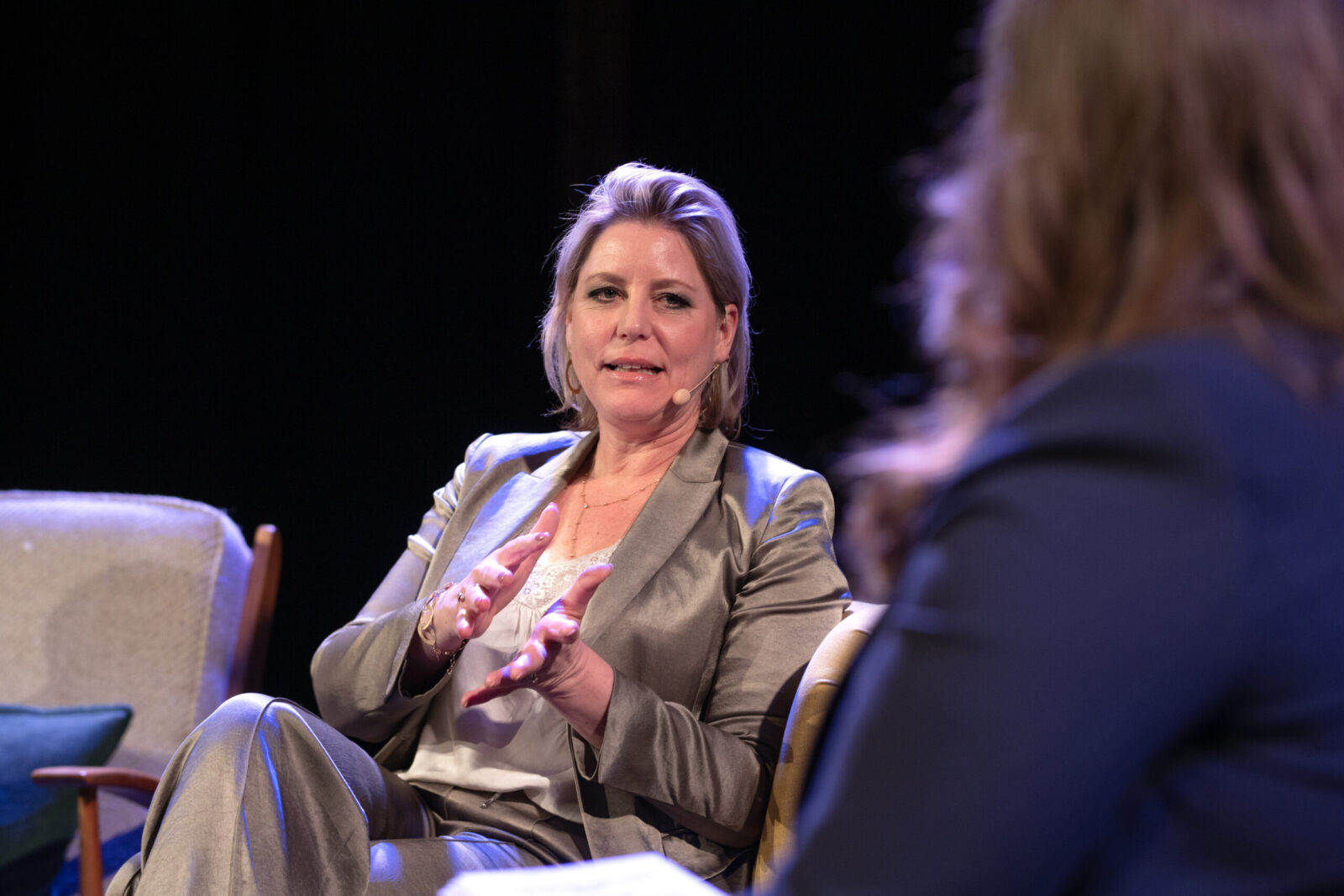
Traces of generative AI have been found in speeches by education minister Rianne Letschert. It is not only students who use chatbots; politicians do too.
They found out about ChatGPT in The Hague. De Volkskrant found traces of AI in hundreds of social media posts by prime minister Rob Jetten, the newspaper reported last Thursday.
Nieuwsuur subsequently also found AI in speeches by other politicians, including defence minister Dilan Yesilgöz and junior minister Derk Boswijk. Some of the speeches were said to consist almost entirely of chatbot-generated words.
Nieuwsuur also spotted sections written with AI in a speech by education minister Rianne Letschert. It did not say which speech. A brief search by the Higher Education Press Agency through six published speeches does produce a clear candidate: a speech given in May in the aula of TU Delft, in which the minister discusses the dilemmas between freedom and security in English.
According to the AI detection tool Pangram, 15 per cent of this speech does indeed consist of AI-generated text. In response to questions, the Ministry of Education acknowledged that it does sometimes use artificial intelligence. This is permitted under certain conditions, a spokesperson said, and it ‘offers opportunities to make government communication clearer and more accessible’.
“For all the minister’s speeches, she determines the message and wording herself”, the response states. “And they are always written by a human.” What exactly ‘writing’ means remains unclear.
Pangram
According to Pangram, a speech by junior minister for education and emancipation Judith Tielen also consists of 24 per cent AI-generated text. Once again, it is an English-language speech, about the freedom to be open about one’s sexual orientation.
Pangram is a relatively new detection programme with large datasets containing both human- and AI-generated texts. This enables it to identify certain patterns that are more commonly used by chatbots.
For example, Pangram can recognise texts produced by Claude, ChatGPT and Gemini. According to scientists, Pangram takes a cautious approach: less than half of texts written entirely by AI are detected as such. Outsiders cannot verify how the programme works: it uses AI itself.
Leading by example
As with many a student’s work, it is impossible to say with certainty what is and is not AI-generated. There is only evidence when there are obvious hallucinations or other errors. This is why AI use has been the subject of much debate in education for several years.
Minister Letschert said through her spokesperson: “AI is an integral part of society and therefore of education too. It is important for education to move with the times.”
Of course, this creates dilemmas, Letschert acknowledged. “It is up to educational institutions to organise education accordingly, and they are working on this intensively in all sectors.”
Digital watermark
Thanks to Pangram, teachers can now detect AI in students’ work somewhat more easily, but it is not yet enough to establish fraud conclusively, an expert told daily newspaper NRC.
New European rules may make this possible after all. The EU requires all AI content to be digitally marked in future. AI companies have a few more months to roll out a digital ‘watermark’.
The makers of the AI chatbot Claude were the first to achieve this. From now on, their bot will generate its texts slightly less randomly, according to a specific statistical code. People do not notice this when reading, but an AI tool can use it to distinguish ordinary texts from AI-generated ones.
Een lijst met artikelen
-

New code of conduct for researchers: Be cautious with AI
Gepubliceerd op:-
Science
-
De redactie
Comments
Ad
Read more in Artificial Intelligence
-
AI in thesis is not always fraud, rules highest education court
Gepubliceerd op:-
Artificial Intelligence
-
Education
-
-

The impact of AI on entry-level jobs: no reason to panic, but much to think about
Gepubliceerd op:-
Artificial Intelligence
-
Student life
-
-
From screen time fines to a gaming platform against loneliness: EUR students organise the Netherlands’ biggest student AI hackathon
Gepubliceerd op:-
Artificial Intelligence
-
Campus
-

Leave a comment