Ad

Education pioneer Ginie Servant-Miklos: ‘I’m not asking my students to solve the climate crisis, but to survive it’
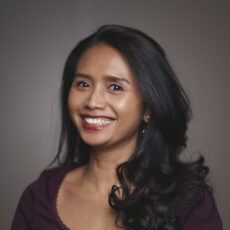
Lecturers talk about what they believe the education of the future should look like and how they put those ideas into practice in the classroom. Ginie Servant-Miklos, who received the university’s education award this week, wants to give students more than just knowledge; above all, she wants to teach them how to take action.
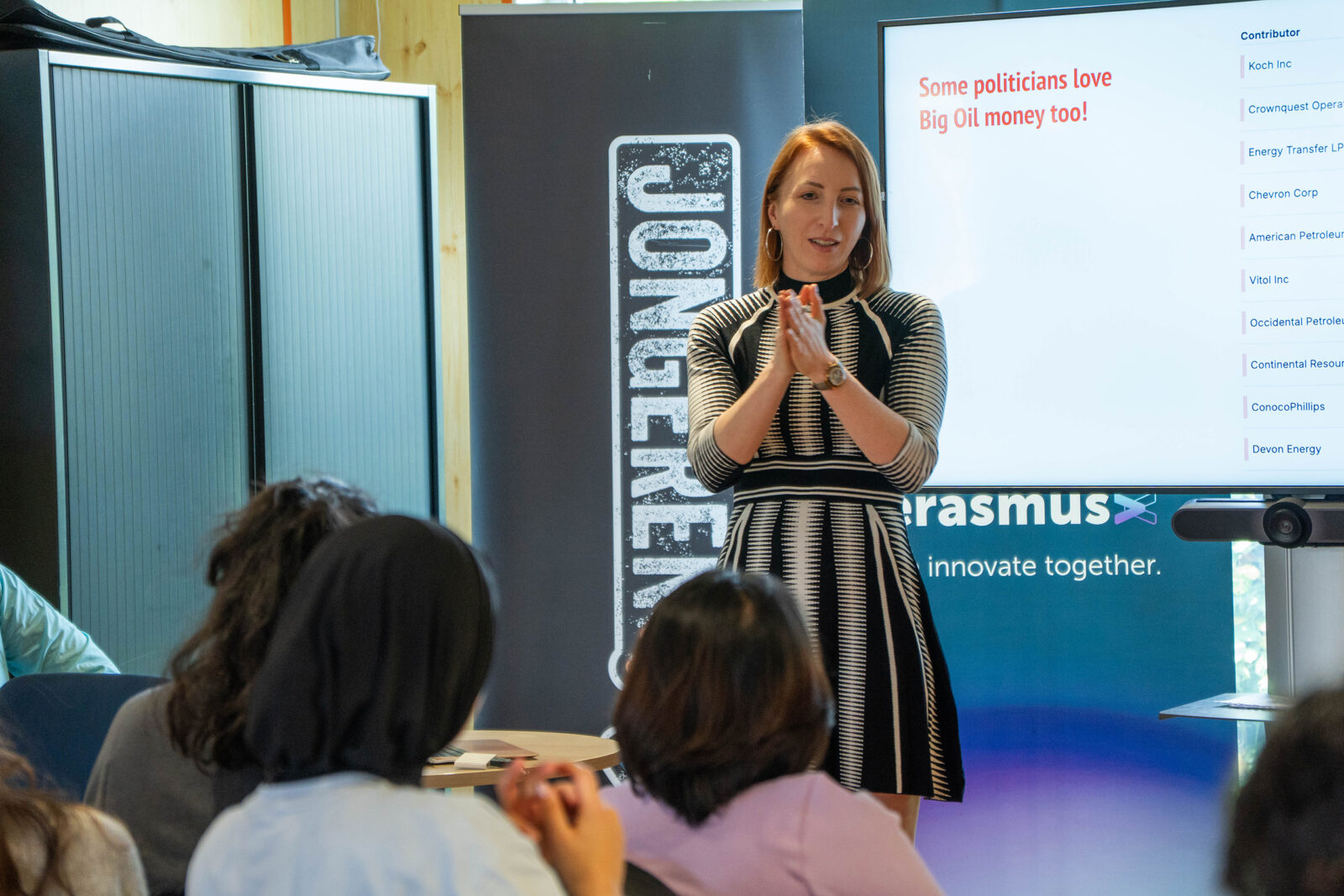
Servant-Miklos gives a lecture about activism.
Image by: Nhat Minh Bui
“If I say the word ‘activist’, what do you think of?” lecturer Ginie Servant-Miklos asks her twenty students in a classroom of the Hef House in Rotterdam-Zuid. The warm afternoon sun streams through the windows, and the door is half open to let some breeze in. One student fans herself with her notebook. “Protesting,” she says. “Blocking the highway,” says another.
Servant-Miklos nods. “Exactly. The A12 highway, Extinction Rebellion, angry people with banners. But I want to get rid of the idea that an activist has to be someone who sits on the A12. Yes, some activists do that, but as I’m going to explain to you today, that is probably one of the least effective forms of activism if you actually want to change something about the climate crisis.”
Over the next half hour, Servant-Miklos makes good on her promise. She talks about how the climate crisis has developed over the past decades and ends with practical steps for becoming an activist oneself. She walks around the room, asks questions and makes jokes. Every now and then, she uses facts about the climate crisis to reinforce her argument.
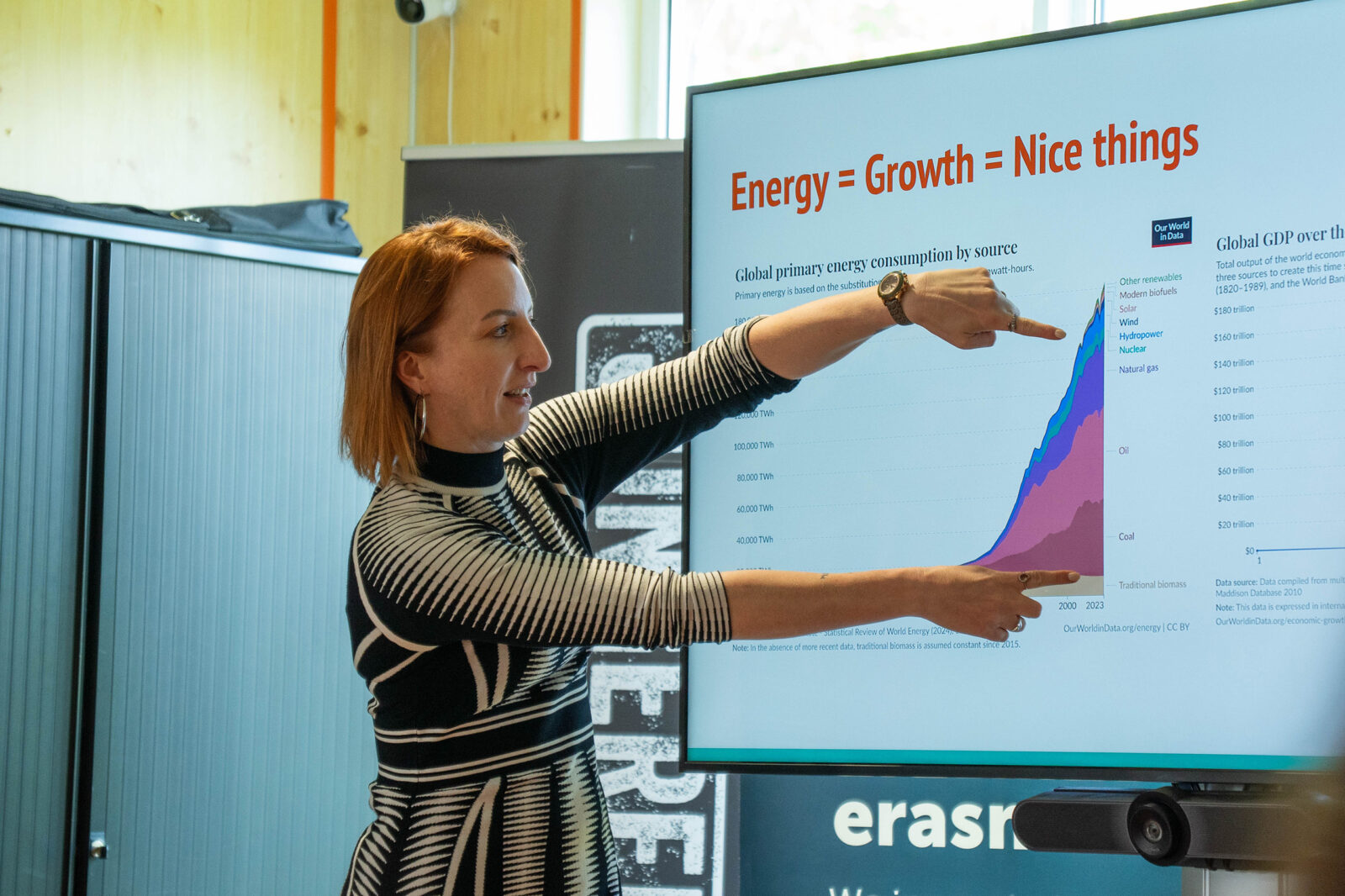
Servant-Miklos uses facts to reinforce her argument.
Image by: Nhat Minh Bui
‘Actionist’
She says she prefers to call herself an ‘actionist’. “I think there is room within the university for people who want to dissect and criticize everything. But that’s not who I am. I have to do something; I want action. I have to bring people together and create a concrete change in people’s lives. You won’t find me sitting on the A12, but you will see me trying to build things.”
One of the things she built is the Building Climate School, an educational programme in which students from different levels of education – from vocational secondary education to university – attend lectures and workshops about the climate crisis and social changes.
The programme grew out of her method of ‘experimental pedagogics’, an educational approach that starts with the individual and then moves through the group and the community towards larger societal issues. “This approach helps you understand who you are, how you function within a collective, what a community is and why communities are falling apart at the moment. And it helps you understand how the individual and local levels are connected to larger global issues.”
No separation between theoretical and practical education
Servant-Miklos struggles with the way the Dutch education system is organised. For her, the separation between theoretical and practical education is not only an educational problem, but also a societal risk. In her view, vocational education, universities of applied sciences and research universities are too separated from one another. Students are placed into different educational tracks at a young age and subsequently have little contact with one another. “While working together with people you don’t completely agree with is part of the learning process.” She calls this ‘imperfect solidarity’. If you only work with people who think exactly the same way you do, she argues, it is easy to remain in your own bubble.
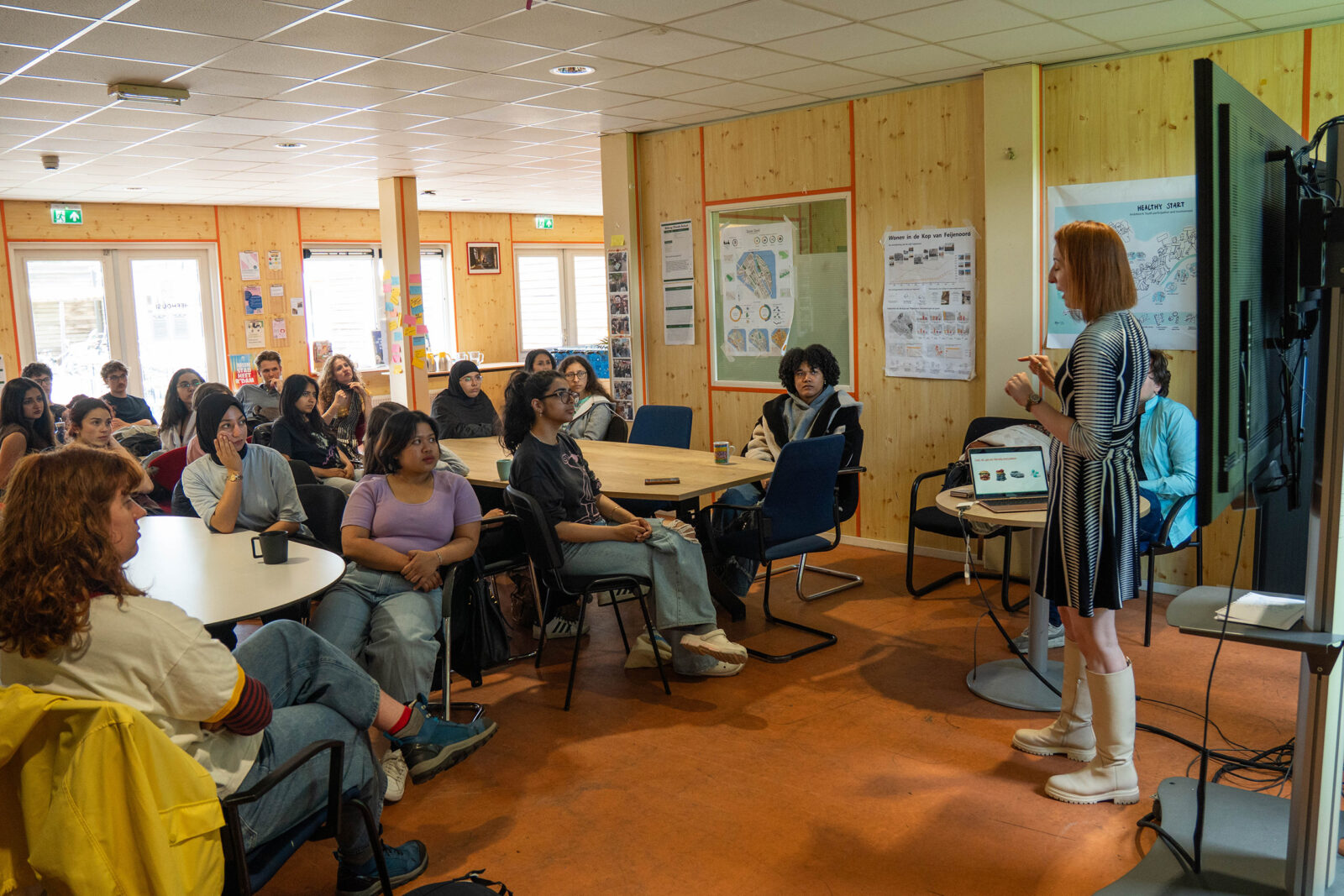
Students of Bildung Climate School are of all educational levels.
Image by: Nhat Minh Bui
According to her, everyone should be able to do both practical and theoretical work. “Students in practically oriented programmes should also have access to artistic or theoretical education, rather than only learning skills that directly lead to a profession.” That is why the Bildung Climate School is open to students at all educational levels. “I see my classroom as a kind of breeding ground for a new form of society.”
Working with your hands
After the lecture, the students receive an assignment. They have brought old T-shirts and put their own stories on them: they can paint what kind of activist they would like to be. “You can choose whatever material you want. The paint is here, and there are fabric markers,” Servant-Miklos says, pointing to a large table in the corner of the room. Some students prefer to work with spray paint. They set up a worktable outside and take turns spraying their T-shirts in all the colours of the rainbow.
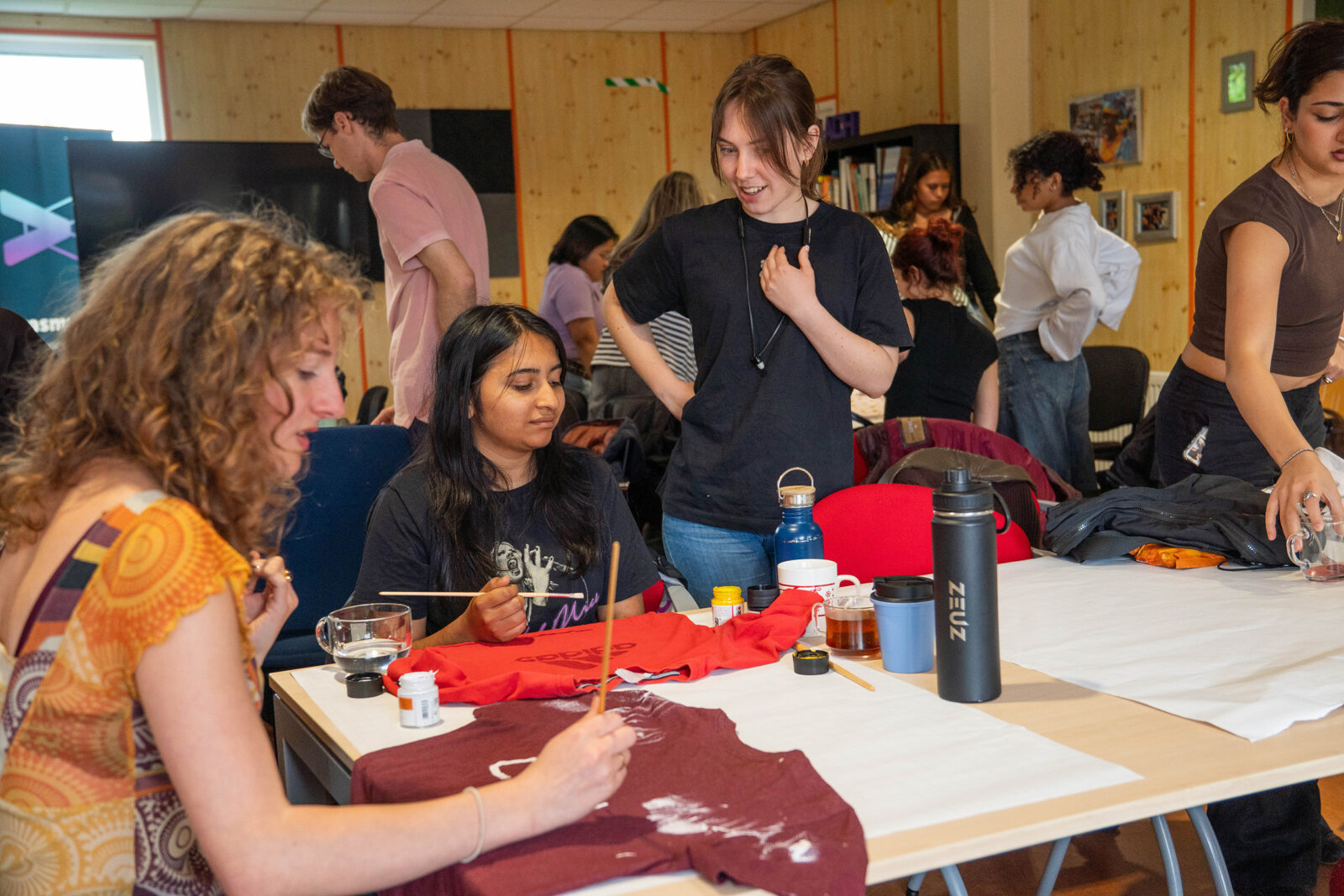
Students paint their old t-shirt.
Image by: Nhat Minh Bui
Working with their hands is nothing new in Servant-Miklos’s classes. Students cook, sing or dance together. At the Climate School, she uses art and music to help students learn not only intellectually, but also physically and emotionally, she explains. “We spend too much time in our heads, and the thoughts and feelings in our bodies need to be able to come out. That’s why we need to work with something tangible.”
According to her, many students also remain stuck in fear and helplessness about climate change. By making something together, that feeling of paralysis should give way to a sense of agency. “I don’t ask my students to solve the climate crisis, but to survive it. And as it happens, the things we do to survive the climate crisis – for example, growing our own food or using energy sustainably – are the same things that can solve it.”
Moreover, she adds, an object can spark a great deal of discussion. “If, for example, students make a new piece of clothing from discarded garments, the questions naturally arise: why was this garment thrown away? Why is one fabric good quality and another is not? Why is clothing so cheap if it takes so much work to make? And how can a T-shirt, including transportation all the way from China, possibly cost two euros?”
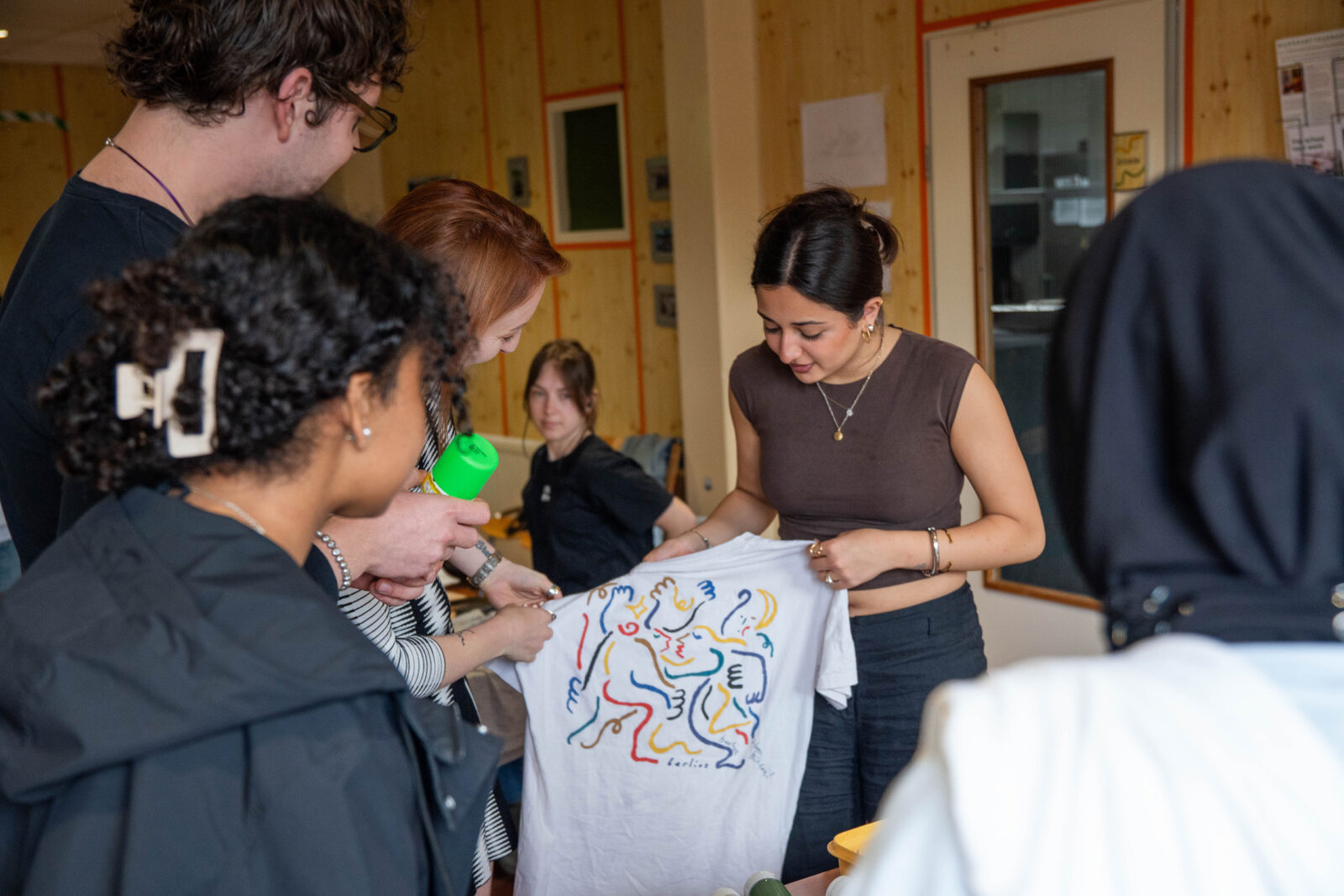
A student shows her creation to Servant-Miklos.
Image by: Nhat Minh Bui
Storyteller
She applies the same principles in her regular teaching at the Erasmus School of Social and Behavioural Sciences: providing knowledge so that students can put it into practice. “In my heart, I’m a storyteller. That’s why I almost never force students to read something. My starting point is that if I make the lectures interesting enough, they will want to read on their own. And they do,” she says. “I’m much more interested in the transformative power of education than in forcing as much course material down their throats as possible.”
Ginie Servant-Miklos is an associate professor at the Erasmus School of Social and Behavioural Sciences. Her work focuses on innovative pedagogy, sustainability and social change. She is the author of Pedagogies of Collapse: A Hopeful Education for the End of the World as We Know It (2024) and The Left We Need: Sex, Drugs, Rock’n’Roll and Climate Justice for All (2027). She is the founder and director of the Bildung Climate School, an innovative climate education programme bringing together vocational, higher professional and university students. In 2025, she received a 530,000 euros Comenius Leadership Fellowship to further develop the programme.
Een lijst met artikelen
-
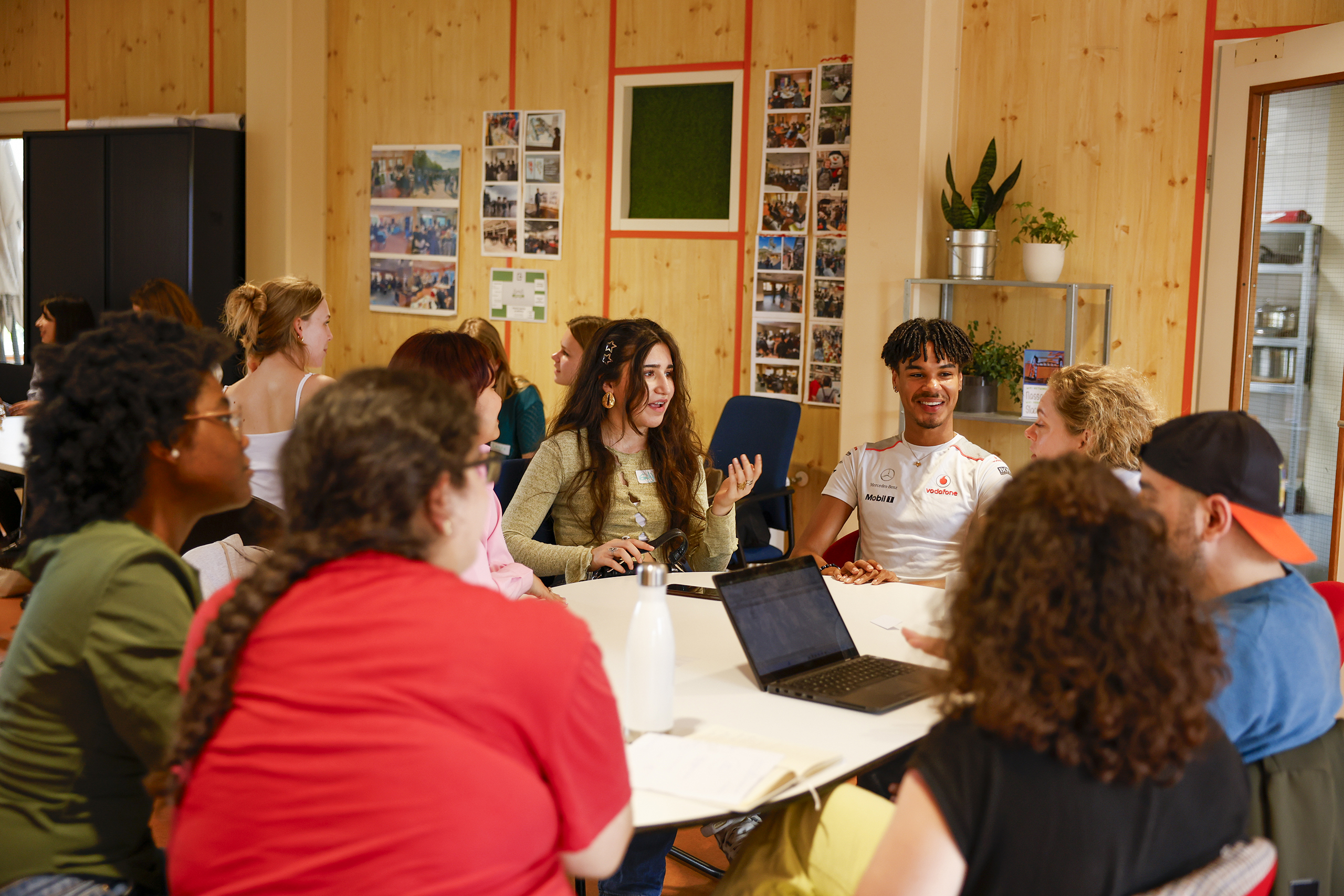
Students ‘of all levels’ learn how to deal with climate change challenges through dance and philosophy
Gepubliceerd op:-
Education
-
De redactie
-
 Feba Sukmana
Editor
Comments
Comments are closed.
Ad
Read more in Education
-
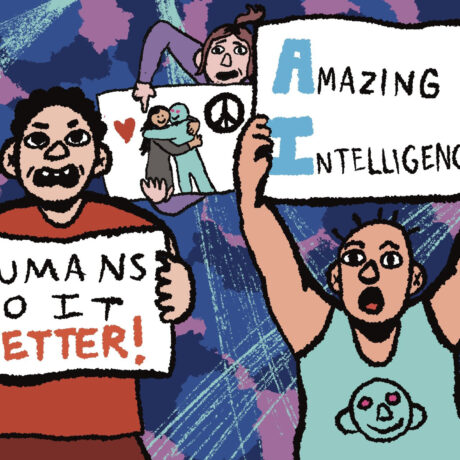
RTL: More than half of master’s theses contain AI-generated text
Gepubliceerd op:-
Artificial Intelligence
-
Education
-
-
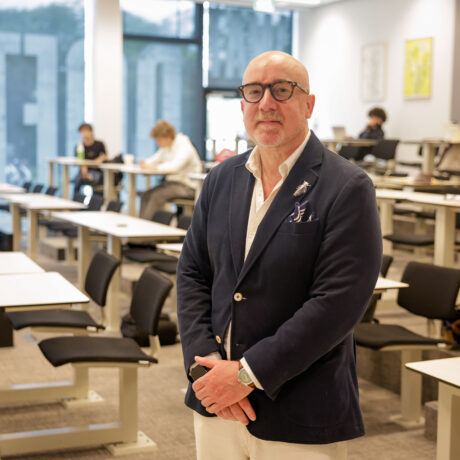
Education pioneer Etienne Augé: ‘Technology should give us more time for people’
Gepubliceerd op:-
Education
-
-

Talent strategy takes shape: plenty of ‘self-management’, freedom of choice of study remains intact
Gepubliceerd op:-
Education
-