Ad

International students come to the Netherlands because life is good here and everything can be in English
More than 130,000 international students are studying in the Netherlands. They come here for the English-taught education and the quality of life, but they are frustrated by the shortage of student rooms and do not always feel welcome.
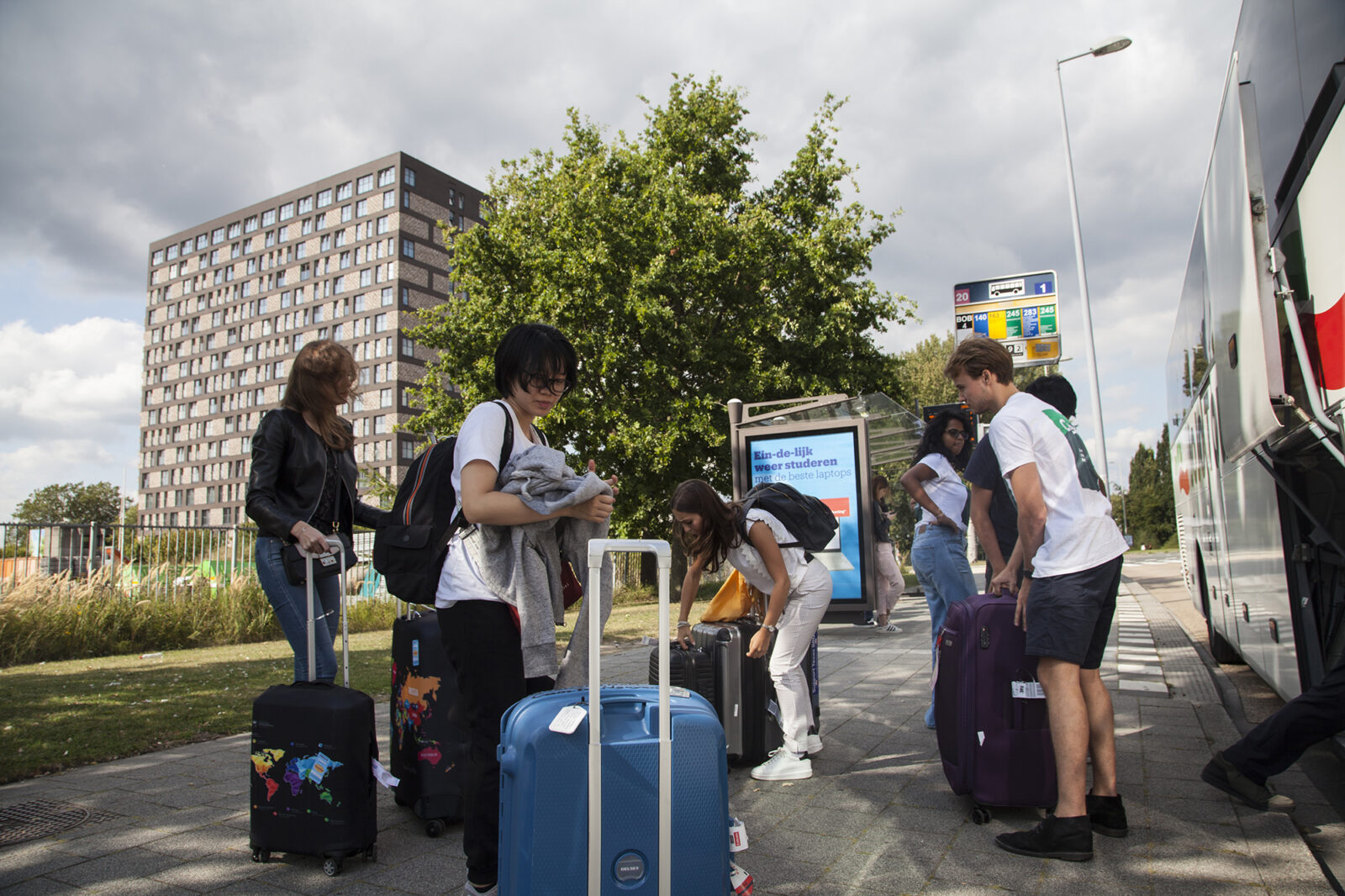
Internationale studenten bij aankomst op campus Woudestein
Image by: Amber Leijen
“I was looking for a country with a high level of education where I could study in English”, an international student tells Nuffic, the organisation for internationalisation in education. “The Netherlands was then a fairly obvious choice.”
This student is one of the 130,000 following a programme at a university of applied sciences (hbo) or a research university (wo) in the Netherlands. At the universities, 27 per cent of students come from abroad, at the universities of applied sciences this is 9 per cent.
But why do they come here? With a questionnaire and further interviews, Nuffic wanted to get a better grasp of this. About 300 international students took part in the study.
There is a wide range of English-taught programmes in the Netherlands, they tell Nuffic. These programmes also have a strong reputation and, compared with many other countries, the tuition fees are low. Students also like the fact that Dutch people easily speak English. They also believe that the quality of life here is good: they mention, for example, safety, but also the pleasant balance between work and private life.
Visa
For most of them, the Netherlands was their first choice. One in five had actually wanted to go to another country. Some, for instance, would have preferred to go to the United Kingdom, but visa hassle and higher tuition fees led them to choose the Netherlands after all.
There are also reasons why they sometimes hesitated about coming to the Netherlands, such as the major housing shortage: seven in ten students mentioned this. Later, finding a room often turned out to be even more difficult than expected.
Many also only realised once they were here that having a command of the Dutch language is actually quite important in daily life. In particular in social life and when looking for a (part-time) job, this turns out to be a challenge. And of course there are also clearly disappointed students. For more than 10 per cent, their expectations of the Netherlands did not match reality. They did not always feel welcome and sometimes even faced discrimination. That may also be due to the political climate, they think.
Politics
Politics is indeed more sceptical about internationalisation than it used to be. The previous government wanted to reduce the number of international students and force certain programmes to teach in Dutch again.
The current government is offering slightly more room for internationalisation, to a certain extent. Universities and universities of applied sciences have promised that they will manage the influx of international students properly themselves.
De redactie
Comments
Comments are closed.
Ad
Read more in Internationalisation
-
Signing up for a Dutch course ‘feels like a race’, no more places available for now
Gepubliceerd op:-
Internationalisation
-
-

Knowledge institutions warn against the Netherlands’ frugal approach in Europe
Gepubliceerd op:-
Internationalisation
-
Politics
-
-

Minister sees ‘major problem’ looming: will there be too few international students soon?
Gepubliceerd op:-
Internationalisation
-
Politics
-