Ad

A ChatGPT of its own for staff: university launches Desidera

University staff have been able to use Desidera since last week. In time, Desidera should become the university’s standard AI tool.
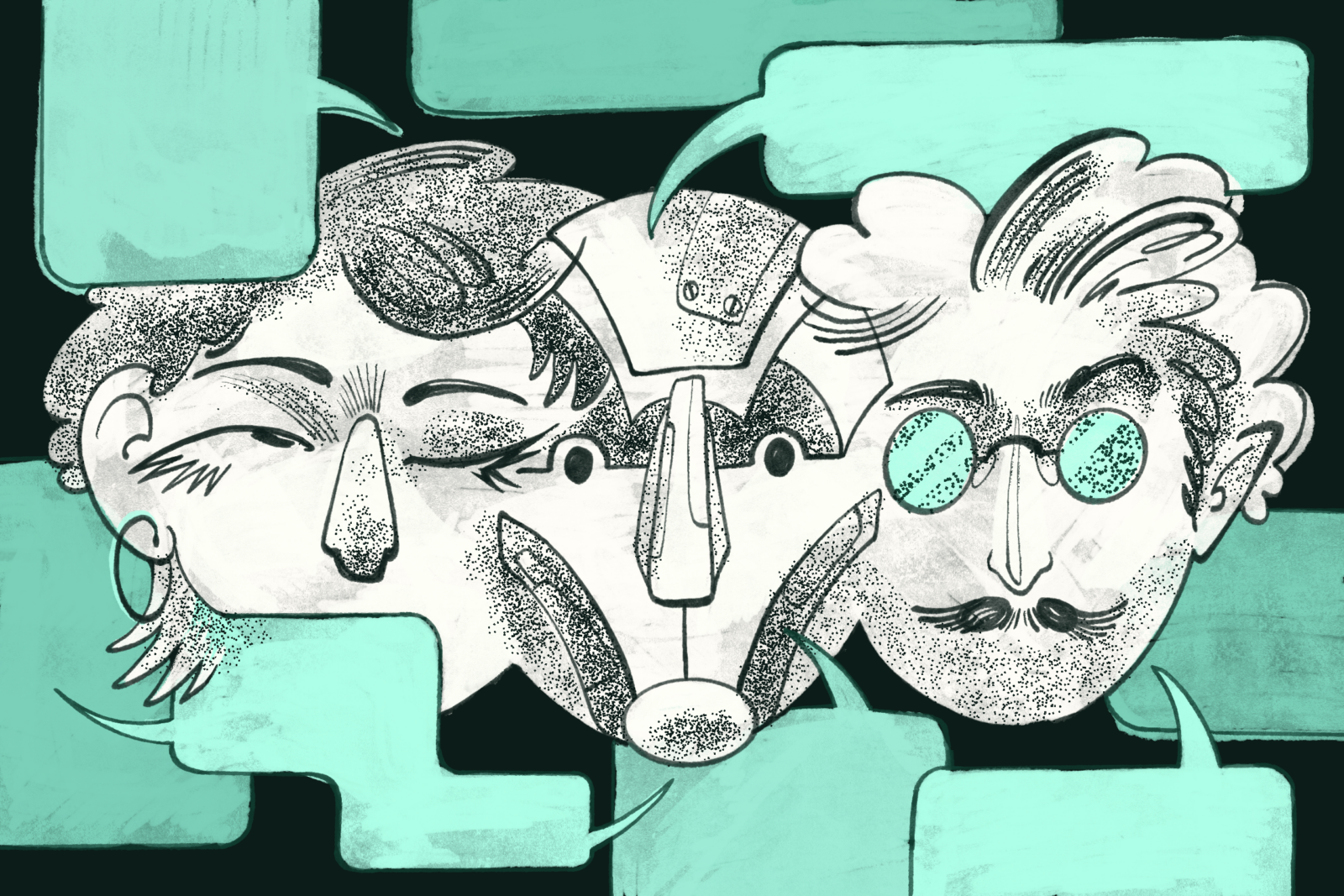
Image by: Ami Rinn
Imagine as a teacher, you’re preparing a tutorial and you are unsure how to explain a certain topic. You want to ask ChatGPT, but you decide not to do this because you are unsure what happens to your data. To still offer staff who want to work with AI this possibility, the university has now developed its own tool: Desidera.
The tool is a derivative of UvAChat, developed by the University of Amsterdam, and uses large language models trained on vast amounts of text to understand, generate and predict human language. For now, the language models used are from OpenAI. In the future, more variants are expected to be added.
What can you do with Desidera?
Like other AI tools, Desidera can come up with practice questions, generate images, assess essays, or help prepare for a tutorial.
Users can create customised AI assistants that respond from a specific role or in a particular style. These personas can be set up by users themselves. They can choose the desired conversational style, expertise and personality. For example, you can deploy an AI assistant as a writing coach or strategy advisor.
Desidera also allows users to save commonly used instructions, so-called prompts, so they can be easily reused. Staff can also create their own projects. In such a project folder all information related to a specific project is stored.
A different approach
Jason Pridmore, professor of Human Centric AI in Society, is closely involved in developing Desidera. He explains why the university built its own AI tool.
To begin with, the university chose a different approach. “We have moved from the question ‘when is something good?’ to ‘when is something good enough?'” What Pridmore means by this is that at the moment there is no single AI tool that meets all the needs and use cases of the university.
For example, AI tools can hallucinate. These are moments when AI convincingly presents incorrect information as truth. Models are also trained only up to a certain date. What happens after that date these models do not know.
“The tool may not yet be perfect, but technologies always have shortcomings”, he says. “That is why the university is launching a model that we believe is good enough for now, with the aim of further improving it step by step.”

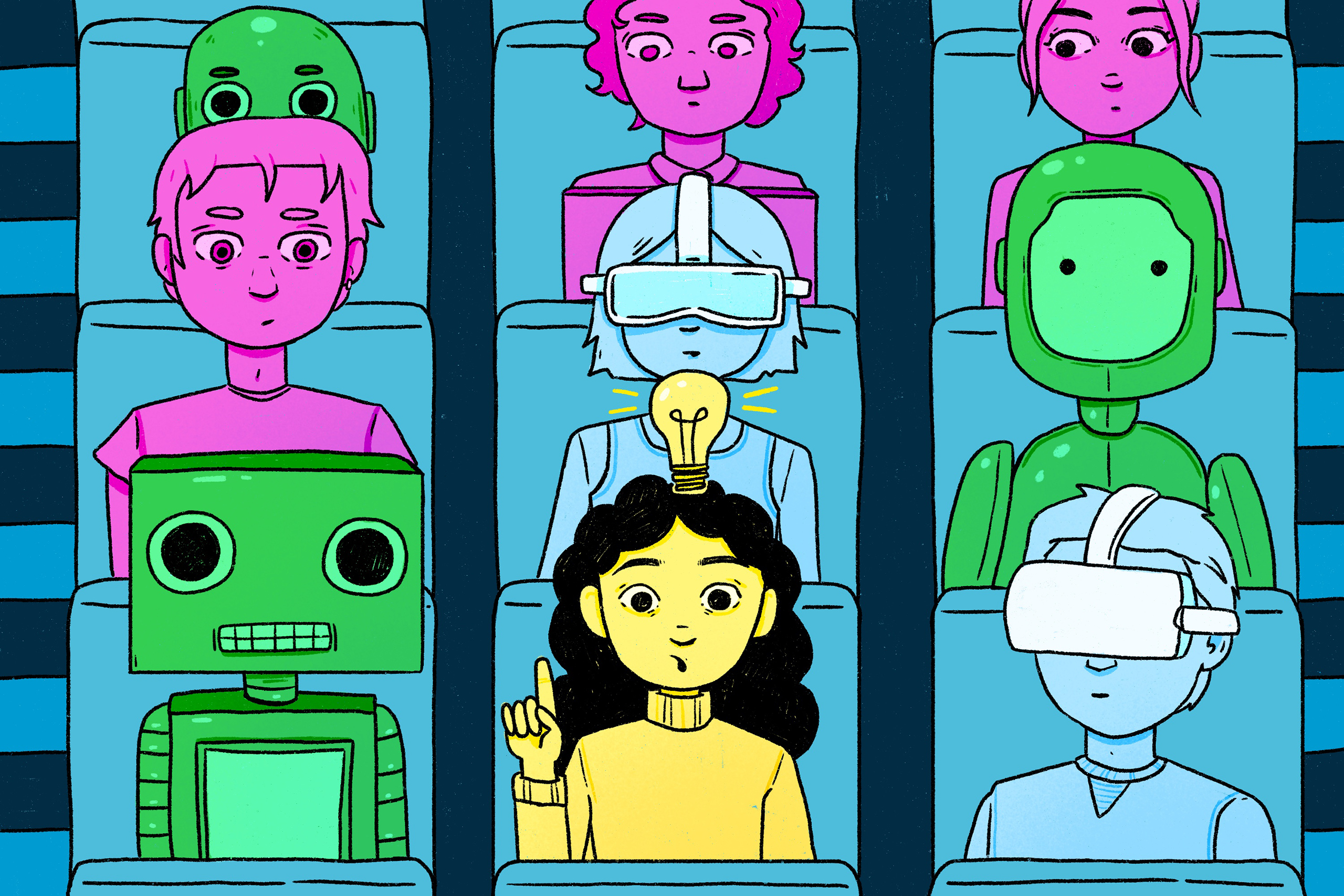
Desidera can also generate images using AI, like this one.
Image by: Created with Desidera
Raising awareness about AI
It should also become clearer to users that not all AI tools are the same. “Different models have different advantages”, Pridmore explains. “For simpler questions you can, for example, better use a less complex model, because it consumes less energy.”
An energy-efficient model can, for instance, perfectly explain a complex concept in accessible language, but summarising and comparing ten scientific articles with each other will probably work better with a more energy-intensive model.
Desidera is managed by the university. According to Pridmore, all data in the tool are well protected. “Our aim is to create our own safe and closed environment, to increase data sovereignty and reduce our dependence on Big Tech.”
Secure data
That does not mean users can entrust everything to Desidera. Staff are not allowed to share personal data or sensitive company information. Pridmore: “We think the data are held securely, but until we are 100 percent certain of this we do not want users to share confidential or secret information.”
And can the university peek at staff? Pridmore is not worried about that. “Technically it could be possible, but there are many safeguards built in to prevent this from happening. We use the same protocols as for Teams and email.”
Moreover, there is a ‘delete all function’, with which, according to Pridmore, all previously entered conversations and documents can be permanently deleted.
The next steps
Pridmore hopes Desidera will be a next step in helping staff and students use AI more intelligently. The plan is for students to also gain access to Desidera from the next academic year. Once they have access, he hopes students and lecturers will collaborate in the Desidera environment.
As an example, he mentions the required readings for a course. “Instead of two hundred students each having their own AI-generated summary, they could use one shared summary created by the lecturer. In such a setup, each student can also ask questions that fellow students can read. This way they learn together, rather than each on their own.”
Want to try Desidera yourself? Staff can log in with their Erna-ID and immediately get started.
Een lijst met artikelen
-
In-house chatbot Erudite aims to lure EUR staff away from privacy drama ChatGPT
Gepubliceerd op:-
Artificial Intelligence
-
Comments
Comments are closed.
Ad
Read more in Artificial Intelligence
-
Prime minister Jetten sees potential for AI to improve education
Gepubliceerd op:-
Artificial Intelligence
-
Politics
-
-
With this theatre show, cybersecurity expert Bernold Nieuwesteeg hopes to finally wake everyone up
Gepubliceerd op:-
Artificial Intelligence
-
Culture
-
-
Education minister Rianne Letschert also used AI in speech
Gepubliceerd op:-
Artificial Intelligence
-