Ad

International students under stress due to doubling of tuition fees in five years

At most faculties, the tuition fees for non-European students have more than doubled over the past five years. Where a bachelor’s student paid around 7,000 euros in 2022, a new proposal for 2027 sets that at 14,700 euros. International students are very worried about the rapid rise.

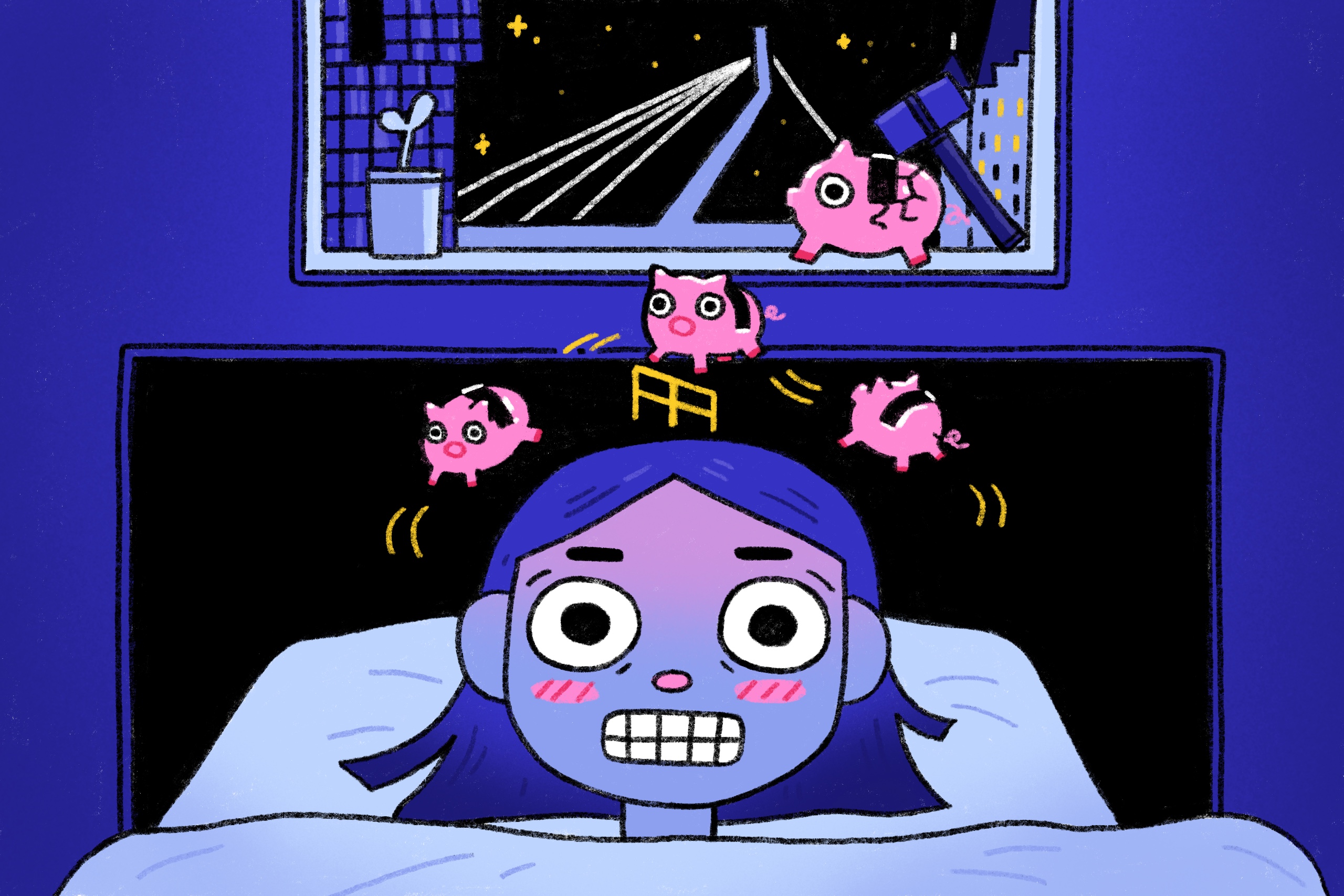
Image by: Sonja Schravesande
For 2027-2028, an advisory commission proposes to raise tuition fees for non-European students by 8.9 per cent. An important reason given for the steep increase is to bring the rates more in line with the national average, the proposal reads. This year the EUR was reasonably in line with that average.
Dutch and European students pay 2,694 euros in tuition this year, the so-called statutory tuition fee. Students from outside the European Economic Area (EEA) pay more because universities don’t receive government funding for those students. How high this so-called institutional fee is, is decided by the universities themselves.
RSM and Medicine most expensive
That institutional fee has risen sharply at most faculties in recent years and has therefore more than doubled. Only at faculties that already charged a higher rate in 2022, such as the Rotterdam School of Management and Erasmus MC, have the rates risen relatively less. These two faculties are still the most expensive, at 15,200 euros and 35,000 euros per bachelor year respectively.
By comparison: the statutory fee rose by only 24 per cent over five years [note: The statutory tuition fee for 2027–2028 is not yet known, which is why EM looked at the same period a year earlier, from 2021 to 2026].
Arrangements to be abolished
There are transitional arrangements for students who already started their studies. If, for example, you started a bachelor’s in 2025 and move into your second year, your tuition will only be increased by the same percentage as the statutory tuition fee, namely 3.6 per cent.
In the proposal this arrangement will be abolished next year. According to the advisory commission’s letter to the University Council, the university’s software cannot automate this kind of arrangement. “A technical limitation should not be an argument to not set up new arrangements. However, it is not desirable to add more different fees for students, especially if further alignment with national average will be used as a structural reference framework for future tuition fee decisions”, the proposal says.
Very stressful
The rapid rise in tuition means some international students are unexpectedly faced with higher costs. For IBA students Adelya and Arina it is ‘very stressful’. Both students faced a tuition increase of 1,100 euros in their second year. “I thought that it would remain the same during my studies, but apparently not”, says Adelya. “Why does the statutory tuition fee rise so little and our tuition rise so sharply?”
'I’m scared to talk to my parents about it'
“I’m scared to talk to my parents about it”, admits Arina. Her parents had not expected the costs to rise so quickly. “It means they have to make different choices than they otherwise would have. My mother should really rest more, but she has decided to keep working”, the 19-year-old Kazakh student says.
Sold the apartment
Adelya’s father, who lives in Russia, already has to use all kinds of tricks to get the money to her because of the boycott against Russia. “He has had to sell the apartment he lived in and is now considering selling the car as well.”
The financial problems this has caused their parents also affect them. “We both managed with great difficulty to find a job at Plus, but as a non-European student you are allowed to work a maximum of 16 hours per week and your employer has to arrange a work visa.” Both rules make it harder to get a job. “I’ll be 21 soon”, says Adelya, “and the question is whether my contract at the supermarket will be renewed then because I might become too expensive. That causes a lot of extra stress.”
And then there is the rule that non-European students, unlike European ones, are not allowed to pay their tuition in instalments in their first year. On top of that there is a ‘living fee’ from the Immigration Service of 14,000 euros. That is money you’ll get back, but at the start of the academic year you are without it for a few weeks, just when you also have to pay your tuition. “And you still have to live in the meantime!”, says Adelya.
‘Offensive’
Borja Ranzinger, chair of the University Council party Erasmus International and involved in the advisory commission as the student representative of the council, is not at all happy with the proposal. “I objected to the increase, but my impression was that the policymakers mainly saw the extra money that higher tuition would bring in. That was mentioned several times: how many fewer people we would have to fire or could hire and how much more we can do with it. That there are also students who become victims of this was left unmentioned. When I raised that argument, I was told that was ‘offensive’.”
Arina feels the university sometimes forgets that it values diversity highly. “With these tuition fees you can only study here if your parents are rich. We will miss out on such a diversity of special minds and skills.”
Elections
The proposal will soon be discussed in the University Council, which, incidentally, has no decision-making power in the matter and can only give advice. Ranzinger nevertheless wants to do everything he can to mitigate the increase. For his party Erasmus International it is one of the key issues in the University Council elections taking place this week. On Thursday student union STUUR is organising a protest on the Erasmus Plaza against the doubling of tuition fees for non-European students.
Een lijst met artikelen
-

Tuition fees for students from non-EEA countries set to rise significantly
Gepubliceerd op:-
Student life
-
De redactie
-
 Elmer Smaling
Deputy editor-in-chief
Comments
Comments are closed.
Ad
Read more in Money
-

Repay your student debt in 15 years? Then interest rises to 3.28 per cent
Gepubliceerd op:-
Money
-
-
For the first time, student debt in the Netherlands falls
Gepubliceerd op:-
Money
-
-
Interest on student debt at highest level in 17 years
Gepubliceerd op:-
Money
-