Ad

How expensive festival tickets and major concerts are threatening the entire live music sector

Where a few years ago it was a struggle to get a ticket for Lowlands, the festival is still not sold out this year. And Lowlands is not the only one. At the same time, artists such as Harry Styles fill the Arena ten times over, at enormous prices. It is code red in the live music sector.
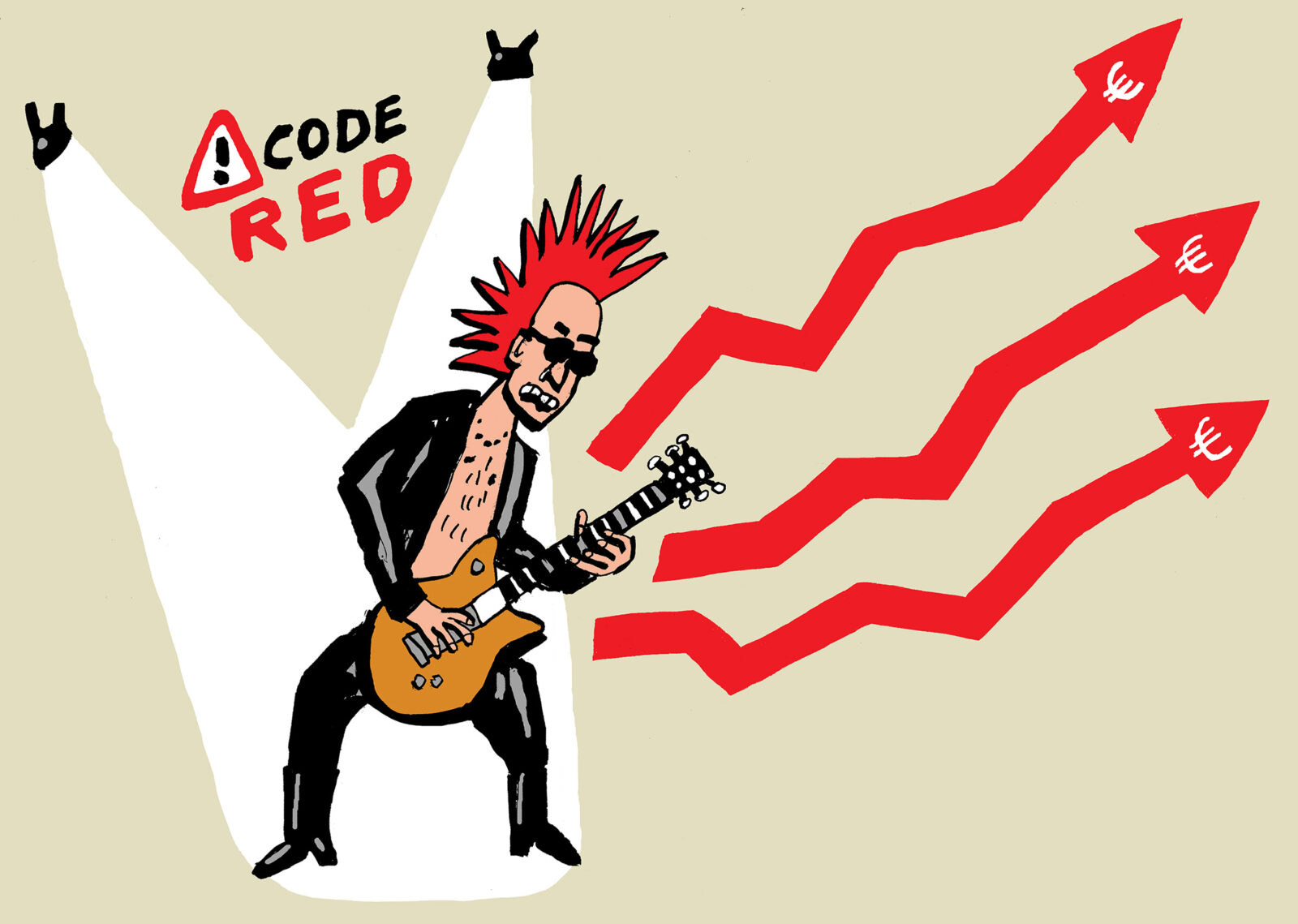
Image by: Bas van der Schot
Festivals are no longer selling out. What is going on?
“The festival sector grew extremely fast between 2005 and 2016. Everything worked in its favour. Audiences were discovering it, so demand kept increasing. Municipalities saw it as a nice way to make money and boost their image. But in recent years that has started to shift. Partly because the market became saturated, but mainly due to high inflation after Covid. A festival is a temporary village that you have to build, with all sorts of things being flown in. That means festival organisers are facing far greater cost increases than fixed venues. Fees for top artists have risen by 40 percent compared to 2019. And municipalities have become much stricter with regulations on, for example, locations, times and sound restrictions. Yes, that makes it difficult.”
Martijn Mulder researches the pop sector, live music and broader issues within the cultural economy at the Erasmus School of History, Culture and Communication. He is also a lecturer and researcher at Rotterdam University of Applied Sciences. In addition, he is a member of the Supervisory Board of pop venue MEZZ in Breda, where he is involved in strategic policy and oversees the organisation.
Why do major concerts sell out within an hour, while festivals do not?
“Young people want a kind of instant top experience. And if you go to someone like Harry Styles, you know you will get that. In addition, top artists choose festivals less often because a solo summer tour generates more money. Real fans will then opt for the concert. And then a substitution effect takes place. If you spend 300 euros on Harry Styles at the Arena, you cannot spend that same 300 euros on Lowlands.
“The absolute top tier, who, like Harry Styles, sell out the Arena ten times at 250 euros per ticket, consists of only a handful of artists, at most twenty worldwide. But that still has an impact. Because if, say, Bruno Mars no longer plays Pinkpop because he opts for his own tour, fewer headliners remain for Pinkpop. And if the choice for Pinkpop becomes smaller, that also affects festivals such as Lowlands and Down the Rabbit Hole. In this way, top artists influence the entire sector, while at the same time those headliners are the main crowd-pullers for festivals.”
Has demand for festivals decreased? Is Gen Z less interested in going out and partying than millennials were ten years ago?
“I have not yet researched whether young people attend festivals less. I have asked my students at the University of Applied Sciences informally. They say they wait before buying a ticket. They trust they can still get one last minute via TicketSwap, and they do not want to commit months in advance. The same applies to slightly older audiences.
“I do not think the desire for festivals has decreased, people still really enjoy them. But many people take longer to weigh it up, because those tickets have become so much more expensive. So where people used to go to three or four festivals a year, they now go only once.”
I can imagine that causes problems for festival organisers.
“Indeed. The difficulty for festival organisers is that they have to spend the money before they receive it. Early sell-outs provide financial certainty, and that is now less obvious.
“Wilde Weide Festival recently issued an appeal: if another two thousand tickets were not sold quickly, it would not go ahead. In the end, Wilde Weide just scraped through, although it will do little more than break even. But in recent summers several festivals did not make it. Particularly in the dance and electronic scene, festivals have been cancelled shortly before they were due to start, such as Graveland Festival and Supercharged. Making new festivals profitable is difficult anyway; it often does not happen within five years. Many festivals launched in the past ten years have already stopped after one or two editions because they did not generate returns.”
Does it also play a role that festivals are being taken over by private equity funds such as KKR?
“When DGTL, with a very progressive audience, is taken over by a private equity firm that also invests in questionable practices, some visitors will not be happy about it. But I doubt that is a reason it does not sell out. A survey at Zwarte Cross, which also falls under KKR, showed that its visitors do not care.
“A number of festivals have left that organisation again because their freedom was too restricted. If the investor wants profit to be made and costs are rising, organisers are pushed towards safer, more mainstream programming.”
'If small venues and space for experimentation disappear, the entire chain will eventually stall'
What effect do these shifts have on the rest of the pop music sector?
“The live music sector consists of different layers that are interconnected. At the top layer, major artists can charge high prices because demand exceeds supply. At the bottom, it is exactly the opposite. There is a surplus of emerging acts competing for performance slots and income. In between is a middle layer of artists who are successful but still barely make ends meet. An artist like Froukje says she can make a living from her work, but cannot offer her crew long-term security.
“These layers need each other, but costs and revenues are unevenly distributed. 85 percent of performances take place in small venues, yet only 15 percent of the money is earned there. Accessible, informal venues such as cafés and community centres are disappearing. The share of performances at such places has fallen in fifteen years from 30 to around 7 percent.
“The top can only continue to exist if new artists progress from the bottom. If small venues and space for experimentation disappear, the entire chain will eventually stall. That is why we need to connect these layers better. In the United Kingdom, for example, there is an experiment where a small contribution from each ticket for major concerts goes into a fund for smaller venues and emerging artists.”
You sit on the Supervisory Board of pop venue MEZZ in Breda. What is MEZZ noticing from these changes?
“The number of events we organise at MEZZ is increasing. Precisely because those informal performance spaces are disappearing. As a result, emerging artists end up with us in the small hall sooner. So we have more concerts and attract more visitors, but despite that we still remain in the red financially. It is quite striking that ticket sales are growing so quickly, yet costs are rising even faster than income.
“Through the industry association, we have issued a code red to the government. Venues are performing well. They show innovative entrepreneurship, attract more visitors, yet still run losses. This forces MEZZ to make difficult choices in programming. We have to programme exciting acts – that is what we are as a pop venue. But we also have to book dance nights and tribute bands, which are hugely popular.”
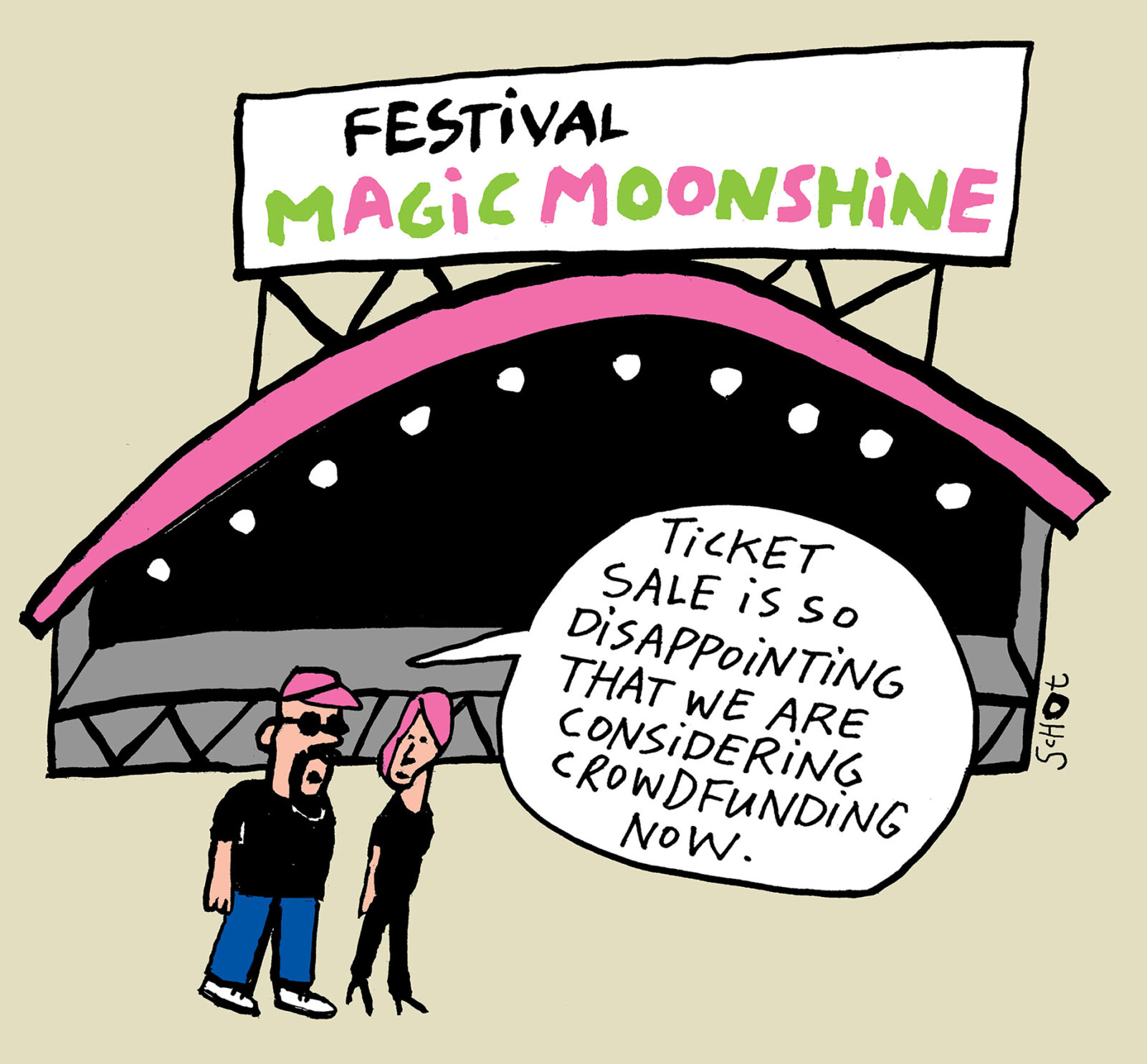
Image by: Bas van der Schot
What do you expect from the government in response to the code red? What can it do about the sector’s problems?
“The call is: give room to experiment, simplify permits, and recognise pop music as culture. Only a fraction of national and municipal cultural subsidies goes to pop music. The vast majority goes to classical music. In addition, many venues have to pay back part of their subsidy in the form of rent for buildings they lease from municipalities. And that rent is often increased annually, while the subsidy is not adjusted for inflation, meaning venues effectively receive less each year. It would also help if municipalities recognised that festivals are more than just events. They also contribute to social cohesion, talent development and the cultural climate of a city.”
'The sector has become highly professionalised, with impressive venues and increasing comfort, but also somewhat tame. These are not the places where young people find their counterculture'
Do visitors also have a responsibility to support the sector, including emerging artists?
“It would be good if visitors more often chose smaller venues, instead of spending all their money on one major concert. But you cannot impose that. At MEZZ, we have organised the ‘Ik Zie U Graag’ festival for years, featuring Flemish artists. We always booked at least one Flemish headliner, such as Novastar. Last year, our programmer changed course and booked only emerging Flemish talent. We have a loyal audience, real music lovers who want to discover new music. They will come, we thought. Less than half the tickets were sold. We lost tens of thousands of euros on that festival. This year we had Haunted Youth. Sold out. It shows that even a dedicated audience cannot be forced.”
It all sounds rather bleak, especially with more inflation on the way. Are you hopeful for the pop sector?
“I firmly believe the sector will eventually adapt to the new circumstances. That may mean some festivals disappear or are organised differently, but that creates room for something new.
“In recent years the sector has become highly professionalised, with impressive venues and increasing comfort, but also somewhat tame. Young people sometimes feel they are entering a theatre rather than a club, while they actually express a need for more underground spaces. These are not the places where young people find their counterculture. Venues are trying to respond to this. At MEZZ, for example, by collaborating with the skate park, where we can host accessible, exciting punk bands.”
Read more
De redactie
-
 Manon Dillen
Editor
Comments
Comments are closed.
Ad
Read more in The Issue
-
‘There should be a minimum age for fatbikes’
Gepubliceerd op:-
The Issue
-
-

‘With gadgets like Meta Glasses, we pay to be surveilled’
Gepubliceerd op:-
The Issue
-
-
‘Most medical influencers do not think they are unqualified’
Gepubliceerd op:-
The Issue
-