Ad

Staff ESHCC raise alarm over unsafe working environment

Staff members of the Erasmus School of History, Culture and Communication (ESHCC) have expressed concerns about the faculty board in a letter. The 54 signatories paint a picture of a faculty where a lack of transparency, unfair recruitment procedures in promotions and non-inclusive leadership are putting pressure on a safe working climate. The dean says she was shocked. The faculty management is working on improvements.
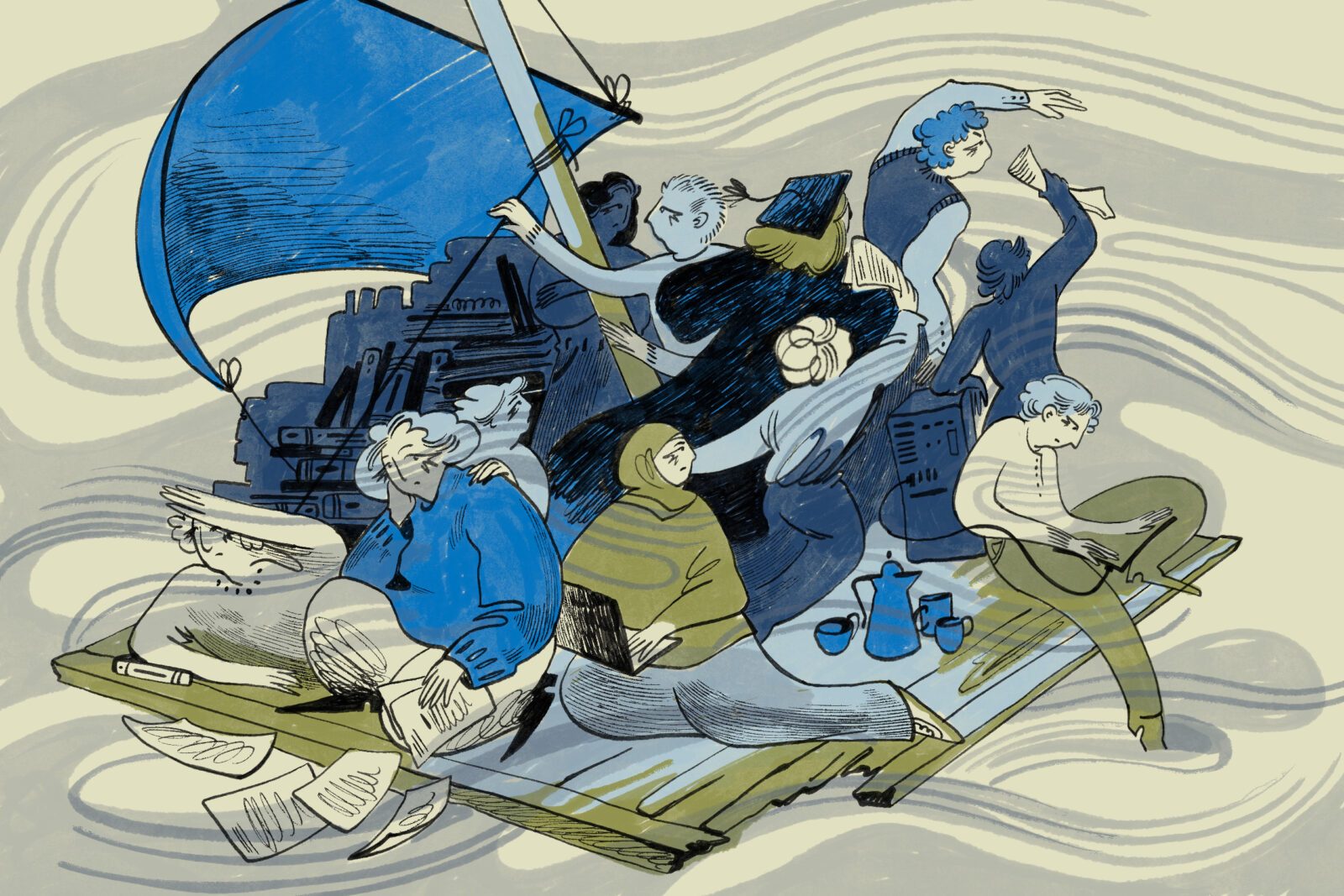
Image by: Ami Rinn
The letter about the concerns was sent in November to the dean, the faculty council, Safe@EUR (the reporting point for undesirable behaviour) and human resources. The letter is in the possession of EM.
A key issue according to the senders of the letter is the lack of transparency. The signatories state that decisions about education, research and organisation are often taken without ‘prior and meaningful consultation from staff’. Decisions are said to be made in a non-transparent manner by a small group of people trusted by management, who are also regularly appointed to positions and committees that should in fact be open to all staff.
Promotion and appointment procedures are also under fire: vacancies sometimes appear to be so specifically formulated that they are aimed at one candidate, creating the impression that outcomes are predetermined, according to the signatories. They are also concerned that committee members are often appointed top-down by the ESHCC management team, which can lead to conflicts of interest, for example when supervisors sit on committees of their subordinates.
'The faculty scores worse than almost all other faculties and departments in terms of psychological safety'
In addition, the leadership style is experienced as non-inclusive. The communication style of some members of the management team is said to be ‘brazen, unsupportive and even counterproductive’, making staff feel that their opinions are ‘neither sought nor valued’.
Last year’s staff survey showed that the faculty scores worse than almost all other faculties and departments in terms of psychological safety. The faculty also scores above average when it comes to workload and work-related stress.
According to the signatories, the vulnerable financial position of the ESHCC is not the cause of the complaints, but it does worsen the situation. Cost-cutting measures by management are said to negatively affect working conditions: staff experience higher workloads, have fewer resources and less flexibility. This leads to uncertainty about their professional development and career prospects.
The signatories say that previous attempts to raise the issues have not led to improvement. That is why they wrote the letter.
Serious signal
In a written response to the signatories in December, dean Martine van Selm, who has led the faculty since 2020, said she considers the letter ‘a very serious signal’. “We were also shocked by it”, she says in an interview with EM. “Apparently certain issues around transparency, culture and inclusivity are not experienced by everyone in the way we would like.”
According to the dean, the letter was discussed confidentially within the management team, with department heads and the faculty council at the request of the senders. “We have taken the signals seriously and have been actively working on them since November following the letter”, she emphasises.
Een lijst met artikelen
-
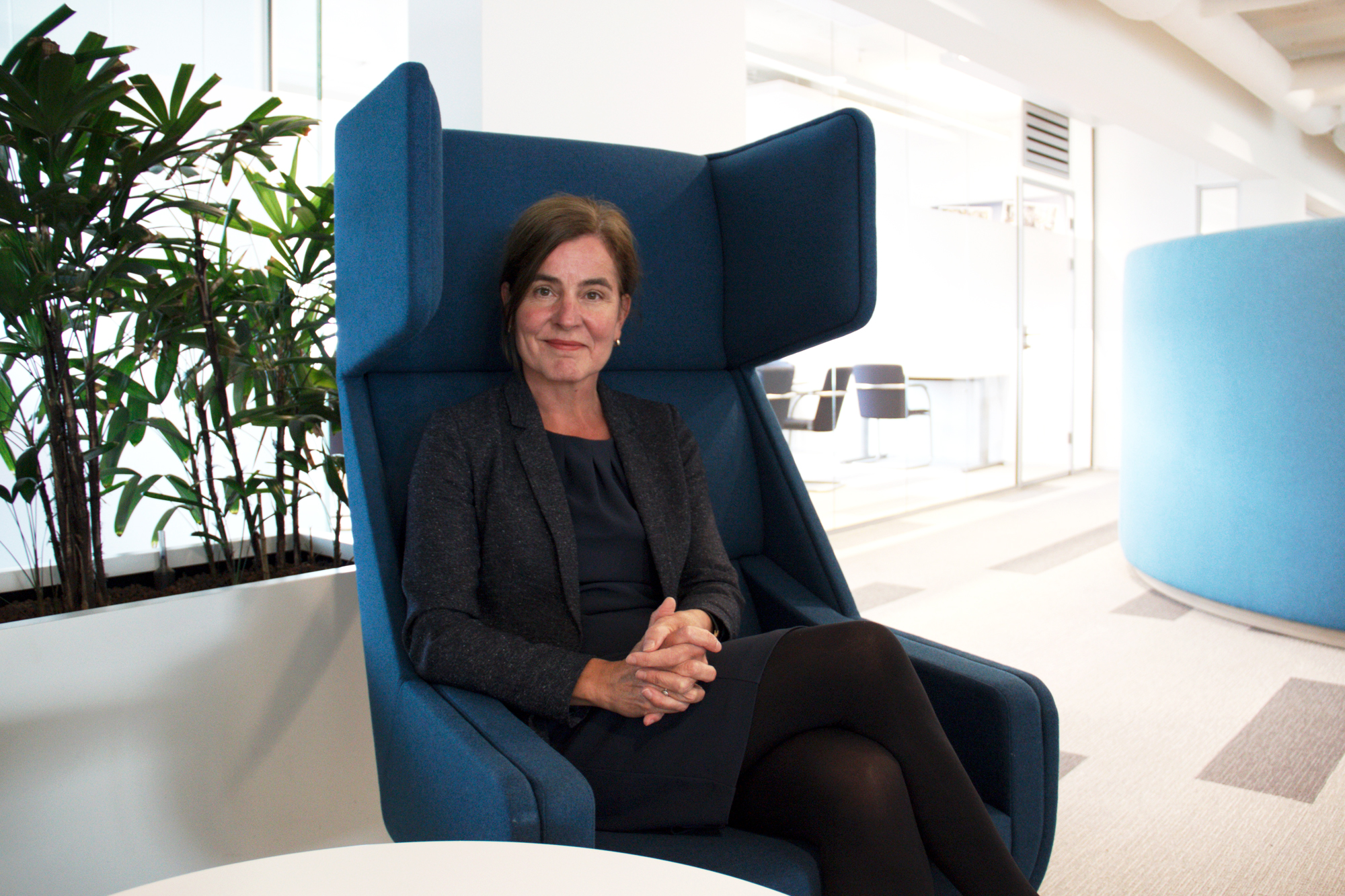
Martine van Selm: Creating impact? ‘We do that every day at ESHCC’
Gepubliceerd op:-
Governance
-
Measures
On the issue of participation, director of operations Angela Vroegindeweij says that various parties are involved in decision-making. “We try to involve as many staff members as possible in decisions. Our staff are engaged, they find their work important and want to contribute positively. At the same time, it is not possible to involve everyone in every decision. That is why we involve programme directors and research directors, who represent education and research. Department heads and the faculty council also contribute.”
On appointments and promotions, dean Van Selm acknowledges that improvements can be made. According to her, there have been cases where procedures were indeed less open than desired. She suspects this was because policy around career tracks and vacancies had not yet been fully developed, but this has now been completed. The strategic personnel plans and the EUR-wide ‘recognition and rewards’ policy should provide more clarity about career paths and vacancies. “This includes each department’s plan, with the roles needed and the profiles we are looking for. This allows staff to better see what career opportunities are available to them.”
For inclusive leadership and wellbeing, the board is trying to create a positive working environment, Van Selm says. “It is important that staff address each other when something is not acceptable, or report it via a confidential counsellor. At the same time, we as a management team see it as our task to pay attention to leadership, through our meetings for managers and leadership training”, she says. “We also try to limit workload, for example by introducing fixed teaching standards so that tasks are distributed fairly.”
Informal meetings
In addition to measures, the board is also trying to organise more informal meetings. “Not to solve a specific problem, but for a sense of community. So that as a management team you meet colleagues and can exchange views”, says the dean. For example, a new series of lunch meetings is being organised, in which board members invite staff from different departments to have lunch together. “For us, this is a way to see colleagues more often and hear what is going on on the work floor and what matters to them.”
Not satisfied
Four staff members who signed the letter say they are not satisfied with the dean’s response to their letter. They only wish to tell their story anonymously, because they do not feel safe speaking about it publicly by name. Their names are known to the editors.
'This board is only making the situation worse'
The problems have been going on for years, they say. “Already in the period before the current board, but this board is only making the situation worse.” The fact that the situation is ‘critical’ is reflected in the number of signatories, they say. The faculty has more than two hundred staff. “So one in five at our faculty feels unsafe and experiences these problems.”
They say they have reported the issues to various parties before, such as to supervisors, confidential counsellor, human resources, the faculty council, the Diversity Office and Safe@EUR. The staff do not want to mention specific cases for fear of being identifiable.
Received critically
According to them, the measures are not a direct response to their complaints. “They were already working on this before we wrote the letter.” The lunch initiative is also received critically. “They do not realise how power relations work. Some colleagues were even afraid to sign the letter, let alone sit down with the board. Some will feel too unsafe to take part.”
The dean says the board takes this comment seriously. “If people feel too unsafe to take part in an informal conversation, that deserves attention. A threshold is only low if people experience it that way. We are paying attention to how we can lower that threshold further.”
'Some colleagues were even afraid to sign the letter, let alone sit down with the board'
Structural approach
Without a ‘structural approach’, the signatories fear that the working climate will deteriorate further. “We also fear that the quality of our education and research will be at stake”, says one of them. Staff are therefore calling for an independent, neutral party to investigate the complaints. “We do not think the management team is the right party to assess and resolve this itself.”
The board currently sees no reason to initiate an external investigation, says dean Van Selm. According to her, the faculty is working on the points raised in consultation with the faculty council. “Furthermore, the existing channels within the faculty and the university remain important for these kinds of situations. We expect staff to make use of the confidential counsellor, the Diversity & Inclusion officer, human resources and Safe@EUR if they have had unpleasant experiences.”
Turbulent years
The faculty has had turbulent years. In 2018, a proposed merger with the Erasmus School of Social and Behavioural Sciences caused unrest. Internal conflicts then came to light, partly due to allegations of plagiarism against former dean Dymph van den Boom. In addition, there were said to be a culture of fear within the ESHCC.
De redactie
-
 Feba Sukmana
Editor
Comments
Comments are closed.
Ad
Read more in Staff
-
University receives four warnings from Labour Inspectorate
Gepubliceerd op:-
Staff
-
-

Data of 22 EUR travellers leaked through bookings made via DGI Travel
Gepubliceerd op:-
Staff
-