Peter Kwikkers, Uitzicht op academische vrijheid – een conceptueel recht. Published by: TriasNet. Price: 42 euros, including shipping.
Ad

Laws, press freedom and an oath can protect academic freedom
How can academic freedom be protected? One of the architects of the law on higher education, Peter Kwikkers, has written a book about it. He argues that academic freedom should be enshrined in the Constitution.
Image by: Ami Rinn
The term ‘academic freedom’ has only been in the law since 1986, Peter Kwikkers explains. “Before that it was a principle. Or at most an unwritten rule.” And in 1992 it nearly disappeared from the law again.
At the time, Kwikkers worked as a civil servant at the Ministry of Education, Culture and Science. Education legislation had to be modernised; the WHW for higher education and scientific research was on the way. Kwikkers became project leader.
At the time, the CDA asked why academic freedom was no longer included. “We simply thought it was unnecessary and the law had to become a bit more concise”, Kwikkers recalls. “But in fact that was hard to explain. So we added it again after all. Also for universities of applied sciences.”
So it was mainly done to stop the complaints. Not because the minister at the time, Kwikkers himself or his colleagues were really worried about academic freedom. But the world has since changed.
Books banned
Kwikkers: “What is happening in the United States is extremely worrying. They interfere with access to education, hand out financial penalties and even ban books. It shows how easy it is to destroy academic freedom.”
So academic freedom also needs stronger protection in the Netherlands, he believes. On his own initiative he started writing a book: Uitzicht op academische vrijheid – een conceptueel recht. It has just come off the press.
Kwikkers outlines the history of the concept of academic freedom as well as the views on it of various players in politics, education and science. He also makes concrete proposals for embedding academic freedom in the law. “Because you can lose that freedom quickly.”
Not defining it too sharply
Loosely speaking, academic freedom means that you can research and teach what you want according to your own judgement. You can follow your curiosity. The accompanying responsibility is that you remain open to criticism of your approach and findings.
But beyond that, according to Kwikkers, you should not define academic freedom too precisely, precisely in order to protect it. His idea: the more sharply you define that freedom, the less will fall under it.
You can, however, explain how it differs from other freedoms. According to Kwikkers, academic freedom should not be confused with freedom of expression or the freedom to demonstrate (because an opinion or political position does not have to be academically substantiated). Nor do the autonomy of institutions and scientific integrity fully coincide with academic freedom. But they are all related to it.
Kwikkers: “From a legal perspective, it concerns an individual right, a protection for the student, researcher and lecturer. But it is a protection that benefits society as a whole.”
In his view, academic freedom is by definition restricted. You cannot always choose your own study path or study pace, and usually you also cannot entirely decide the subject of your PhD research yourself. And the list goes on, says Kwikkers: “Within a department you jointly determine the research programme, but you must realise that this detracts from individual academic freedom.”
Oath
But how do you protect a freedom that is always under pressure? One option is an oath when graduating or obtaining a PhD, Kwikkers suggests. In his book he already proposes one: “I, student/lecturer/researcher, will preserve, respect and defend everyone’s academic freedom and safeguard the quality of education and science…” And then more follows.
Of course people can break their oath, just as doctors can break the Hippocratic oath. But an oath sets the tone, Kwikkers believes. “You should not only look at how to prevent a violation of academic freedom through legal wording, but also at how to make everyone aware of the value of this freedom.”
Press freedom
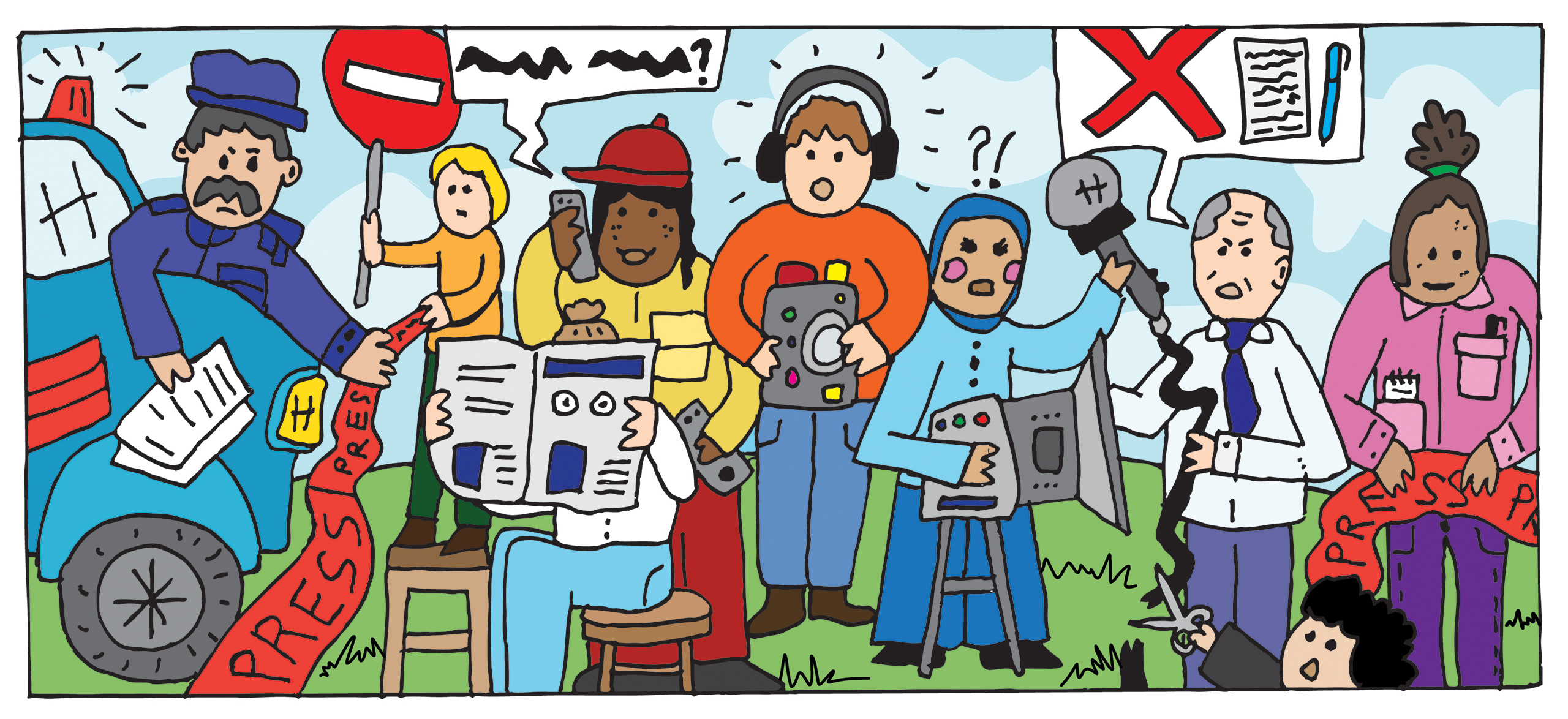
For that reason, press freedom within universities and universities of applied sciences should also be enforced by law, he argues. In the past he found it embarrassing to suggest such a thing – every self-respecting administrator would surely want such a publication within their institution? – but after several incidents involving censorship and intimidation he has changed his mind.
Een lijst met artikelen
-
Press freedom at higher education media remains under pressure
Gepubliceerd op:-
Campus
-
“It is time to throw out that lifeline, if only because an independent in-house publication can – and must – help safeguard academic freedom and strengthen it where necessary”, his book states. Small institutions could maintain a medium together if necessary, but it must exist.
Such news media are important for open debate within an institution. Moreover, journalists can hold administrators to account if they restrict academic freedom.
Legal texts
Kwikkers has formulated various possible new legal provisions. Not only the WHW but also the Constitution could use an amendment, he believes. Article 7 on freedom of expression should receive a new first paragraph: “Thoughts and feelings are free. Education and the practice of the arts and sciences are free. Academic freedom is inalienable.”
The new government frequently refers to freedom in the coalition agreement, but academic freedom is not mentioned. Nevertheless, it will also become a topic of discussion during this government’s term.
The previous government had already expressed concerns about this freedom. It had already fallen when the Minister of Education asked the Royal Netherlands Academy of Arts and Sciences for advice: is academic freedom currently sufficiently protected in Dutch law?
Apparently not, says Kwikkers. And this is also visible in smaller matters. At the moment (“due to a blunder”) academic freedom has disappeared from the law for the Royal Library, the KNAW and privately funded universities of applied sciences and universities. That must in any case be corrected, Kwikkers believes.
But whatever the KNAW advises, he does not think it will make his book redundant. “It is not only intended for politicians and lawyers. It is for everyone who deals with this freedom. For example, academic freedom should also be protected in the Teaching and Examination Regulations (TER) and in the development of participation bodies.”
Een lijst met artikelen
-

‘Academic freedom is not just a matter for the university, but for society as a whole’
Gepubliceerd op:-
Science
-
De redactie
Comments
Comments are closed.
Ad
Read more in Campus
-

Prime minister Jetten sees potential for AI to improve education
Gepubliceerd op:-
Artificial Intelligence
-
Politics
-
-

Staff will soon be able to use new risk guide to assess for themselves whether a collaboration is sensitive
Gepubliceerd op:-
Governance
-
-
With this theatre show, cybersecurity expert Bernold Nieuwesteeg hopes to finally wake everyone up
Gepubliceerd op:-
Artificial Intelligence
-
Culture
-