Ad

International students can also vote in the municipal elections, but many do not know this


About 12.5 percent of eligible voters in Rotterdam do not have a Dutch passport but are still allowed to vote. This includes many international students. But do they know this, and will they use their right to vote on 18 March?
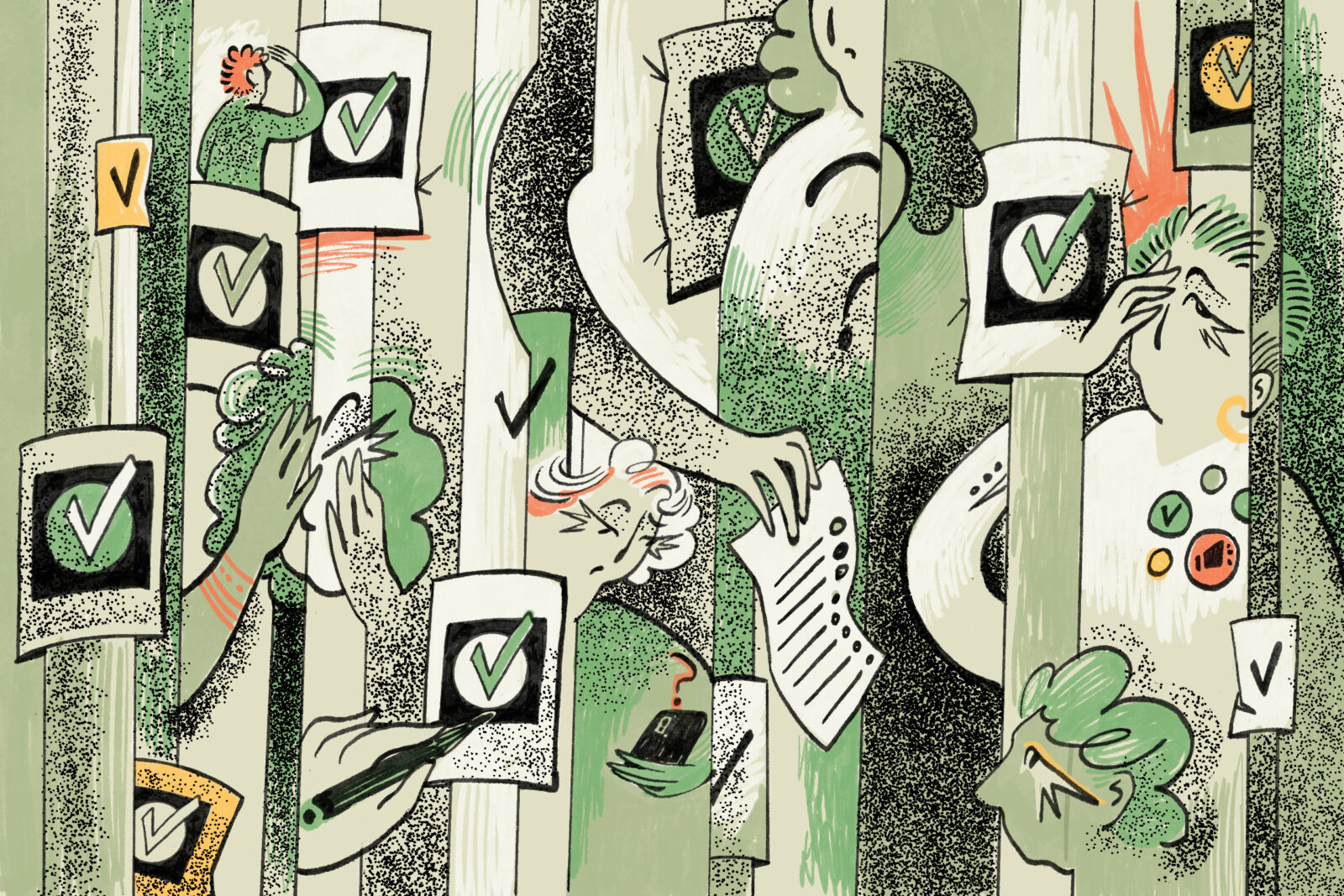
Image by: Ami Rinn
People from the EU, and people from outside the EU who have lived in the Netherlands for five years, are allowed to vote in the municipal elections. Many international students will therefore be able to vote on Wednesday 18 March for politicians who want to enter Rotterdam’s municipal council. But not everyone knows this, according to a round of interviews with international students on campus.
The Spanish Mar Rubio i Boné, for example, thought it was a mistake when the polling card landed on her doormat. “I thought I would not be allowed to vote here because I vote in Spain”, says the premaster student Media and Creative Industries. “But now that I know, I will check it out as it is important for me to be politically involved.”
“I think I will vote for someone from a left-wing party who argues for fewer cars because of noise and pollution”, says Mar. “And I would welcome more festivals, concerts and cultural initiatives in Rotterdam, so that internationals feel welcome.”
The Bulgarian friends Lora Yordanova and Zhanet Zografova do know that students from the EU are allowed to vote next week, but are still in doutb if they’re actually going to. “If I have time, I will go”, says Lora (International Business Administration). “It takes two weeks before I can see the GP when I am ill. I once even flew back home to get help.”
'When a landlord notices that I do not speak Dutch, I am rejected without explanation'
For Zhanet (International Bachelor Communication and Media), the housing market and discrimination during her search for accommodation would be the most important election issues: “I’ve been looking for housing close to the university for two months, but everything is far away or expensive. Many houses are only for Dutch people. The second a landlord notices that I don’t speak Dutch, I’m rejected without explanation.”
Right to vote
Although almost all Dutch people aged 18 or older can in principle vote on Wednesday 18 March in the municipality where they live, they do not have the exclusive right to do so. People with another nationality may also have the right to vote, under certain conditions.
All citizens from an EU country may vote for the municipal council, as long as that person has been registered at a Dutch address since 2 February 2026. The same applies to those who were born outside the EU and have lived legally in the Netherlands for five years or longer.
In Rotterdam there are, according to Theo Breimer, elections spokesperson for the municipality of Rotterdam, 460,473 Dutch eligible voters, 45,964 eligible EU citizens and 19,747 citizens who are not from the EU but are still allowed to vote.
Voting locally

Image by: Ami Rinn
“Even if I could vote this year, I do not know whether I would do so. I do not know much about Dutch politics”, says Beril Yildiz from Turkey. She follows the bachelor’s Management of International Social Challenges and is currently in her second year, which means she has not lived in the Netherlands long enough to have the right to vote.
“I do think it is important that people are allowed to vote in the place where they live”, Yildiz continues. “It is better to vote locally than to vote in a country you might visit only once a year.”
The municipal elections give residents the chance to influence what happens in their own place of residence. The issues that parties focus on have a direct impact on the living environment of the municipality’s residents, for example in the case of housing construction or green spaces, but also nightlife culture and safety on the streets – matters that also concern internationals, even if they only live here for a short time.
Parties
Political parties usually campaign in Dutch, but some parties also partly target the international public. For example, the Rotterdam group of GroenLinks-PvdA has posted a video on its Instagram explaining briefly when a non-Dutch citizen is allowed to vote. The party also organised an information session in English on Wednesday evening, and its main positions are summarised in English online.
Volt also addresses international residents in addition to Dutch citizens. The Rotterdam group has placed an English summary of its key points on its website. The party has also made a similar video to GroenLinks-PvdA to inform internationals. D66 also distributes flyers in English and can regularly be found at the tram stops around the university to speak with non-Dutch students.
Information in Dutch

Image by: Ami Rinn
But if an international – student, expat or labour migrant – wants to make use of the right to vote, how do they find information? A small survey by EM shows that much of the information about the elections is only provided in Dutch. The posters and billboards between Kralingse Zoom and Erasmus University, with a few exceptions, are aimed at a Dutch audience.
Even the polling card that must be taken to a polling station does not have an English version. For more information, non-Dutch residents can contact the municipality where they live, although not every municipality offers the same amount of English information on its website.
One Spanish student does not seem to have many problems with the limited English information. “To get an idea, I plan to fill in a questionnaire”, he says, referring to the voting guides offered by municipalities. “I will then look up the parties that come out of it to see what their plans are. With that information I will decide who to vote for.”
Read more
-
Student on the ballot: Mina goes for climate targets and affordable housing
Gepubliceerd op:-
Politics
-
De redactie
-
 Togzhan Kanapina
Editor

Comments
Comments are closed.
Ad
Read more in Politics
-
After a second compensation payment, that must be it for students who missed out
Gepubliceerd op:-
Money
-
Politics
-
-
Far-right extremists use campuses to normalise their ideas
Gepubliceerd op:-
Politics
-
-

Prime minister Jetten sees potential for AI to improve education
Gepubliceerd op:-
Artificial Intelligence
-
Politics
-