Ad

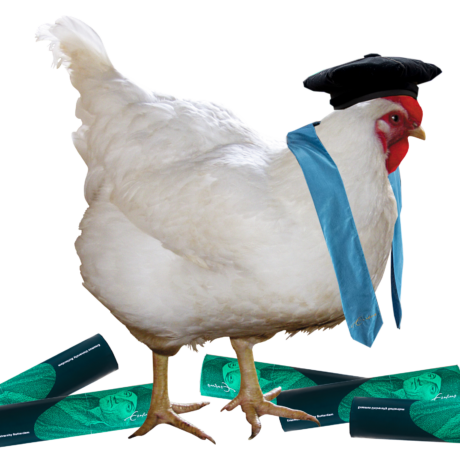
A maximum number of PhD candidates per professor? That is not going to happen
De Jonge Akademie wants a maximum for the number of PhD candidates per professor. Columnist Chris Aalberts is sceptical: the discussion about the quality of PhD supervision has already been held countless times.
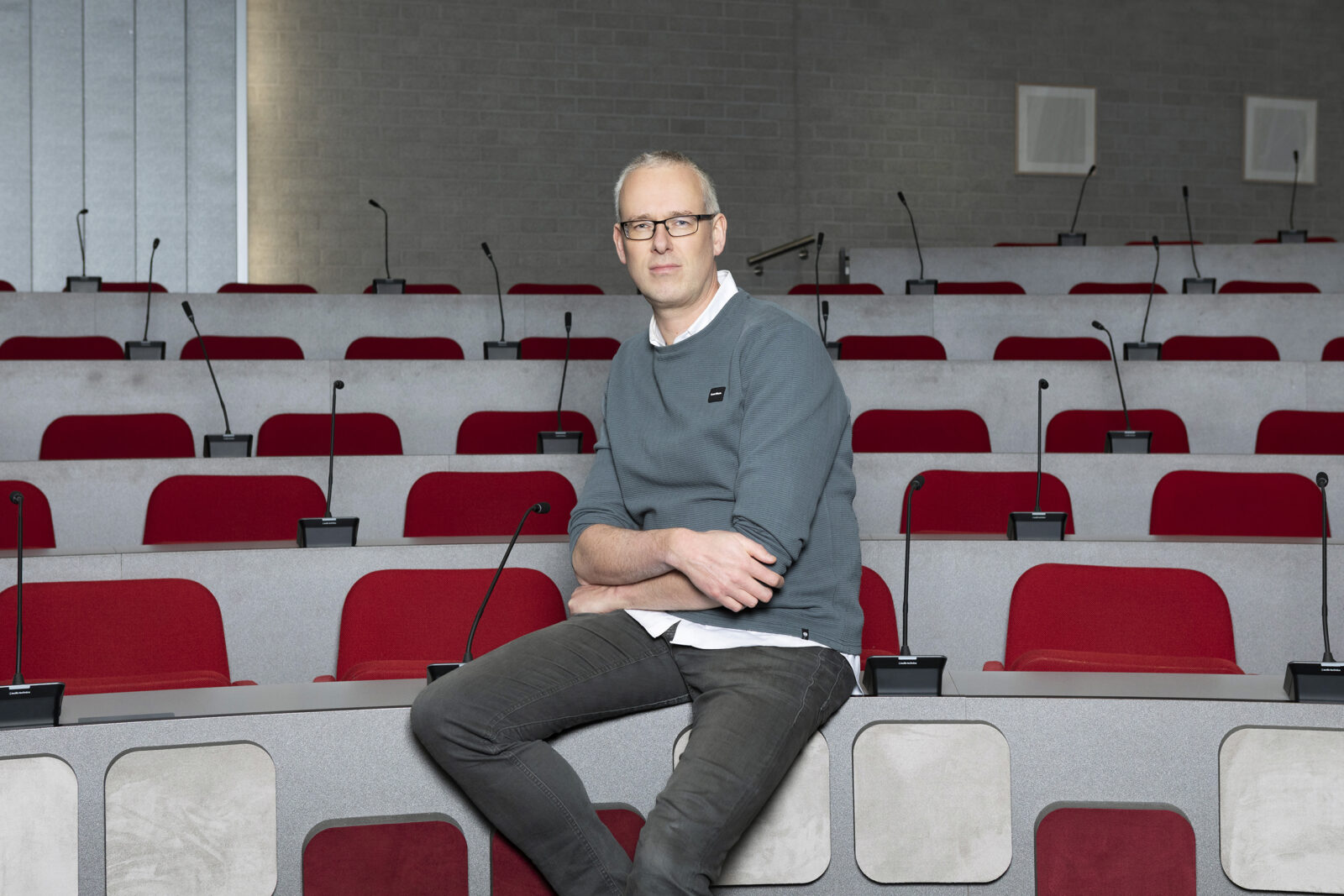
Image by: Geisje van der Linden
How often has the quality of PhD supervision already been discussed? That question came to mind when I read the advice from De Jonge Akademie about the ‘profkip’, a joking term for professors with too many PhD candidates. If you have too many of them, you cannot supervise them properly because you simply do not have the time. The young scientists have a suggestion: a restriction on the number of PhD candidates per professor. Sounds like stating the obvious, but in policy terms it is apparently controversial because, as De Jonge Akademie writes, it is time to ‘start a conversation’ about it.
I once had such a conversation myself. It was around 2004, and together with a fellow board member of Promovendi Netwerk Nederland (PNN), the representative body for young researchers, I was sitting in one of the towers of the Ministry of OC&W. A man came in – one Mark Rutte, the state secretary – with a whole entourage. He smiled kindly at us, we began to complain that the quality of PhD supervision was poor, and he started nodding. After a while the discussion turned to measures, and then he quickly began preparing to leave again.
At the time, our board also had contact with members of parliament. I remember that one member of the LPF parliamentary group was very interested in this issue. After all, poor supervision leads to PhD candidates who never complete their research, and that can easily be seen as a waste of taxpayers’ money. It was not entirely our own political line, but we still saw it as a possible hook to persuade the state secretary to change his mind. You can imagine how that ended.
'Sounds like stating the obvious, but in policy terms it is apparently controversial'
PhD supervision has since become an endless serial. Two years earlier a report had been published with the telling title Retain talent! Ten years later it was published again, because nothing had changed. It deals, among other things, with the autonomous position of professors who are not called to account by colleagues for poor supervision, while PhD candidates are completely dependent on them. And then there is that one sentence: ten years earlier people had already found that supervision needed to improve.
De Jonge Akademie now points to inequality in the allocation of grants: since these are mainly used to appoint PhD candidates, and one grant increases the chance of another, huge differences sometimes arise between professors in the number of PhD candidates they supervise. A maximum could offer a solution, the young scientists think. Now, after thirty years of a lack of effective policy, they first want to start a conversation about the pros and cons. They also want to talk about the quality of supervision, as if that discussion has not already been held countless times.
The representative body for young researchers is not helping much either. In a response, PNN writes that the number of PhD candidates is not the whole story. After all, there is a certain context in which supervision has to take place. That context is different every time. Policymakers will be delighted with these highly effective ways of once again postponing any measure indefinitely, just as before.
Een lijst met artikelen
-
The discussion on study migration is back in the fridge
Gepubliceerd op:-
Column
-
-
Away with the ‘profkip’, says The Young Academy
Gepubliceerd op:-
Science
-
De redactie
-
 Chris Aalberts
Columnist
Comments
Comments are closed.
Ad
Read more in Column
-

Notes on your phone
Gepubliceerd op:-
Column
-
-
Looking back without anything weighing on you
Gepubliceerd op:-
Column
-
-
Academics allow themselves to be used by politicians
Gepubliceerd op:-
Column
-