Ad

Executive Board supports institutes ISS and IHS’s wish to merge
The International Institute of Social Studies (ISS) and the Institute for Housing and Urban Development Studies (IHS) wish to merge, with a main location in The Hague. The Executive Board supports this exploration. In the coming period, the institutes will further examine how feasible and desirable a merger actually is.

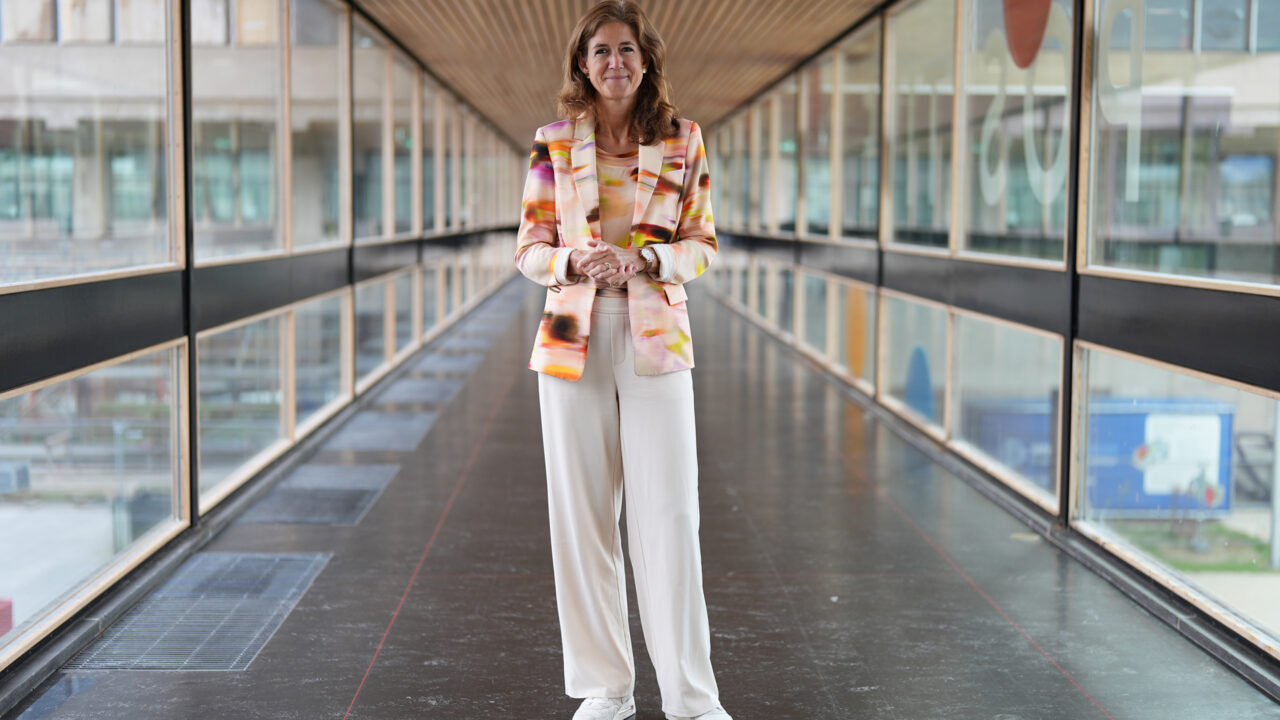
Image by: Ami Rinn
Two years ago, the two EUR institutes saw their master student numbers halved, mainly due to the end of the Orange Knowledge Programme (OKP), a scholarship programme that attracted many students from the Global South to Rotterdam. Nevertheless, IHS Director David Dodman and ISS Rector Ruard Ganzevoort say in a joint interview with EM that the possible merger is not a direct result of this, but is mainly motivated by a changing world: “The sentiment today is that development cooperation should not cost money. So we have to change in order to continue doing what we consider important.”
What is the current status of the merger plan?
Dodman: “Over the past year, we have organised joint meetings and examined various aspects of a merger in different working groups with members of both institutes. At the end of 2025, they presented a report that outlines our shared values, why we could merge, and practical issues that we need to investigate further. We believe that a merger will lead to better opportunities to make an impact and find funding.”
What were the employees most concerned about during those meetings?
Ganzevoort: “Firstly, practical matters such as working conditions. To give an example: at ISS we work 38 hours a week, at IHS 40. ISS also has a bicycle scheme and IHS has more extensive leave arrangements.
“The second category of questions mainly concerns the different approaches. Some colleagues already work together and mainly see similarities, while others have not yet had that privilege and may see more differences. Our histories are also very different: since 1952, ISS has focused on education and research in the Global South, while IHS has its roots in the business world.”
Dodman: “Nevertheless, our institutes and students are quite similar. Our alumni also end up in similar places.”
Will people be made redundant as a result of the merger?
Dodman: “No, that is not permitted under the legal framework in which this merger is taking place.”
How much money will the merger save?
Ganzevoort: “Saving money is not the goal, but the merger could certainly yield economies of scale. We are relatively small institutes, so we have a relatively large number of support staff and management, and the accommodation is quite expensive. But there will be no redundancies, so those benefits will mainly be due to natural attrition and enhanced earning opportunities in the longer term.”
What does the merger exploration sent to the Executive Board say?
Dodman: “In it, we explain that together we will be better able to deliver high-quality academic work and high-impact advice. We have also examined the financial side of a merger, which shows that the financial basis is likely to be solid. The Executive Board has by now responded with support and together we will now make available the expertise we need to work out the details.”
The IHS is currently located at Woudestein and the ISS is in the embassy district in The Hague. Will there be a single location after the merger and where will it be?
Dodman: “I think it would be very good to have a single location; that could have many advantages.”
Ganzevoort: “For the ISS, it is very important to maintain contacts with government, NGOs and the diplomatic world, so we would prefer to stay in The Hague. Our current building on Kortenearkade is in need of major renovation, so whether that will be in this building or somewhere else is not yet clear.”
Dodman: “At the same time, it remains useful to maintain a branch on campus, also for ISS colleagues who regularly have appointments in Rotterdam. They currently have nowhere to work, so that could change.”
How will a merger affect students?
Dodman: “The study programmes will continue to exist side by side. Of course, we will look for opportunities such as additional electives or a more modular approach. But for students, nothing will change initially.”
They may have to go to a different location for their lectures. The ISS currently has its own building, its own student accommodation and even its own bar. Will that feeling change with a possible new building and the arrival of IHS students?
Ganzevoort: “To be honest, our building has become a bit quiet due to the decline in student numbers. So if the IHS students join us, it will mainly add a bit more liveliness.”
With the disappearance of the OKP scholarship programme, the IHS and the ISS lost almost half of their master students. Will a merger lead to more opportunities to attract more students from Africa, for example?
Dodman: “We are already working hard on that. The end of the OKP meant we had to think about how we could maintain a diverse student population, and I think we are succeeding. The combination with the ISS makes us more attractive, and we can join forces in finding new scholarships and other revenue models.”
Ganzevoort: “Other institutes in the Netherlands are also struggling, and together we are trying to persuade the new government to set up something similar to the OKP. In that respect, the merger may increase our ability to achieve that.”
Both institutes have a history spanning decades, and a merger will end their independence. How does that feel for the rector and the director?
Dodman: “We are doing this purely because we see opportunities; there is no external pressure to merge. And there have always been organisational changes. The ISS only became part of Erasmus University in 2009, and the IHS in 2003. We are doing this because we want to be proactive, rather than sticking to what used to work well.”
Ganzevoort: “I couldn’t have said it better myself, although I do feel a certain ambivalence about a merger. Not because I don’t see the opportunities and the strategic necessity, because the world has really changed. Until recently, policy was driven by the idea that international development cooperation is a positive thing. Nowadays, the sentiment is that development cooperation should not cost any money. So we have to change in order to continue doing what we consider important.
“No, the ambivalence lies in the burden we are placing on our colleagues. There are already cutbacks, changes in the curriculum, discussions about renovating our building and, on top of that, a possible merger. That’s a lot to take on at once. The participation councils at both ISS and IHS are basically in support of this exploration, but they have also raised many important questions that we need to address before reaching a full decision.”
What will the new institute be called?
Ganzevoort: “Both the IHS and the ISS are very strong international brand names, make no mistake. If you say ‘Erasmus’ abroad, everyone thinks of the Erasmus+ exchange programme, but if you say ‘ISS’ or ‘IHS’, they immediately know us and our alumni who are often in important positions.”
“So we have to think carefully about how we can retain the strong brand names while building something new. But there is no concrete proposal yet.” Over the next six months, the further details of the merger plan will be worked out and a final decision will have to be made as to whether a full merger is feasible.
Een lijst met artikelen
-

Number of students at ISS and IHS halved due to termination of international scholarship programmes
Gepubliceerd op:-
Education
-
De redactie
-
 Elmer Smaling
Deputy editor-in-chief
Comments
Comments are closed.
Ad
Read more in Governance
-
Staff will soon be able to use new risk guide to assess for themselves whether a collaboration is sensitive
Gepubliceerd op:-
Governance
-
-
Universities want to work more with Defence
Gepubliceerd op:-
Governance
-
Politics
-
-
University president on powerhouses: ‘If we do nothing, we will hit a wall’
Gepubliceerd op:-
Governance
-