Ad

Why the economy doesn’t belong to economists
Economists often describe the economy in terms of what is visible and measurable. But what if the work that actually holds societies together, work that is usually unseen and undervalued, forms its true foundation? For Wendy Harcourt, a single image was enough to connect a lifetime of feminist and environmental research into a radically different way of understanding what the economy really is.
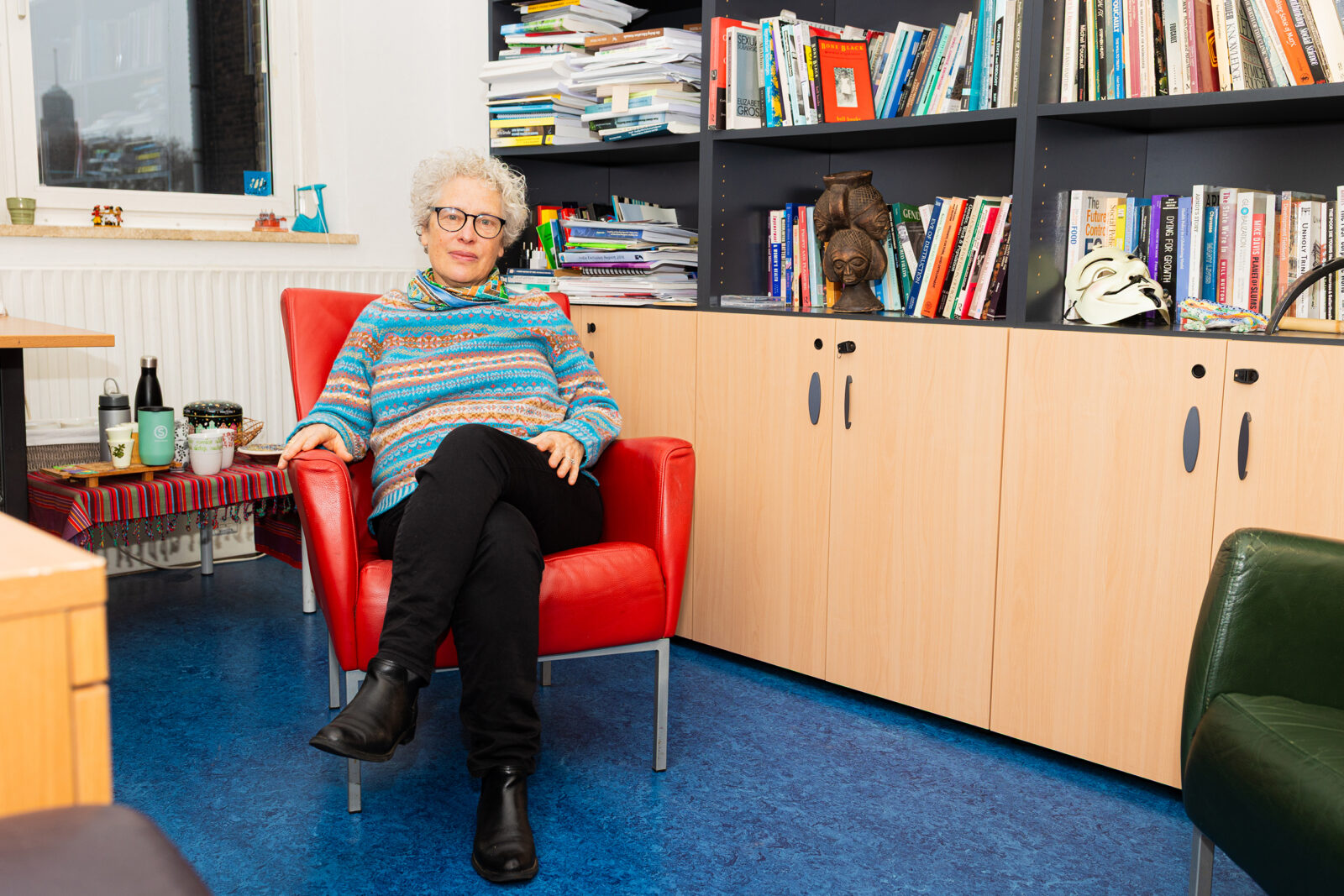
Image by: Pien Düthmann
The wonder
“I grew up surrounded by economists as my father, brother and husband were economists. They talked about markets, firms, and finance. That made me believe that the economy was something for experts, and I felt that it wasn’t a place for me.
“I’m a trained historian, and I always kept an eye for the history of ideas. Later I became active in feminist and ecological movements. I was interested in how people make a living, survive in difficult circumstances, and live together in community. I’ve studied inspiring examples of how inventive people can make ends meet, and to set up alternative ways of living. Domestic and emotional labour, and community and care work, all usually fall on the shoulders of women. Such reproductive work is essential to keep a society going. And yet all those activities were seen as not ‘real work’. Moreover, with big societal issues and crises, it is still economists who ultimately shape decisions, even when the issues are cultural, social or environmental.”
Wendy Harcourt is professor of Gender, Diversity and Sustainable Development at the International Institute of Social Studies. As a feminist political economist and critical development scholar, her work explores how care, gender and community-based practices reshape our understanding of the economy.
The eureka moment
“When I started teaching post-development at the ISS, I went looking for ways to conceptualise community work and informal labour. That search led me to the work of JK Gibson Graham. When I read their work on post-capitalism economics and saw the diagram of the ‘diverse economies iceberg’, I had a true eureka moment.
“What we usually recognise and measure as economic activity occupies only the visible surface, while beneath it lies the much larger body of diverse economic activities that actually sustains society and life. The iceberg image was incredibly liberating for me. It gave me a language to articulate what I had long observed but couldn’t name: that this invisible work, largely carried out by women, is not separate from the formal economy but the very foundation on which it rests.”
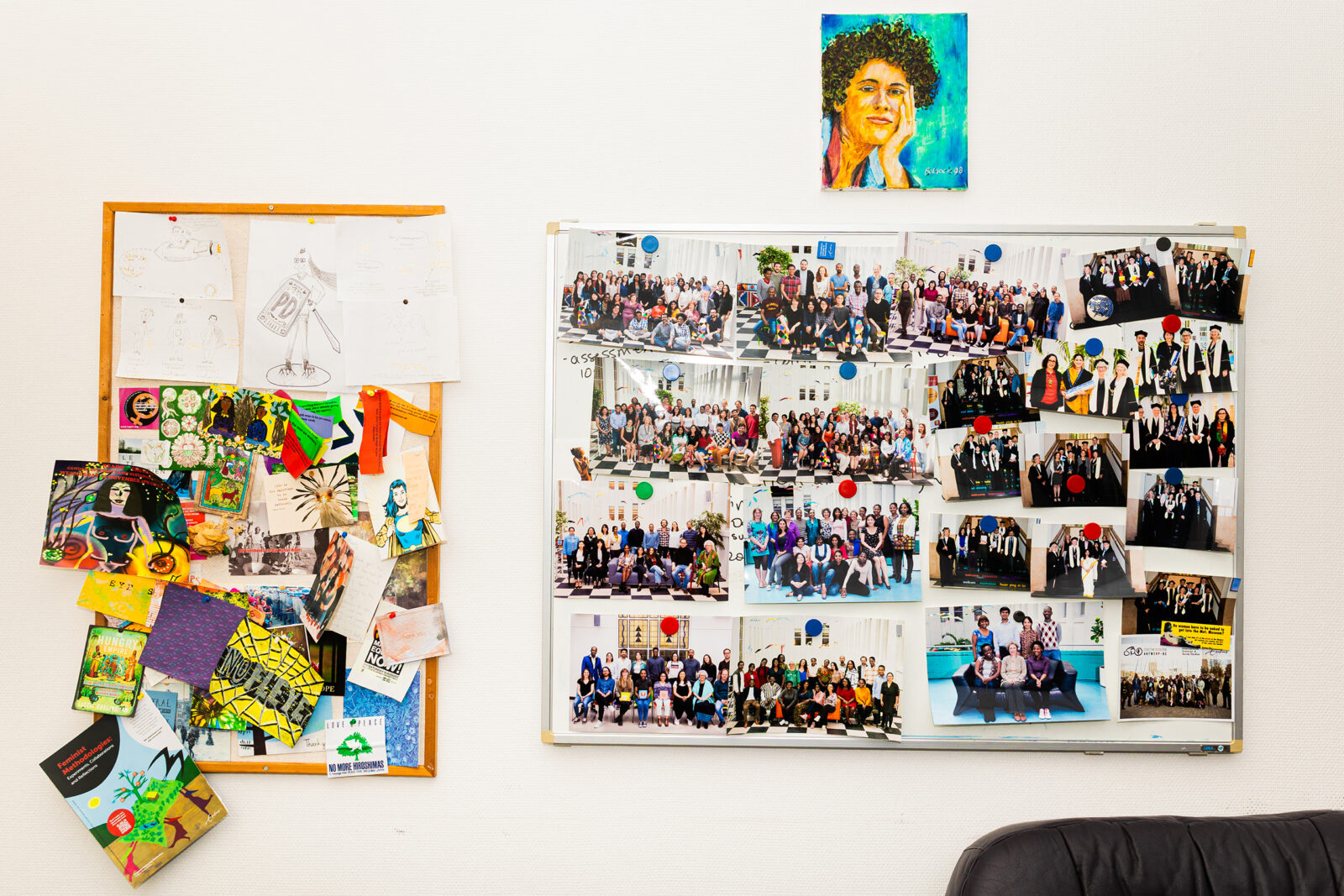
Image by: Pien Düthmann
The research
“I used this approach in a large EU Research project. As part of the Wellbeing Ecology Gender cOmmunity (WEGO) network, I worked closely with cooperatives and local groups, and we explored how people organise their livelihoods for instance through care, bartering, and local food production. The iceberg image makes it possible to take these practices seriously, even when they don’t fit neatly into conventional economic models. It allowed me to place diverse economics activities that recognised the crucial importance of care, women’s work and environment at the centre of economic life.
“Also for teaching this concept of the iceberg works very well. When they see it, students have a moment of recognition. I invited them to create their own iceberg diagrams based on their lives and contexts. Suddenly the economy is no longer distant or technical, but something rooted in their everyday experiences. The PhDs in the WEGO network were inspired by diverse economies looking at the activities below the iceberg tip. One PhD project, for instance, focused on older women in depopulated areas of Japan, where men and younger generations had left. By making and selling noodles gleaned from their local area, these women sustained themselves, preserved local knowledge and built a community economy alongside the capitalist one.”
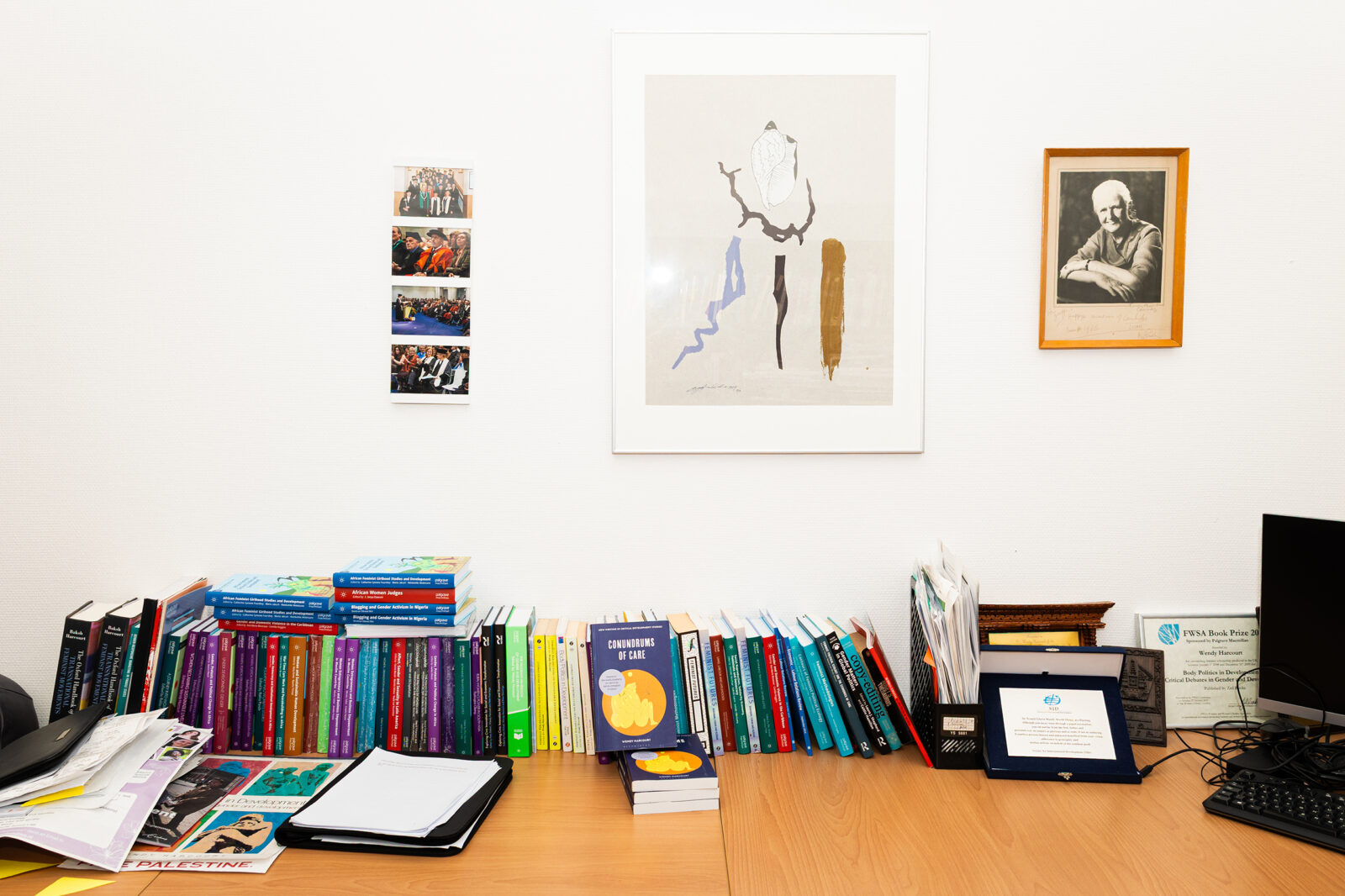
Image by: Pien Düthmann
The aftermath
“These insights are sometimes met with resistance by some students, and in conferences discussing sustainable development. Mainstream economists can find it romantic, or fluffy. They see my research on gender, alternative economics and care as sociology or anthropology. And implicitly, as less important.
“I’ve become more confident in pushing back against that view. Precisely because this type of research is so empowering. When the economy is framed as something abstract, managed by distant experts, it becomes hard to imagine that you’re part of it and that you have the power to change things. But if you recognise care, community and everyday practices as economic activities, people can reclaim the economy as their own.
“And diverse economies are already there. We don’t need to wait for a revolution to change things. Of course that doesn’t mean capitalism will disappear, or that we do need to study how it disappears. The tip of the iceberg still matters. But it’s not the whole story. Economic alternatives don’t have to be invented from scratch. We just need to understand them better, and create more space for these communities and ways of living to flourish. That matters enormously in a time of climate crisis and deep inequality.”
De redactie
-
 Manon Dillen
Editor
Comments
Comments are closed.
Ad
Read more in Eureka!
-
Why Philip Hans Franses had students look in wallets at a DIY store
Gepubliceerd op:-
Eureka!
-
-
Did your parents know what your sex life was like when you were eighteen?
Gepubliceerd op:-
Eureka!
-
-
How a thousand women recognised a pattern that science did not see
Gepubliceerd op:-
Eureka!
-