Ad

Eleven programmes to limit intake in English-language tracks

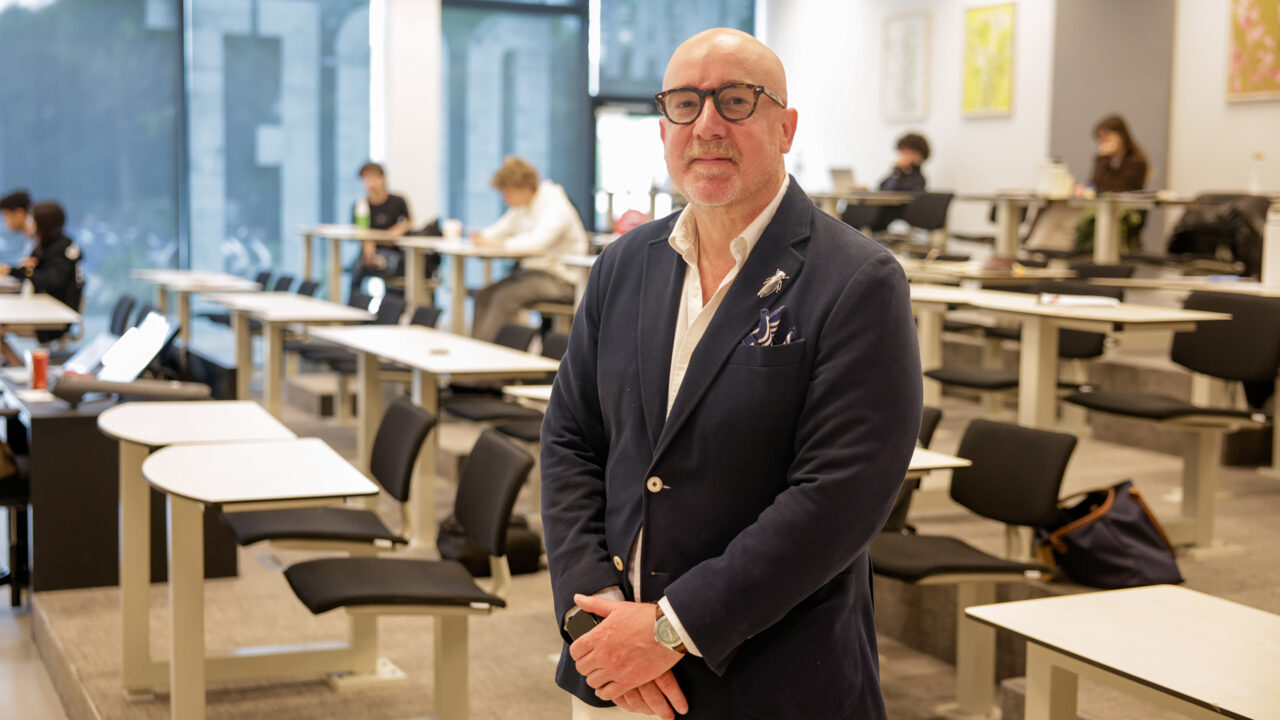
Next year, eleven bachelor’s programmes in the Netherlands will cap the number of first-year students in their English-language tracks. The aim is to manage the controversial internationalisation of higher education more effectively. International Psychology in Rotterdam will be limited to 200 students for now, but still faces the risk of being scrapped altogether from 2028.

Image by: Femke Legué
This week, it was announced that a total of 86 programmes will apply an intake restriction. These programmes will therefore select or draw lots if too many prospective students apply for the 2026/2027 academic year.
Recently, programmes have been allowed to distinguish between English-language and Dutch-language tracks. This enables them to limit the influx of international students (via the English-language track) while keeping the programme accessible to Dutch students.
Physiotherapy, psychology
For the first time, eleven programmes are now applying such a track-specific intake cap, including the bachelor’s programme in physiotherapy at Hanze University of Applied Sciences in Groningen. There, a maximum of 75 students will be allowed to start in the English-language variant, while there is no cap for the Dutch track.
The other ten programmes are university-based, including five psychology programmes. At Erasmus University, 400 students may follow the Dutch-language track, while 200 are welcome in the English-language variant. The English-language track may disappear altogether from 2028. This has been postponed by a year – it was originally planned for 2027.
But that’s not the case everywhere. Some programmes merge students from different tracks. At psychology in Vrije Universiteit Amsterdam, 600 first-years may enrol, regardless of whether they follow the Dutch-language or English-language track.
There are also two programmes (Psychology at the University of Amsterdam and Computer Engineering at Delft University of Technology) that allow more students in the English-language variant than in the Dutch or bilingual one.
Overcrowded lecture halls
Previously, programmes were not allowed to distinguish between tracks. An intake restriction always applied to the entire programme. Universities in particular have long advocated for the option of a separate intake cap for international students.
Some programmes were overwhelmed by international students, leading to overcrowded lecture halls. But a general intake cap meant Dutch students had to compete with candidates from all over the world. That could harm accessibility for Dutch students.
To enable the new track-specific caps, the law had to be amended. Three ministers attempted this in recent years, but they added controversial language policy rules to their proposals, causing delays in the legislative process.
Impatient
The University of Amsterdam grew impatient. It went ahead with new rules for its Psychology programme. This was officially not allowed, but in the end, no one objected.
The VVD also became impatient and submitted an amendment. At the time, the political climate began to shift. The liberals wanted deep cuts to higher education spending, partly by reducing the number of international students. They joined forces with PVV, NSC and BBB.
Dijkgraaf had proposed a language test: every non-Dutch-taught programme would have to explain why it was not offering education in Dutch. If no valid explanation was given, the programme would have to switch back to Dutch within a few years.
Dick Schoof’s cost-cutting cabinet wanted to tighten this language test, which even caused moral concerns among the committee that would be responsible for the assessment: you can’t introduce such a test under the shadow of severe budget cuts, the chair argued.
Self-regulation
The universities decided to take the initiative and came up with self-regulation plans. Scrap the language test, was their proposal to the government, and we’ll take care of responsible internationalisation ourselves.
These plans included, for example, making psychology programmes in the Randstad region Dutch-taught again. That has not yet happened, but the language test has also not been definitively scrapped. The legislative proposal is still in the pipeline, and it remains to be seen how the next cabinet will deal with it.
Read more
-

Psychologists disappointed: ‘I had hoped for a bit more Harvard, a bit less Columbia’
Gepubliceerd op:-
Internationalisation
-
De redactie
-
 Elmer Smaling
Deputy editor-in-chief
Latest news
-

Minister scraps ‘interest cap’ for students: plan much more expensive than expected
Gepubliceerd op:-
Money
-
-
Clubs closing, expensive drinks and dancing with a matcha. How Rotterdam’s nightlife is changing
Gepubliceerd op:-
Culture
-
-

Powerhouses are like shoulder pads
Gepubliceerd op:-
Column
-


Comments
Comments are closed.
Ad
Read more in Education
-

TU Delft may not favour women in admissions to courses
Gepubliceerd op:-
Education
-
-

RTL: More than half of master’s theses contain AI-generated text
Gepubliceerd op:-
Artificial Intelligence
-
Education
-
-
Education pioneer Etienne Augé: ‘Technology should give us more time for people’
Gepubliceerd op:-
Education
-