Ad

The wellbeing of students has improved slightly

Students are doing better than four years ago. Even so, four in five students still experience feelings of anxiety or depression from time to time. They still use the same amount of alcohol and drugs on average.
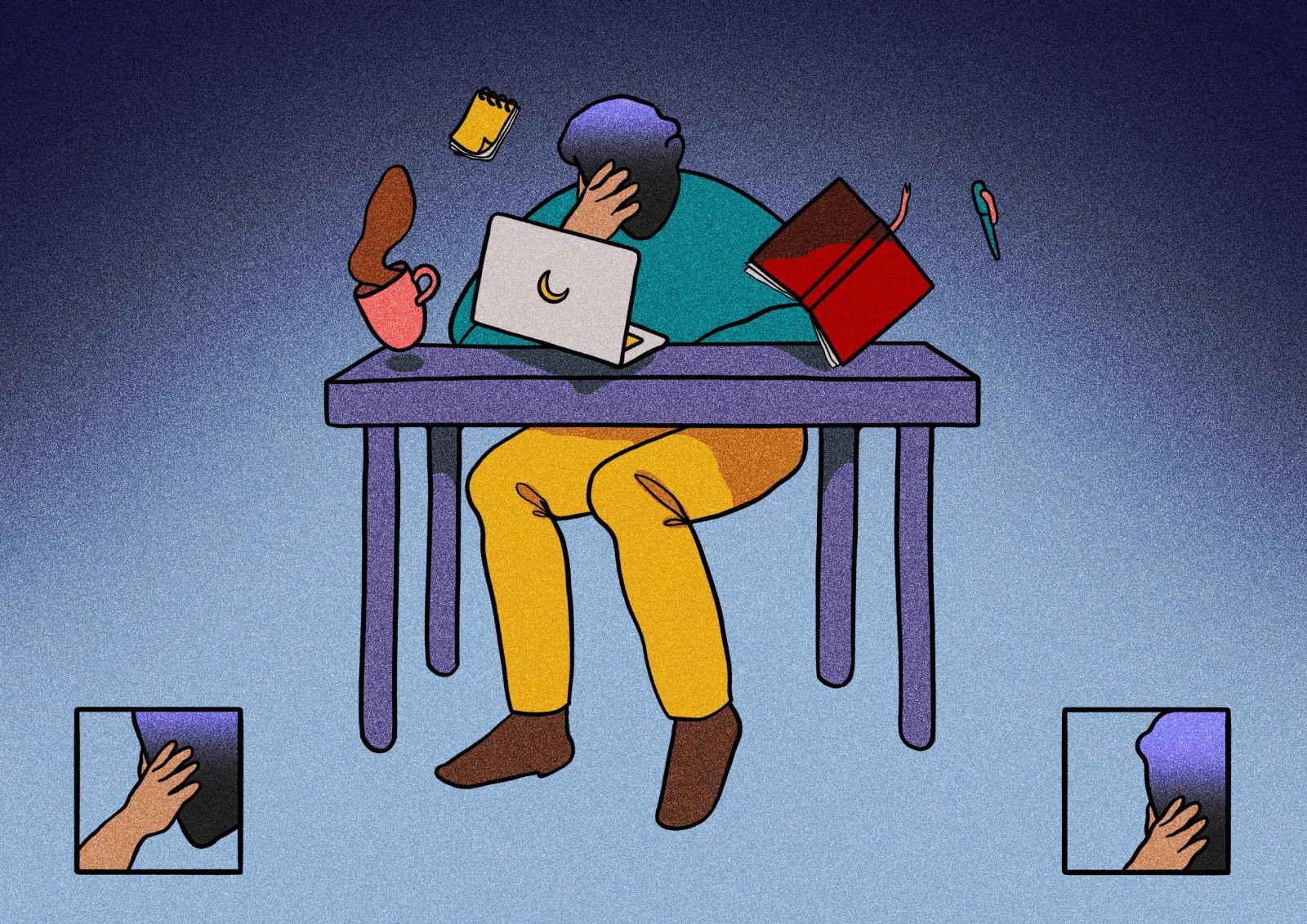
Image by: Honey Simatupang
For the third time, thousands of students have been surveyed about their mental state and their use of alcohol and drugs. A significant share still struggles with psychological complaints, report the Trimbos Institute, RIVM and GGD GHOR Nederland.
Students’ mental health has mainly improved compared to the first measurement in 2021, when they were still dealing with the lockdowns during the coronavirus crisis. The difference between 2023 and 2025 is much smaller.
Students are again slightly more satisfied with life: the score rose from a 6 during the coronavirus crisis to 6.7 in 2023. It has now reached 6.8.
A smaller share also feels lonely: this percentage fell from 79 to 62 to 60 per cent since 2021. And students feel less pressure to perform: the figure has gone from 54 to 44 to 41 per cent.
But the problems are not over. More than eighty per cent of students have experienced anxiety or depression in the past month, and about a quarter of them sometimes feel worn out by life. More than half experience a lot of stress, mainly due to their studies but also because of personal problems or financial worries.
Substance use
Alcohol and cannabis are the substances students use most. One in four is an excessive or heavy drinker. Almost half have used cannabis and five per cent do so weekly.
XTC also remains popular among students: one in five have used it at some point and 11 per cent did so in the past year. For cocaine the figures are 10 and 5 per cent. In addition, 15 per cent have taken a psychedelic substance, such as truffles or LSD.
Those living in student housing appear to use more substances than those still living with their parents. It also appears that students with high stress levels and/or sleep problems use alcohol or drugs more often.
Students are less likely to seek help for substance-use problems (22 per cent) than for psychological complaints (66 per cent). They often say they do not feel the need for it.
‘A generation is drowning, while politicians look on’
Response
In total, 27,000 students from thirteen universities of applied sciences and eleven universities completed the questionnaire: the response rate was almost six per cent. But who fills in the questionnaire? There may be a distortion, with mainly students who have problems taking part.
The authors of the report are aware of this. They therefore stress that the figures are not exact but do provide an impression of students’ mental health and substance use.
Students’ response
And that picture is alarming, says the Dutch Student Union (LSVb). “A generation is drowning, while politicians look on”, says chair Maaike Krom. She criticises the planned cuts to education, which would deliver the ‘final blow’ to students’ mental health. For these cuts will also affect projects related to student wellbeing, she argues.
The LSVb also points to, among other things, the housing shortage and students’ financial problems. The union calls for a higher basic grant, mandatory internship pay and lower interest on student loans. Moreover, more student housing is needed. Krom says, “The ball is in the politicians’ court.”
According to the Dutch National Students’ Association (ISO), the glass is half full. The ISO praises the ‘big steps’ education institutions have taken in recent years, although chair Sarah Evink believes there is still room for improvement: “If you fail to show up at work, someone will call to ask if you are all right. This almost never happens to students at universities of applied sciences and research universities.”
The ISO argues for a kind of ‘duty of care’ for education institutions. They should ask students more often how they are doing. She also believes the education system should cause less stress. In her view, politicians should increase the basic grant and place less emphasis on graduating quickly.
Response from Gouke Moes
Outgoing minister Gouke Moes sees the report mainly as confirmation that current policy is bearing fruit. “It is good to see that students’ mental health seems to be improving”, he responds. “Feeling well is a prerequisite for being able to study well.”
Education institutions and students, the minister says, have worked hard on mental wellbeing and this seems to be working. As far as he is concerned, the Ministry of Education, Culture and Science will continue to support the national programme for student wellbeing (STIJN).
But he also wants to look for solutions outside education. “The approach to mental wellbeing is a broader societal task”, he believes. “Local cooperation between education institutions, municipalities and the healthcare sector is crucial for improving students’ wellbeing. And of course the voice of students cannot be left out. I speak with the national student organisations, but at local level student officers and the participation council can also play a major role.”
For several years now, some cities have had ‘student officers’, who form a bridge between the municipal authorities and students. They contribute, for example, to student housing policy but also to mediation with neighbours in case of disputes. The participation councils of universities and universities of applied sciences influence the policies of their institution, including the approach to student wellbeing.
Universities
The universities are pleased with the improvement, says a spokesperson for their umbrella organisation UNL. “Universities have made a strong effort to increase the sense of belonging, improve the flow of information and strengthen the support structure, so that students know where within their university they can go with their questions.”
Student wellbeing remains an important focus for universities, UNL adds. “It is important that we continue to work on this with other organisations. The study shows that many circumstances outside education affect the wellbeing of young people and students.”
The Association of Universities of Applied Sciences was not yet able to respond.
Read more
-

Highly educated young people more concerned about environmental pollution
Gepubliceerd op:-
Student life
-
De redactie
Latest news
-

TU Delft may not favour women in admissions to courses
Gepubliceerd op:-
Education
-
-

Hate campaigns and political pressure: KNAW wants legal protection for academic freedom
Gepubliceerd op:-
Science
-
-

Signing up for a Dutch course ‘feels like a race’, no more places available for now
Gepubliceerd op:-
Internationalisation
-

Comments
Comments are closed.
Ad
Read more in Mental health
-

Jasper has lost his carefree outlook since the attack on Erasmus MC, but the experience will make him a better doctor
Gepubliceerd op:-
Mental health
-
-

A quarter of academics suffer from symptoms of depression or anxiety, particularly young researchers
Gepubliceerd op:-
Mental health
-
Staff
-
-
With these five tips, you as a lecturer can immediately improve your students’ mental wellbeing
Gepubliceerd op:-
Mental health
-