Ad

International Criminal Court dumps Microsoft. Can a university of applied sciences or university do the same?

Higher education without Microsoft? In some places, serious alternatives are being explored. Yet it’s far from a done deal. While education is trying to wriggle free, Microsoft is pulling more and more tasks towards itself.
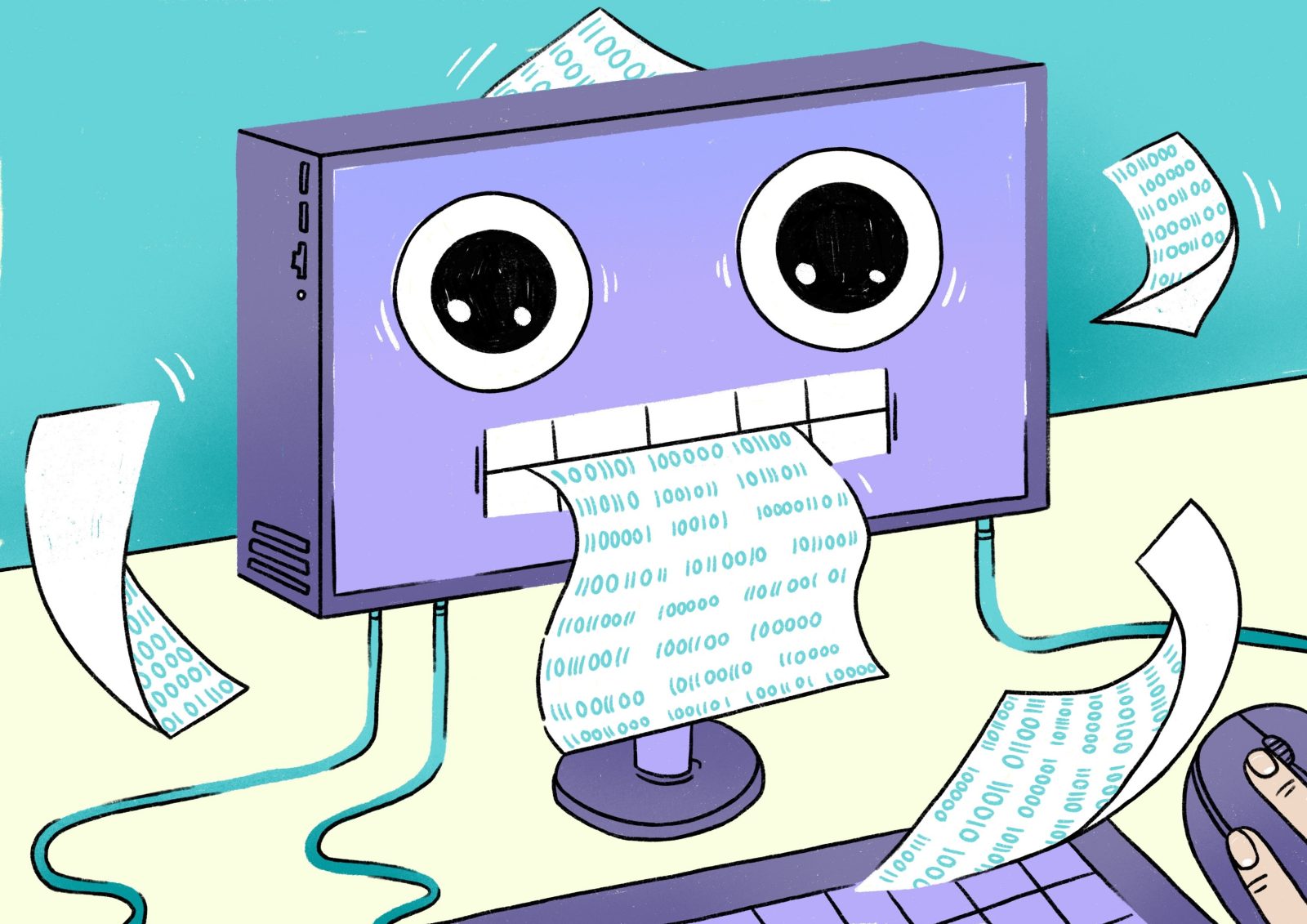
Image by: Femke Legué
At the International Criminal Court, the chief prosecutor suddenly found he could no longer access his email. According to software supplier Microsoft, this was due to US sanctions against staff of the Court. The Trump administration was far from pleased with the Court’s arrest warrant for the Israeli prime minister Netanyahu and the Court was hit with sanctions as a result.
The lesson? Anyone wanting to protect themselves from Trump’s wrath had better not depend on companies from his country. The Court officially says nothing about the reason for the switch, but according to NRC it now prefers a German alternative over Microsoft.
With that alternative, OpenDesk, you can also send emails, do word processing, produce reports, give presentations, share files and make video calls. It is open source, which means that anyone can inspect and improve its code.
The same goes for another alternative, also from Germany: Nextcloud. This office software has been tested since the start of this year by some 75 researchers at five Dutch universities. Can other institutions switch to it as well?
Dependence
In Dutch higher education, dependence on American tech companies is high. Microsoft in particular is a major player. Not only do students and staff use its software extensively; IT staff at educational institutions are also tied to the American company with all kinds of specialist software. Moreover, a lot of data are stored in Microsoft’s cloud.
That is why lecturers are sounding the alarm. Last Wednesday, the knowledge centre for practice-based research, DCC-PO, argued that the dominance of companies such as Google and Microsoft threatens researchers’ autonomy. Universities of applied sciences should work more with open source and open standards.
In July, De Jonge Akademie also warned that students and staff have no idea what tech companies do with their data. By handing over the management of IT systems, educational institutions lose technical knowledge and control. This draws them ever further into the spell of big tech and puts academic freedom and independence at risk, De Jonge Akademie argues.
Fickle
Already, seven Dutch universities and one university of applied sciences are on the sanctions list of the state of Florida because they severed or froze ties with Israeli institutions. With a fickle president like Donald Trump, educational institutions could just as easily face their own ‘Strafhof moment’.
Read more
-

Minister expects no consequences for universities due to Florida boycott
Gepubliceerd op:-
Politics
-
But can they do without Microsoft? Without Office, Outlook, Teams and OneDrive? For now, certainly not, think Utrecht professors José van Dijck and Albert Meijer. “All research and education would grind to a halt immediately”, they wrote in March.
Wriggling free
It’s becoming increasingly clear that dependence on big tech entails risks. That applies to Dutch higher education as well, says Wladimir Mufty of SURF, the IT cooperative of Dutch education and research institutions. “We have spent years raising awareness. We have looked at where the dependencies lie and now it is time to start trying out alternatives.”
Mufty is SURF’s programme manager for digital sovereignty. Late last year, he sat down with five universities that wanted to have a shared digital environment for their research programme, AlgoSoc. Scientists from Delft, Utrecht, Rotterdam, Tilburg and Amsterdam (the UvA) wanted to use the same scheduling tool, share files, work jointly on a single text and make video calls, without being dependent on one major provider. Mufty suggested the open source software package from Nextcloud.
But can it compete with Microsoft? One of the users, PhD candidate Jacqueline Kernahan from TU Delft, thinks it can. Occasionally something still falters, she says. But she is not put off: she knows how problematic dependence on Microsoft is.
In the hall of her faculty in Delft, she shows the software. It looks very ordinary. “The word processor is pretty good”, says Kernahan, who is completing a PhD on quality and security checks in digital systems. “I am an average user, so I don’t need all the options and apps. But to be honest, Microsoft is making it more appealing to switch. Now that the company is stuffing AI into everything, it is becoming more irritating to use.”
Still, not all educational institutions will be able to switch to OpenDesk or Nextcloud overnight, Mufty thinks. “The Court has to act quickly now, under pressure, but if a university wanted to leave Microsoft tomorrow, that would cause problems.”
Intertwined
Meanwhile, Microsoft is pulling more and more tasks towards itself. In addition to office software, it develops artificial intelligence, builds its own data centres and even lays its own internet cables on the seabed. The company is ‘vertically integrated’, as specialists call it: everything can run through one company, from the basic technology to the end user.
And that is not all. Because Microsoft is also expanding ‘horizontally’: it is acquiring companies not because of the technology but for the content . “This is a new phase and I find it worrying”, says Mufty. For example, Microsoft bought LinkedIn, with its hundreds of millions of active users who generate huge amounts of data. Or GitHub, where software developers can share and store their work.
SURF is keeping a close eye on this development. “I want our education to remain public and able to uphold public values such as autonomy, independence and academic freedom. IT should be supportive, not steering”, says Mufty.
He is wary of the cooperation between Microsoft and Sanoma. The Finnish publisher, which as owner of Malmberg also serves the Dutch education market, wants to make its learning materials available through Microsoft Teams. Microsoft then adds its own ‘learning accelerators’: artificial intelligence that is supposed to help personalise the learning process. Mufty: “These are the kinds of developments that keep me up at night.”
Alternatives
There are indeed Dutch and European alternatives. For instance, research institute TNO is working with SURF and the Netherlands Forensic Institute on its own AI language model. There are also home-grown data centres.
Read more
-
In-house chatbot Erudite aims to lure EUR staff away from privacy drama ChatGPT
Gepubliceerd op:-
Artificial Intelligence
-
And SURFConext is making progress with a service for secure logins. “But that is not enough. If logging in via Microsoft fails for whatever reason in the future, we will have a major problem. Even for applications that are not Microsoft’s own”, says Mufty.
Serious alternatives must be developed, he says. If crisis strikes, you shouldn’t have to start from scratch. Moreover, competition ensures that the market leader can’t charge top prices.
But which educational institution will volunteer to run those alternatives, with all the teething troubles that come with them, when Microsoft can deliver everything ready-made? Especially at the outset, institutions will have to run two systems side by side, with extra spending on support, maintenance and security, Mufty thinks. “But I do not think any sector is as value-driven as education and research. This is precisely where alternatives should be able to take off.”
Rectors
In 2019, the rectores magnifici of fourteen universities published a pressing essay on the digital independence of Dutch higher education. We risk losing control to Google and Microsoft, was the message.
Since then, little has improved, says Jacquelien Scherpen, who became rector of the University of Groningen last year. “A few months after that piece the covid pandemic broke out. We then became even more dependent, because we simply did not have time to look for alternatives.” Microsoft Teams, for example, has become indispensable.
On behalf of the rectors within the universities association UNL, Scherpen is the portfolio holder for digital sovereignty. She argues for small steps: “If we now choose an alternative product that functions less well, students and staff will start using free programmes and we will be worse off.”
Moreover, Scherpen says, legislation is needed to protect European alternatives from the hunger of big tech. Suppose you join forces with a European competitor of Microsoft and then Microsoft buys that company – what do you do?
That’s not an imaginary scenario. She points to the Dutch software company Solvinity, which is involved in government services such as DigiD and also ensures secure communication within the Ministry of Justice. An American company wants to acquire it.
Scherpen: “Perhaps we need to be more protectionist, without hindering the free exchange of new insights and innovations. We must ensure that the independence we are fighting for does not slip through our fingers again.”
Read more
-
Experts raise privacy concerns about Microsoft 365’s AI assistant
Gepubliceerd op:-
Education
-
De redactie
Latest news
-

Minister scraps ‘interest cap’ for students: plan much more expensive than expected
Gepubliceerd op:-
Money
-
-

Clubs closing, expensive drinks and dancing with a matcha. How Rotterdam’s nightlife is changing
Gepubliceerd op:-
Culture
-
-

Powerhouses are like shoulder pads
Gepubliceerd op:-
Column
-


Comments
Comments are closed.
Ad
Read more in IT
-

Half of students unable to find important information about their studies
Gepubliceerd op:-
IT
-
-

Cybersecurity: lighter supervision for higher education
Gepubliceerd op:-
IT
-
Politics
-