Ad

Cabinet lenient on sport and culture, but not on teacher retraining programmes
Universities may continue to facilitate sport and culture, confirms caretaker minister Gouke Moes. But the universities of applied sciences (hbo) will face financial supervision on retraining programmes leading to teaching qualifications.
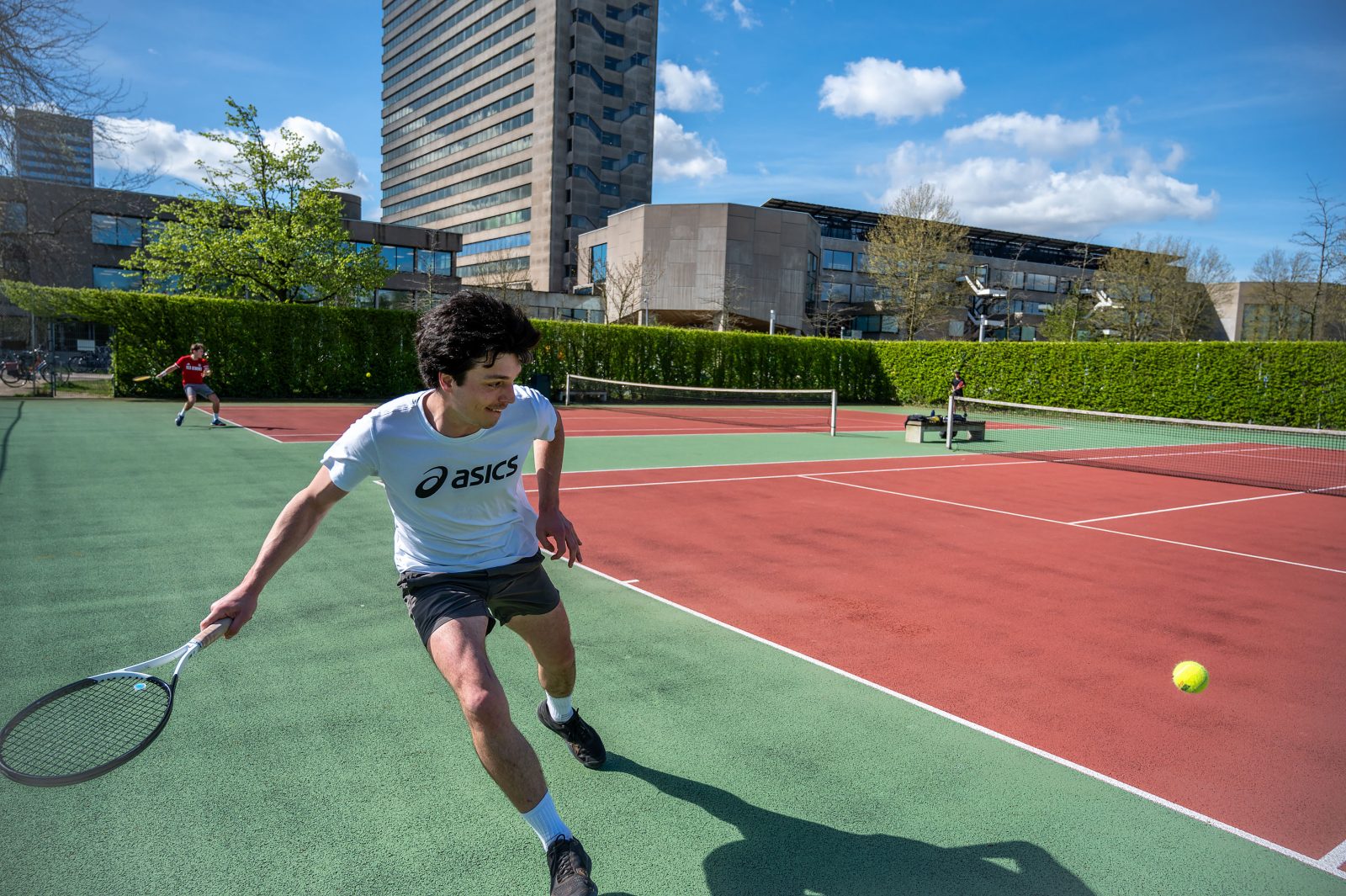
A student on the tennis court at Woudestein campus.
Image by: Ronald van den Heerik
Public money may not be used by educational institutions to fund ‘private’ activities – that is the rule. The government intends to tighten its oversight of this. As a result, universities and universities of applied sciences were expected to end their cheap sports facilities for students and staff.
Saved
A storm of outrage erupted when HOP broke this news last April. From petitions to written questions in the House of Representatives, the Minister of Education faced criticism from all sides. Cheap cultural facilities were also expected to be disallowed.
Former minister Eppo Bruins quickly reversed course. In a letter to the boards of universities and universities of applied sciences, caretaker minister Moes now confirms this approach: sport and culture have been saved for the time being. Further research and new decision-making will follow. Until then, the Inspectorate of Education will not scrutinise these matters in its financial supervision.
Lateral entry not included
Things are different for the so-called lateral entry programmes in higher professional education, which retrain people to become teachers. These are seen as private activities, so the inspectorate will tighten its supervision: public money may not simply be used for them, as that could distort the market.
The Association of Universities of Applied Sciences has previously objected to this. There is a huge shortage of teachers. So why punish the universities of applied sciences with strict financial supervision when they want to offer lateral entry programmes that lead to a teaching qualification?
But the caretaker cabinet is standing firm. Its reasoning: funding for these lateral entry programmes does not flow through the universities of applied sciences themselves (as it does for a regular bachelor’s programme), but through the primary and secondary schools that enrol participants in the programme.
Those schools can therefore also work with private providers of such programmes. It is a free market, and in that sense these are considered ‘private’ rather than public programmes. Unlike sport and culture, there was never any ambiguity about this, minister Moes believes. He therefore sees no reason to make an exception.
Not set in stone
“This was a deliberate choice to subsidise the school boards rather than the providers of lateral entry programmes”, he writes in his letter. “Of course, this is not set in stone; we regularly review how best to design the instruments aimed at training as many good teachers as possible.”
But at least until 2027, lateral entry programmes will remain classified as ‘private’ activities in higher professional education.
Chair Maurice Limmen of the Association of Universities of Applied Sciences is disappointed by the letter. “Primary and secondary schools and universities of applied sciences will now continue to face unnecessary bureaucracy when training lateral entrants who want to teach. That is a shame. The Netherlands is crying out for these people. In our view, lateral entry does not belong in this complex regulation on public–private activities.”
Read more
De redactie
Latest news
-
New code of conduct for science emphasises ‘distinctiveness and autonomy’
Gepubliceerd op:-
Science
-
-
Executive Board regularly uses AI for speeches and LinkedIn posts
Gepubliceerd op:-
Artificial Intelligence
-
Governance
-
-
TU Delft may not favour women in admissions to courses
Gepubliceerd op:-
Education
-
Comments
Comments are closed.
Ad
Read more in Culture
-
The emotions of science (and scientists) are palpable during theatre performance DOPE
Gepubliceerd op:-
Culture
-
Science
-
-
With this theatre show, cybersecurity expert Bernold Nieuwesteeg hopes to finally wake everyone up
Gepubliceerd op:-
Artificial Intelligence
-
Culture
-
-

Art workshops and dance performances play important role during inaugural lecture The art of healing
Gepubliceerd op:-
Culture
-
Science
-