Ad

What does the election result mean for students and higher education?
The future of higher education and science looks a little brighter again. D66 has made strong gains compared to the 2023 elections, while the PVV has been punished by voters. It is still unclear which of the two parties will turn out to be the largest.
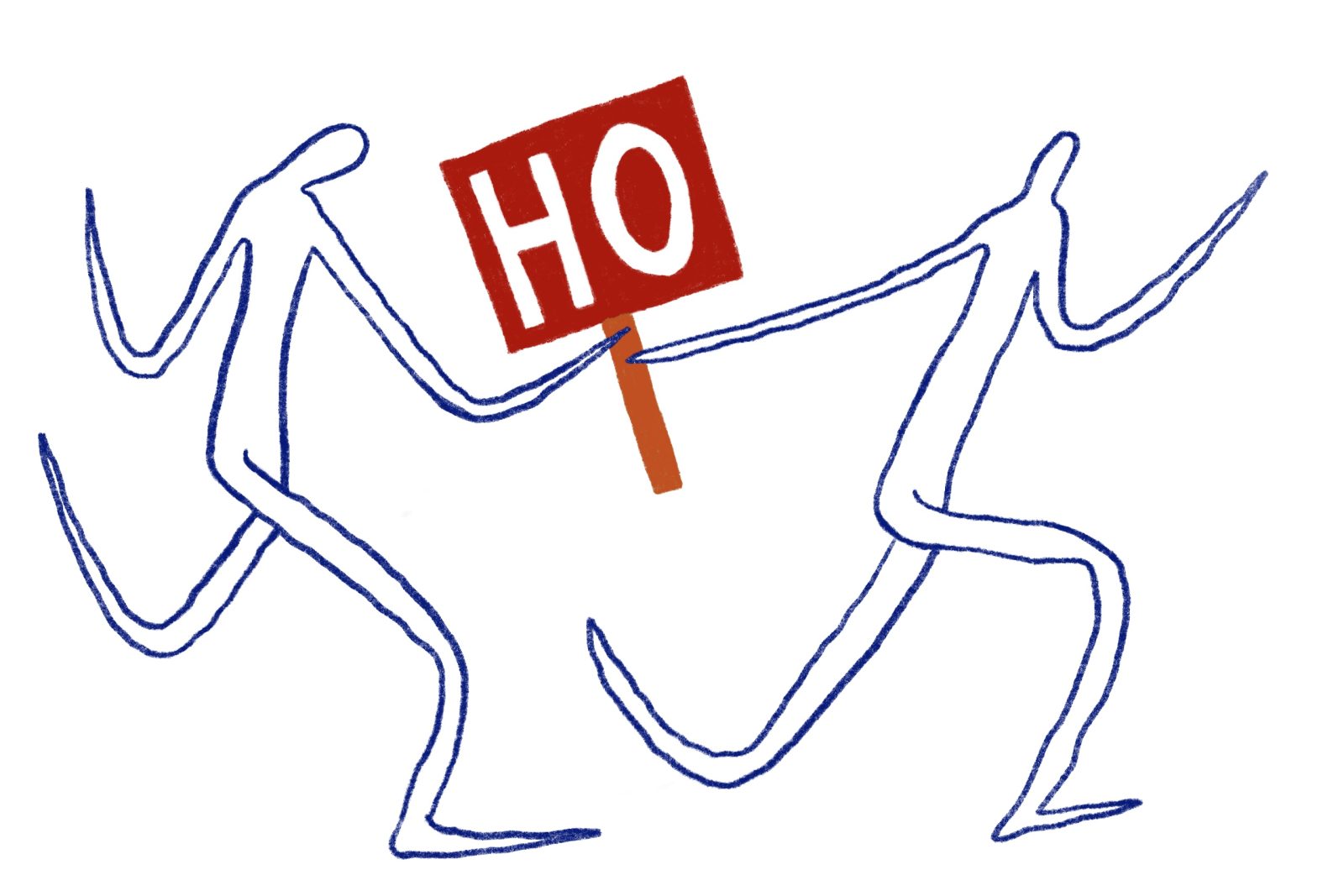
Image by: Sonja Schravesande
In the provisional election result, D66 is as large as the PVV: both parties have 26 seats. It seems almost inevitable that D66 will be part of the next government. The PVV, meanwhile, is likely to end up in opposition.
The damage for the VVD is limited: only two seats fewer than in 2023. The party would like to make even deeper cuts to education and research, but without the PVV in government, that seems highly unlikely to happen.
What will happen instead? It seems all but certain that D66 will govern together with the CDA: the Christian Democrats also made strong gains yesterday. The main question now is which other parties will join them.
Through the middle or to the right?
A broad centrist coalition including GroenLinks-PvdA and the VVD would secure a majority. These two parties are probably not keen to join, but they might set aside their objections eventually and form a cabinet with D66 and the CDA.
Instead of the VVD, JA21 plus one smaller party could also make such a centrist coalition with GroenLinks-PvdA possible. For higher education and research, that might not be a bad outcome, as JA21 opposed cuts to education.
Or will the coalition look to the right? D66 could also govern with the CDA, VVD and JA21. Together, they would hold exactly 75 seats. One smaller party (for example, the ChristenUnie or BBB) would push them over the threshold. Governing with the right would make policy less progressive than Rob Jetten and his party would prefer.
For students and universities, a cabinet led by D66 would in any case be good news. It remains to be seen what the parties will agree on, but some outcomes are fairly predictable.
More student finance…
D66 wants to raise the basic grant by 164 euros per month, which would cost about 600 million euros. GroenLinks-PvdA also supports this, but other potential coalition partners see no need.
Compromises are easily within reach. For example, they could raise only the supplementary grant or only the grant for students living away from home. It seems unlikely that nothing at all will change in student finance.
… and a mandatory internship allowance
Three parties want to make an internship allowance compulsory: D66, GroenLinks-PvdA and the CDA. So there is a good chance that this measure will indeed be introduced.
The VVD and JA21 are worried that small businesses will then stop offering internships. But that can probably be resolved – for example, through a special internship fund, which already has majority support in Parliament.
Extra money for education and research…
D66 wants to allocate more than five billion euros extra for education and research, on top of spending on innovation via Defence, healthcare and business. GroenLinks-PvdA is thinking of three billion, and JA21 set aside about two billion.
The CDA is more cautious, as the party’s plans do not include additional money for education and research. But the Christian Democrats are likely to accept that a D66-led government will spend more in this area.
As mentioned, the VVD still wants to make cuts, but it is apparently not a make-or-break issue. The Rutte IV cabinet actually opened the taps, and at that time the VVD was the largest governing party.
… but which research?
On the precise allocation of research funding, tough negotiations are expected. The CDA and VVD, in particular, want to focus first on research that benefits the labour market and society. JA21 thinks along similar lines.
D66 and GroenLinks-PvdA are, of course, not opposed to applied research, but they also want to allocate more money to fundamental, curiosity-driven research, where scientists themselves decide what they find interesting.
The likely outcome? More money for the applied research done at universities of applied sciences seems logical, and universities will probably receive more funding for research addressing societal challenges. Extra funding for fundamental science, however, may come under pressure.
Diversity…
On diversity policy, the potential coalition partners have very different views. Some think higher education has become too woke, while others want to continue fighting for equal opportunities. The most likely outcome of the talks: agree to disagree.
In their coalition agreement, they will probably avoid taking a position on diversity officers, gender-neutral toilets, quiet rooms or the dismissal of activist lecturers. They are likely to leave such matters to university administrators.
… and demonstrations?
The same goes for the fierce protests in higher education over the ties between universities and (in some cases) universities of applied sciences and Israeli institutions. One party wants to take a tougher line against rioters, while another mainly emphasises the right to protest.
Two options seem likely. Either they leave it again to university administrators, or they say something like: we will make agreements with universities and universities of applied sciences about safety and freedom to demonstrate at their institutions. And they can work out later what those agreements will look like.
In short…
The planned cuts by PVV, VVD, NSC and BBB will be scrapped. How quickly that will happen remains to be seen. How much extra money will be made available in the next government term is also still unclear.
… or will the radical right seize power after all?
One other outcome is possible. It seems unlikely, but if the CDA were to change course and decide to govern with the PVV after all, things could take a completely different turn, leaving D66 sidelined.
The PVV could even attempt to secure a majority without the CDA, together with the VVD, JA21, Forum, BBB, SGP, 50Plus and perhaps one other small party such as the ChristenUnie or the Party for the Animals. But that seems a hopeless task. For now, the PVV is on the sidelines.
Read more
De redactie
Latest news
-
Dutchman wins Ig Noble Prize for burying tighty whities
Gepubliceerd op:-
Science
-
-
Long waiting times for medical internships also affect other cities
Gepubliceerd op:-
Education
-
-

EM TV newsflash: Expensive rooms, Servant-Miklos wins Education Prize and public transport strike
Gepubliceerd op:Article type: Video-
EM TV
-
Comments
Comments are closed.
Ad
Read more in Politics
-
Cabinet wants knowledge and innovation for the armed forces
Gepubliceerd op:-
Education
-
Politics
-
-
Analysis of hearing on Covid: former minister Van Engelshoven faced no tough questions
Gepubliceerd op:-
Covid
-
Politics
-
-
Universities praised for national collaboration that almost fell victim to budget cuts
Gepubliceerd op:-
Politics
-