Ad

Muesli bar instead of a banana: ‘Judges waste energy on hopeless student cases’

The Council of State spends too much time on ‘futile’ student cases, says Groningen professor and judge Bert Marseille. “The balance has been lost.” But not everyone agrees.

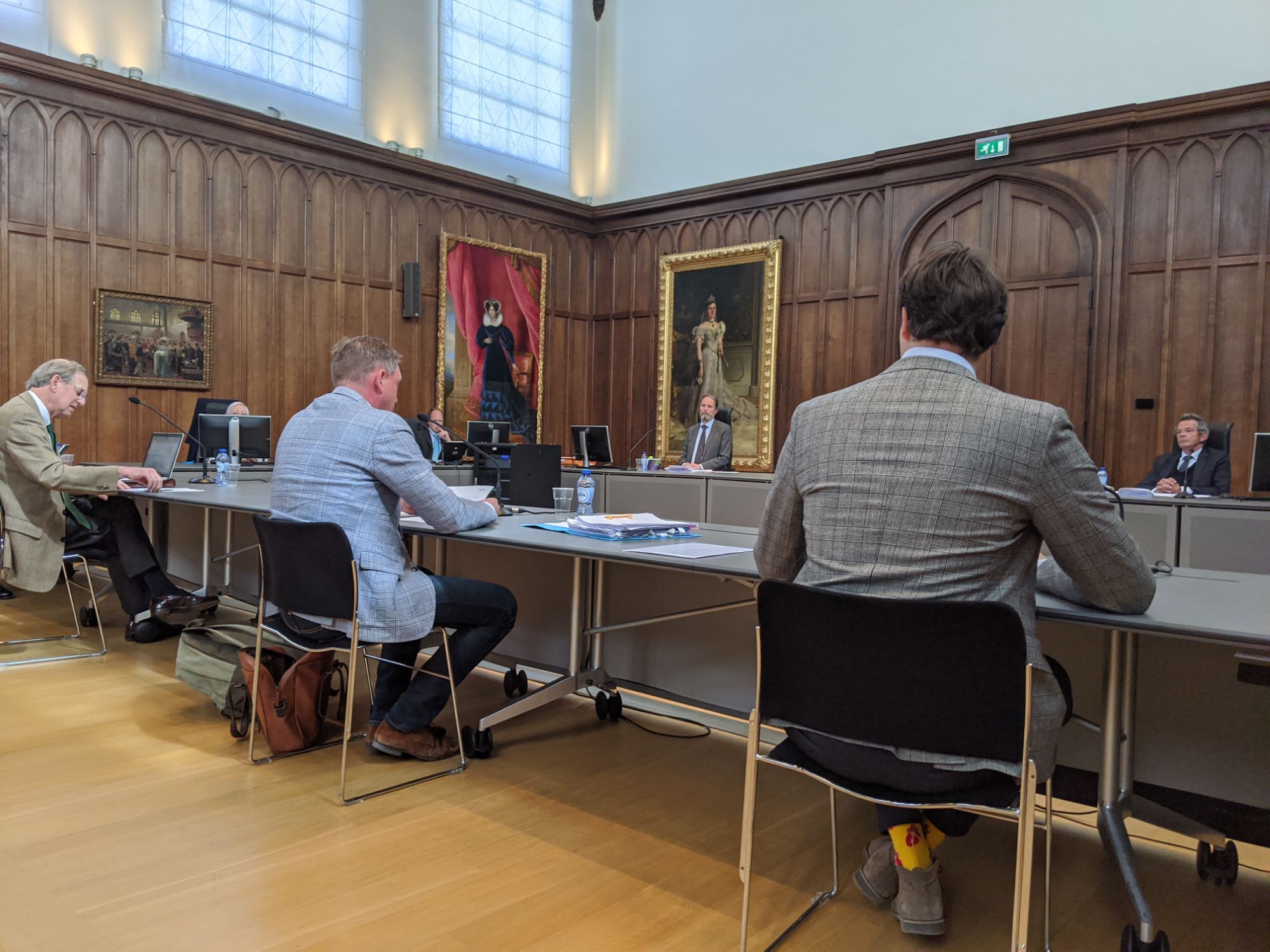
A full house during this IBA lecture
Image by: Aysha Gasanova
Leiden law student Jordy Loof received a 7.5 for his thesis and thought that wasn’t good enough. His first examiner had given him ‘a solid eight’ – so how could the second examiner bring that down to a 7.5? Loof took the matter to the Council of State.
The Council of State is the Netherlands’ highest administrative court, but also the first court that students turn to when they challenge a decision by their institution. Students appear in The Hague and later receive a detailed, written judgment, sometimes from multiple judges. Loof lost his case.
A lawsuit over half a point ‘might seem exaggerated’, Loof admits. “But graduating cum laude can still make a difference on the job market.” And there’s a reason the law allows students to challenge decisions made by their universities or universities of applied sciences.
And Loof is not the only one. Judges also deal with the case of a student who wasn’t satisfied with a grade of eight. Or consider the complaint about a medical school selection day: an applicant wanted to receive a banana, like some others, instead of a muesli bar, and complained of unequal treatment.
Even ‘the most futile grievances’ receive full attention from the Council of State, writes Bert Marseille in Ars Aequi, a monthly legal magazine. Should the Council of State devote less time to some student cases? Or does every student deserve equal attention?
Bitter
Marseille is professor of public administration at the University of Groningen and deputy judge at the Central Appeals Tribunal, the highest administrative court for, among other things, social security and civil service law.
He reviewed a hundred student cases since September last year. In 68 of them, the students’ arguments were ‘so futile, vague, poorly substantiated or irrelevant’ that anyone could have foreseen they would lose. Yet the court still takes the time for a hearing and a written judgment.
That could be reduced, argues Marseille. Especially when cases with far greater consequences are sometimes dismissed without even being heard. That happens regularly in asylum cases.
Read more
-
Court: Erasmus MC student has a right to inspect exam
Gepubliceerd op:-
Education
-
92 times rejected
Of the hundred cases Marseille studied, only eight students won. The other 92 had to accept the decision of their examination boards and Boards of Appeal for Examinations (CBE), the internal appeal committees of universities and universities of applied sciences.
According to Marseille, the Council of State has the freedom to handle cases in writing only or to give short oral judgments. He believes administrative judges should make use of that option more often.
Disagreement
Loof says it’s “too easy to claim things could simply be made more efficient”. After his case, he heard people at the university complain that it had all been a waste of time. “But it’s not as if educational institutions never make mistakes”, Loof says. “Sometimes a judge views a case differently than expected, and it turns out it wasn’t futile at all.”
Moreover, students don’t have a monopoly on hopeless cases, says his lawyer Robin Verspaandonk. There are plenty of such cases involving zoning plans or property valuations (WOZ decisions). “Of course there are students who appeal without good reason – Marseille is right about that. But that’s precisely why it’s important to have an independent party assess it. I’m very happy with how the Council of State handles things.”
Lees meer
-
New course for highest court: study programme ‘doesn’t punish’, but educates students
Gepubliceerd op:-
Student life
-
Education court abolished
There’s a reason students now have so much access to the Council of State. Until a few years ago, there was a special court that dealt exclusively with higher education cases (the CBHO). All students in universities and universities of applied sciences could take their cases there.
The government at the time decided it would be more practical for the Council of State to take over that role – and, in the same move, students in secondary vocational education (mbo) also gained better access to justice. This took effect in 2023.
Since then, the highest administrative court has been handling thesis disputes, binding study advice and other academic grievances. And those cases stand in stark contrast to asylum seekers’ appeals, which often never reach a hearing at the Council of State – even when they involve life-and-death questions about safety in their home country.
Incomprehensible
That contrast also angers immigration lawyers. When Jordy Loof spoke about his case in AD, asylum lawyer Julian Luscuere posted a scathing comment on LinkedIn: “I just can’t understand why every student can make a full argument before the Council of State about a disappointing grade, while an asylum case – even with life-or-death questions – almost never gets a hearing there.”
‘I just can’t understand why every student can make a full argument before the Council of State about a disappointing grade, while an asylum case – even with life-or-death questions – almost never gets a hearing there’
Marseille makes the same comparison. But is that reason enough to deny students the right to a hearing? And where do you draw the line? There will always be someone whose case seems more important than a student’s. That’s true, Marseille concedes. “I’m not saying students don’t deserve access to the courts. But the balance has been lost.”
There’s also an important difference between student and asylum cases, Marseille notes. Asylum seekers appear before multiple courts before their case reaches the Council of State. Students, however, only go through the examination board and the internal appeal board. The Council of State is the first real court they can go to.
Speaking by phone, Marseille moderates his stance somewhat. Since the Council of State is the first real court for students, he suggests, one could choose to be more lenient about organising hearings. “But at the very least, judges could issue far more oral rulings. I can see that one judge is already doing that much more often.”
Less nit-picking
In the same vein, Marseille argues for fewer ‘technical legal discussions’ in student cases. Those only distract from the substance of the dispute, he writes in Ars Aequi.
In that respect, he sees a glimmer of hope. A few months ago, the Council of State made life a little easier for educational institutions when students file lawsuits. This happened in a much-discussed ruling against a cheating student at Fontys University of Applied Sciences.
The examination board had decided that the student could not sit any exams for a year. The student didn’t deny the cheating, but claimed his procedural rights had been violated – the board hadn’t sent him certain documents in time. The Council of State disagreed: disciplinary measures imposed by educational institutions, such as excluding students from exams, aren’t really punishments but educational measures. Therefore, the process doesn’t need to be as strict as in criminal law.
Marseille doesn’t find the Council’s reasoning particularly strong, but he welcomes the outcome. He sees it as a ‘first step’ towards limiting the ‘generous treatment’ students currently receive from the Council of State. A slightly ‘more modest’ approach, he believes, ‘would not do any injustice to students’ interests’.
De redactie
Latest news
-

Students and staff join the Pride March: ‘We must stand up for this community’
Gepubliceerd op:-
Diversity
-
-

EM TV newsflash: Too many internationals, too many information platforms and more collaboration with the military
Gepubliceerd op:Article type: Video-
EM TV
-
-

18-year-old student dies after ‘hazing party’ in France
Gepubliceerd op:-
Student life
-



Comments
Comments are closed.
Ad
Read more in Student life
-
18-year-old student dies after ‘hazing party’ in France
Gepubliceerd op:-
Student life
-
-
Jasper has lost his carefree outlook since the attack on Erasmus MC, but the experience will make him a better doctor
Gepubliceerd op:-
Mental health
-
-

Government sets aside millions extra for student accommodation construction
Gepubliceerd op:-
Housing
-