Ad

Minister Bruins’ own party opposes language assessment for existing English-language education
A significant portion of the House of Representatives is against the language assessment for existing English-language bachelor education. NSC, the party of Minister of Education Eppo Bruins, supports a call from opposition parties regarding this matter.

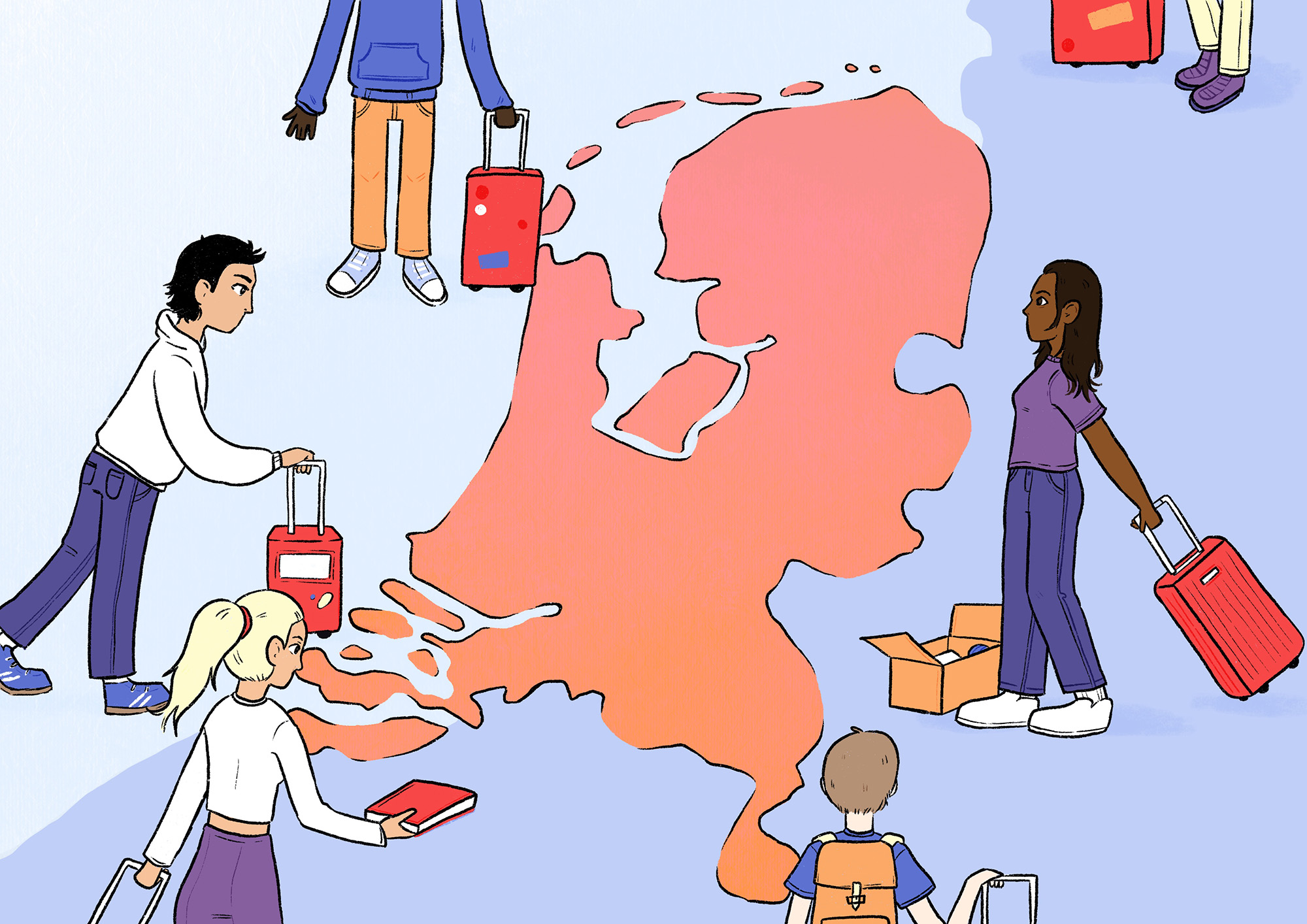
Image by: Eva Gombár-Krishnan
The Ministry of Education has been working for years on legislation aimed at slowing down the influx of foreign students. One of the methods could be through the language of instruction. If courses are predominantly taught in Dutch, it’s likely that fewer foreigners will be attracted.
Therefore, the bill put forward by minister of Education Eppo Bruins includes a language assessment. Existing English-taught programmes will have to meet various requirements if they wish to continue teaching in English. Otherwise, they need to switch to Dutch.
Five seats
Read more
-

Bruins refuses to drop language review for programmes, despite universities’ offer
Gepubliceerd op:-
Politics
-
However, a significant portion of the House of Representatives now wants to abandon this idea. Many parties support the proposal from universities to manage internationalisation themselves. Also, the number of international bachelor students is already declining, as the internationalisation organisation Nuffic reported on Thursday morning previously.
During a debate with minister Bruins, eight parties submitted a motion asking the government to drop the language assessment for existing programmes. Only new programmes would need to justify their use of a foreign language for instruction.
The motion originates from the CDA and has support from GroenLinks-PvdA, D66, DENK, Volt, ChristenUnie and SGP. The governing party NSC is also included as a co-signer. This means that the motion is just five seats short of a majority.
'Geopolitical developments'
Those could potentially come from the VVD. Claire Martens of that party asked during the debate whether Bruins can still meet his budget cuts without the language assessment. The minister confirmed wholeheartedly. Martens couldn’t immediately say after the debate whether she would support the motion.
Due to agreements in the coalition agreement, Minister Bruins had to officially advise against the motion. However, he noted the significant support for it from various parties and expressed his willingness: “If the House were to give me a different mandate by majority, I would of course be responsive to that.”
Earlier, many parties in the House of Representatives appeared more sceptical about internationalisation. Now, they cite not only the labour market and declining student numbers in the ‘region’ as arguments for withdrawing the language assessment, but also ‘geopolitical developments’ as reasons to oppose it. It seems that the anti-science policies of Trump are also being felt in this debate.
NSC
Another factor may be the stern warning from KNAW last week, stating that academic freedom is also under pressure in the Netherlands. The scientific society specifically mentioned the bill ‘Internationalisation in balance’: universities are losing part of their autonomy if they cannot determine their language of instruction themselves.
The coalition party NSC has always been a strong advocate for measures to combat the anglification in higher education. Former MP Rosanne Hertzberger made it one of her key points.
Her party colleague Aant Jelle Soepboer submitted his own motion during the debate to emphasise that he still considers the return of Dutch in higher education to be very important. He stated: “It is nearly impossible to order a drink in Dutch on a terrace.”
Binding agreements
Similar to the broadly supported CDA motion against the language assessment, Soepboer calls for ‘binding agreements’ to be made with higher education in a governance agreement. This is different from legal coercion.
It is unclear how the other two coalition parties view the CDA motion. Coalition party BBB was not present at the debate, and the PVV did not express their opinion. They are expected to indicate their stance on a relaxation of the law next Tuesday, when a vote will be held on the motion.
Read more
-

English-taught Psychology to disappear and IBEB and IBA to shrink, if language test is scrapped
Gepubliceerd op:-
Internationalisation
-
De redactie
Latest news
-

Students and staff join the Pride March: ‘We must stand up for this community’
Gepubliceerd op:-
Diversity
-
-

EM TV newsflash: Too many internationals, too many information platforms and more collaboration with the military
Gepubliceerd op:Article type: Video-
EM TV
-
-

18-year-old student dies after ‘hazing party’ in France
Gepubliceerd op:-
Student life
-



Comments
Comments are closed.
Ad
Read more in Internationalisation
-

After Covid, students are once again more likely to go abroad for part of their studies
Gepubliceerd op:-
Internationalisation
-
-
CPB: international students bring money into the Netherlands
Gepubliceerd op:-
Internationalisation
-
-

International students come to the Netherlands because life is good here and everything can be in English
Gepubliceerd op:-
Internationalisation
-