Ad

Americans never grow up
We watch American movies, listen to American music and know more about American politics than about politics in neighbouring countries like Belgium and Germany. The United States seems so close that we forget how different this country actually is. I always saw the US as the land of freedom. That changed when, as a PhD student, I got to speak at a conference in Chicago.
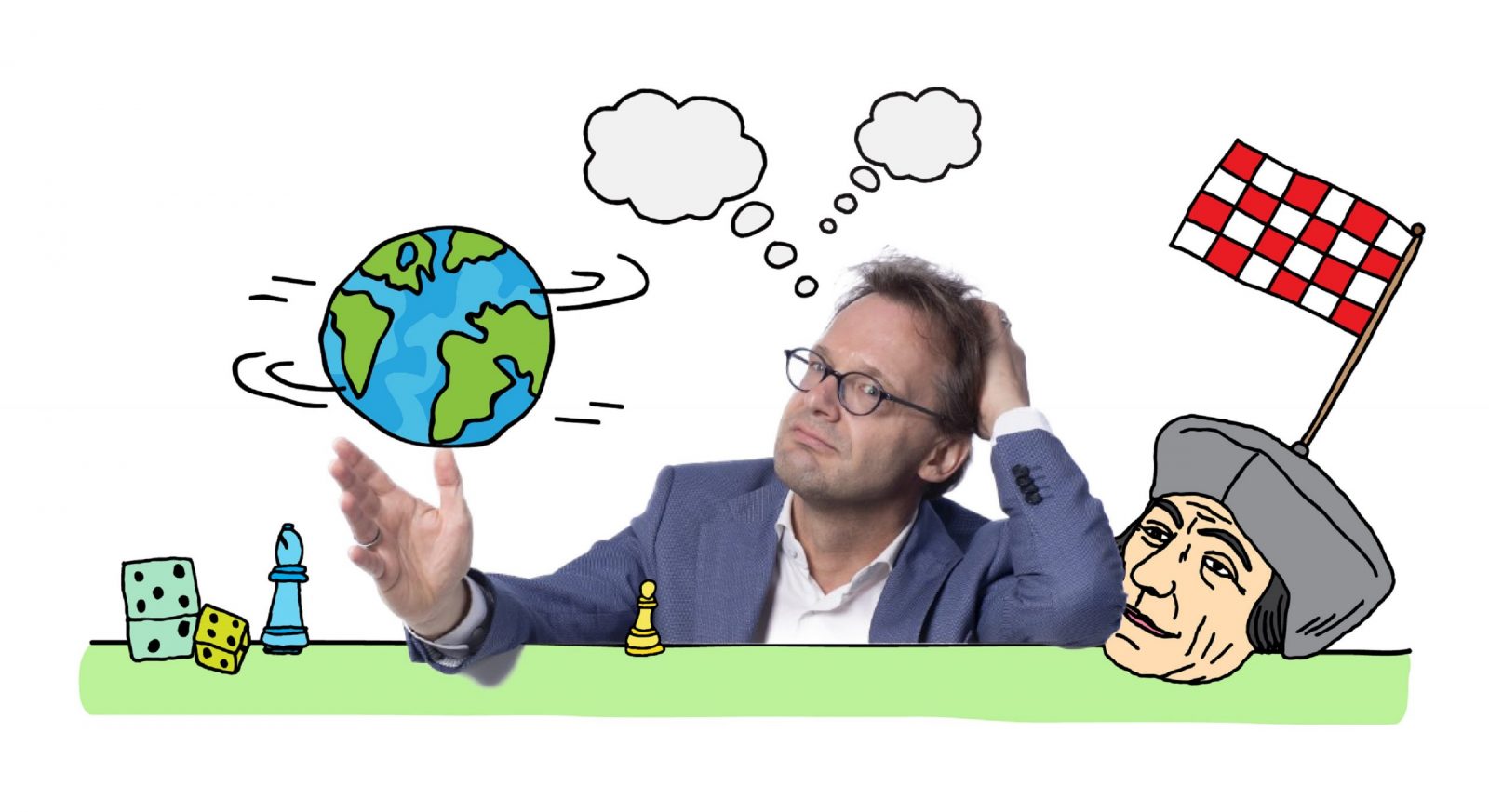
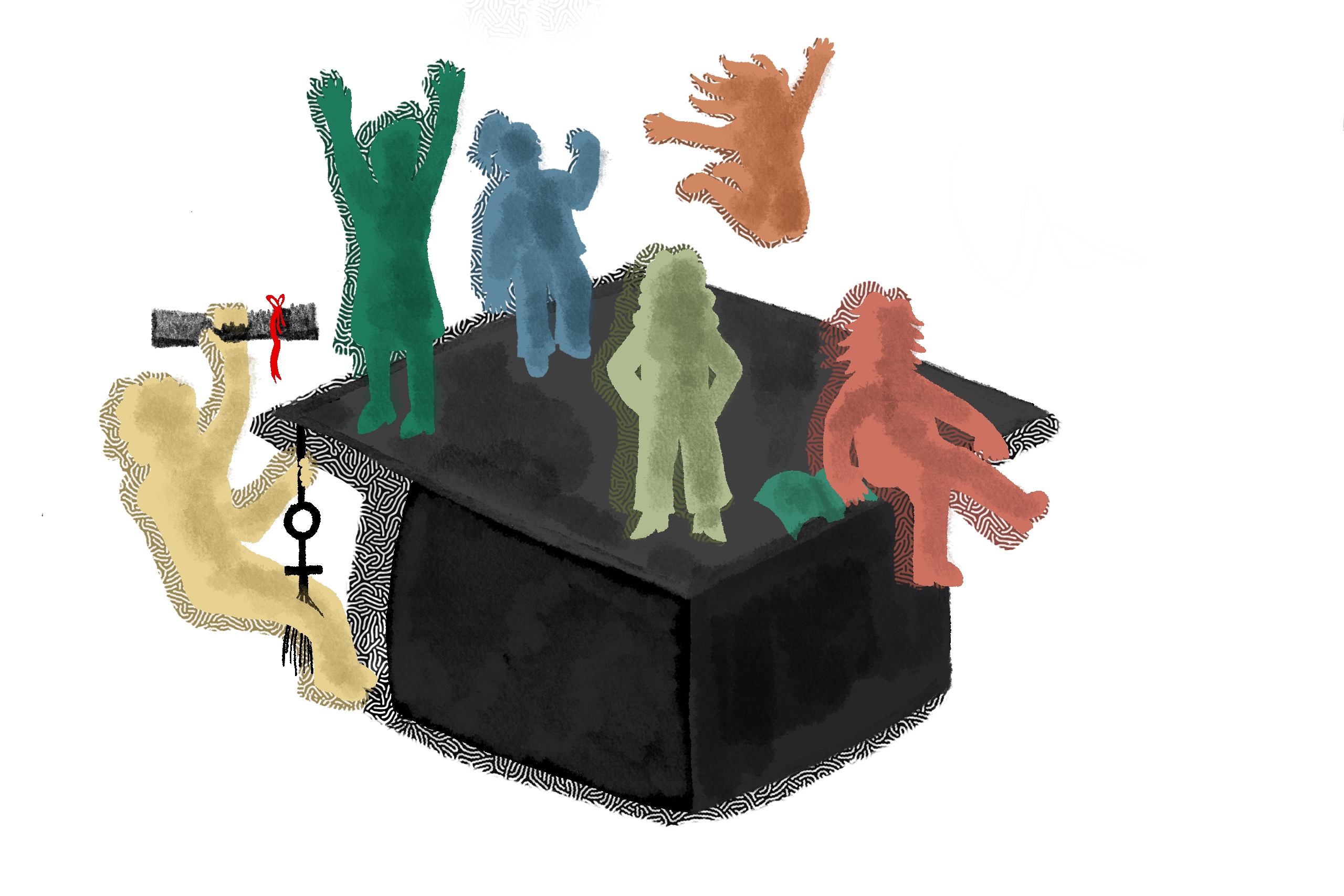
Image by: Levien Willemse, Pauline Wiersema
At this conference, in the late 1990s, I met a historian who was a member of a local socialist party. He invited me to come and give a lecture. That same evening, I found myself sitting in a small bookstore in a Chicago suburb, with a handful of left-wing intellectuals. Before my talk began, bookcases were shoved in front of the door and curtains firmly closed. A European who came to give a lecture to a socialist party – that was quite dangerous. These academics in this land of freedom turned out to be very scared.
Calling yourself a ‘socialist’ is more commonplace in America these days; among progressive youth, it even seems to be a buzz term. However, the fear and uncertainty in academic circles is even greater now than it was then. Under Donald Trump, a witch hunt seems to be underway against academics. Investments will be stopped and research banned if people do not adapt to ‘Trumpism’.
The Dutch have always marvelled at America: it was the same a century ago. Johan Huizinga visited the country in the 1920s, when America was developing rapidly and becoming a model for Europe. However, the historian encountered a different culture there than he had expected. Not so much a land of freedom, but mostly one of group pressure.
It may well be that Americans never grow up, but if that is so, the same goes for us
According to Huizinga, the US was a mass society: with the mass media of the commercial press, the mass entertainment of Hollywood and the mass production of assembly line work. It amazed him how ideals of freedom and democracy led to dominant groupthink here in practice, even among the academics he met. Mass society also produced a mass man: “They all sacrifice part of their own personality, to march along in closed formation”, he wrote in Amerika levend en denkend [America alive and thinking] (1926). Huizinga found Americans immature: “Poor children, some of them are already old”, he noted in a diary he kept of the trip, after visiting the university in Chicago.
“The world has become a toy to him. No wonder it makes him behave like a child.” This is how Huizinga later wrote about Americans, in In de schaduwen van morgen [In the Shadows of Tomorrow] (1935). After World War II, America became the most powerful country in the West, and we adopted much of American culture: we have become ‘American’ in our country too. It may well be that Americans never grow up, but if that is so, the same goes for us. The wonder we have about America is equally an alienation about our own society: a discomfort with our mass culture. The famous Huizinga’s criticism of Americans a century ago seems to have become a mirror for ourselves today.
Ronald van Raak is professor of Erasmian values.
Read more
-
Free the pedestal of Erasmus from its glass cage
Gepubliceerd op:-
Column
-
De redactie
-
 Ronald van Raak
Columnist
Latest news
-
TU Delft may not favour women in admissions to courses
Gepubliceerd op:-
Education
-
-

Hate campaigns and political pressure: KNAW wants legal protection for academic freedom
Gepubliceerd op:-
Science
-
-

Signing up for a Dutch course ‘feels like a race’, no more places available for now
Gepubliceerd op:-
Internationalisation
-

Comments
Comments are closed.
Ad
Read more in Column
-
The sad anniversary of powerless staff and students
Gepubliceerd op:-
Column
-
-

Tea, theory and a healthy dose of procrastination
Gepubliceerd op:-
Column
-
-
The drama of Jason Arday
Gepubliceerd op:-
Column
-