Ad

‘Sentencing demand against Fouad L. can be seen as a tactic to keep him imprisoned for as long as possible’
This Friday, the court will rule on Fouad L., who is on trial for murder, arson, and threats, including at Erasmus MC. Forensic psychologist Josanne van Dongen has followed the case. “The animal abuse and lack of remorse don’t fully align with just an autism spectrum disorder.”
Image by: Josine Henneken
“The main question that I find interesting is how the Pieter Baan Centre reached the conclusion that an autism spectrum disorder influenced his actions”, says Josanne van Dongen, associate professor of forensic psychology. She researches dark personality traits and the risk of violence. “I would love to read that report because, based on what I observe from a distance, I notice other characteristics as well.”
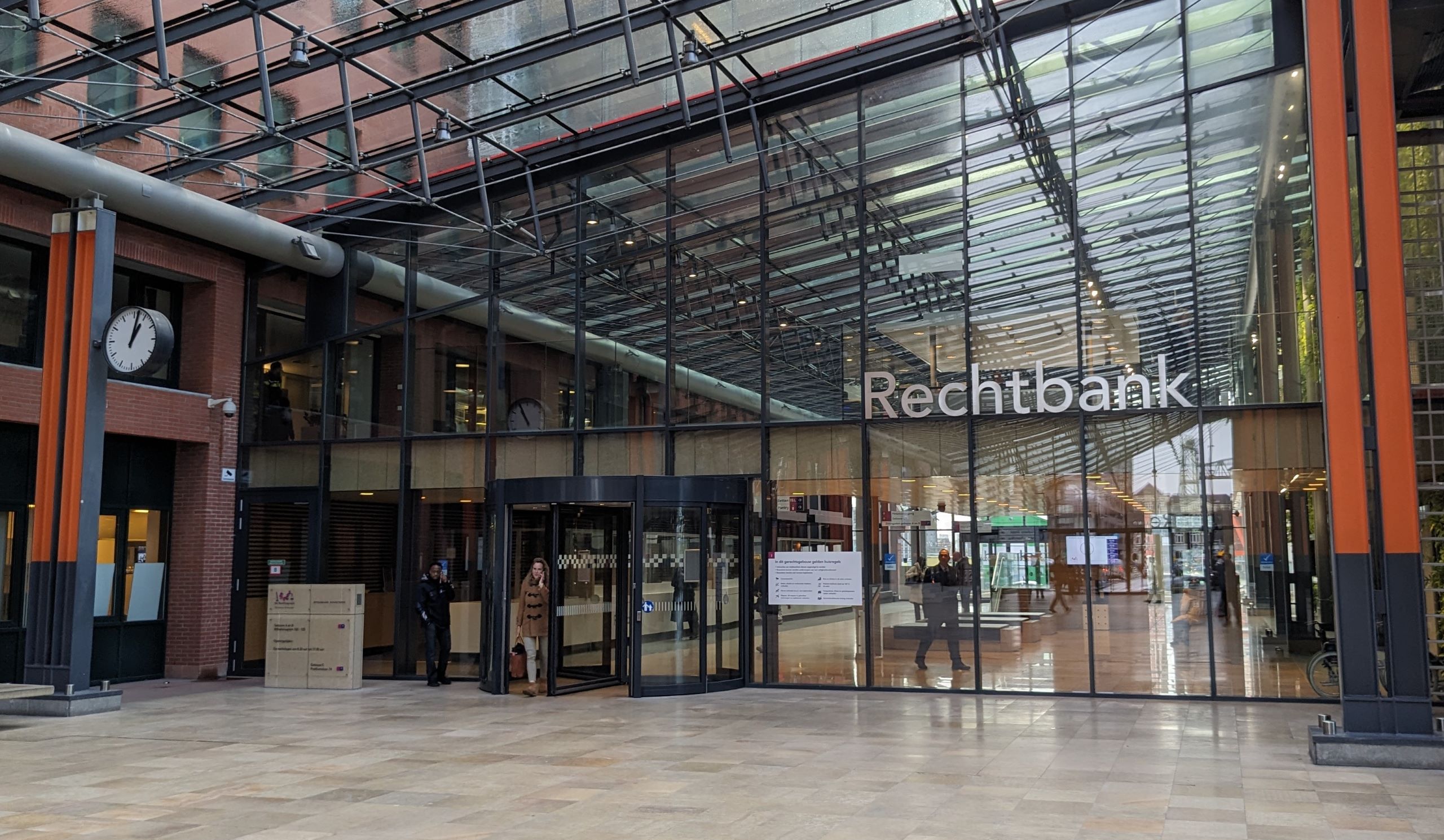
On Friday 21 February, the court will rule in the case against Fouad L., who is on trial for three murders, arson, and threats against his neighbours and at Erasmus MC. The public prosecutor has demanded a sentence of 30 years in prison and compulsory psychiatric treatment (TBS).
Read more
-
OM demands thirty years in prison and compulsory treatment for Fouad L.
Gepubliceerd op:-
In court
-
L. was examined at the Pieter Baan Centre, which, in what the judge called an exceptionally lengthy report, concluded that he has diminished responsibility, because his autism spectrum disorder allegedly influenced his actions on 28 September 2023. Van Dongen followed the case at EM’s request. She emphasises that she hasn’t personally examined L. and does not question the expertise of the Pieter Baan Centre.
Animal abuse
“I recognise various antisocial and psychopathic traits next to the autism spectrum disorder”, says the forensic psychologist. “Consider, for instance, the animal abuse – that can indicate so-called cold and unemotional traits.” L. had multiple encounters with the justice system for animal abuse: he allegedly shot at pigeons and fish, kicked a dog, and was convicted of mistreating his rabbit. “And his complete lack of remorse stood out to me during the trial. Those are two things that don’t fully align with just an autism spectrum disorder, where someone can actually be very sensitive.”
Psychopathic and autism spectrum disorders can influence a person’s actions, but the distinction is crucial in determining how accountable someone is and how they should ultimately be treated, Van Dongen explains. “I would say that psychopathic traits are more personality-related. If those traits play a strong role, a person is more aware of their actions than someone with only an autism spectrum disorder. And although both involve difficulties in empathising with others, their nature is quite different.”
‘If someone is that intelligent, can you really say that they are only partially accountable for their actions?’
Verdict
To what extent does the report on his mental state influence the judge’s final decision? “In general, it is very difficult to determine to what degree someone can be held accountable”, says Van Dongen. “An autism spectrum disorder is certainly not a risk factor for everyone. But it can influence someone’s actions – the question is to what extent that happened.”
In the case of Fouad L., this is particularly complex, Van Dongen believes. “It is remarkable that he functioned very well in many areas and passed his courses and medical internships. If someone is that intelligent, can you really say that they are only partially accountable for their actions? He knew full well that he was going to kill people and that this was not acceptable – that was also evident during the trial.”
Sentencing demand
Image by: Josine Henneken
The fact that the public prosecutor has demanded both a prison sentence and TBS makes the judge’s decision easier. “It’s interesting that the prosecutor aligns with the Pieter Baan Centre and states that L.’s disorder played a role in his actions and requires treatment.” As a result, the question of whether his actions were influenced by his mental state is unlikely to be contested.
Van Dongen believes that retribution is a key factor in the sentence demand of 30 years and TBS. “If someone is sentenced to life imprisonment, a review takes place after 25 years, and there is a chance of release. With 30 years and TBS, a person remains imprisoned longer than with a life sentence”, she explains. The public prosecutor also mentioned this during the trial: 30 years and TBS offers better protection for society. Van Dongen: “You could see this sentencing demand as a tactic to ensure that someone remains in prison for as long as possible.”
De redactie
-
 Tim Ficheroux
Desk editor
Latest news
-
TU Delft may not favour women in admissions to courses
Gepubliceerd op:-
Education
-
-

Hate campaigns and political pressure: KNAW wants legal protection for academic freedom
Gepubliceerd op:-
Science
-
-

Signing up for a Dutch course ‘feels like a race’, no more places available for now
Gepubliceerd op:-
Internationalisation
-

Comments
Comments are closed.
Ad
Read more in In court
-

Students are often treated leniently by judges, researchers say
Gepubliceerd op:-
In court
-
-

Community service and suspended prison sentence for founder extreme-right student party
Gepubliceerd op:-
At the neighbours
-
In court
-
-

ESL PhD candidate loses lawsuit over Gaza letter
Gepubliceerd op:-
In court
-