Ad

Impoverished students and a hot-blooded queen
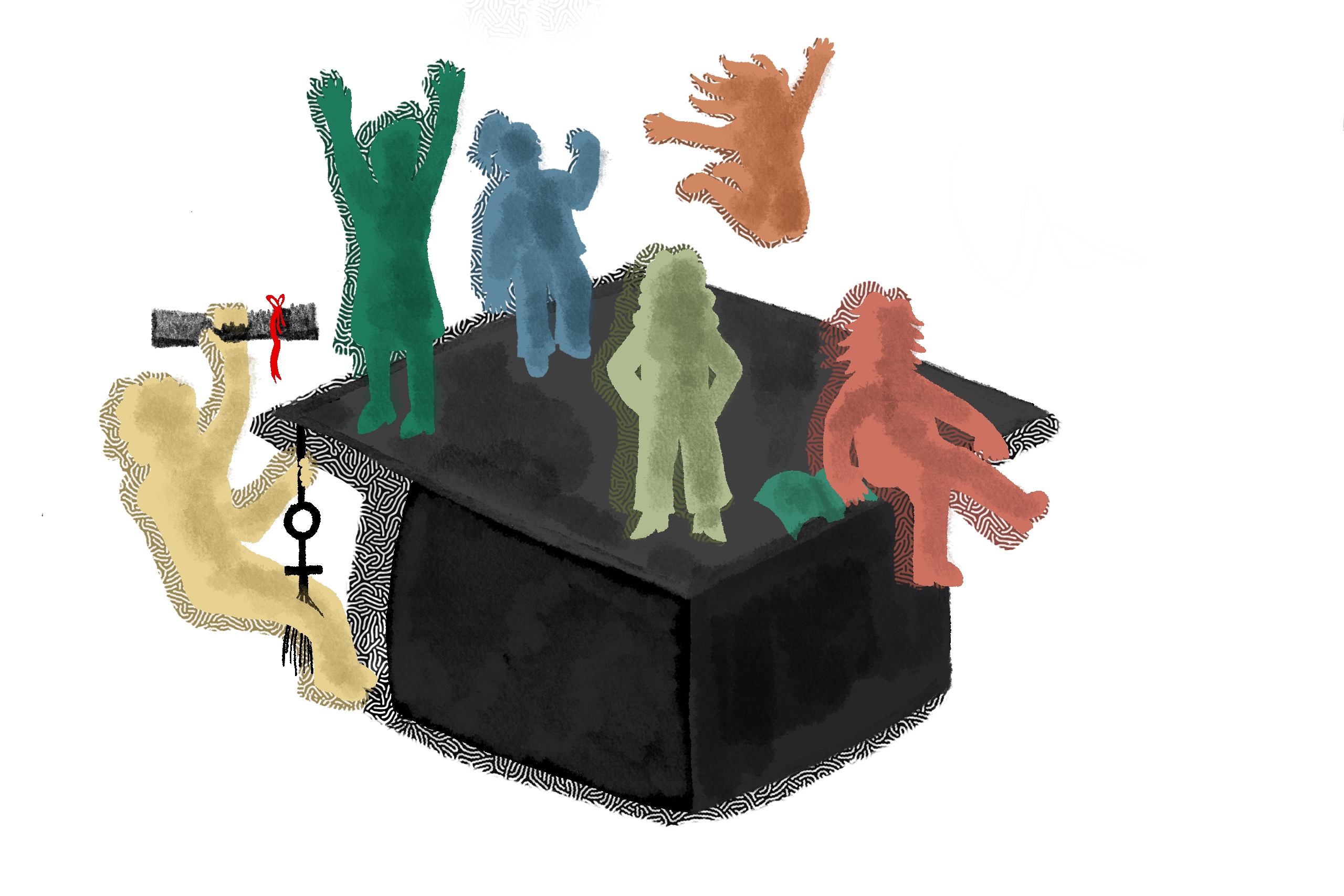
Transgressive behaviour in the academic world is sadly nothing new, and all kinds of stories are told about it. The strangest story concerns the queen of France. In the 14th century, she is said to have lured Paris university students to her palace on the Seine for her entertainment. Then, after a few days, she had them thrown into the river with their hands tied, to avoid a scandal.
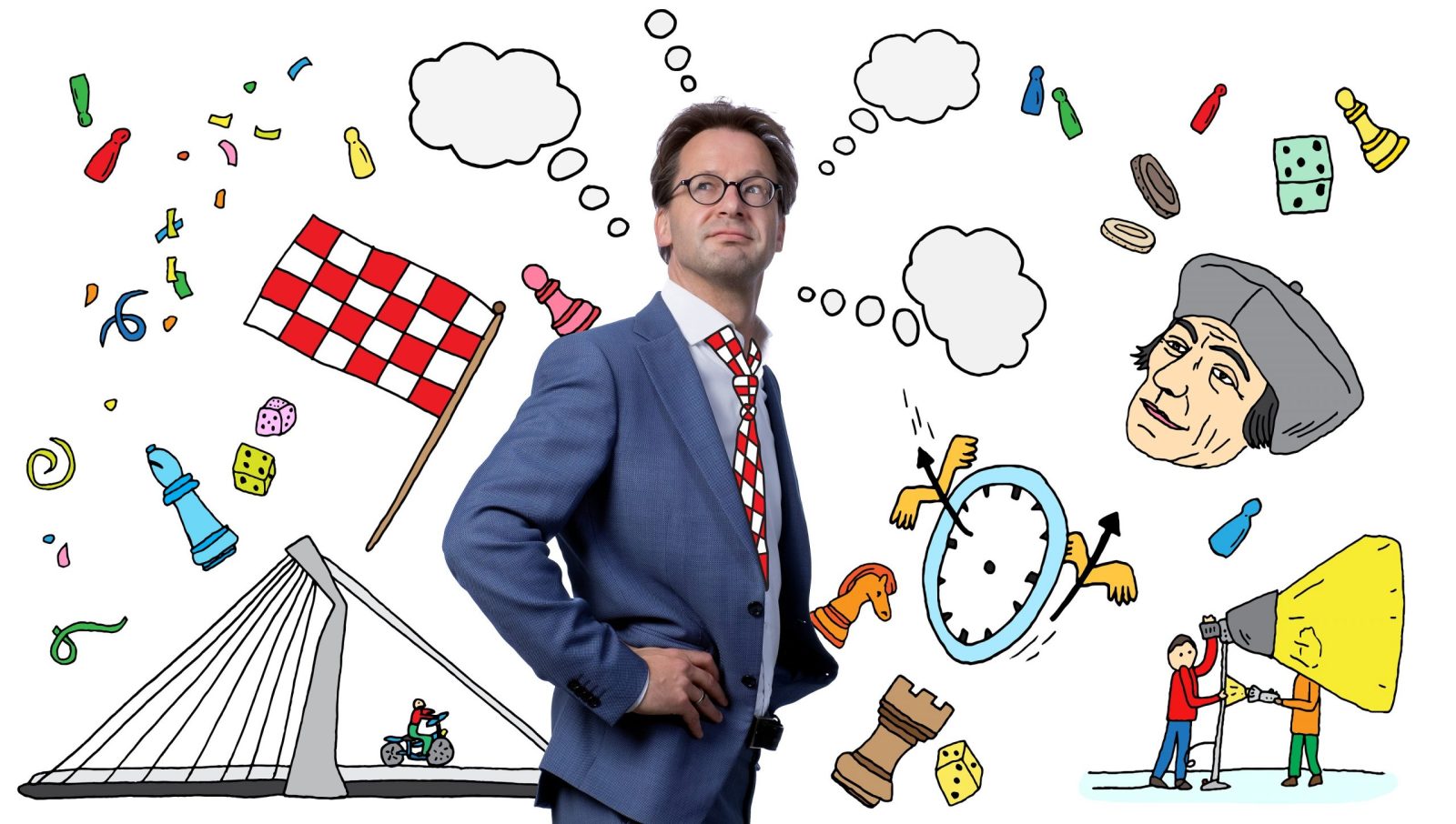
Image by: Pauline Wiersema, Levien Willemse
The disappearance of the young men concerned Rector Magnificus Jean Buridan. The philosopher went to the palace to investigate. However, Buridan also piqued the queen’s interest and a passionate relationship ensued until, after a few days, the queen decided to have the philosopher thrown into the Seine as well24.
The Erasmus School of Philosophy (ESPhil) is a special place, as many dual-programme students come here from EUR’s other faculties. This often leads to interesting debates, especially with Economics students. During these debates, I am often struck by how little they actually learn about the history of their field. The philosopher Buridan was already concerned with the ethics of economics in the Middle Ages, and he saw things very differently than we do today. In the 14th century, for instance, the question was raised whether you could earn money from money, for instance by charging interest. This was considered a sin because, as a lender, you added nothing and only used time – which belongs to all of us.
‘Buridan conceived the idea that charging interest was not sinful as long as people did not abuse their economic power’
The church accordingly forbade the charging of interest, but merchants needed the money to do business. Buridan conceived the idea that charging interest was not sinful as long as people did not abuse their economic power: a person could make a profit only if the loan also provided a benefit to society. It is interesting to look at stock markets (where the price of shares is often the subject of speculation) or to look at banks (which make big profits from expensive loans) through Buridan’s eyes. Buridan said we should first look at the consequences for society. The question of when returns are “good” is open to debate, and I would like to see economists have that ethical debate more often.
Speaking of ethics: Buridan was himself not immune to the queen’s charms, and, like his students, was in danger of being thrown into the Seine with his hands tied. However, the philosopher devised a ruse and asked the queen for a favour: to keep his right hand free, so that he could make the sign of the cross underwater at the moment of his death. The queen agreed, and with one arm free, Buridan was able to stay above water and make his way to safety. After this scandal became public, the queen deeply regretted her actions and donated a substantial sum of money to the University of Paris. After careful consideration of the moral issues, Buridan believed that interest could be charged on this money. Thus the queen’s bad behaviour led to something good: the beginning of a fund from which impoverished students could receive student grants.
Read more
-
Honest science: the Plasterk case
Gepubliceerd op:-
Column
-
De redactie
-
 Ronald van Raak
Columnist
Latest news
-
TU Delft may not favour women in admissions to courses
Gepubliceerd op:-
Education
-
-

Hate campaigns and political pressure: KNAW wants legal protection for academic freedom
Gepubliceerd op:-
Science
-
-

Signing up for a Dutch course ‘feels like a race’, no more places available for now
Gepubliceerd op:-
Internationalisation
-

Comments
Comments are closed.
Ad
Read more in Column
-
The sad anniversary of powerless staff and students
Gepubliceerd op:-
Column
-
-

Tea, theory and a healthy dose of procrastination
Gepubliceerd op:-
Column
-
-
The drama of Jason Arday
Gepubliceerd op:-
Column
-