Ad

How does your background affect your academic chances?

Fewer young people with a migrant background go to university than you might expect. For the first time in years, universities are starting to obtain a clearer view of their academic opportunities.

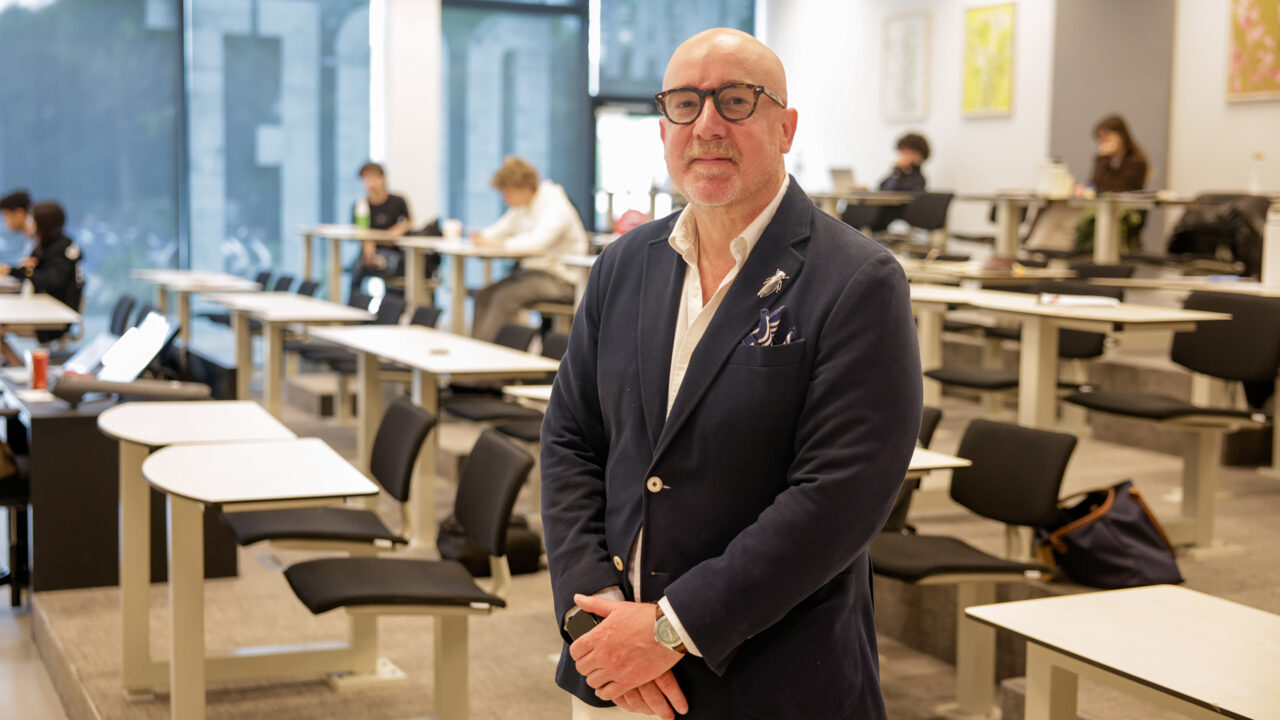
Image by: Bas van der Schot
Six universities are taking a deep dive into the statistics on the admission and performance of students whose father or mother was born outside the Netherlands. Leiden, Rotterdam, Wageningen, Utrecht and the two Amsterdam universities (VU and UvA) are taking part.
This is the first study of its kind since 2017, reveals Maurice Crul, Professor of Education and Diversity at VU Amsterdam. Until then, educational institutions received this kind of data as a matter of course, but more recent privacy laws have restricted access.
“Without data, it’s impossible to see differences in dropout rates and academic performance between groups with different backgrounds”, Crul explains. Every university in the country now has a diversity office and diversity policies in place, but they lack the figures to assess the impact of their efforts.
Wider variety
For the purposes of this study, the researchers have been able to obtain the relevant data from Statistics Netherlands after all. Their first conclusion: today’s student intake covers a wider variety of backgrounds than in the past. The vast majority of this group used to consist of students with one or both parents born in Morocco, Turkey, Suriname, Indonesia or the Caribbean Netherlands. Now the range of backgrounds is far more diverse.
Another conclusion: fewer students with a migrant background have gone to university in recent years than you might expect. The student loan system appears to be partly responsible. Higher education has become more expensive for students who progress to university via other forms of further education, a route by which many students with a migrant background arrive at university.
Once at university, the data also shows that they are less likely than students from other groups to complete their degree. That said, Crul introduces a note of caution: the data is not yet clear enough to draw firm conclusions. The student numbers are small and, for privacy reasons, individual data has to be rounded up to groups of ten. “We plan to ask the stats people to aggregate the figures for certain groups so that we can also see if their field of study plays a role.”
Lees meer
-

More chance of graduation if you have rich parents
Gepubliceerd op:-
Education
-
Other universities
Why are the other universities not participating in this study? Universities in the country’s urban centres tend to collaborate more frequently in this area, Crul observes. Wageningen does not fit this profile but was highly motivated to take part. There’s a chance that other universities could get involved at a later date. “For now, they couldn’t make the staff available. The amount of consultation involved can easily stretch to six months. Exactly what data do we need? What do we want to know?”
Eventually, Crul believes, university association UNL may be in a position to collect this type of data. That would once again provide a more accurate national picture. The six participating universities can be seen as paving the way. “Our study is a kind of pilot.”
The UNL confirms that the relevant data is no longer readily available. “Until 2018, universities had access to data on students’ migration background through the Ministry of Education and the Education Executive Agency”, a spokesperson explains. “But stricter legislation has meant that this information is no longer open to universities and the UNL.”
Under strict conditions, however, the data can be made available for scientific purposes. “This is an academic study on a relevant social issue, which may also have outcomes that are relevant for the universities themselves”, the UNL comments.
In the meantime, the work goes on for Crul and his fellow researchers. “Our hope is that this study will give us a better understanding of the obstacles to equal opportunities in education”, he concludes.
Lees meer
-

Unequal opportunities for Dutch-Caribbean students in medical programmes, despite shortage
Gepubliceerd op:-
Diversity
-
De redactie
Latest news
-
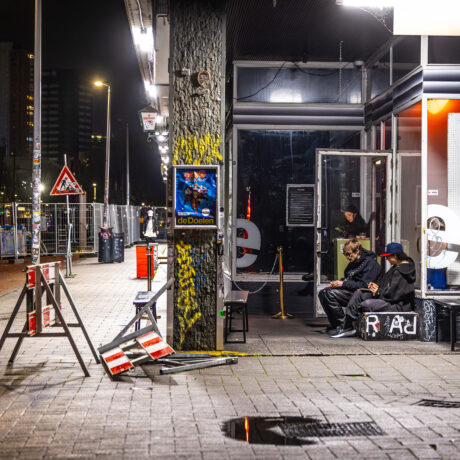
Clubs closing, expensive drinks and dancing with a matcha. How Rotterdam’s nightlife is changing
Gepubliceerd op:-
Culture
-
-

Powerhouses are like shoulder pads
Gepubliceerd op:-
Column
-
-

Seven EUR scientists receive a Vidi grant
Gepubliceerd op:-
Science
-
Comments
Comments are closed.
Ad
Read more in Education
-

TU Delft may not favour women in admissions to courses
Gepubliceerd op:-
Education
-
-

RTL: More than half of master’s theses contain AI-generated text
Gepubliceerd op:-
Artificial Intelligence
-
Education
-
-
Education pioneer Etienne Augé: ‘Technology should give us more time for people’
Gepubliceerd op:-
Education
-