Ad

Frenemies

A while ago, I was rejected for a major grant application. It was for a national partnership focusing on the issue of premature birth. I was involved as a co-applicant. Of course, I was extremely disappointed – and so was the rest of the team. Fortunately, my immediate colleague, who had also applied to the same grant programme was allowed to advance to the next round. As Dutch television presenter Henny Huisman sang when I was a little girl: ‘Maar zoals bij elke wedstrijd, kan er maar één de winnaar zijn’ (Every competition can only have one winner).
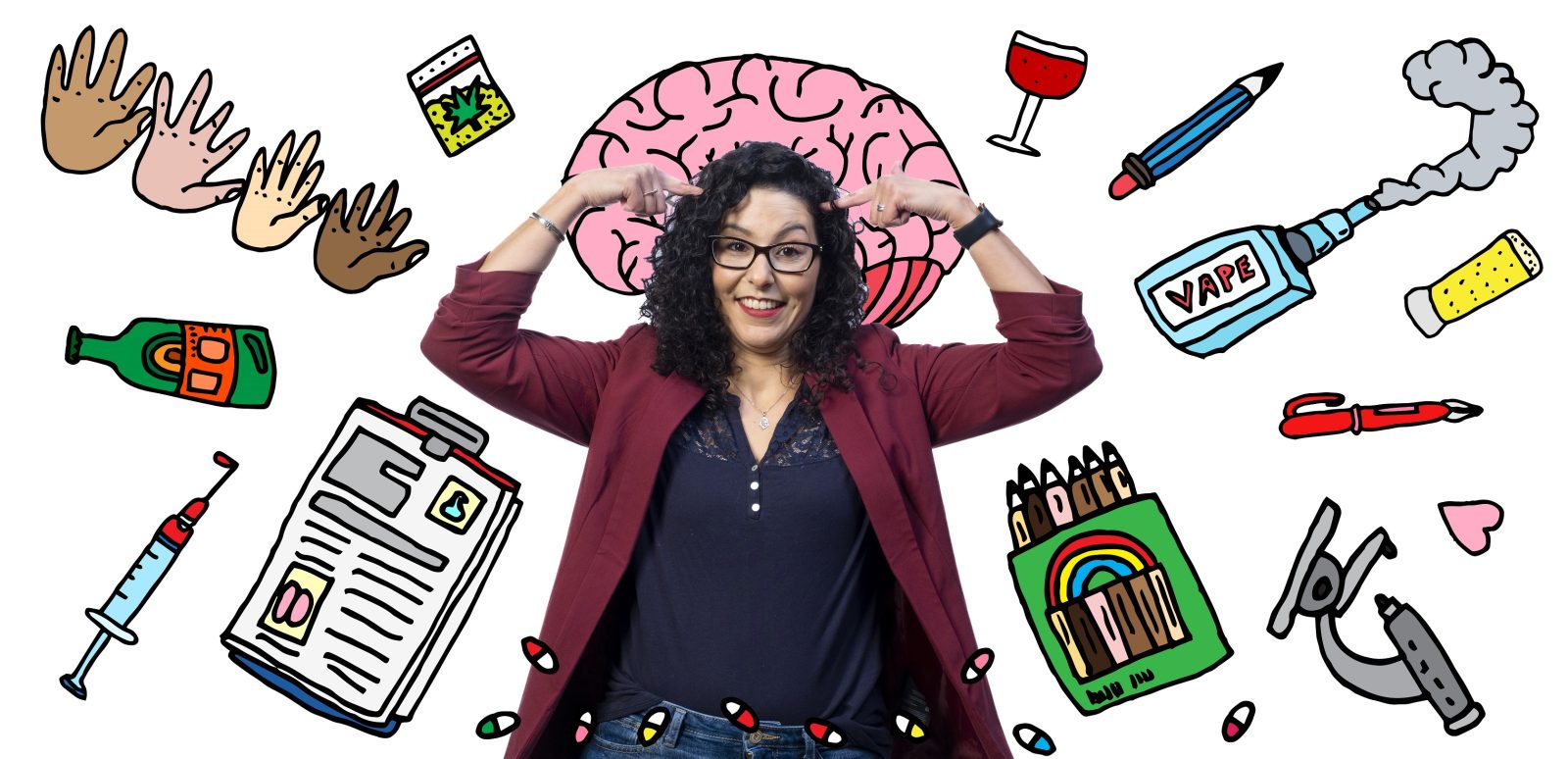
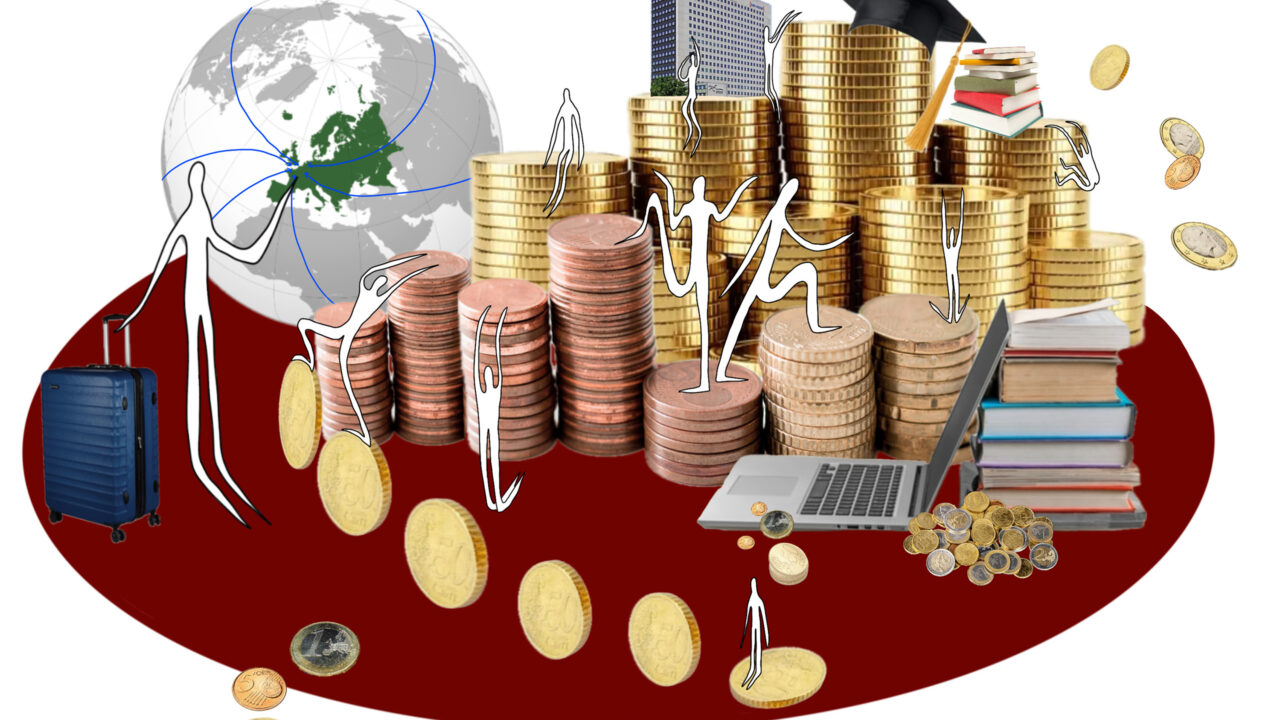
Image by: Levien Willemse, Pauline Wiersema
In the days following the rejection, I reflected on the particular area of tension scientists are confronted with. On the one hand, we work together with fellow scientists on common goals, and on the other, we compete with each other to bring in money from the same grant. In one situation you’re friends and in the other, you’re enemies.
A network of colleagues within the same field – at a local, national and international level – allows us to share expertise, collaborate and obtain joint funding to tackle complex (global) problems. Investing in building and maintaining strong and diverse networks is crucial to driving scientific progress. And let’s not forget, meeting people who share the same passion as you do makes working as a scientist incredibly fun.
On the other hand, those same driven colleagues are at times also your biggest competitors. Funnily enough, that kind of competition can also act as a driving force to advance science. The urge to be the first to make a discovery, test a new theory or find a solution to an intractable problem can lead to scientific breakthroughs. Competition encourages you to push your own boundaries, explore new approaches as well as critique and improve your own work. Yet competition can also have less positive consequences. If you want to be first to succeed, it is important to get results quickly – and that success can come at the expense of care and diligence. Competition can also lead to withholding information or even fraud in some cases.
The paradox of collaboration and competition in science is that they need one another. We should not see these elements as contradictions, but rather as complementary to each other. It is important to strive for an academic culture in which collaboration is encouraged and rewarded. At the same time, we should embrace competition as a driver for innovation and excellence, without losing sight of ethical standards and values.
Is my immediate colleague my friend, my enemy – or in fact both? In English, we have a word for someone with whom we have a complex relationship that features elements of both friendship and rivalry. My awesome colleagues are my ‘frenemies’.
Hanan El Marroun is a Professor of Biological Psychology.
Lees meer
-
Catch them while they’re young
Gepubliceerd op:-
Opinion
-
De redactie
-
 Hanan El Marroun
Author
Latest news
-
Interest on student debt at highest level in 17 years
Gepubliceerd op:-
Money
-
-
Behind on repaying your student debt? DUO may soon pass the details on to your municipality
Gepubliceerd op:-
Politics
-
-
Extra funding for higher education does not keep pace with inflation
Gepubliceerd op:-
Education
-
Politics
-
Comments
Comments are closed.
Ad
Read more in Column
-
The drama of Jason Arday
Gepubliceerd op:-
Column
-
-
The president of the Executive Board hopes scientists will draw energy from hot air
Gepubliceerd op:-
Column
-
-

Notes on your phone
Gepubliceerd op:-
Column
-