Ad

Smooth start for next-gen hybrid lecture hall

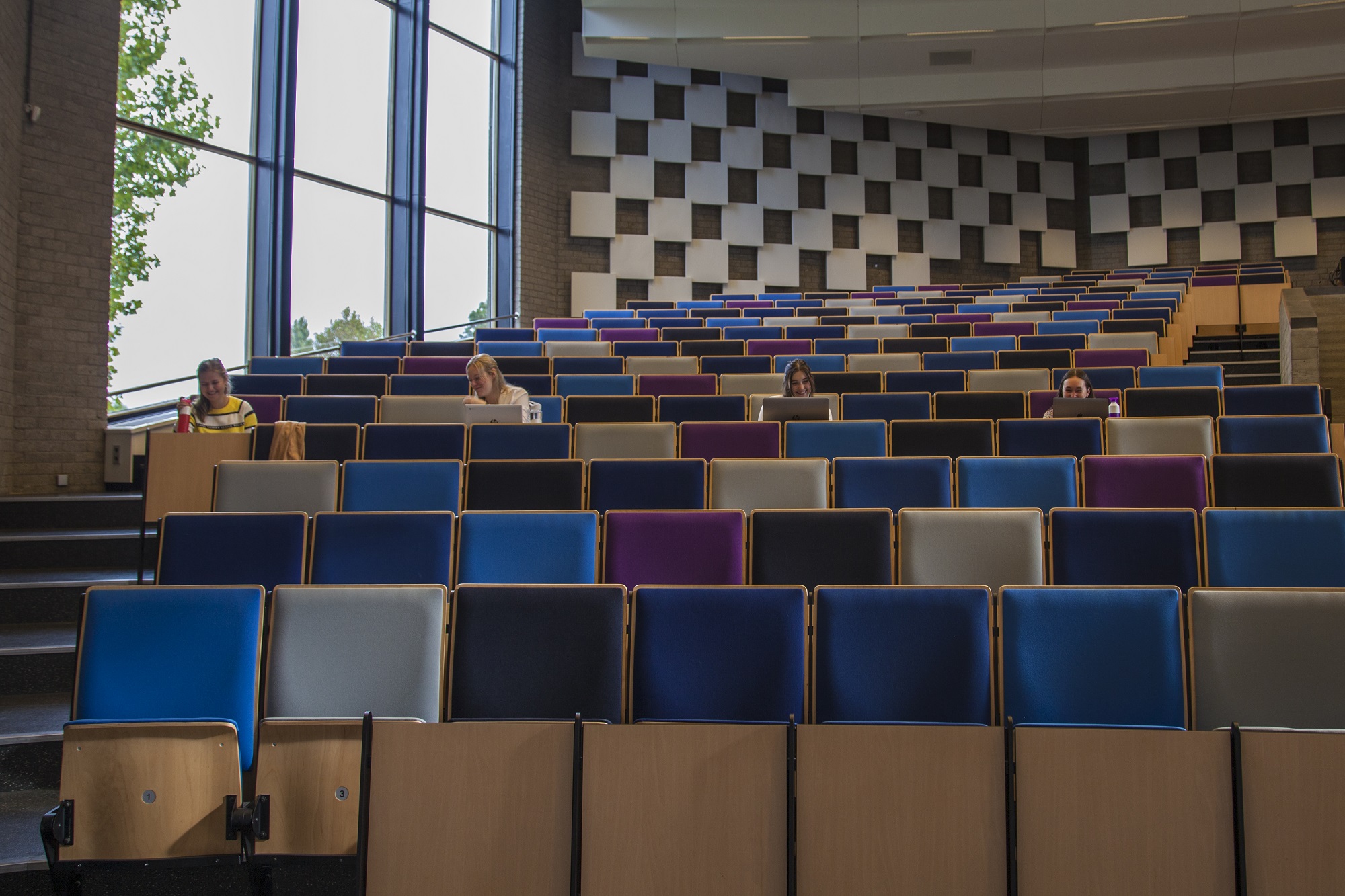
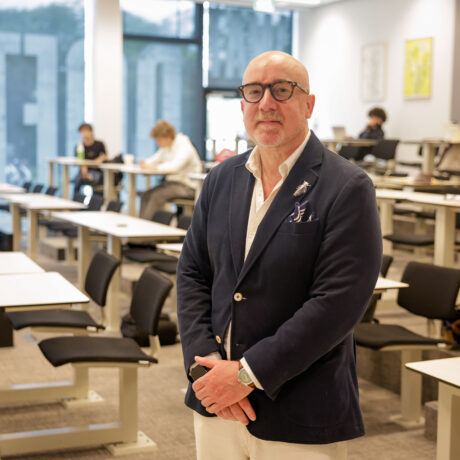
Emö Oldenkamp (Erasmus School of Economics) was met by happy faces in her lecture hall in the Theil Building on Tuesday. First-year Econometrics students were attending the first Introduction to Analysis lecture – 75 students in the hall and the other 225 from their laptops on Zoom.
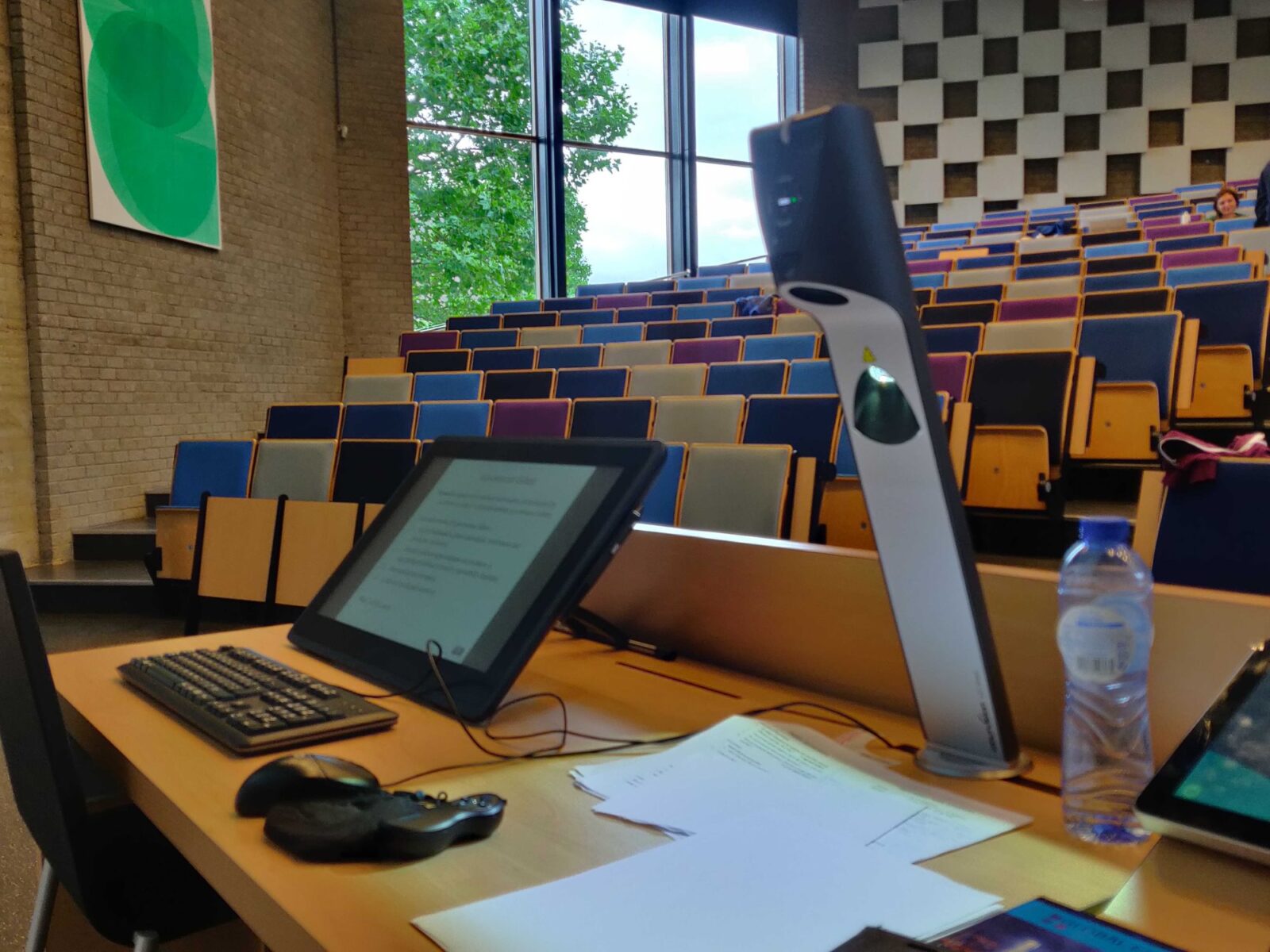
Image by: Wouter Sterrenburg
Emö Oldenkamp
Last year there were often technological issues, says Oldenkamp, but everything has changed since then. Two lecture halls on the ground floor of the Theil Building have now been designated as next-gen hybrid lecture halls. Here, there should be fewer delay and sync issues, two common problems in previous hybrid lectures. On her screen, the lecturer sees all the students at home via Zoom, and these students can also ask questions, just like students in the hall.
“Don’t be afraid of the systems. Just read everything carefully beforehand,” Oldenkamp advises colleagues who are slightly more digital phobic. In fact, she enjoys new technology, so immediately agreed to work with the new system in the pilot organised by the Center for Learning and Innovation.
Bit nervous
On Tuesday morning, a couple of hours before her first lecture, she was ‘a bit nervous’, says Oldenkamp. After a quick briefing by the Media Support Centre, however, she felt confident. And justifiably: the lecture went almost without a hitch.
“There’s absolutely no delay, so I can just as easily answer questions from Zoom students as from the hall.” The only remaining issue is that students on Zoom can’t hear questions from students in the hall. “That means that I need to repeat the question, but I sometimes forgot to do that. So, I expressly told the students on Zoom to remind me. Hopefully, we’ll get a microphone in the hall.”
Much less delay
In the past, Oldenkamp sometimes used a catchbox, a throwable microphone. However, due to the risk of infection, she doesn’t think that’s such a good idea. And students putting their hands up on Zoom doesn’t work either. She tells them to just interrupt her. “I don’t see those hands. I’ve noticed that some students don’t like suddenly being heard in the hall via Zoom. I therefore schedule an extra hour after each lecture for questions. To be honest, I hadn’t expected there to be so many after the first introductory lecture, but we needed the entire hour.”
Hybrid lectures were given last academic year too, but they used a different, less advanced system. “It operated via an American provider,” Oldenkamp explains. “The visual quality was excellent, but we had a lot of delay on the line. Sometimes I’d be asked questions about subjects I’d addressed two minutes previously. That meant going back, which was quite disruptive.”
Before
-
Faculties don’t enjoy hybrid teaching; slightly more on-campus classes scheduled
Gepubliceerd op:-
Education
-
De redactie
-
 Elmer Smaling
Deputy editor-in-chief
Latest news
-
Significantly more reports to confidential counsellors, more complex cases as well
Gepubliceerd op:-
Safety
-
-

EM TV newsflash: Porn in Pavilion, no joint Eurekaweek and highest interest rate for student debt in decades
Gepubliceerd op:Article type: Video-
EM TV
-
-
Minister sees ‘major problem’ looming: will there be too few international students soon?
Gepubliceerd op:-
Internationalisation
-
Politics
-

Comments
Comments are closed.
Ad
Read more in Education
-
Education pioneer Etienne Augé: ‘Technology should give us more time for people’
Gepubliceerd op:-
Education
-
-
Talent strategy takes shape: plenty of ‘self-management’, freedom of choice of study remains intact
Gepubliceerd op:-
Education
-
-

Extra funding for higher education does not keep pace with inflation
Gepubliceerd op:-
Education
-
Politics
-