Ad

‘The university of 2035 does not need to become a Superpowerhouse. Excellent teaching and research are ambitious enough’
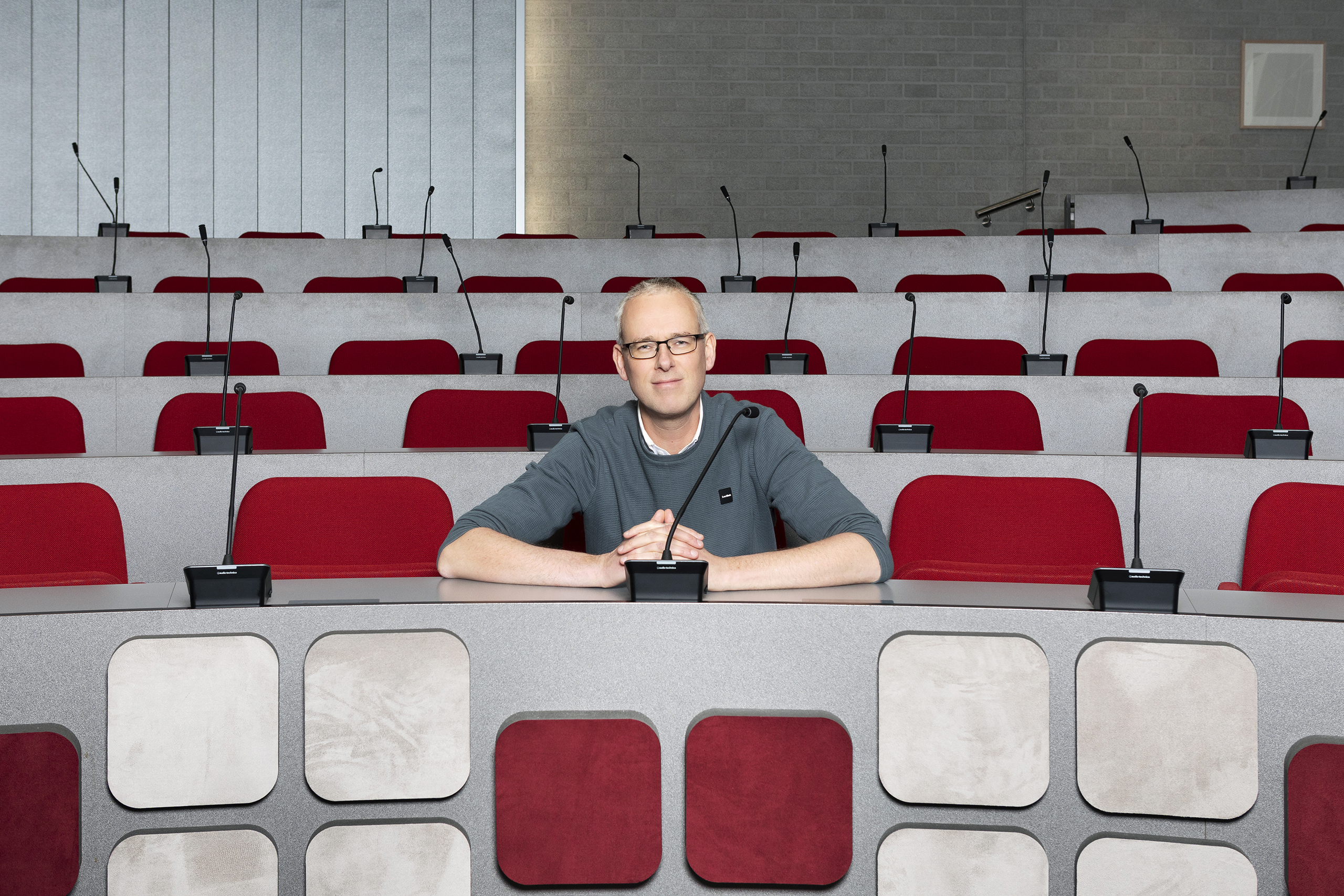
EUR has strong academics, committed staff, enterprising students and a rich history. Cherish that instead of wanting to transform the university into an ‘Academic Superpowerhouse’, argues Gerrit van Bruggen, professor of Marketing at Rotterdam School of Management.

Image by: Sonja Schravesande
Anyone entering the Erasmus University campus in 2035 immediately notices that major changes have taken place here. Above the entrance it no longer says ‘Erasmus University Rotterdam’, but ‘EUR Global Academic Superpowerhouse’.
Individual faculties no longer exist. In 2028 they were merged into three academic powerhouses, which after an evaluation in 2030 were combined into one Superpowerhouse.
That was more efficient, although an extra administrative layer was added. At the top sit a president, three vice-presidents, six deans without faculty and a Chief Superpowerhouse Alignment Officer, who makes sure everyone moves in the same direction.
Teaching is provided by Knowledge Delivery Associates. They used to be called lecturers. Each of them teaches eight courses, supervises students and is allowed to do research on Friday afternoon between 4pm and 4.30pm, provided they have completed the mandatory e-learning module Social Safety in Strategic Transitions.
Since 2031, PhD candidates have been called ‘early-career output units’. That sounds less personal but makes it easier not to renew contracts. After a highly successful pilot at the former RSM, the entire university is now extremely lean and mean. Mostly lean.
For years, the number of academics fell faster than the number of policy makers around academia. In 2035, each researcher is matched by a policy adviser, a programme manager, a communications partner and 0.4 change management specialist. One professor still teaches in person. She is photographed every year for the annual report and gives her farewell lecture at the end of the year.
The great taxi transition
Expense claims took on a special place in the history of the new university. In the twenties there was commotion about taxi rides by members of the Executive Board. Later it turned out society had misunderstood this. They were not taxi costs, but investments in executive mobility.
That is why the Taxi Transformation Programme was created in 2029. Board members could have important thoughts while travelling. A trip from Rotterdam to The Hague henceforth counted as a mobile strategy session. The train was less suitable for that. There they could encounter ordinary staff members, with the risk of spontaneous internal dissent.
The extra taxi costs caused by the private move of the chair of the Executive Board were henceforth referred to as ‘strategic mobility costs of institutional leadership’. When an employee asked why his extra metro costs after a move to Nesselande were not reimbursed, the explanation was short but clear. His move was a personal choice, the chair’s move was leadership.
Een lijst met artikelen
-
University president on powerhouses: ‘If we do nothing, we will hit a wall’
Gepubliceerd op:-
Governance
-
Nokia upon the Maas
The Executive Board had always defended the reorganisations by warning that otherwise the university would become the new Nokia. It was an attractive comparison. Everyone knew Nokia but almost no one knew exactly what had happened.
In reality, Nokia kept changing. It reorganised and invested heavily but also made wrong strategic choices. That detail disappeared from the EUR narrative. What remained was the comforting thought that sitting still was dangerous and that every change therefore meant progress.
‘The university’s own professors of strategy, organisation and change management were not consulted. That would only complicate the process’
Reorganisations followed one another in rapid succession. A failing structure mainly proved that a new transformation was needed. In this way each solution created new challenges, project groups and policy roles. Boston Consulting Group therefore received a permanent wing in the fully renovated Executive Board building in 2032, future-proofed for structurally temporary external support. Every year, at great expense, it confirmed that the Executive Board was making exactly the difficult but necessary choices. The university’s own professors of strategy, organisation and change management were not consulted. That would only complicate the process and might lead to a request for a workspace.
The mystery of the vanished student
Meanwhile, student numbers kept falling. At first this was attributed to demographics, then to The Hague and finally to geopolitical developments. The unlikely possibility that students were looking for good teaching in well-equipped lecture halls and for lecturers who were there because of their knowledge and skills was investigated by the Taskforce Student Journey Renewal. It concluded that students mainly needed more digital portals. From then on, they consumed their teaching largely via EURror™, the immersive learning app that took students everywhere except into a lecture hall.
In the meantime, the university made further cuts to buildings, teaching and support for degree programmes. This was not called painful, but targeted quality development. The central department of Strategy and Change remained largely intact to carefully guide that development.
In 2035, the 286-page report Back to the core was published. The core was on page 241: Teaching and research.
An alternative ending
Fortunately, this future is fictional and can still be avoided. EUR has strong academics, committed staff, enterprising students and a rich history. The problem is not too little (re)organisation, but that reorganising is mistaken for choosing.
Making choices is actually simple. Protect teaching, research and academic careers and simplify the organisation around them. Work in recognisable units in which people know each other and see their shared purpose. Cut management layers, external consultancy contracts and policies that mainly produce more policy. For every role and reorganisation, ask what it concretely contributes to good teaching and research.
BCG is not needed for this. The knowledge is often already with the people who implement the decisions. Involve them seriously, without letting vested interests block change. Support arises when the problem is clear and the chosen approach demonstrably better than the alternatives.
‘The organisation must trust and give space to the people who excel in these, instead of constantly redesigning itself’
Be equally frugal with everyone. If public transport is good enough, use it. Costs arising from a private decision remain by default private. Not because a taxi ride or a move determines EUR’s financial future, but because leading by example shapes trust in the bigger choices.
The university of 2035 does not need to become a Superpowerhouse. Excellent teaching and research are ambitious enough. The organisation must trust and give space to the people who excel in these, instead of constantly redesigning itself. Anyone who wants to use a company as an example of how not to do it is therefore better off looking at Boeing than at Nokia. At Boeing, the problem was not lack of change, but management that pushed craftsmanship aside.
If that craftsmanship continues to come first at EUR, students will still be drawn there in 2035.
Gerrit van Bruggen is professor of Marketing at Rotterdam School of Management, Erasmus University.
Een lijst met artikelen
-
Criticism of academic powerhouses: ‘A university is not a power station’
Gepubliceerd op:-
Governance
-
De redactie
Comments
Ad
Read more in Opinion
-
The president of the Executive Board hopes scientists will draw energy from hot air
Gepubliceerd op:-
Column
-
-

Notes on your phone
Gepubliceerd op:-
Column
-
-

Looking back without anything weighing on you
Gepubliceerd op:-
Column
-


Leave a comment